Ancient Greek Myth and Civic Identity: Power, Origin, and Authority
Greek myths were not just stories about gods and heroes—they were shared narratives that defined how a city understood itself. Each community used myth to explain its origins, justify its authority, and establish a clear sense of who belonged within it. The function was not entertainment, but identity formation tied to place and power.
In practice, myth worked as a framework that connected people, land, and history. A city did not exist as a neutral space; it was anchored in a story that explained why it existed and who had the right to claim it. These narratives were repeated, recognized, and embedded into public life, making them part of the structure that held the community together.
To understand Greek civic identity, the key question is not “what were the myths?” but “how were myths used to define belonging, justify authority, and maintain continuity within a city?”
What Myth Meant in Greek Society
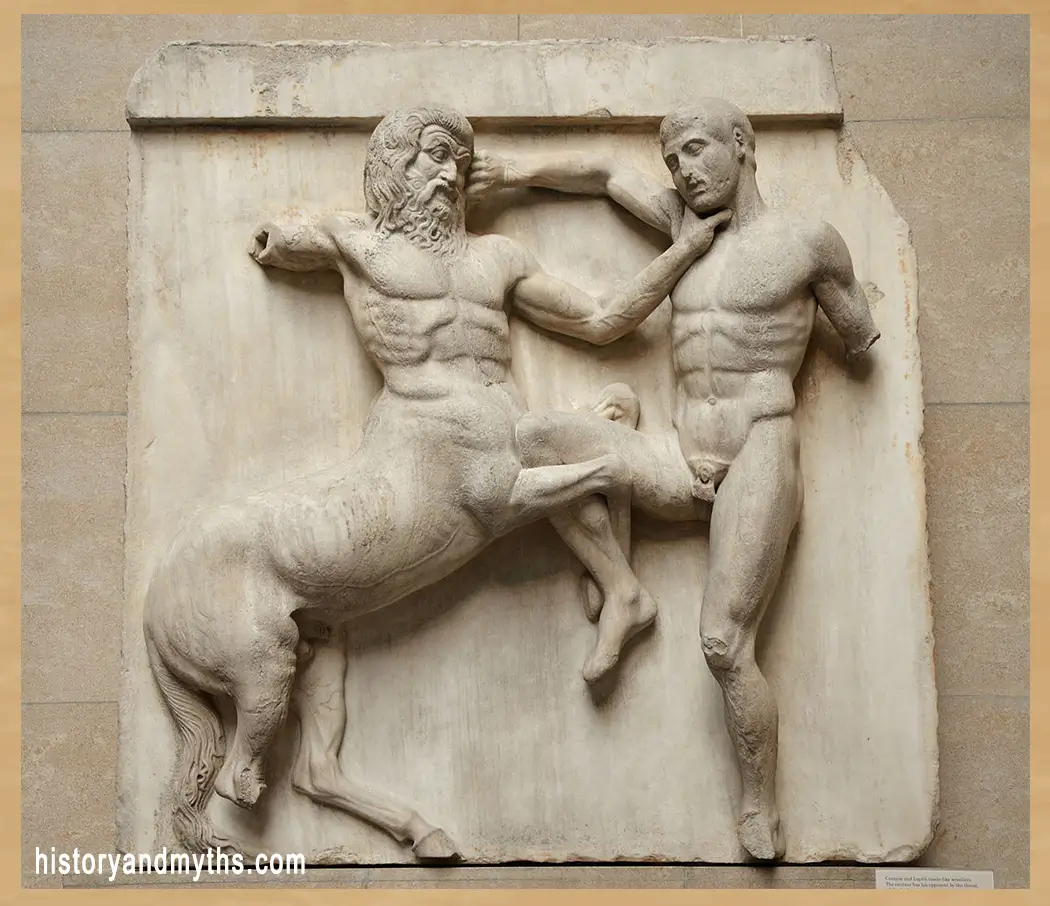
In the Greek context, myth was not separate from reality—it was a structured way of explaining and organizing it. These narratives defined origins, relationships, and boundaries, giving communities a shared reference that did not require constant verification.
What made myth effective was its collective acceptance. It did not operate as personal belief but as a common framework that people recognized and used. This allowed it to function as a stable point of agreement in areas where direct evidence or formal systems were limited.
Myth also provided continuity across time. By linking the present to a defined past, it created a sense that current structures were not temporary or arbitrary. This reduced uncertainty and reinforced the idea that the community existed within an established order.
Another key element is that myth did not stay abstract. It was embedded in practices, spaces, and public recognition, which made it part of daily structure rather than an isolated narrative. Its role was not to describe the world from a distance, but to support how the world was understood and maintained.
Seen clearly, myth in Greek society functioned as a shared system of meaning that stabilized identity, explained origins, and reinforced the structure of the community.
| Function | Role of Myth | Outcome |
|---|---|---|
| Identity | Defines origin and belonging | Stable civic identity |
| Authority | Links power to accepted narratives | Recognized legitimacy |
| Territory | Explains and justifies land claims | Defined boundaries |
| Continuity | Connects present to past | Long-term stability |
| Public Life | Embedded in rituals and festivals | Collective reinforcement |
Myth as Identity Builder
Greek cities did not define themselves through abstract categories—they defined themselves through specific origin narratives that established who they were. Myth provided a clear answer to that question by linking each community to a founding figure, lineage, or event that could be recognized and repeated.
This function worked by creating exclusivity. A city’s myth was not interchangeable with another’s. It marked a boundary between groups, establishing who belonged within that identity and who did not. The narrative acted as a filter for membership, not just a shared story.
Myth also tied identity to place. The origin narrative was connected to the land itself, making identity inseparable from location. This connection ensured that belonging was not abstract—it was grounded in a specific environment that the myth explained and justified.
Another key point is stability. By relying on a fixed narrative, identity did not need to be renegotiated constantly. The myth provided a consistent reference point that allowed the community to maintain coherence over time, even as individuals and circumstances changed.
In practical terms, myth built identity by defining origin, setting boundaries, and anchoring belonging to a place. It turned a group of people into a recognizable and continuous community.
Myth and Political Legitimacy
In Greek cities, authority did not rely on force alone—it required recognition. Myth provided that recognition by linking power to a pre-existing narrative that the community already accepted. This allowed leaders and institutions to present their position as continuous with the past, not newly imposed.
The mechanism was straightforward. Political authority was framed as an extension of a founding figure, a heroic lineage, or a defining event. By aligning current leadership with these elements, power appeared grounded rather than arbitrary. The claim was not simply “we rule,” but “we continue what was already established.”
This also reduced resistance. When authority was connected to a shared narrative, it did not need to be justified from the beginning each time. The myth functioned as a reference point that pre-legitimized decisions, making them easier to accept within the existing framework.
Another important aspect is flexibility. Myths could be reinterpreted or emphasized differently depending on the context. This allowed political actors to adapt the narrative to support current needs without abandoning the structure that gave it authority.
In practice, myth did not create power, but it made power recognizable and acceptable. It transformed authority from a present claim into a continuation of an established order, which is what allowed it to function effectively within the city.
Local Myths vs Pan-Hellenic Myths
Greek myth operated on two different levels at the same time. Some narratives were specific to a single city, while others were shared across the Greek world. The difference between them is not content, but function.
Local myths defined a particular community. They explained origin, justified claims, and established identity within a specific place. These narratives were exclusive by design—they worked because they belonged to one group and not to others. Their role was to create distinction and internal cohesion.
Pan-Hellenic myths, by contrast, connected multiple communities. They provided a broader framework that different cities could recognize without losing their own identities. These narratives did not replace local myths; they overlaid them, creating a shared cultural layer across otherwise separate groups.
The system depended on this balance. If only local myths existed, there would be no common reference between cities. If only shared myths existed, local identity would weaken. By maintaining both, Greek society allowed for simultaneous separation and connection.
The result is a dual structure. Local myths defined who a community was, while shared myths defined how that community related to others within a wider system.
- Myth defined who belonged within a community
- It linked authority to accepted narratives
- Land and identity were connected through story
- Public rituals reinforced myth as lived practice
- Myth adapted to support changing political needs
© historyandmyths.com — Educational use
Myth and Territory
In Greek cities, territory was not defined by boundaries alone—it was explained and justified through myth. Land was treated as meaningful space because it was linked to a narrative that established why it belonged to a particular community.
This worked by attaching key locations to founding figures or defining events. A hill, a sanctuary, or a specific site was not neutral; it was part of a story that anchored the community’s presence. The claim over land was therefore not only physical, but narrative-based and recognized.
Myth also helped stabilize territorial claims over time. Instead of relying solely on current control, a city could point to a narrative that presented its relationship to the land as continuous and established. This reduced the need to justify ownership from the beginning each time.
Another important aspect is boundary definition. Myths did not only explain what belonged to a community—they also implied what did not. By linking identity to specific places, they created a clear distinction between internal space and external territory.
In practical terms, myth turned territory into more than geography. It made land part of a shared identity, supported by a narrative that justified presence, defined boundaries, and reinforced continuity.
Myth in Public Life (Festivals and Rituals)
Myth did not remain a story that people knew—it became something they repeatedly performed in public settings. Festivals and rituals were the mechanism that turned narrative into shared, visible practice, ensuring that the myth stayed active within the community.
The key function here is repetition. By reenacting elements of a myth through organized events, the community did not just remember the narrative—it confirmed it as part of its current reality. This removed the gap between past and present, making the origin story continuously relevant.
Public participation also mattered. These events were not private or limited. They involved the wider population, which meant that the myth was collectively reinforced, not individually interpreted. This created consistency in how the narrative was understood and maintained.
Another important aspect is spatial integration. Rituals often took place in specific locations connected to the myth, linking the story to the physical environment. This ensured that identity, place, and practice were aligned within the same structure.
In practice, myth became durable because it was enacted, not just told. Festivals and rituals ensured that the narrative remained visible, repeatable, and embedded in public life, rather than fading into abstraction.
Why Myths Changed Over Time
Greek myths did not remain fixed because the needs of the community did not remain fixed. As political structures shifted, populations changed, or new pressures emerged, the narratives were adjusted to remain relevant within the same framework.
The key point is that change did not mean replacement. Myths were rarely discarded; instead, they were reinterpreted or emphasized differently. Certain elements could be highlighted, minimized, or connected to new contexts without breaking the overall structure. This allowed continuity without rigidity.
This flexibility made myth a usable tool rather than a static tradition. When a city needed to reinforce a claim, integrate new groups, or support a shift in authority, the narrative could be aligned with that goal. The myth did not create the change, but it supported it in a recognizable way.
Another important factor is collective acceptance. Adjustments worked only if they remained within the boundaries of what the community could recognize as valid. This limited how far a myth could be altered, ensuring that change did not undermine the system that gave it authority.
In practice, myths persisted because they could adapt. Their strength was not in remaining unchanged, but in being flexible enough to support evolving conditions while maintaining a stable identity.
Myth as a System (Not Just Stories)
Greek myth functioned as a coherent system that organized identity, authority, and space. It was not a collection of independent narratives, but a set of interconnected references that communities used to structure how they understood themselves and their world.
The system worked because it linked multiple elements at once. A single narrative could connect a city to its origin, justify its control over land, and support its political structure. This integration meant that myth did not operate in isolation—it aligned different aspects of society within one framework.
Another key feature is consistency without central control. There was no single authority managing these narratives, yet they remained stable because they were shared, repeated, and embedded in public practice. This allowed the system to function across different cities while maintaining local variation.
Importantly, myth provided recognizable answers to fundamental questions: where a community came from, why it held its position, and how it related to others. These answers did not require constant proof—they were accepted as part of the structure, which made them effective in maintaining order.
Seen clearly, Greek myth is best understood as a system because it organized meaning across identity, power, and territory at the same time. It did not just describe the world—it helped hold it together.
- Greek myths were functional systems, not just narratives
- They defined civic identity through shared origins
- Myths supported political legitimacy and authority
- Territorial claims were reinforced through narrative
- Public rituals kept myths active and visible
- Local and shared myths operated together
- Myths adapted while maintaining structural stability
Frequently Asked Questions
What role did myth play in Greek civic identity?
Myth defined origins, belonging, and the shared identity of a community.
How did myths support political authority in ancient Greece?
They linked power to accepted narratives, making authority recognizable and legitimate.
Were Greek myths the same across all cities?
No. Each city had its own local myths, alongside shared Pan-Hellenic narratives.
How did myths relate to territory?
They justified land claims by connecting places to founding figures and events.
Did myths change over time?
Yes. They were adapted to fit new political and social conditions.
How were myths maintained in society?
Through public rituals, festivals, and repeated recognition.
Were myths just stories?
No. They functioned as systems that organized identity, authority, and continuity.
Sources & Rights
- de Polignac, François. Cults, Territory, and the Origins of the Greek City-State. Chicago: University of Chicago Press, 1995.
- Morgan, Catherine. Athletes and Oracles: The Transformation of Olympia and Delphi in the Eighth Century BC. Cambridge: Cambridge University Press, 1990.
- Hall, Jonathan M. Hellenicity: Between Ethnicity and Culture. Chicago: University of Chicago Press, 2002.
- Malkin, Irad. Myth and Territory in the Spartan Mediterranean. Cambridge: Cambridge University Press, 1994.
- Malkin, Irad. A Small Greek World: Networks in the Ancient Mediterranean. Oxford: Oxford University Press, 2011.
- Gehrke, Hans-Joachim. History of the Archaic Greek World. Malden, MA: Wiley-Blackwell, 2010.
- Osborne, Robin. Greece in the Making: 1200–479 BC. London: Routledge, 1996.
- Cartledge, Paul. Ancient Greece: A Very Short Introduction. Oxford: Oxford University Press, 2011.
- Parker, Robert. On Greek Religion. Ithaca: Cornell University Press, 2011.
- Burkert, Walter. Greek Religion: Archaic and Classical. Cambridge, MA: Harvard University Press, 1985.
- Kindt, Julia. Rethinking Greek Religion. Cambridge: Cambridge University Press, 2012.
- Price, Simon. Religions of the Ancient Greeks. Cambridge: Cambridge University Press, 1999.
- Ogden, Daniel, ed. A Companion to Greek Religion. Malden, MA: Blackwell Publishing, 2007.
- Versnel, H. S. Coping with the Gods: Wayward Readings in Greek Theology. Leiden: Brill, 2011.
- Boardman, John. Greek Sculpture: The Archaic Period. London: Thames & Hudson, 1978.
- Snodgrass, Anthony. Archaeology and the Emergence of Greece. Ithaca: Cornell University Press, 2006.
- Whitley, James. The Archaeology of Ancient Greece. Cambridge: Cambridge University Press, 2001.
- Coldstream, J. N. Geometric Greece: 900–700 BC. London: Routledge, 2003.
- Hornblower, Simon, and Antony Spawforth, eds. The Oxford Classical Dictionary. 4th ed. Oxford: Oxford University Press, 2012.
- Lewis, David M., et al., eds. The Cambridge Ancient History, Vol. 3: The Expansion of the Greek World. Cambridge: Cambridge University Press, 1982.
- Fowler, Robert L. Early Greek Mythography. Oxford: Oxford University Press, 2000.
- Dowden, Ken. The Uses of Greek Mythology. London: Routledge, 1992.
- Graf, Fritz. Greek Mythology: An Introduction. Baltimore: Johns Hopkins University Press, 1993.
- Harrison, Thomas. Divinity and History: The Religion of Herodotus. Oxford: Oxford University Press, 2000.
Written by H. Moses — All rights reserved © Mythology and History