Ancient Greek Family Structure: Roles, Power, Daily Life Explained
Ancient Greek family structure was built around control, inheritance, and social order—not emotional bonds. At its core was the oikos, a household unit led by a male authority figure who controlled property, marriage, and the roles of every member inside it. The family was not just a private group; it was the foundation of economic survival and social stability.
Within this system, each role was defined by function. Men held legal and public authority, women managed the internal household and ensured legitimate heirs, children were raised to continue the family line, and enslaved individuals supported daily operations. These roles were not flexible—they were structured to maintain continuity across generations.
To understand ancient Greek society, you have to start here. The family was where power was organized, resources were controlled, and identity was preserved. It did not simply reflect the social system—it actively enforced it.
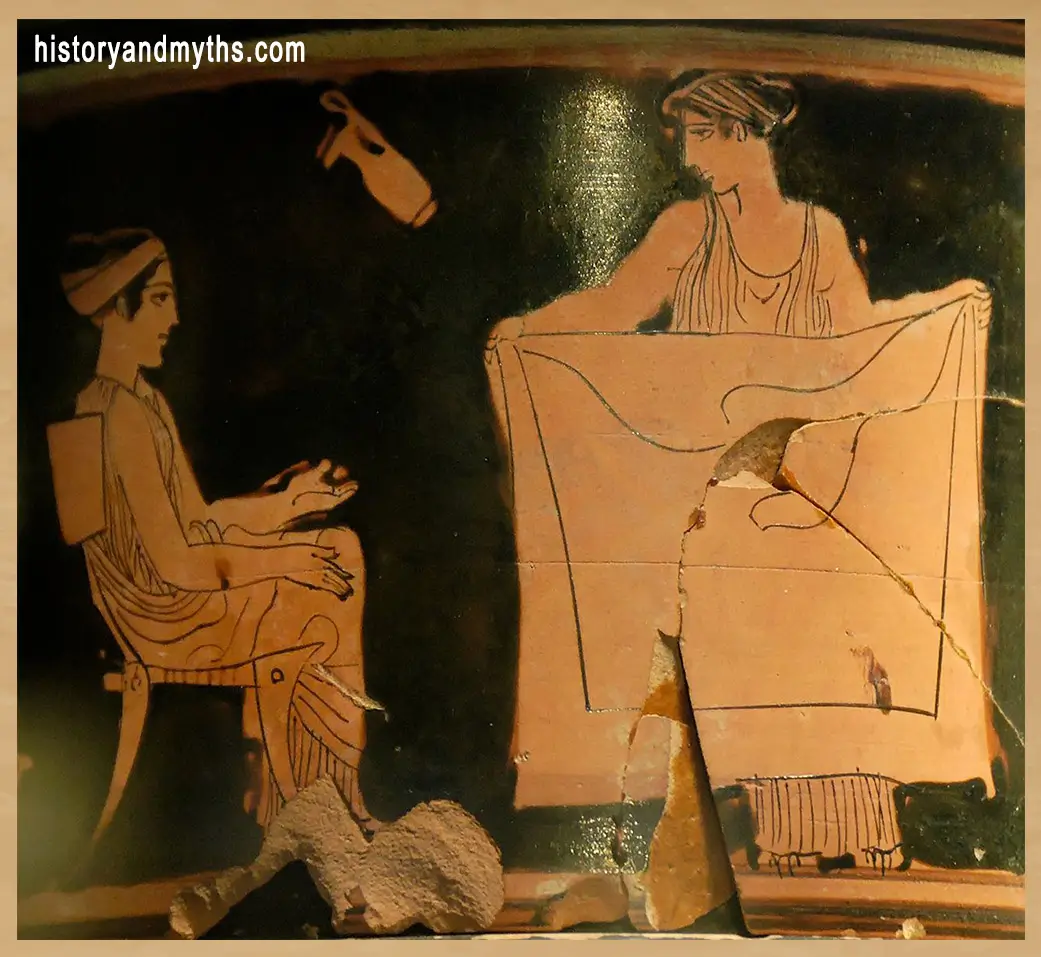
The Core System: The Oikos as a Power Unit
The Greek family cannot be understood as a group of relatives living together. The correct unit is the oikos—a structure that combines people, property, labor, and authority under one controlled system. It includes the house itself, the land connected to it, the individuals who live and work within it, and the rules that govern all of them.
What defines the oikos is not kinship alone, but control over resources and continuity. The household exists to maintain itself across generations. That means producing what it needs, protecting what it owns, and ensuring that everything—especially property—passes in a clear and legitimate line.
This is why the family structure is rigid. Roles are not assigned based on preference; they are assigned based on what the system requires. Someone must hold authority. Someone must manage internal work. Someone must ensure heirs. Someone must perform labor. These functions are distributed across members of the household, but they are all tied to the same goal: stability.
The house, as a physical space, supports this system. It separates external interaction from internal control, allowing the oikos to operate with limited interference. What happens inside is organized according to its own logic, not according to public visibility. The result is a unit that is both private and functional—closed from the outside, but highly structured within.
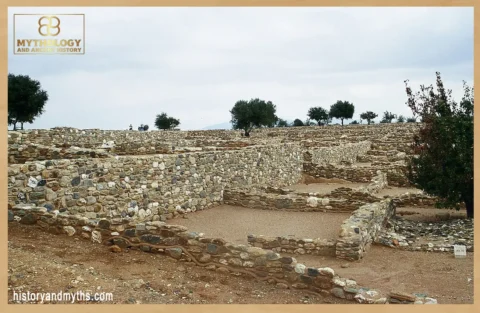
Evidence from sites like Athens and Olynthus shows that this model is not theoretical. Household layouts, storage systems, and work areas all point to the same pattern: a space designed to support coordinated activity under centralized control.
| Element | Function | System Role |
|---|---|---|
| Male Head | Decision-making authority | Controls property, marriage, and external relations |
| Women | Internal management | Maintain household stability and produce heirs |
| Children | Future roles | Ensure continuity of family line |
| Slaves | Labor force | Support production and daily function |
| Marriage | Alliance and reproduction | Secures inheritance and social ties |
The Authority of the Male Head
Control inside the oikos was concentrated in a single position: the male head of household. This role was not symbolic. It carried legal, economic, and social authority over the people and property within the household.
He decided how resources were used, how property was managed, and how the family would maintain its position over time. That included arranging marriages, determining alliances, and overseeing inheritance. These decisions were not treated as personal choices; they were part of maintaining the continuity of the oikos.
Authority also extended to movement between private and public life. The male head represented the household outside its walls—in legal matters, civic participation, and social interaction. Inside the house, his authority defined the limits within which others operated. Roles were not negotiated. They were set.
This control was reinforced by the structure of the household itself. The separation of spaces, the organization of labor, and the management of access all supported a system where decisions flowed from a central point. The house did not distribute authority; it concentrated it.
In cities like Athens, where legal status and citizenship carried weight, this authority had direct consequences. Only certain members of the household could participate in public life, and that participation depended on the structure maintained inside the home. At sites such as Olynthus, the physical organization of houses reflects the same principle—clear control over access, movement, and function.
The system does not rely on constant enforcement. It relies on clarity. Everyone inside the oikos knows where authority sits and how decisions are made.
That clarity is what allows the structure to hold.
Women’s Position: Managed, Not Equal
Within the oikos, women held a defined but limited position shaped by function rather than status. Their role was essential to the system, but it operated under control rather than independence.
A woman of the household was responsible for managing internal operations—overseeing food preparation, supervising textile production, organizing storage, and directing the labor of enslaved individuals where present. This was not informal work. It required coordination and continuity, especially in households that depended on internal production. The stability of the oikos relied on this management.
At the same time, this role existed within clear limits. Women did not control property in the same way as the male head, nor did they represent the household in legal or public contexts. Their authority remained internal. It was real in practice, but bounded by the structure that defined the household.
Marriage reinforced this position. A woman entered a new oikos through marriage, and her primary function became the production of legitimate heirs. This was not treated as a personal matter. It was tied directly to inheritance, property continuity, and the preservation of the family line.
Control was maintained not only through social expectations but through the organization of space and interaction. Visibility was regulated, and contact with outsiders was limited. This did not isolate women completely, but it structured how and when they could be seen. The goal was not exclusion for its own sake, but protection of the household’s integrity as defined by its social norms.
In urban contexts such as Athens, these boundaries were closely tied to ideas of reputation and legitimacy. Across different sites, including Olynthus, the pattern remains consistent: women operate at the center of the household’s internal function, but without control over its external identity.
Children: Continuity Before Individual Choice
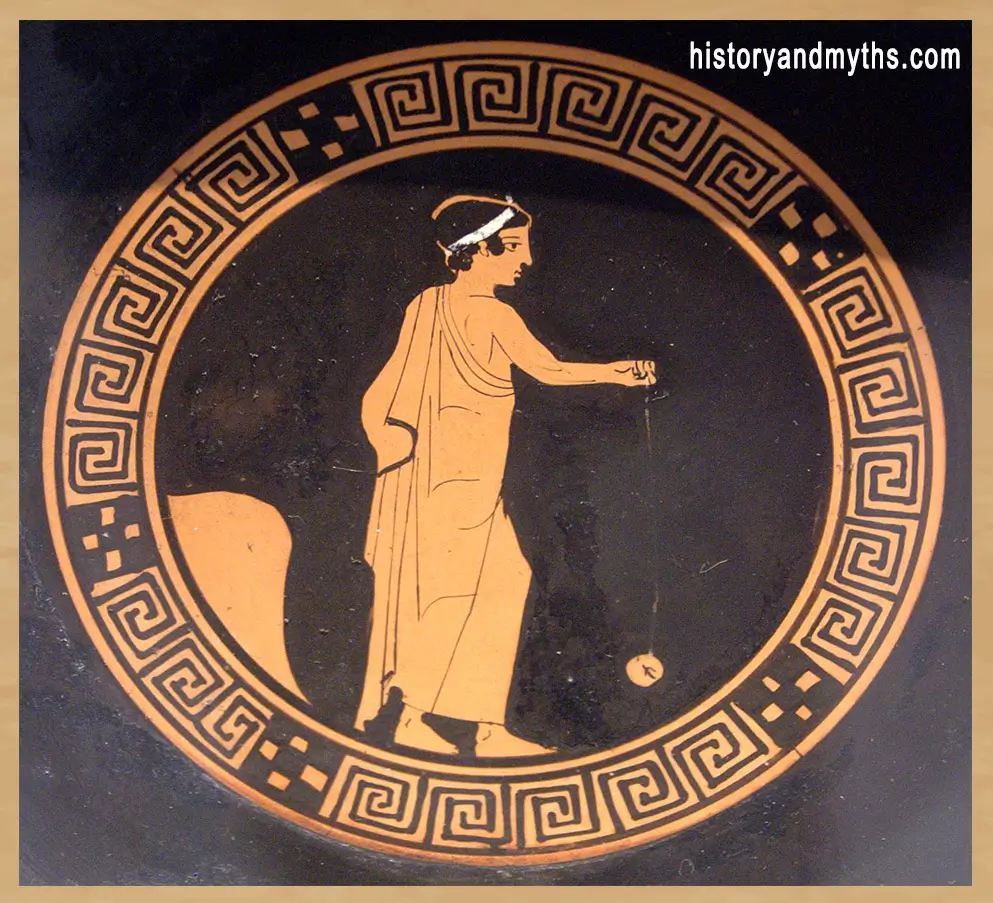
Children in the Greek oikos were defined by what they would become, not by what they were at the moment. Their place in the family was tied to continuity—of name, property, and status—rather than personal development as an independent goal.
From early on, upbringing was directed toward function. Boys were prepared to step into the public-facing role of the household: managing property, representing the family, and continuing the male line. Girls were prepared for integration into another oikos through marriage, where their role would repeat the same internal structure—management of the household and production of heirs. The direction was set early, and it did not change.
This focus explains why legitimacy mattered. Not every child had the same position. Only those recognized as legitimate heirs could carry the line forward and inherit property. The distinction was not abstract. It determined access to resources, status, and future authority. The family structure depends on this clarity to function without dispute.
Education, where it existed, followed the same logic. It was not aimed at individual expression but at preparing the child to fit the role expected of them. Skills, behavior, and discipline were all oriented toward maintaining the stability of the oikos. Even in cities like Athens, where formal education had a stronger presence, the end goal remained aligned with family continuity.
The treatment of children reflects the priorities of the system as a whole. The household does not organize itself around the needs of the child. It organizes the child around the needs of the household.
Slaves Inside the Family System
The oikos did not operate on free labor alone. Enslaved individuals were integrated into the household as a working layer that supported its daily function. They were not outside the system; they were built into it.
Their roles were practical and continuous. Inside the house, they handled routine tasks—food preparation, cleaning, childcare, and assistance in textile production. In larger households, they could also be assigned to more specialized duties depending on skill. What matters is that their labor was not occasional support; it was part of how the household sustained itself.
This integration changes how the family structure works. The internal management carried out by the woman of the house often involved directing this labor. The economic output of the oikos—especially in areas like textile production and storage—depended on coordinated work, not individual effort. The presence of enslaved workers allowed the household to expand what it could produce and maintain.
At the same time, their position remained controlled. They did not participate in decision-making, and their movement and roles were defined by the structure of the household. They could move across different spaces, often more freely than other members, but always within a framework set by authority. Their access does not equal autonomy.
Evidence from domestic sites in Athens and Olynthus shows that work areas, tools, and living arrangements were organized to support this layered system. The house is not divided only by family roles; it is also structured around labor.
Marriage as a Strategic Tool
Marriage in the Greek oikos was not organized around personal choice. It was a controlled arrangement designed to secure alliances, regulate inheritance, and produce legitimate heirs. The decision did not belong to the individuals involved. It belonged to the structure of the household.
The primary objective was continuity. A marriage connected two households, but it did not merge them equally. The woman moved into the husband’s oikos, and her role shifted immediately to fit its internal system. What mattered was not compatibility, but stability—ensuring that property, name, and status would pass forward without dispute.
This is why marriages were arranged. The male head of the household determined the match based on practical considerations: family background, economic position, and the potential to reinforce existing ties. The process was less about forming a new unit and more about extending an existing one.
The transfer of a dowry is part of this logic. It was not simply a gift; it functioned as a form of financial arrangement that tied the marriage to property. It provided security within the new household and created a structured link between the two families. At the same time, it reinforced the idea that marriage had economic consequences, not just social ones.
Control continues after the marriage itself. The woman’s position remains defined by the needs of the oikos she has entered. Her primary role is to produce legitimate children and manage internal operations. The structure does not adapt to her; she adapts to it.
In places like Athens, where citizenship and inheritance were tightly connected, marriage carried legal weight. The legitimacy of children, the transmission of property, and the stability of the household all depended on it. Across different contexts, including evidence from Olynthus, the same pattern appears: marriage is embedded in the system, not separate from it.
The ancient Greek family was a structured unit designed to control property, regulate roles, and ensure long-term continuity. Authority was centralized, labor was organized, and every member functioned within a system that prioritized stability over personal choice.
© historyandmyths.com — Educational use
Property and Inheritance: The Real Objective
The structure of the Greek family only becomes fully clear when you look at what it is designed to protect: property and its transfer across generations. Everything else—authority, marriage, roles inside the household—supports this outcome.
Property in the oikos is not just land or wealth. It includes the house, stored goods, tools, and anything that sustains the household’s position. Control over these resources defines the power of the family, and losing that control threatens its continuity. The system is built to prevent that loss.
Inheritance provides the mechanism. It determines how property moves from one generation to the next and ensures that it stays within a recognized line. This is why legitimacy matters so strongly. Only certain heirs can inherit without dispute, and the structure of the family is organized to produce and protect those heirs.
This also explains the emphasis on male succession. Property is expected to pass through a stable line, and that line must be clear. When that clarity is at risk, the system introduces solutions rather than allowing fragmentation. In some cases, inheritance could be structured through arrangements designed to preserve the continuity of the household, even when direct heirs were not available.
The legal and social framework in places like Athens reinforces these rules. Ownership, transfer, and succession are not left to informal agreement. They are structured to maintain order and avoid conflict. Archaeological and historical evidence from sites such as Olynthus reflects the same priority: households are organized around storage, control, and long-term stability.
Social Control: How the Family Maintained Order
The Greek family did not just organize private life. It acted as the first layer of social control, shaping behavior before any formal authority intervened. Order did not begin in the state; it began inside the oikos.
This control works through structure rather than constant enforcement. Roles are clearly defined, expectations are stable, and deviation carries consequences that affect the entire household. Because identity, property, and reputation are tied together, individual behavior is not treated as isolated. It reflects on the family as a whole.
Reputation plays a central role in this system. In a society where public standing matters, the household becomes responsible for maintaining a consistent image. That image depends on internal discipline—how members act, how relationships are managed, and how boundaries are respected. The family does not simply react to social pressure; it anticipates it and adjusts behavior accordingly.
This is why control inside the household is strict but often indirect. The structure limits options before action is taken. Movement, interaction, and decision-making are guided by established patterns. Members do not need constant supervision because the system defines what is acceptable in advance.
The connection to the wider community reinforces this. In cities like Athens, participation in public life depends on the stability of the household. A family that fails to maintain order internally risks losing status externally. The boundary between private and public is not a separation; it is a link. What happens inside the oikos affects how it is recognized outside it.
Evidence from settlements such as Olynthus supports this interpretation. The organization of space, the distribution of work, and the control of access all point to a system designed to regulate behavior without relying on external enforcement.
The result is a form of control that is embedded rather than imposed. The family does not just follow social rules—it produces them at the smallest scale.
That is why the structure holds.
Daily Function: How the Family Operated in Practice
The structure of the Greek family becomes clear when you follow how decisions and tasks moved through it during a normal day. Authority does not appear occasionally—it directs routine.
Decisions start at the top and move downward. The male head determines external matters—property, agreements, and interactions beyond the house. These choices set the framework for everything that happens inside. Internal management then takes over, translating those decisions into daily activity. Work is assigned, resources are used, and tasks are coordinated without constant negotiation.
Labor is distributed according to role, not preference. Some members remain tied to internal production and maintenance, others handle tasks that connect the household to the outside. The system does not rely on flexibility; it relies on predictability. Each person operates within a known range, and that consistency keeps the household functioning without interruption.
Interaction between roles is structured rather than equal. Instructions move in one direction, while work moves in another. This creates a steady flow where decisions and execution remain aligned. The household does not need to pause and reorganize itself because its structure already defines how activity should proceed.
When external interaction occurs—trade, visits, or legal matters—the same pattern holds. The household engages with the outside through controlled points, and internal operations adjust without losing structure. What changes is the context, not the system.
Across different settings, including urban environments like Athens and more regularly planned sites such as Olynthus, the same functional pattern appears. The scale may vary, but the flow remains consistent.
What this shows is not complexity, but stability. The Greek family operates as a coordinated unit where roles, decisions, and labor are aligned by design.
A System Built to Last
The Greek family was not held together by emotion or personal choice. It was structured to manage authority, organize labor, and protect property across generations. Every role inside it—male authority, female management, children as heirs, enslaved labor—served that purpose.
What gives the system its strength is consistency. The same logic appears in the house, in marriage, in inheritance, and in daily function. It does not depend on individual decisions to survive. It depends on a structure that defines those decisions in advance.
This is why the family stands at the center of Greek society. It does not just reflect social order—it produces it, maintains it, and passes it forward.
- The Greek family (oikos) functioned as a unit of power and production.
- Authority was concentrated in the male head of household.
- Women managed internal operations but lacked external control.
- Children were raised to maintain continuity, not personal independence.
- Slaves were integrated into the household’s economic system.
- Marriage and inheritance were tools to preserve property and status.
Frequently Asked Questions
What was the Greek family structure?
It was a hierarchical system centered on the oikos, where authority, labor, and inheritance were tightly controlled.
Who had the most power in a Greek family?
The male head of household held legal and economic authority over the family.
What role did women play in Greek families?
Women managed internal household operations and ensured the birth of legitimate heirs.
Were children important in Greek families?
Yes, children were essential for maintaining the family line and inheriting property.
Did slaves live inside Greek households?
Yes, enslaved individuals were part of the household and supported its daily work.
Why was marriage important in ancient Greece?
Marriage secured alliances, inheritance, and the continuation of the family.
Sources & Rights
- Nevett, Lisa C. House and Society in the Ancient Greek World. Cambridge University Press, 1999.
- Pomeroy, Sarah B. Goddesses, Whores, Wives, and Slaves. Schocken Books, 1975.
- Foxhall, Lin. “Household, Gender and Property in Classical Athens.” The Classical Quarterly, 1989.
- Jameson, Michael H. “Private Space and the Greek City.” Oxford University Press, 1990.
- Cahill, Nicholas. Household and City Organization at Olynthus. Yale University Press, 2002.
- Garland, Robert. Daily Life of the Ancient Greeks. Greenwood Press, 1998.
- Cartledge, Paul. Ancient Greece: A History in Eleven Cities. Oxford University Press, 2009.
- Osborne, Robin. Greece in the Making. Routledge, 1996.
- Morris, Ian. Archaeology as Cultural History. Blackwell, 2000.
- Whitley, James. The Archaeology of Ancient Greece. Cambridge University Press, 2001.
- Hansen, Mogens. The Athenian Democracy. Blackwell, 1991.
- Allison, Penelope. The Archaeology of Household Activities. Routledge, 1999.
- Ault, Bradley. The Houses at Halieis. Indiana University Press, 2005.
- Golden, Mark. Children and Childhood in Classical Athens. Johns Hopkins University Press, 1990.
- Just, Roger. Women in Athenian Law and Life. Routledge, 1989.
- MacDowell, Douglas. The Law in Classical Athens. Cornell University Press, 1978.
- Sealey, Raphael. A History of the Greek City States. University of California Press, 1976.
- Finley, Moses I. The Ancient Economy. University of California Press, 1999.
- Humphreys, Sally C. The Family, Women and Death. Routledge, 1983.
- Cohen, David. Law, Violence and Community in Classical Athens. Cambridge University Press, 1995.
Written by H. Moses — All rights reserved © Mythology and History