Ancient Greek Social Structure: Who Had Power, Rights, and Status
Greek society was not simply divided into social classes—it was organized to control who could participate in public life and who could not. Status determined more than wealth or position. It determined access: who could speak, vote, own property freely, or take part in decision-making.
So how was this structure built? At the center were citizens, the only group with full political rights. Around them were non-citizens who lived and worked within the system but had limited access. Beyond that were slaves, who supported the economy but remained outside participation entirely. Women occupied a different position again—integral to the household and social order, yet excluded from formal political roles.
This arrangement was not accidental. It allowed the system to function by assigning clear roles and boundaries. Each group had a defined place, and the stability of the society depended on those divisions being maintained.
The key point is that Greek social structure worked as a framework for distributing power and participation, not just as a hierarchy of status. Understanding it means looking at who was included, who was excluded, and how those limits shaped everyday life.
| Group | Access Level | Function |
|---|---|---|
| Citizens | Full participation | Decision-making and governance |
| Non-Citizens (Metics) | Limited access | Economic activity and trade |
| Slaves | No participation | Labor and production |
| Women | Restricted participation | Household management and continuity |
| Public System | Controlled access | Maintain stability and order |
What Greek Social Structure Actually Was
Greek social structure was not a loose hierarchy. It was a system that defined access to participation—who could act in public, who could influence decisions, and who could not.
The key is function. Each group in society was placed according to what it was allowed to do within the system, not just its status. Being at the top did not only mean higher standing; it meant direct access to political and legal processes. Being outside that position meant operating with limits, regardless of wealth or skill.
This made the structure visible in practice. You could see it in who spoke in assemblies, who appeared in courts, who owned land without restriction, and who required a sponsor to operate. These were not abstract distinctions. They were rules that shaped daily interaction.
The system also separated roles clearly. Participation was concentrated in a defined group, while economic and supportive functions were distributed more widely. This allowed the society to maintain control over decision-making while still functioning economically.
Another important feature is stability. The structure did not depend on constant enforcement. It was maintained through repeated patterns—people acting within known limits and others recognizing those limits. Over time, this created a self-sustaining framework.
In practice, Greek social structure functioned as a controlled system of access, determining who could participate in public life and how each group operated within that boundary.
Citizens (Core of the System)
Citizens formed the operational core of Greek society. They were the only group with full access to public life—able to speak in assemblies, vote on decisions, and participate in legal processes without restriction. This access is what defined their position, not just their status.
The key point is exclusivity. Citizenship was limited, usually to adult males born to citizen families. This restriction kept the decision-making group small and controlled, which made direct participation possible. Without that limit, the system would not function the same way.
Rights came with responsibilities. Citizens were expected to engage actively—to attend assemblies, serve in juries, and take part in collective decisions. Participation was not optional in principle; it was part of maintaining the system itself.
Economic position did not replace political access. A non-citizen could be wealthy and still lack the ability to participate in decision-making. A citizen with fewer resources still retained full political standing. This shows that the structure was organized around access, not wealth alone.
Recognition was immediate. In public settings, it was clear who had the right to speak and act. The system did not require constant verification because roles were already known and enforced through practice.
In practice, citizens were the decision-making group, holding direct control over political and legal processes within the social structure.
Non-Citizens (Limited Access)
Non-citizens lived inside Greek cities and kept the economy moving, but they operated with defined limits on participation. They could work, trade, and build wealth, yet they did not have the same access to political and legal processes as citizens.
The most important group here were resident foreigners—often called metics in places like Athens. They were essential to economic life. Many were skilled craftsmen, merchants, or professionals. The system depended on them to expand production and trade beyond what the citizen body alone could sustain.
Despite that, their position was conditional. They usually needed a local sponsor to operate formally, paid specific taxes, and could not participate in assemblies or vote on decisions. Access was functional, not political. They contributed to the system but did not shape its direction.
Legal standing also differed. Non-citizens could engage with the legal system, but often through mediated or restricted channels, not with the same independence as citizens. This reinforced the boundary without removing their role entirely.
The structure here is deliberate. By allowing economic participation while restricting political access, the system maintained control over decision-making while still benefiting from a broader population.
- Greek society controlled participation through defined roles
- Citizens held decision-making power
- Non-citizens supported economic activity without political access
- Slaves operated outside participation but sustained the system
- Women maintained social continuity within structured limits
© historyandmyths.com — Educational use
Slaves (Outside the System)
Slaves operated outside the framework of participation. They were integrated into the economy, but not into public life. They did not speak in assemblies, appear as independent actors in legal processes, or hold recognized political status.
Their role was functional. They supported households, workshops, agriculture, and administrative tasks. This labor made it possible for citizens to spend time in public activities—debate, decision-making, and legal work. The system relied on this separation.
Control was direct. Unlike non-citizens, who had limited but recognized standing, slaves were treated as dependent units within the structure, not participants in it. Their position was defined by use, not by rights or access.
This created a clear boundary. There was no gradual entry from this position into full participation. Movement out of it, when it occurred, required a change in status, not just behavior. Until then, access to public roles remained closed.
Another effect is concentration. By placing labor-intensive functions outside the citizen body, the system kept the decision-making group smaller and more focused, which supported the mechanics of direct participation.
Women and Social Position
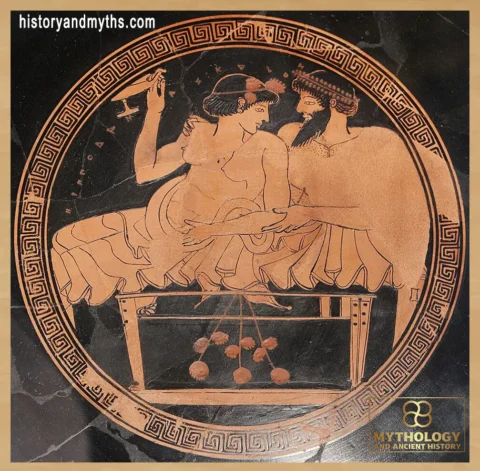
Women were part of the social structure, but their position was defined by restricted access to public participation. They were recognized within the system, yet excluded from its decision-making processes.
The key point is separation of roles. Women operated primarily within the household and family structure, which was essential for maintaining continuity—property, lineage, and daily management. This was not a marginal role; it was foundational for the stability of the system.
At the same time, access to public life was limited. Women did not speak in assemblies, vote, or take part in formal political processes. The boundary here is clear: presence in society did not equal participation in governance.
Legal and economic activity existed but within constraints. Women could be involved in property and household management, yet often through controlled or mediated arrangements rather than independent public action. This maintained their role inside the structure without extending full access.
There was also a public dimension through ritual. Women participated in religious activities and ceremonies, which were visible and structured. This shows that exclusion was specific to political participation, not total absence from public space.
Social Roles and Daily Function
The structure becomes clear when you look at who does what every day. Each group had a defined role, and those roles were arranged so the system could run without friction.
Citizens handled public functions—debate, voting, jury service, oversight. Their time was directed toward decision-making and governance. Non-citizens concentrated on economic activity—trade, crafts, services—providing the flow of goods and skills the cities depended on. Slaves carried out labor that required continuity and scale—household work, workshops, agriculture—keeping production stable. Women managed the household domain—property within the oikos, storage, distribution, and family continuity—ensuring daily operations didn’t break.
Coordination came from separation. Tasks did not overlap randomly. Each role had a clear scope, which reduced conflict and kept responsibilities predictable. When a public decision was needed, the group responsible was already defined. When economic or domestic tasks were required, other groups covered them.
Dependence tied it together. Public activity depended on the time freed by labor outside it. Economic activity depended on access to markets and protection shaped by public decisions. Household management supported both by maintaining resources and continuity. No single role was sufficient on its own; the system worked because the roles were interlocked.
Adjustment happened within limits. Individuals could change wealth or occupation, but the boundaries of access—who could decide, who could only contribute—remained stable. That stability is what kept daily function consistent.
Structure and Power Distribution
Power in Greek society was not spread evenly. It was concentrated where access to participation existed. The structure determined who could influence decisions and who could only operate within them.
Citizens controlled outcomes because they held the mechanisms of decision-making—assemblies, votes, and legal processes. This did not mean all citizens had equal influence, but it meant they all operated inside the same decision framework. Access came first; influence varied within it.
Non-citizens contributed to the system without shaping it. Their economic role gave them importance, but not control. They could affect outcomes indirectly—through trade, resources, and expertise—but final authority remained elsewhere.
Slaves had no role in power distribution. Their function supported the system materially, but they had no access to influence. This kept the decision-making group insulated from the demands of those outside it.
Women occupied a parallel position. They were central to household stability and continuity, yet excluded from formal power structures. Their influence existed within defined domains, not within public decision processes.
The result is a layered model. Power flows from the center—those with access—outward to groups with decreasing levels of participation. The boundaries between these layers are what maintain control over decisions.
Social Structure as a System (Not Just Hierarchy)
Greek social structure only becomes clear when you stop treating it as a list of groups and see it as a system that controls access, roles, and outcomes. Each layer—citizens, non-citizens, slaves, women—was positioned based on what it could do within that system.
The system held because its parts were aligned. Decision-making was concentrated in a defined group. Economic activity was distributed to those allowed to operate in it. Labor and household management supported both. These functions did not compete; they reinforced each other.
Another key feature is predictability. Roles were known in advance, and interactions followed expected patterns. This reduced uncertainty. People did not need to negotiate access every time—they already knew where they stood and what they could do.
Control was maintained without constant intervention. Boundaries were enforced through practice—who speaks, who votes, who appears in court, who does not. Repetition made the system self-sustaining.
At the same time, the structure was not purely rigid. Movement could happen within limits—changes in wealth, occupation, or circumstance—but the core rule remained: access to participation defined position. That rule kept the system stable.
- Greek social structure was based on access, not just status
- Citizens formed the core decision-making group
- Non-citizens contributed economically but lacked political rights
- Slaves supported the system without participation
- Women played essential roles within limited public access
- Roles were clearly defined and reinforced through daily practice
- The system controlled power by controlling participation
Frequently Asked Questions
What was Greek social structure?
It was a system that defined roles and controlled access to participation.
Who were Greek citizens?
Adult male members of the city with full political rights.
What were metics?
Resident foreigners who worked and lived in cities but lacked political rights.
Did slaves have rights?
No. They were excluded from participation and decision-making.
What was the role of women?
They managed households and maintained social continuity.
Was wealth equal to power?
No. Political power depended on citizenship, not wealth alone.
Why was the structure important?
It maintained order by controlling who could participate in society.
Sources & Rights
- Hansen, Mogens Herman. The Athenian Democracy in the Age of Demosthenes. Norman: University of Oklahoma Press, 1991.
- Cartledge, Paul. Ancient Greece: A Very Short Introduction. Oxford: Oxford University Press, 2011.
- Ober, Josiah. Mass and Elite in Democratic Athens. Princeton: Princeton University Press, 1989.
- Osborne, Robin. Greece in the Making: 1200–479 BC. London: Routledge, 1996.
- Finley, M. I. The Ancient Economy. Berkeley: University of California Press, 1999.
- Finley, M. I. Ancient Slavery and Modern Ideology. Princeton: Princeton University Press, 1980.
- Pomeroy, Sarah B. Goddesses, Whores, Wives, and Slaves: Women in Classical Antiquity. New York: Schocken Books, 1975.
- Foxhall, Lin. Studying Gender in Classical Antiquity. Cambridge: Cambridge University Press, 2013.
- Hodkinson, Stephen. Property and Wealth in Classical Sparta. London: Duckworth, 2000.
- Garnsey, Peter. Ideas of Slavery from Aristotle to Augustine. Cambridge: Cambridge University Press, 1996.
- Cohen, Edward E. The Athenian Nation. Princeton: Princeton University Press, 2000.
- Rhodes, P. J. A History of the Classical Greek World. Oxford: Wiley-Blackwell, 2005.
- Jones, Nicholas F. Public Organization in Ancient Greece. Philadelphia: American Philosophical Society, 1987.
- Aristotle. Politics. Translated by H. Rackham. Cambridge, MA: Harvard University Press, 1932.
- Thucydides. History of the Peloponnesian War. Translated by Rex Warner. London: Penguin Books, 1972.
- Herodotus. The Histories. Translated by Aubrey de Sélincourt. London: Penguin Books, 2003.
- Hornblower, Simon, and Antony Spawforth, eds. The Oxford Classical Dictionary. 4th ed. Oxford: Oxford University Press, 2012.
- Burkert, Walter. Greek Religion. Cambridge, MA: Harvard University Press, 1985.
- MacDowell, Douglas M. The Law in Classical Athens. Ithaca: Cornell University Press, 1978.
- Davies, J. K. Wealth and the Power of Wealth in Classical Athens. New York: Arno Press, 1981.
Written by H. Moses — All rights reserved © Mythology and History