Greek City-States: How the Polis Shaped Ancient Greece
Ancient Greece was never a single unified country. Instead, it was a network of independent political communities known as city-states, or poleis. Each of these city-states functioned as a small, self-governing world with its own laws, army, economy, and identity. Cities such as Athens and Sparta were not provinces of a larger nation but fully independent states that controlled both an urban center and the surrounding farmland.
The Greek term polis referred to more than a city. It described a political community of citizens who shared institutions, religious traditions, and public spaces such as the agora, where political debate and economic exchange took place. By the seventh and sixth centuries BCE, hundreds of such city-states existed across the Greek mainland and the Aegean world, each developing its own system of government—from democracy in Athens to the militarized society of Sparta. This decentralized structure became the foundation of Greek political life and shaped the rivalries, alliances, and cultural achievements that defined Greek civilization.
What Was a Greek City-State?
A Greek city-state, known in Greek as a polis, was a small independent political community that combined a city, its nearby villages, and the surrounding agricultural land into a single self-governing state. Unlike later nations with centralized governments, ancient Greece was divided into hundreds of these separate political units. Each polis had its own laws, military forces, religious traditions, and political institutions, functioning in practice as a complete state rather than a municipal city within a larger country.
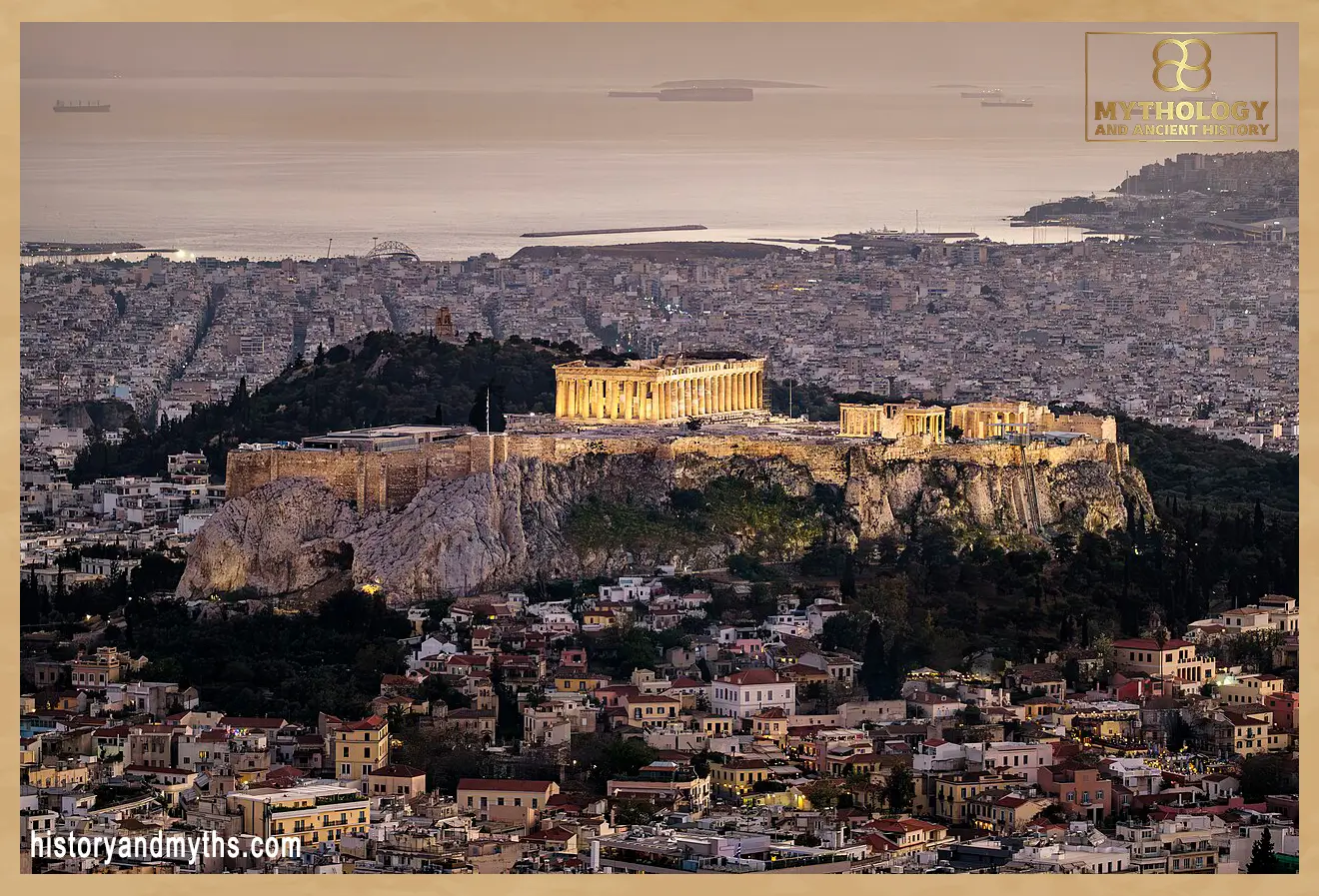
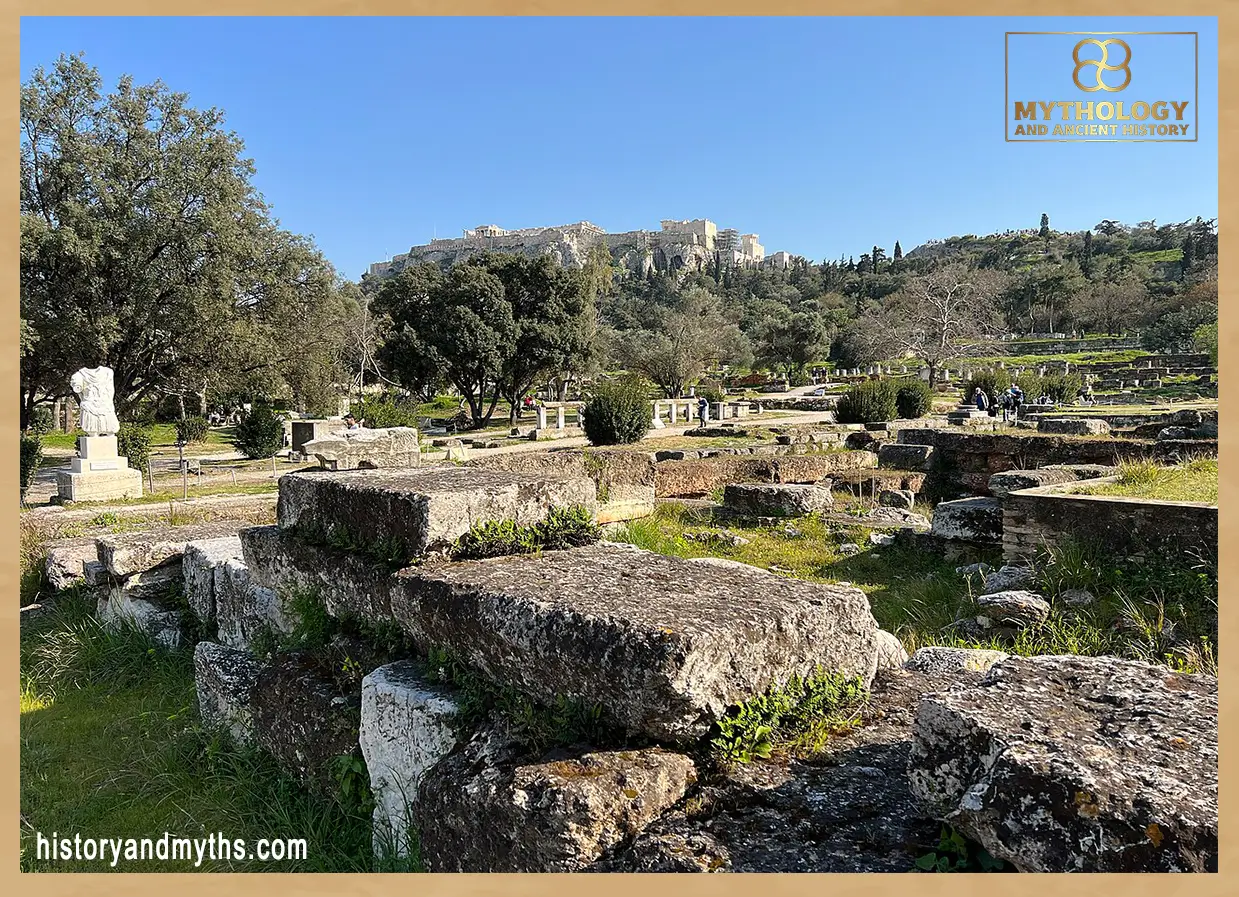
The physical center of a polis usually consisted of several key spaces that structured public life. The acropolis, typically built on high ground, served as a fortified religious center where temples and important sanctuaries stood. Below it lay the agora, an open public square used for markets, civic gatherings, and political debate. Surrounding the urban core were farmlands and rural settlements that supplied food and manpower to the community. Together these elements formed a compact political and social unit in which citizenship, land, religion, and military service were closely connected.
Most poleis were relatively small. Many had populations of only a few thousand citizens, though larger ones such as Athens controlled wider territories and larger populations. Despite their size, these communities were fiercely independent and rarely submitted to outside authority. This fragmentation was not accidental but became the defining political structure of the Greek world.
Greek City-States at a Glance
| Feature | Description |
|---|---|
| Political Unit | Independent state consisting of a city and surrounding countryside |
| Greek Term | Polis (plural: poleis) |
| Population | Often a few thousand citizens, sometimes larger in major cities |
| Main Public Spaces | Acropolis (religious center) and Agora (market and civic space) |
| Economy | Agriculture, trade, crafts, and maritime exchange |
| Political Systems | Varied: democracy, oligarchy, monarchy, and tyranny |
| Famous Examples | Athens, Sparta, Corinth, Thebes |
| Historical Period | Especially prominent from the 8th to 4th centuries BCE |
Why Did Greece Develop City-States Instead of One Kingdom?
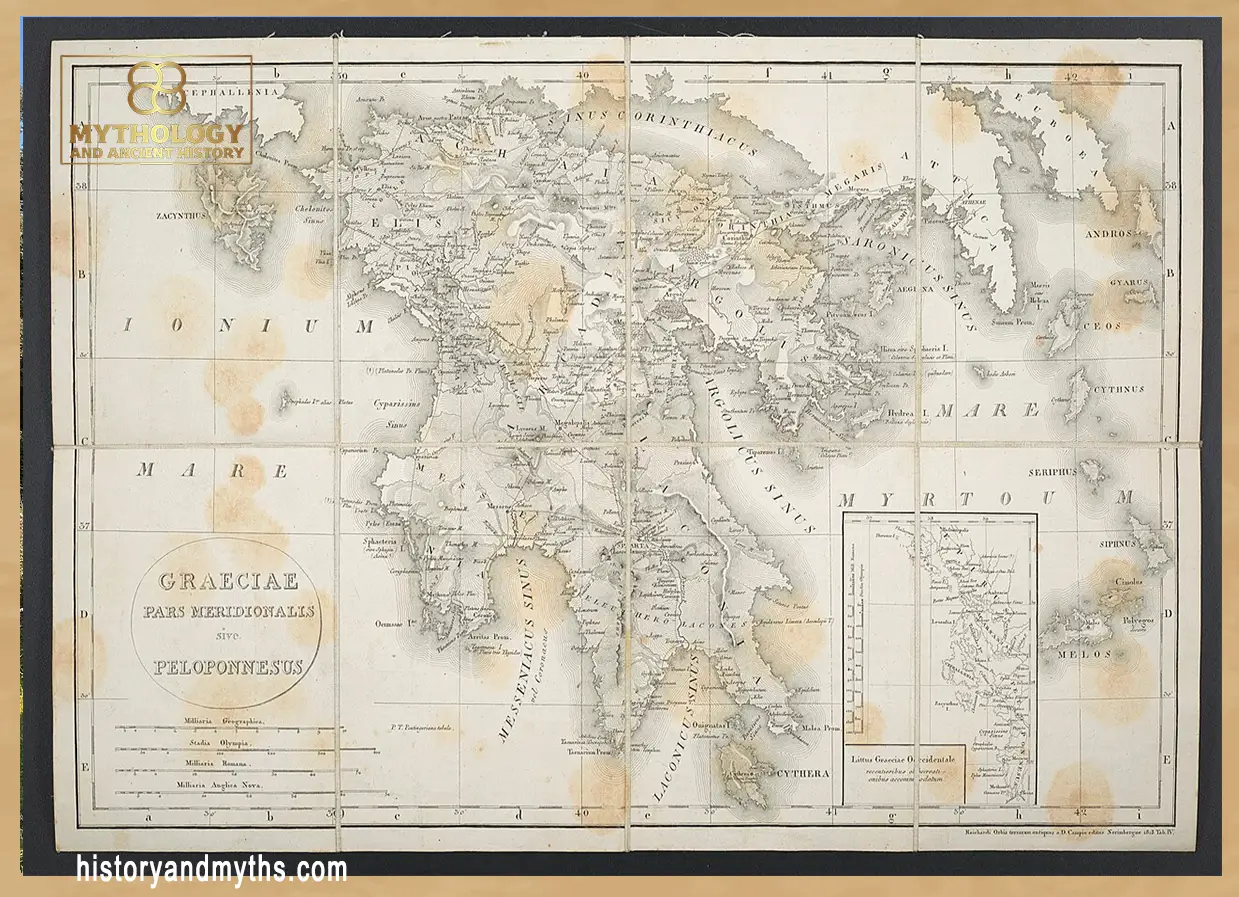
The political fragmentation of ancient Greece was not simply the result of rivalry or cultural difference. It was largely shaped by geography. The Greek mainland is dominated by mountains, narrow valleys, and a deeply indented coastline filled with bays and islands. These natural barriers made large-scale political unification difficult. Communities often developed in isolated pockets of fertile land separated by rugged terrain, and over time each settlement evolved into its own political community.
Because travel across mountains was slow and communication between regions was limited, local communities had strong incentives to organize and govern themselves independently. Instead of forming a single centralized kingdom, Greek society developed as a mosaic of small autonomous states. Each community controlled its surrounding farmland, defended its territory, and created its own political institutions. The result was a landscape filled with independent poleis such as Athens, Sparta, and Corinth, each pursuing its own interests.
This structure also encouraged competition. Because no single power dominated the entire region, city-states constantly interacted through trade, alliances, diplomacy, and war. Rivalry between poleis pushed communities to strengthen their institutions, armies, and economies. In this sense, the fragmented political geography of Greece did not weaken Greek civilization; it helped shape the intense political and cultural dynamism for which it later became known.
The Structure of a Greek Polis
Although Greek city-states differed in size and political organization, most of them shared a similar physical and institutional structure. The polis was not just an urban settlement; it was an integrated political landscape that connected civic space, religious centers, and agricultural territory. This arrangement allowed a relatively small population to sustain an independent political community.
At the center of the city stood the acropolis, usually built on elevated ground. This fortified area functioned primarily as a religious and symbolic center, containing temples and sacred spaces dedicated to the city’s patron deities. In times of crisis it could also serve as a defensive refuge for the population.
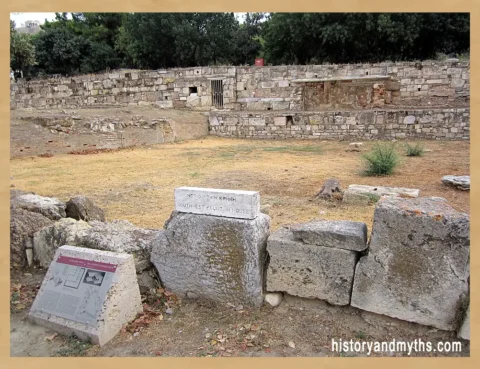
Below the acropolis lay the agora, the civic heart of daily life. The agora functioned simultaneously as a marketplace, political meeting space, and social gathering point. Public announcements, legal proceedings, and debates among citizens took place here, making it the central arena of civic participation.
Beyond the urban core stretched the surrounding countryside known as the chora. These agricultural lands were essential to the survival of the polis, providing grain, olives, wine, and livestock. Rural villages and farms formed part of the same political community as the city itself, and citizens often owned or worked land within this territory. Together, the acropolis, agora, and chora created a compact but self-sufficient system that defined how the Greek city-state functioned.
Citizenship and Political Identity in the Polis
Citizenship was the defining principle of political life in a Greek city-state. A polis was not simply a place where people lived; it was a community of citizens who shared legal rights, political responsibilities, and collective obligations. Participation in public life—voting, debating policy, serving in the army, and holding office—was limited to those recognized as citizens.
In most city-states, citizenship was restricted to adult men born to citizen families. Women, resident foreigners, and enslaved people lived within the territory of the polis but did not participate directly in its political institutions. As a result, the political community was relatively small, allowing citizens to gather in assemblies, debate decisions, and influence policy in ways that would have been impossible in larger states.
This system also shaped personal identity. People in the ancient Greek world usually identified themselves by their city-state rather than by a broader national identity. A man would describe himself as a citizen of Athens or Sparta, not simply as “Greek.” Loyalty to the polis defined political allegiance, military duty, and social belonging within the Greek world.
Key Characteristics of Greek City-States
- Each polis functioned as an independent political community.
- The city-state included both an urban center and surrounding farmland.
- Citizens participated directly in political decisions and public life.
- Different city-states developed different systems of government.
- Competition between poleis shaped Greek warfare and diplomacy.
- Colonization spread the polis model across the Mediterranean.
- The polis became the core framework of Greek political and cultural life.
© historyandmyths.com — Educational use
Different Systems of Government Among Greek City-States
Greek city-states did not share a single political model. Although they were built on the same basic structure of the polis, each community developed its own system of government shaped by local traditions, social tensions, and historical circumstances. As a result, the Greek world became a landscape of varied political experiments rather than a uniform state system.
Some city-states were ruled by kings in their early history, while others evolved into oligarchies in which power was held by a small group of aristocratic families. In several poleis, periods of political instability produced tyrants—leaders who seized power outside traditional structures but often governed with the support of popular groups seeking protection from aristocratic dominance.
The most famous political system emerged in Athens, where citizens gradually developed a form of direct democracy that allowed eligible citizens to participate in public decision-making through assemblies and councils. In contrast, Sparta maintained a highly structured mixed system combining kingship, oligarchic councils, and a citizen assembly within a strongly militarized society.
This diversity of political forms meant that the Greek world functioned as a laboratory of governance. Different communities experimented with institutions, laws, and power structures, shaping political ideas that would later influence broader debates about citizenship, authority, and the organization of the state.
Rivalry and Competition Between City-States
Independence meant that Greek city-states rarely acted as a unified political bloc. Each polis pursued its own interests, guarded its autonomy, and competed with neighboring communities for influence, resources, and security. Alliances could form when external threats appeared, but cooperation was usually temporary. Rivalry remained a constant feature of Greek political life.
Competition took several forms. Economic rivalry emerged as cities expanded trade networks across the Aegean and Mediterranean. Political competition developed as different poleis promoted their own systems of government and attempted to lead regional alliances. Military conflict also occurred frequently, as city-states fought to control territory, trade routes, or strategic locations.
The most famous example of this rivalry occurred between Athens and Sparta. Their contrasting political systems and competing alliances eventually led to the Peloponnesian War in the fifth century BCE, a prolonged conflict that reshaped the balance of power across the Greek world.
This environment of competition influenced nearly every aspect of Greek civilization. Military organization, political institutions, diplomacy, and even cultural achievements developed within a landscape where city-states constantly measured themselves against one another.
Continue Reading
Greek Colonization and the Spread of City-States
From the eighth to the sixth centuries BCE, many Greek communities began establishing new settlements far beyond the mainland. Population growth, pressure on agricultural land, and the search for trade opportunities encouraged groups of citizens to leave their home cities and found colonies across the Mediterranean and the Black Sea. These settlements were not simply trading posts; they were new city-states organized on the same political model as the polis.
A typical colony was founded by settlers who maintained religious and cultural ties with their original city but governed themselves independently. Once established, the colony developed its own institutions, laws, and economic networks. Greek colonies appeared along the coasts of southern Italy, Sicily, North Africa, and parts of Asia Minor, creating a wide network of Greek-speaking communities connected through commerce and shared cultural traditions.
This process significantly expanded the influence of the Greek world. Trade routes multiplied, cultural ideas circulated more widely, and contact with other civilizations increased. Colonization also reinforced the city-state model itself. Even when Greeks settled in distant regions, they continued to organize their communities according to the familiar structure of the polis.
Why the Polis Became the Foundation of Greek Civilization
The city-state was not just a political arrangement; it became the framework through which Greek society organized nearly every aspect of collective life. Political participation, military service, religious festivals, and economic activity were all structured around the institutions of the polis. Because communities were relatively small, citizens could take part directly in public decisions and civic responsibilities, creating a strong connection between individual identity and political life.
This structure also shaped the cultural development of the Greek world. Public spaces within the city-state—assemblies, theaters, sanctuaries, and marketplaces—served as arenas where ideas, artistic expression, and political debate could flourish. Philosophical discussion, dramatic performances, and civic rituals were embedded in the daily life of the polis rather than separated from it.
Even when the Greek world expanded through trade and colonization, the basic model remained the same. New settlements reproduced the institutional patterns of the city-state, reinforcing the polis as the central unit of Greek civilization. For centuries, this system defined how Greeks governed themselves, interacted with neighboring communities, and understood their place within the wider Mediterranean world.
Key Takeaways
- Ancient Greece was organized as a network of independent city-states known as poleis.
- Geography played a major role in preventing political unification.
- The polis combined urban space, farmland, and political institutions into one system.
- Citizenship defined political participation within each city-state.
- Different poleis experimented with different forms of government.
- Rivalry between city-states shaped much of Greek political history.
- The polis system remained the foundation of Greek civilization for centuries.
Frequently Asked Questions
What was a Greek city-state?
A Greek city-state, or polis, was an independent political community consisting of a city and its surrounding territory.
Why did Greece develop city-states instead of a unified kingdom?
Mountainous geography separated communities and encouraged the development of independent political centers.
What were the most famous Greek city-states?
Athens, Sparta, Corinth, and Thebes were among the most influential city-states in the Greek world.
What was the role of citizens in the polis?
Citizens participated in political assemblies, served in the military, and took part in civic decision-making.
Did all city-states have the same government?
No. Different poleis adopted different systems including democracy, oligarchy, monarchy, and tyranny.
What was the agora in a Greek city-state?
The agora was the central public square used for markets, political meetings, and civic gatherings.
How did colonization affect Greek city-states?
Colonization spread Greek communities and culture across the Mediterranean while preserving the polis structure.
Sources & Rights
- Encyclopaedia Britannica — Ancient Greece.
- Encyclopaedia Britannica — Polis (Ancient Greek City-State).
- World History Encyclopedia — Polis.
- World History Encyclopedia — Greek Government.
- World History Encyclopedia — Greek Colonization.
- Mogens Herman Hansen — Polis: An Introduction to the Ancient Greek City-State.
- Sarah B. Pomeroy — Ancient Greece: A Political, Social, and Cultural History.
- Robin Osborne — Greece in the Making 1200–479 BC.
- Paul Cartledge — Ancient Greece: A History in Eleven Cities.
- Donald Kagan — The Peloponnesian War.
- Victor Davis Hanson — A War Like No Other.
- Ian Morris — Burial and Ancient Society.
- Walter Scheidel — The Cambridge Economic History of the Greco-Roman World.
- Oxford Classical Dictionary.
- Cambridge Ancient History — Volume III.
- Thomas Martin — Ancient Greece: From Prehistoric to Hellenistic Times.
- Peter Green — Alexander of Macedon.
- Josiah Ober — Political Dissent in Democratic Athens.
- Paul Millett — Lending and Borrowing in Ancient Athens.
Written by H. Moses — All rights reserved © Mythology and History