How Ancient Greeks Stored Grain During Food Crises
Ancient Greek cities stored grain to reduce the danger of famine, wartime shortages, and disruptions to maritime trade networks that supplied urban populations with essential food resources. Because many city-states depended heavily on imported grain and unstable harvest conditions, maintaining food reserves became an important strategy for protecting social order and urban survival during periods of crisis.
Grain storage was therefore more than a simple agricultural practice. It formed part of a broader system of emergency preparation connected to trade security, political stability, and the ability of governments to sustain populations during sieges, poor harvests, or interrupted supply routes. Public authorities, merchants, and households all played roles in preserving grain supplies and reducing the risk of severe urban scarcity.
Why Grain Storage Was Essential in Ancient Greece
Grain storage became essential in Ancient Greece because food systems remained vulnerable to poor harvests, war, interrupted trade, and seasonal instability. Many cities could not rely entirely on immediate agricultural production, especially when urban populations depended heavily on imported grain for survival.
Stored grain provided a buffer against sudden disruption by allowing communities to preserve food supplies during periods when normal trade or harvest activity weakened. This reserve capacity became particularly important for cities exposed to naval conflict, siege warfare, or unstable maritime routes.
Storage also reduced the risk of panic and extreme market instability during shortages. Maintaining accessible grain reserves helped governments, merchants, and households manage uncertainty more effectively and improve long-term urban resilience.
How Greeks Stored Grain for Crisis Periods
| Storage Purpose | Role in Greek Food Security |
|---|---|
| Emergency Reserves | Reduced risk during shortages and trade disruption |
| Public Granaries | Supported urban populations during crises |
| Household Storage | Helped families manage seasonal instability |
| Protected Storage Conditions | Reduced spoilage, contamination, and theft |
| Government Oversight | Improved stability during wartime and scarcity |
Where Greeks Stored Grain
Greek communities stored grain in several types of protected spaces designed to preserve food supplies and reduce exposure to moisture, theft, and spoilage. Storage areas could include public granaries, household facilities, commercial storehouses near ports, and secured structures connected to markets or civic administration.
Large urban centers required organized storage systems capable of supporting dense populations during unstable periods. Ports and trading districts often became important locations for storing imported grain before distribution into the city.
Households also maintained private reserves when possible. Smaller-scale storage inside homes allowed families to manage seasonal uncertainty and temporary supply disruptions without relying entirely on daily market availability.
Grain Storage and Urban Survival
Stored grain played a major role in urban survival because large Greek cities required stable food access even when harvests failed or trade routes became unreliable. Reserve supplies helped reduce the immediate danger of hunger during short-term disruptions and gave governments additional time to respond to crises.
Urban populations were especially vulnerable because many residents depended on markets rather than direct agricultural production. Grain reserves therefore supported continuity inside crowded cities where sudden shortages could create rapid social and political pressure.
Storage systems also strengthened resilience during conflict. Cities with access to preserved food supplies could endure periods of siege, delayed shipping, or regional instability more effectively than communities with limited reserves.
Protecting Grain From Spoilage and Theft
Protecting stored grain required careful management because moisture, pests, contamination, and theft could quickly reduce valuable food reserves. Greek storage systems therefore emphasized dry conditions, controlled access, and physical protection of supplies intended for long-term use.
Containers, elevated storage spaces, and sealed facilities helped limit exposure to environmental damage. Maintaining grain quality remained important because spoiled reserves could become useless during periods when replacement supplies were difficult to obtain.
Security also mattered during shortages and wartime instability. Valuable grain reserves attracted theft and illegal trade, leading authorities and merchants to supervise storage areas more closely during periods of increased pressure on food supplies.
Governments and Grain Reserves
Greek governments sometimes supervised grain reserves in order to reduce the danger of severe shortages and stabilize access to food during periods of crisis. Public authorities monitored trade activity, regulated certain grain transactions, and intervened when instability threatened urban supply systems.
Control over reserves allowed cities to respond more effectively to disruptions caused by war, poor harvests, or delayed imports. Access to stored grain could help reduce panic, slow rapid price increases, and support populations during temporary shortages.
Government involvement also reflected the political importance of food security. Maintaining reliable grain supplies became part of broader civic responsibility because prolonged scarcity could threaten public order and weaken confidence in state institutions.
Grain Storage Was Part of Urban Survival
Ancient Greek cities stored grain to reduce the danger of famine, wartime shortages, and disrupted maritime trade. Food reserves became part of a broader system of urban resilience connected to political stability, emergency preparation, and long-term survival.
© historyandmyths.com — Educational use
Grain Storage During War and Siege
War and siege conditions made grain storage especially important because cities could lose access to external food supplies for extended periods. Naval blockades, enemy raids, and interrupted trade routes increased dependence on preserved reserves already stored inside urban centers.
During sieges, stored grain often determined how long a city could continue resisting military pressure before facing severe scarcity. Communities with stronger reserve systems possessed greater ability to endure isolation and maintain internal stability during conflict.
Military insecurity also encouraged preventive storage before crises developed. Cities exposed to regional warfare often treated grain reserves as part of broader defensive preparation rather than as a purely economic concern.
Household Storage vs Public Storage
Grain storage in Ancient Greece operated on both private and public levels because food security depended on cooperation between households, merchants, and civic authorities. Families often maintained personal reserves for seasonal stability, while cities supervised larger supplies intended to support broader urban needs during emergencies.
Household storage provided flexibility for daily survival and short-term disruptions. Families with sufficient resources could preserve grain for periods of unstable prices, delayed harvests, or temporary shortages in local markets.
Public storage served a different purpose by supporting collective stability inside the polis. Civic reserves became more important during war, major trade disruption, or widespread scarcity affecting large urban populations simultaneously.
Why Grain Storage Increased Political Stability
Reliable grain storage helped strengthen political stability because cities with preserved food reserves were better prepared to manage shortages, maintain public order, and reduce panic during periods of crisis. Access to emergency supplies increased confidence that authorities could respond to disruption without immediate collapse of urban food systems.
Storage systems also reduced pressure created by sudden market instability or interrupted imports. Governments capable of stabilizing access to grain possessed greater ability to prevent unrest and maintain civic continuity during uncertain conditions.
In many Greek cities, grain reserves therefore became part of a broader infrastructure of resilience connecting food security to governance, military preparedness, and long-term urban survival.
Grain Storage and Maritime Uncertainty
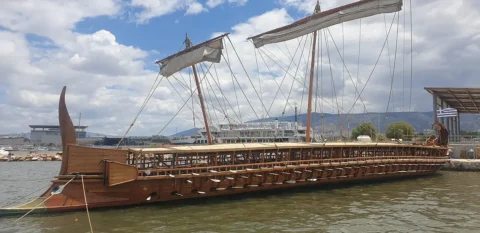
Many Greek cities stored grain partly because maritime trade remained unpredictable and vulnerable to seasonal disruption. Storms, delayed shipping, piracy, and naval conflict could interrupt the arrival of imported grain and create sudden pressure on urban food supplies.
Cities dependent on external imports therefore required reserve systems capable of absorbing temporary interruptions in maritime trade. Stored grain reduced immediate dependence on constant commercial movement and helped stabilize access to food during uncertain conditions at sea.
This relationship between storage and maritime uncertainty became especially important for major port cities whose populations relied heavily on imported resources transported across long-distance trade networks.
Why Food Reserves Meant Urban Survival
Food reserves supported urban survival by allowing Greek cities to maintain population stability during periods when normal supply systems weakened or failed. Dense urban centers required continuous access to grain, making reserve storage essential for preventing rapid collapse during crisis conditions.
Stored grain also provided governments and communities with valuable time to respond to war, disrupted trade, or poor harvests before shortages became catastrophic. Cities with stronger reserve systems possessed greater resilience during periods of uncertainty and regional instability.
For many Greek poleis, food reserves became part of the basic infrastructure necessary to sustain urban life, political continuity, and long-term survival in a highly unstable Mediterranean environment.
Key Takeaways
- Greek cities stored grain to prepare for famine, war, and trade disruption.
- Urban populations depended heavily on stable reserve systems.
- Public granaries and household storage both supported food security.
- Protecting grain from spoilage and theft was essential during crises.
- Governments supervised reserves to reduce instability and public panic.
- Sieges and naval disruption increased the importance of stored grain.
- Food reserves strengthened long-term urban resilience and political continuity.
Frequently Asked Questions
Why did Ancient Greeks store grain?
Greek cities stored grain to prepare for famine, war, disrupted trade routes, and periods of unstable harvests that threatened urban food supplies.
Where was grain stored in Ancient Greece?
Grain could be stored in public granaries, household storage areas, commercial storehouses, and facilities connected to ports or civic administration.
Why was grain storage important for Greek cities?
Stored grain helped cities survive shortages, maintain political stability, and support urban populations during crises.
How did Greek governments manage grain reserves?
Authorities supervised grain trade, monitored reserves, and sometimes intervened to stabilize food supplies during periods of scarcity.
How did wars affect grain storage?
Wars and sieges increased dependence on stored grain because trade routes and agricultural production could be disrupted for long periods.
How did Greeks protect stored grain?
Greek storage systems used dry conditions, sealed containers, protected facilities, and supervision to reduce spoilage and theft.
Did households store grain privately?
Yes. Many households kept private reserves to manage seasonal instability and temporary shortages in local markets.
Why was grain storage connected to political stability?
Reliable reserves helped governments reduce panic, prevent unrest, and maintain urban continuity during food crises.
Sources & Rights
- Garnsey, Peter. Famine and Food Supply in the Graeco-Roman World. Cambridge University Press, 1988.
- Moreno, Alfonso. Feeding the Democracy: The Athenian Grain Supply in the Fifth and Fourth Centuries BC. Oxford University Press, 2007.
- Bresson, Alain. The Making of the Ancient Greek Economy. Princeton University Press, 2016.
- Finley, Moses I. The Ancient Economy. University of California Press, 1999.
- Burford, Alison. Land and Labor in the Greek World. Johns Hopkins University Press, 1993.
- Foxhall, Lin. Olive Cultivation in Ancient Greece. Oxford University Press, 2007.
- Osborne, Robin. Greece in the Making: 1200–479 BC. Routledge, 2009.
- Hansen, Mogens Herman. The Athenian Democracy in the Age of Demosthenes. University of Oklahoma Press, 1999.
- Hornblower, Simon. The Greek World: 479–323 BC. Routledge, 2011.
- Meiggs, Russell. The Athenian Empire. Oxford University Press, 1972.
- Thucydides. History of the Peloponnesian War. Academic translated editions.
- Aristotle. The Athenian Constitution. Academic translated editions.
- Cartledge, Paul. Ancient Greece: A History in Eleven Cities. Oxford University Press, 2009.
- Murray, Oswyn. Early Greece. Harvard University Press, 1993.
- Sealey, Raphael. The Athenian Republic. Pennsylvania State University Press, 1987.
- Rhodes, P. J. The Greek City States: A Source Book. Cambridge University Press, 2007.
- Andreades, A. M. A History of Greek Public Finance. Harvard University Press, 1933.
- Ober, Josiah. The Rise and Fall of Classical Greece. Princeton University Press, 2015.
- Van Wees, Hans. Greek Warfare: Myths and Realities. Duckworth, 2004.
- Davies, John K. Democracy and Classical Greece. Harvard University Press, 1993.
Written by H. Moses — All rights reserved © Mythology and History