Ancient Mesopotamian Fortifications: City Walls and Defense
Fortifications in Mesopotamia were not decorative walls or symbolic boundaries — they were engineered survival systems built in one of the most militarized landscapes of the ancient world. From the early city-states of Sumer to the imperial capitals of Assyria and Babylon, urban defenses determined whether a city endured, surrendered, or vanished.
Unlike later stone fortresses in mountainous regions, Mesopotamian cities stood on open plains, exposed to rival kingdoms, nomadic incursions, and organized siege warfare. In this environment, walls were not optional architecture; they were the thin line between stability and collapse. Understanding Mesopotamian fortifications means examining not only bricks and gates, but military logic, engineering adaptation, and the constant pressure of war that shaped them.
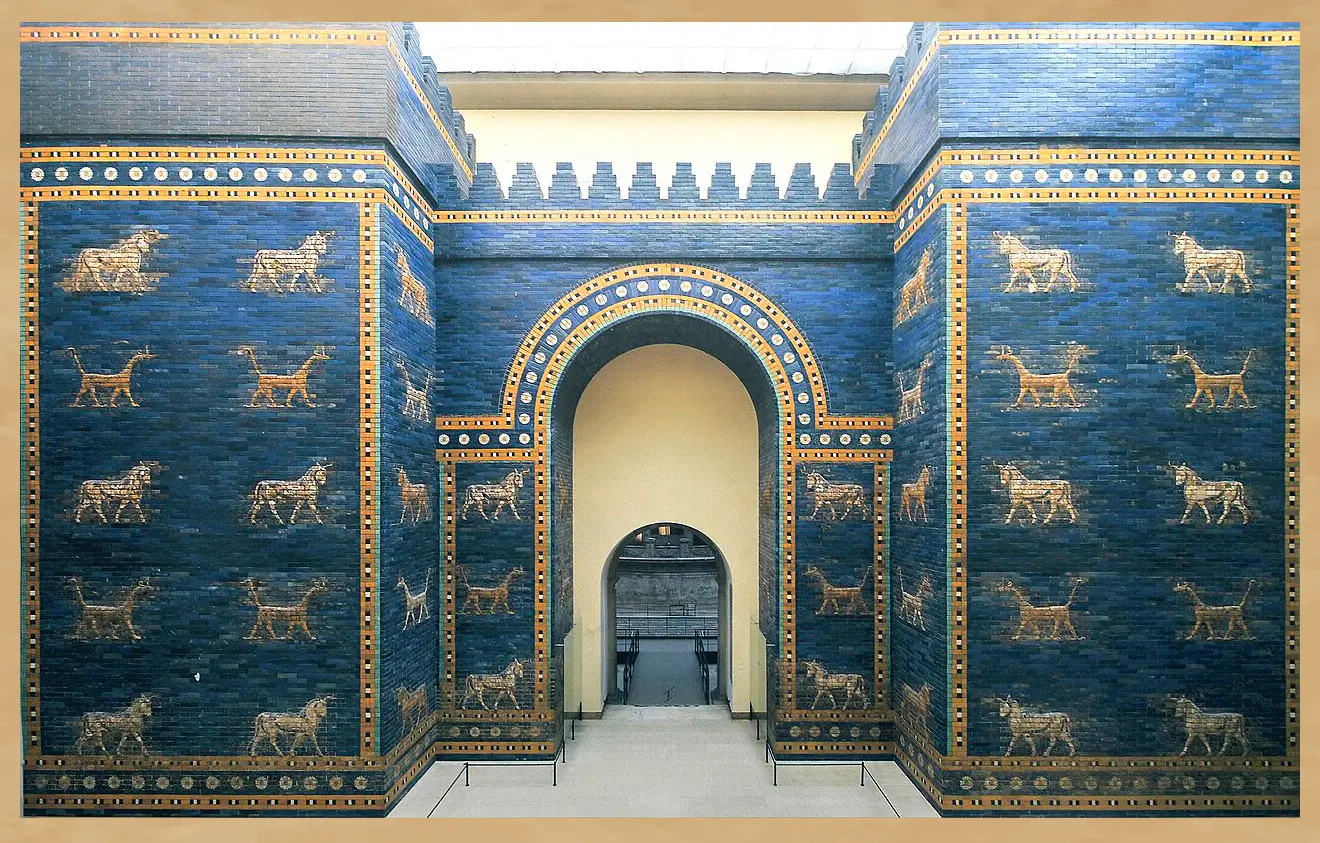
Why Fortifications Were Essential in Mesopotamian Warfare
Constant Warfare and City-State Rivalries
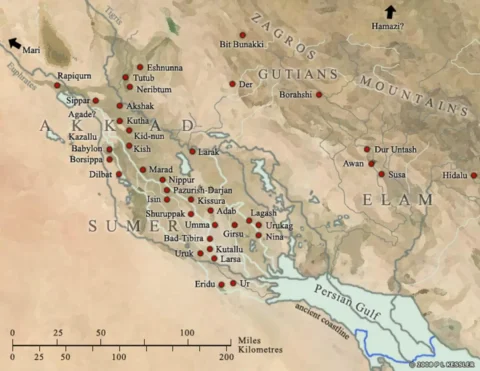
From the Early Dynastic period onward, Mesopotamia was fragmented into competing city-states — Uruk, Ur, Lagash, Kish, Umma — each controlling agricultural land and irrigation networks that were economically vital. Control over canals meant control over survival. This made warfare endemic rather than exceptional.
Written records from the third millennium BCE describe repeated conflicts over boundary canals and fertile fields. In such a context, open settlements were strategically indefensible. Cities required permanent defensive perimeters capable of resisting both sudden raids and organized assaults.
By the Akkadian and later Babylonian periods, warfare evolved from localized conflict into imperial expansion. Campaigns were seasonal, planned, and increasingly sophisticated. Fortifications therefore had to withstand not only infantry assaults but structured siege operations.
Walls became the first and most critical military asset of any city.
Geography, Open Plains, and Structural Vulnerability
Mesopotamia’s geography imposed structural vulnerability. Unlike Anatolia or the Levant, southern Mesopotamia offered no mountains or natural escarpments to shield settlements. Cities were built on alluvial plains formed by the Tigris and Euphrates rivers.
The terrain was flat, exposed, and visible from great distances. An approaching army could be seen — but it could also maneuver freely.
This geographical reality shaped defensive design:
- Walls had to be high and thick enough to compensate for lack of elevation.
- Defensive lines often included artificial mounds or raised platforms.
- Moats and canals were integrated into urban perimeters to simulate natural barriers.
Where nature did not provide defense, engineering had to replace it.
Fortifications as Political and Military Statements
Mesopotamian fortifications were practical, but they were also ideological. In royal inscriptions, kings boasted of constructing or restoring city walls as acts of divine legitimacy. To build a wall was to demonstrate authority, stability, and divine favor.
The walls of Uruk were attributed in tradition to Gilgamesh, reflecting the association between kingship and urban defense. Babylonian rulers, particularly Nebuchadnezzar II, emphasized monumental fortification projects as visible expressions of imperial power.
But symbolism did not diminish function. Monumental scale had military consequences:
- Greater wall thickness absorbed impact from battering rams.
- Massive gates controlled traffic and slowed attackers.
- Multi-layered defenses increased the time required to breach a city.
Psychological intimidation and structural resistance operated together.
A fortified city projected strength before battle even began.
| City | Period | Key Defensive Features | Strategic Purpose |
|---|---|---|---|
| Uruk | Late 4th Millennium BCE | Thick mudbrick walls, early urban enclosure | Protection of early administrative core |
| Babylon | Neo-Babylonian | Layered walls, monumental gates, fired bricks | Imperial defense + psychological dominance |
| Nineveh | Neo-Assyrian | Dense tower network, fortified gates | Advanced siege resistance |
The Origins of Urban Fortifications in Early Mesopotamia
Early Defensive Walls in Uruk and Proto-Urban Centers
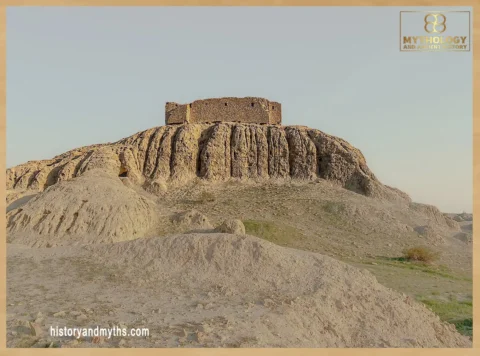
The earliest large-scale fortifications in Mesopotamia appeared alongside the first true cities during the late fourth millennium BCE. Archaeological evidence from Uruk, often considered the world’s first urban center, indicates the presence of substantial defensive walls by the Late Uruk period.
These early walls were not isolated structures. They were integrated into planned urban layouts, enclosing administrative districts, temples, storage facilities, and residential quarters within a single defensive perimeter. This suggests that fortification was conceived as part of urban design from the beginning, not added later as a reaction to crisis.
Excavations at Uruk reveal thick mudbrick walls reinforced with buttresses and internal supports. Their scale exceeded what was necessary for flood control or property demarcation. Their purpose was military.
By the Early Dynastic period, similar defensive systems appeared in cities such as Ur, Lagash, and Kish. Each developed enclosed urban cores, often surrounded by multiple construction phases reflecting cycles of destruction, repair, and expansion.
Fortification, therefore, evolved in parallel with urbanization itself.
Mudbrick Technology and Early Construction Methods
Early Mesopotamian fortifications relied almost entirely on mudbrick construction. Stone was scarce in southern Mesopotamia and reserved for limited symbolic or infrastructural use. Builders instead exploited abundant river clay and reeds to produce sun-dried bricks.
Standard bricks were formed from:
- Alluvial clay
- Chopped straw or reed temper
- Water from canals or flood basins
After drying, bricks were bonded using mud mortar, sometimes reinforced with bitumen in moisture-prone zones.
This technology imposed structural constraints. Mudbrick erodes under rain and flood conditions. To compensate, walls were built exceptionally thick, often exceeding five meters at the base. Multiple parallel walls were sometimes constructed, creating layered defensive belts.
Foundations were frequently laid on compacted earth platforms or artificial terraces to prevent subsidence. In later periods, fired bricks were introduced in critical zones such as gates and foundations, increasing durability.
Construction was labor-intensive. It required coordinated state organization, seasonal labor mobilization, and continuous maintenance. Fortifications were therefore economic as well as military projects.
Myth, Kingship, and the Symbolism of City Walls
From an early stage, Mesopotamian fortifications acquired symbolic meaning beyond their defensive function. City walls became markers of civilization itself, separating ordered urban life from the perceived chaos of the surrounding world.
Literary texts reinforce this association. The Epic of Gilgamesh opens with a detailed description of Uruk’s walls, inviting the reader to admire their craftsmanship and endurance. The wall stands as proof of royal achievement and collective identity.
Royal inscriptions from Sumerian, Akkadian, and later Babylonian rulers repeatedly list wall construction among their greatest accomplishments. Repairing or enlarging walls was framed as restoring cosmic and social order.
This ideological framing had practical implications. When walls embodied divine protection and royal legitimacy, their maintenance became a political priority. Neglecting fortifications could be interpreted as administrative failure.
Thus, early Mesopotamian walls operated simultaneously as:
- Military barriers
- Economic investments
- Political monuments
- Religious symbols
This multi-layered significance explains their persistence and continual renewal over millennia.
Materials and Engineering Behind Mesopotamian Fortifications
Mudbrick, Bitumen, and Structural Reinforcement
The primary building material of Mesopotamian fortifications remained mudbrick throughout most periods, even after the emergence of fired brick technology. This was not merely a matter of tradition, but of environmental and economic logic. Clay was abundant, easily processed, and could be produced on an industrial scale near construction sites.
To counter the inherent weakness of sun-dried bricks, builders developed reinforcement techniques. Bitumen, naturally occurring asphalt extracted from regional deposits, was used as a waterproofing and binding agent in foundations, lower wall courses, and critical joints. Its presence reduced moisture infiltration and slowed structural decay.
In some major cities, particularly during the Neo-Babylonian period, fired bricks were inserted at vulnerable points such as:
- Gate complexes
- Foundation layers
- Drainage channels
These fired sections functioned as structural anchors within otherwise mudbrick systems.
Wooden beams, reeds, and rope bindings were sometimes embedded horizontally within walls to improve cohesion. Though organic materials rarely survive archaeologically, impressions and secondary evidence confirm their use as internal reinforcement.
Mesopotamian fortifications were therefore composite structures, combining multiple materials to achieve stability in an unfavorable environment.
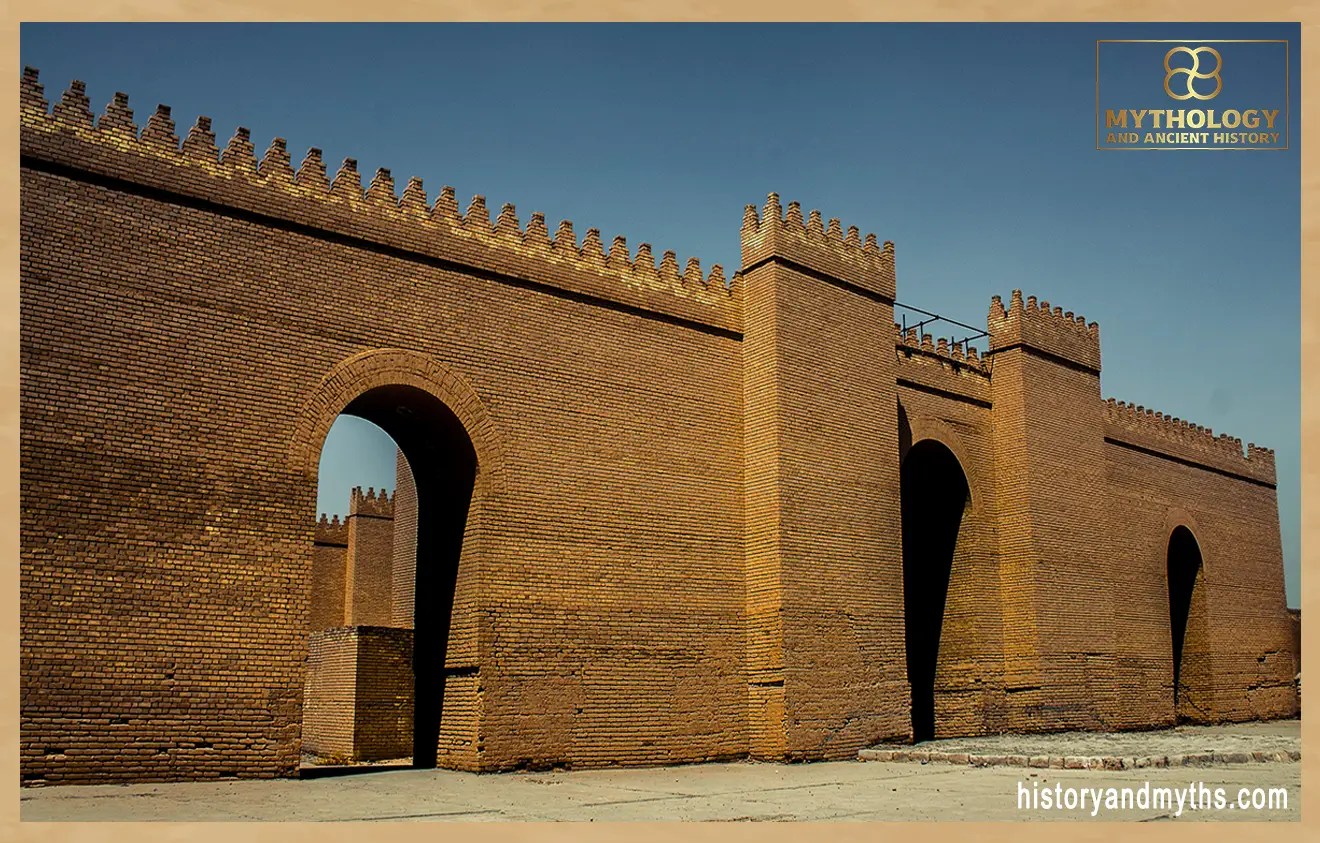
Wall Thickness, Foundations, and Layered Construction
Thickness was the central engineering solution to the limitations of mudbrick. Rather than relying on height alone, Mesopotamian builders prioritized mass and depth.
Major city walls often measured:
- 4 to 7 meters thick at the base
- 10 to 15 meters high in preserved estimates
- Several kilometers in total perimeter
Such dimensions absorbed kinetic energy from siege engines and reduced the risk of collapse under prolonged pressure.
Foundations were carefully prepared. Builders excavated trenches, filled them with compacted earth and gravel, and sometimes added bitumen layers for stabilization. In flood-prone zones, elevated platforms raised the wall base above seasonal water levels.
Layered construction was another key feature. Walls were built in horizontal courses, with alternating brick orientations to distribute stress. Over time, new layers were added externally or internally, producing composite walls composed of multiple construction phases.
This method allowed continuous upgrading without dismantling earlier defenses.
Urban fortifications were therefore dynamic structures, not static monuments.
Maintenance, Repairs, and Urban Labor Systems
No Mesopotamian fortification could survive without constant maintenance. Rain erosion, groundwater seepage, temperature variation, and biological decay steadily weakened mudbrick walls.
Administrative texts from various periods record regular labor mobilization for wall repair. Corvée labor systems obligated citizens, dependent workers, and prisoners to participate in public construction. Specialized crews handled brick production, transport, and masonry.
Maintenance cycles followed seasonal rhythms. Major repairs were conducted after flood seasons and before military campaigning periods. Neglect could rapidly render even massive walls ineffective.
Kings frequently advertised restoration projects in inscriptions, emphasizing their role as protectors of urban infrastructure. In practice, wall maintenance functioned as a continuous administrative process embedded in state management.
Fortifications thus reflected not only engineering skill, but bureaucratic capacity.
Core Engineering Principles of Mesopotamian Fortifications
- Mass over height: thickness absorbed impact better than elevation alone.
- Layered defense: multiple walls increased siege duration.
- Gate control: narrow corridors slowed attackers.
- Tower placement: overlapping firing coverage reduced blind spots.
- Maintenance cycles: survival depended on administrative upkeep.
- Integration with canals and moats to compensate for flat terrain.
© historyandmyths.com — Educational use
Defensive Architecture: Walls, Towers, and Gates
Mesopotamian defensive architecture was designed as a layered and interdependent system rather than a collection of isolated structures. Walls, towers, and gates functioned together to regulate movement, concentrate firepower, and delay attackers long enough for defenders to organize resistance.
The curtain wall formed the backbone of this system. It enclosed the city in a continuous perimeter and defined the physical boundary between urban order and external threat. These walls were rarely uniform in design. Their thickness, height, and reinforcement varied according to terrain, strategic importance, and exposure to attack.
- Main walls were constructed to absorb sustained impact rather than resist single assaults.
- Secondary or inner walls created fallback positions if outer defenses failed.
- Buttresses and projections strengthened long stretches vulnerable to collapse.
- Corner sections received extra reinforcement because they were structurally weaker.
This emphasis on depth and redundancy reflects a defensive philosophy focused on endurance rather than rapid victory.
Towers represented the vertical dimension of Mesopotamian defense. Positioned at regular intervals, they transformed flat walls into elevated combat platforms. From these structures, defenders could observe enemy movement, coordinate responses, and engage attackers at multiple distances.
Unlike simple watch posts, towers were integral fighting positions.
- They extended above wall height to maximize visibility.
- They housed archers and slingers capable of covering wide approach zones.
- They allowed flanking fire against enemies gathered at the base of the wall.
- They reinforced structurally vulnerable segments of the perimeter.
In many cities, towers also served as communication nodes, linking visual signals with internal command routes.
City gates formed the most complex and heavily fortified elements of the entire system. While walls and towers aimed to block entry, gates had to balance security with daily economic and administrative activity. This dual function made them both essential and dangerous.
Gate complexes were therefore designed as controlled corridors rather than simple openings.
- Multiple doorways created successive barriers.
- Narrow passages restricted the movement of attackers.
- Overhead platforms allowed defenders to strike from above.
- Adjacent towers provided lateral protection.
- Heavy wooden doors were reinforced with metal fittings and locking mechanisms.
In peacetime, these structures regulated trade, taxation, and population flow. In wartime, they became fortified strongpoints capable of independent resistance.
Together, walls, towers, and gates formed a coordinated defensive network. Each element compensated for the limitations of the others. Walls delayed, towers controlled, and gates regulated. When properly maintained and staffed, this architectural system transformed vulnerable open cities into resilient military strongholds.
However, its effectiveness always depended on organization and discipline. Without trained defenders, reliable communication, and consistent maintenance, even the most sophisticated defensive architecture could be reduced to inert mass.
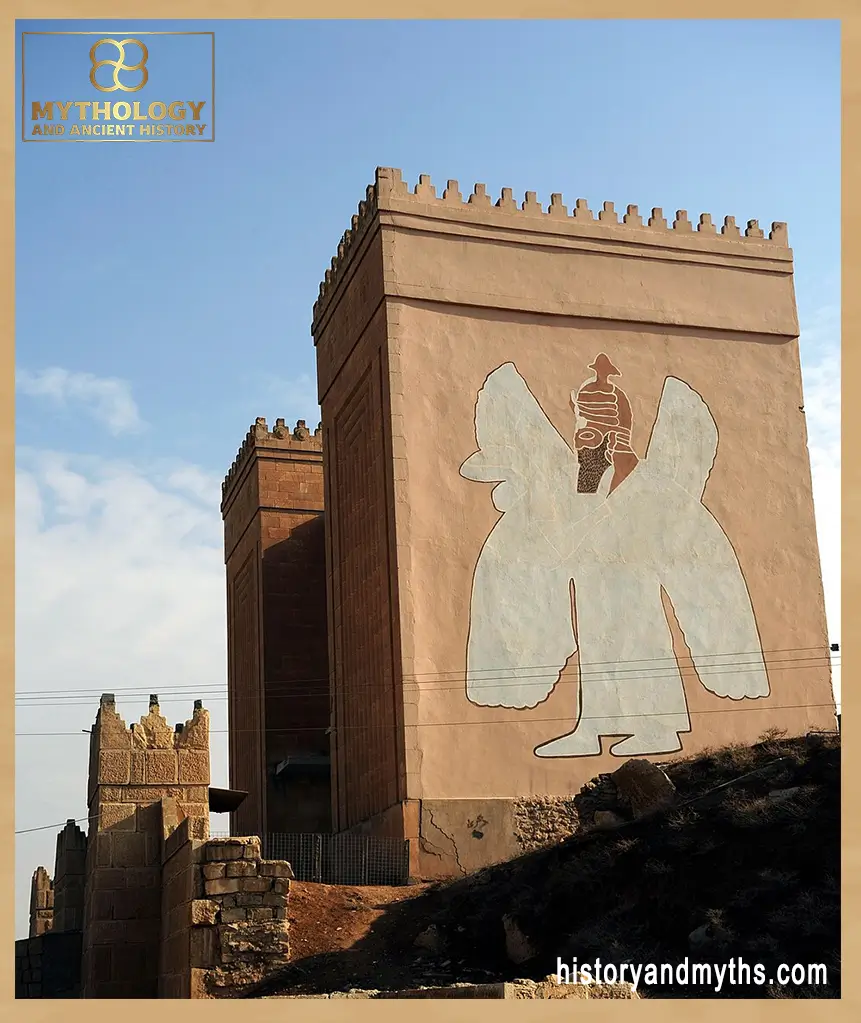
Fortifications Versus Siege Warfare
Mesopotamian fortifications were built with one expectation: sooner or later, someone would try to break them. The real test of a wall was not how impressive it looked, but how it performed under organized siege pressure. Siege warfare evolved dramatically over time, especially in the Assyrian and later imperial periods, and defenses had to adapt to that escalation.
- Attackers aimed first at the predictable weak points: gates, corners, and any section softened by water damage.
- Battering rams targeted gateways and lower wall courses because mudbrick could fracture under repeated concentrated impact.
- Siege ramps and earthen embankments attempted to neutralize wall height by raising the attacker’s ground level.
- Undermining tactics exploited foundations, particularly where drainage and erosion had already compromised stability.
- Psychological tactics mattered too: cutting water access, surrounding fields, and waiting for hunger to do what weapons could not.
Defenders responded by designing walls as “systems” rather than single barriers. The key idea was delay: every extra day a city resisted increased the cost of conquest and raised the chance of relief forces, internal revolt in the besieging camp, or a shift in political alliances.
- Thick bases absorbed impact and reduced catastrophic collapse.
- Towers created overlapping firing coverage, making close approach costly.
- Moats and ditches increased the distance siege engines had to cross under fire.
- Multi-layered defenses meant that even if an outer wall failed, the city was not instantly lost.
Still, fortifications had limits. They could slow invasion, but they could not guarantee survival when faced with prolonged siege, superior logistics, or betrayal from within. Many Mesopotamian cities ultimately fell not because walls were weak, but because supply lines were cut, defenders were exhausted, or political control fractured at the decisive moment.
- The strongest walls were useless if the city could not store grain and water for a long blockade.
- A single compromised gate mechanism could undo an otherwise formidable defensive ring.
- Mudbrick demanded constant repair; neglect could turn a defensive asset into a liability.
- In imperial warfare, besiegers often had enough manpower to maintain encirclement for months.
- Internal dissent, bribery, or negotiated surrender could end a siege faster than engineering.
Continue Reading
Regional and Chronological Evolution of Fortifications
Fortification design did not stay static across Mesopotamian history. It evolved with political scale, threat models, and the technologies of siege. What began as thick mudbrick perimeters around early cities became, in later empires, monumental and complex systems combining engineering, intimidation, and administrative control.
- Early Sumerian defenses prioritized enclosure and thickness, designed for local warfare between neighboring city-states.
- Akkadian and post-Akkadian periods pushed toward more standardized urban defenses as warfare expanded beyond regional skirmishes.
- Babylonian fortifications emphasized both durability and spectacle, especially around major gates and processional routes.
- Assyrian military architecture increasingly reflected a siege-minded world, where attackers and defenders both assumed advanced assault methods.
- Over time, walls became not just defensive shells but parts of state infrastructure tied to taxation, labor mobilization, and imperial legitimacy.
Case Studies: Major Fortified Cities
Mesopotamian fortifications varied in scale and complexity according to political power, economic resources, and strategic location. Three cities in particular illustrate how defensive architecture evolved to meet different military and administrative demands: Babylon, Uruk, and Nineveh.
Babylon: Monumentality and Psychological Defense
Babylon represents the most monumental expression of urban fortification in Mesopotamian history. Its walls were designed not only to resist attack, but to project imperial dominance.
- The outer and inner walls created multiple defensive layers.
- Fired bricks and bitumen increased structural durability.
- Major gates, especially ceremonial ones, doubled as military checkpoints.
- Massive scale discouraged attack through intimidation alone.
Babylon’s defenses functioned as both physical barriers and political symbols, reinforcing the image of an invulnerable imperial capital.
Uruk: Early Urban Defense Planning
Uruk provides insight into the earliest phase of Mesopotamian fortification. Its walls reflect experimentation rather than standardized military doctrine.
Unlike later cities, Uruk’s defenses developed alongside urbanization itself. They enclosed administrative, religious, and residential zones within a unified perimeter.
- Walls emphasized thickness over height.
- Construction relied entirely on mudbrick technology.
- Defensive planning was integrated into early city layout.
- Symbolic and practical functions overlapped from the beginning.
Uruk demonstrates that organized urban defense was a foundational feature of Mesopotamian civilization, not a later innovation.
Nineveh: Assyrian Military Engineering
Nineveh reflects the peak of militarized urban defense under the Assyrian Empire. Its fortifications were shaped by centuries of siege experience and imperial warfare.
Assyrian rulers treated fortification as a strategic science rather than a traditional craft.
- Walls incorporated dense tower networks.
- Gate systems were heavily compartmentalized.
- Defensive corridors enabled rapid troop movement.
- Surveillance and communication were highly developed.
- Military planning influenced urban layout.
Nineveh’s defenses illustrate how imperial warfare transformed fortifications into integrated command-and-control systems.
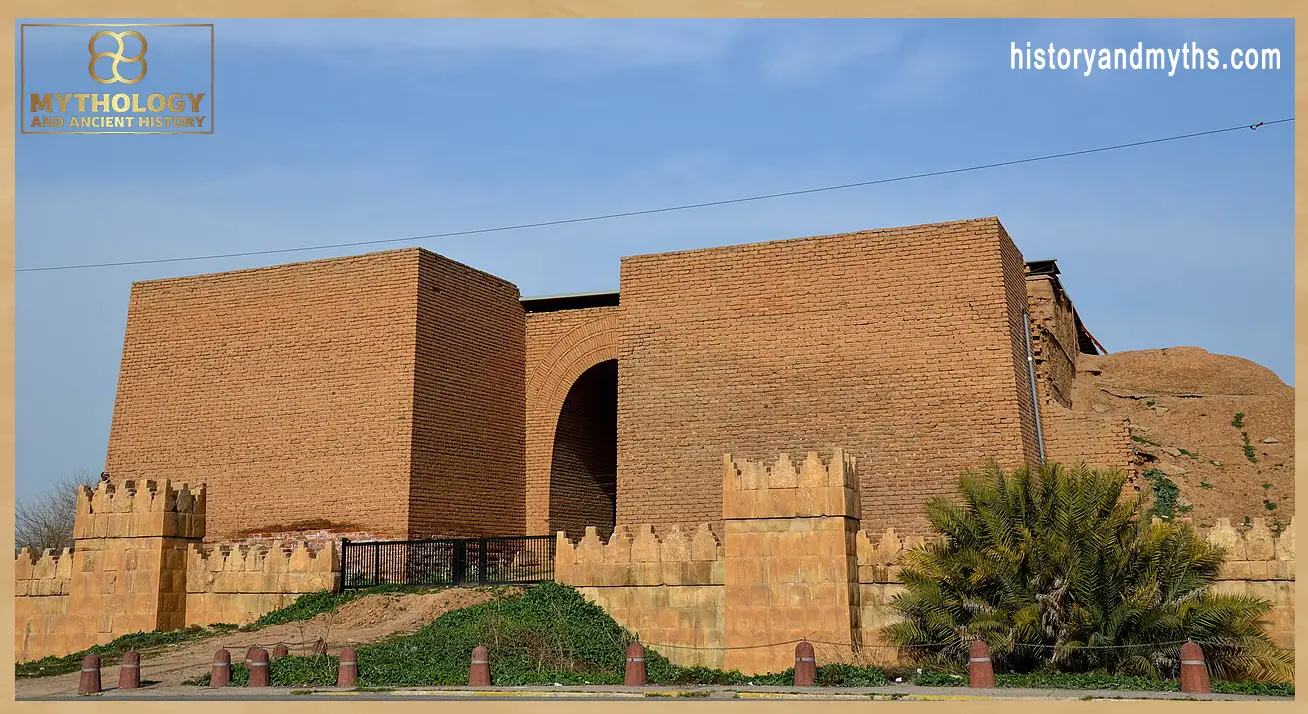
Limits of Fortifications in Mesopotamian Warfare
Despite their scale and sophistication, Mesopotamian fortifications never guaranteed absolute security. Walls could delay conquest and raise its cost, but they could not eliminate the structural and political vulnerabilities of urban centers.
The first major limitation was logistical dependence. A fortified city survived only as long as its internal resources lasted.
- Grain storage determined how long defenders could resist blockade.
- Access to clean water was often more decisive than wall thickness.
- Overcrowding during sieges accelerated disease and exhaustion.
- Prolonged isolation weakened civilian morale and military discipline.
Once supplies failed, even intact defenses became irrelevant.
A second constraint lay in material durability. Mudbrick, the foundation of Mesopotamian architecture, deteriorated under sustained environmental pressure.
Seasonal flooding, groundwater seepage, and rainfall gradually weakened wall bases. Without constant repair, defensive strength declined silently long before an enemy appeared.
- Erosion created hidden structural weaknesses.
- Poor maintenance reduced resistance to impact.
- Neglected foundations increased collapse risk.
- Emergency repairs during sieges were often insufficient.
Engineering excellence required continuous administrative investment.
Internal instability represented an even greater threat than external assault. Many fortified cities fell not through brute force, but through political failure.
- Factional conflict undermined coordinated defense.
- Corruption weakened command structures.
- Negotiated surrender bypassed military resistance.
- Betrayal of gates or supply routes nullified fortifications.
- Popular unrest pressured elites to capitulate.
In such cases, walls remained standing while authority collapsed.
Finally, imperial warfare gradually reduced the strategic advantage of fixed defenses. Large empires possessed the manpower, logistics, and time to sustain long sieges.
Assyrian and later Neo-Babylonian campaigns demonstrated that determined attackers could neutralize even massive fortification systems through isolation, attrition, and psychological pressure.
Fortifications still mattered, but they no longer decided wars on their own.
They functioned as delaying mechanisms rather than final safeguards.
The Strategic Legacy of Mesopotamian Fortifications
Mesopotamian fortifications left a lasting imprint on the military and urban traditions of the ancient Near East. Their significance extended beyond immediate defense and shaped how later societies understood the relationship between power, territory, and security.
One of their most important contributions was the institutionalization of urban defense. In Mesopotamia, fortification became a permanent element of city planning rather than an emergency response to crisis.
- Cities were designed around defensive perimeters from their earliest stages.
- Public labor systems evolved to support continuous maintenance.
- Administrative records treated wall repair as a core state responsibility.
- Military planning became integrated with urban infrastructure.
This model influenced neighboring regions and later civilizations across the Near East.
Mesopotamian fortifications also transformed warfare itself. By increasing the cost of conquest, they encouraged the development of siege technologies, logistical systems, and long-term campaign strategies.
Key Takeaways
- Fortifications were permanent elements of urban planning in Mesopotamia.
- Walls functioned as integrated military systems, not isolated barriers.
- Mudbrick engineering required exceptional thickness and constant repair.
- Siege warfare evolved in direct response to defensive innovation.
- Political stability was as important as architectural strength.
- Babylon, Uruk, and Nineveh illustrate chronological development.
Frequently Asked Questions
What were Mesopotamian fortifications made of?
Most fortifications were built from sun-dried mudbrick reinforced with bitumen. Fired bricks were used in critical areas such as gates and foundations.
Why were Mesopotamian city walls extremely thick?
Mudbrick required mass for strength. Thick walls absorbed impact from battering rams and reduced structural collapse during prolonged sieges.
Did Mesopotamian cities use moats or water defenses?
Yes. Many cities integrated canals, artificial ditches, or natural river branches into their defensive perimeters.
How did siege warfare challenge Mesopotamian walls?
Attackers used battering rams, siege ramps, and foundation undermining. Long blockades were often more effective than direct assault.
Which city had the strongest fortifications?
Babylon and Nineveh represent the most advanced known systems, with layered walls, fortified gates, and dense tower networks.
Were fortifications purely military structures?
No. They also symbolized royal authority and were considered expressions of divine protection and political legitimacy.
How were these massive walls maintained?
Regular labor mobilization and seasonal repairs were necessary to prevent erosion and structural weakening.
Sources & Rights
- Adams, Robert McC. Heartland of Cities. University of Chicago Press.
- Crawford, Harriet. Sumer and the Sumerians. Cambridge University Press.
- Van De Mieroop, Marc. A History of the Ancient Near East. Wiley-Blackwell.
- Oates, Joan. Babylon. Thames & Hudson.
- Kuhrt, Amélie. The Ancient Near East. Routledge.
- Margueron, Jean-Claude. Cités invisibles. Geuthner.
- Fales, Frederick Mario. Assyrian Royal Inscriptions.
- Liverani, Mario. The Ancient Near East: History, Society and Economy. Routledge.
- Postgate, J.N. Early Mesopotamia. Routledge.
- Oppenheim, A. Leo. Ancient Mesopotamia: Portrait of a Dead Civilization.
- Algaze, Guillermo. The Uruk World System. University of Chicago Press.
- Winter, Irene J. Studies on Neo-Assyrian Art and Architecture.
- Matthews, Roger. The Archaeology of Mesopotamia. Routledge.
- Pollock, Susan. Ancient Mesopotamia. Cambridge University Press.
- George, Andrew. The Epic of Gilgamesh. Penguin Classics.
Written by H. Moses — All rights reserved © Mythology and History