Weapons and Armor in Mesopotamia: How Ancient Armies Ruled Warfare
Military success in ancient Mesopotamia was not determined by courage alone. It depended on tools. The quality of weapons, the reliability of armor, and the ability to supply and maintain equipment often decided battles before soldiers ever met face to face.
From the earliest Sumerian city-states to the Neo-Assyrian Empire, rulers invested heavily in military technology. Workshops produced standardized blades, spearheads, and arrow points. Administrators tracked materials and distribution. Equipment was treated as a strategic resource, not a personal possession.
This article explains how Mesopotamian armies equipped their soldiers, why certain weapons dominated specific periods, and how technology shaped battlefield tactics. Instead of listing objects, it examines how material choices influenced power, survival, and imperial expansion.
How Technology Shaped Mesopotamian Weapons
Early Mesopotamian societies relied on locally available materials. Copper and stone were used for basic tools and weapons, but their limitations were quickly recognized. Blades dulled easily, and impact resistance was low. As warfare intensified, demand for stronger materials increased.
The development of bronze metallurgy marked a turning point. By combining copper with tin, smiths produced harder and more durable weapons. Bronze spearheads, daggers, and axes became standard military equipment. Their uniform shape suggests controlled production rather than individual craftsmanship.
Access to metal resources influenced military capacity. Mesopotamia lacked major tin deposits, forcing rulers to secure long-distance trade routes. Control over mining regions and caravan networks became strategically important. Weapons production depended on political stability as much as technical skill.
By the late second millennium BCE, iron began to replace bronze in elite units. Although early iron was difficult to refine, it offered greater strength and wider availability. Assyrian authorities supported centralized workshops capable of producing large quantities of standardized equipment. This allowed rapid re-arming after campaigns and sustained military pressure.
Technological change did not occur in isolation. New materials required new training, maintenance systems, and supply chains. Weapons evolved together with administrative capacity. Military innovation was therefore as much bureaucratic as metallurgical.
| Category | Main Equipment | Primary Function | Period of Peak Use |
|---|---|---|---|
| Infantry | Spears, daggers, shields | Close combat and formation control | Early–Neo-Assyrian |
| Archers | Composite bows, arrows | Ranged disruption | Middle–Neo-Assyrian |
| Chariots | War chariots, bows | Command and mobility | 2nd millennium BCE |
| Siege Units | Battering rams, ladders | City assault | Neo-Assyrian |
| Elite Guards | Scale armor, iron weapons | Core defense and offense | Neo-Assyrian |
Infantry Weapons
Infantry soldiers formed the backbone of Mesopotamian armies, and their effectiveness depended largely on simple, reliable weapons. Equipment was designed for durability and ease of use rather than technical complexity.
The spear was the primary infantry weapon. Its long reach allowed soldiers to keep distance from opponents while maintaining formation. Spearheads were produced in standardized shapes, making replacement and mass distribution easier. In close formations, spears created defensive barriers that limited enemy movement.
Swords played a secondary role. Early blades were short and suited for thrusting rather than slashing. They were used mainly when formations broke or combat shifted to close quarters. Because swords required more metal and skilled workmanship, they were less common than spears.
Daggers served as backup weapons. Every soldier carried one for emergencies, finishing blows, or self-defense in chaotic situations. Their small size made them easy to produce and replace, reinforcing their practical role.
Axes and maces remained in use, especially in earlier periods. These weapons were effective against lightly armored opponents and required minimal training. Over time, however, their importance declined as organized formations became more central to warfare.
Infantry weapons reflected a clear priority: control over space and cohesion. Victory depended less on individual skill and more on disciplined collective movement supported by standardized equipment.
Archers and Ranged Weapons
Ranged combat played a decisive role in Mesopotamian warfare. Archers weakened enemy formations before physical contact and disrupted coordination during advances and retreats. Their effectiveness depended on training, positioning, and supply rather than raw strength.
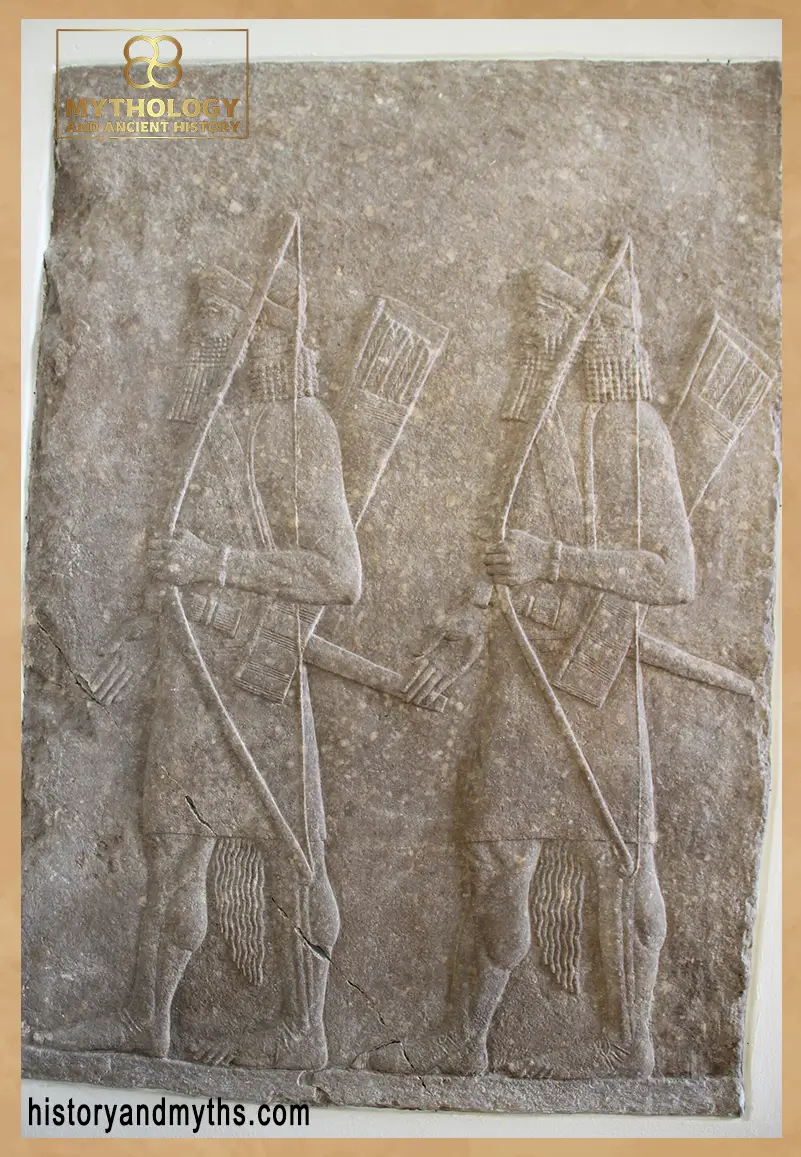
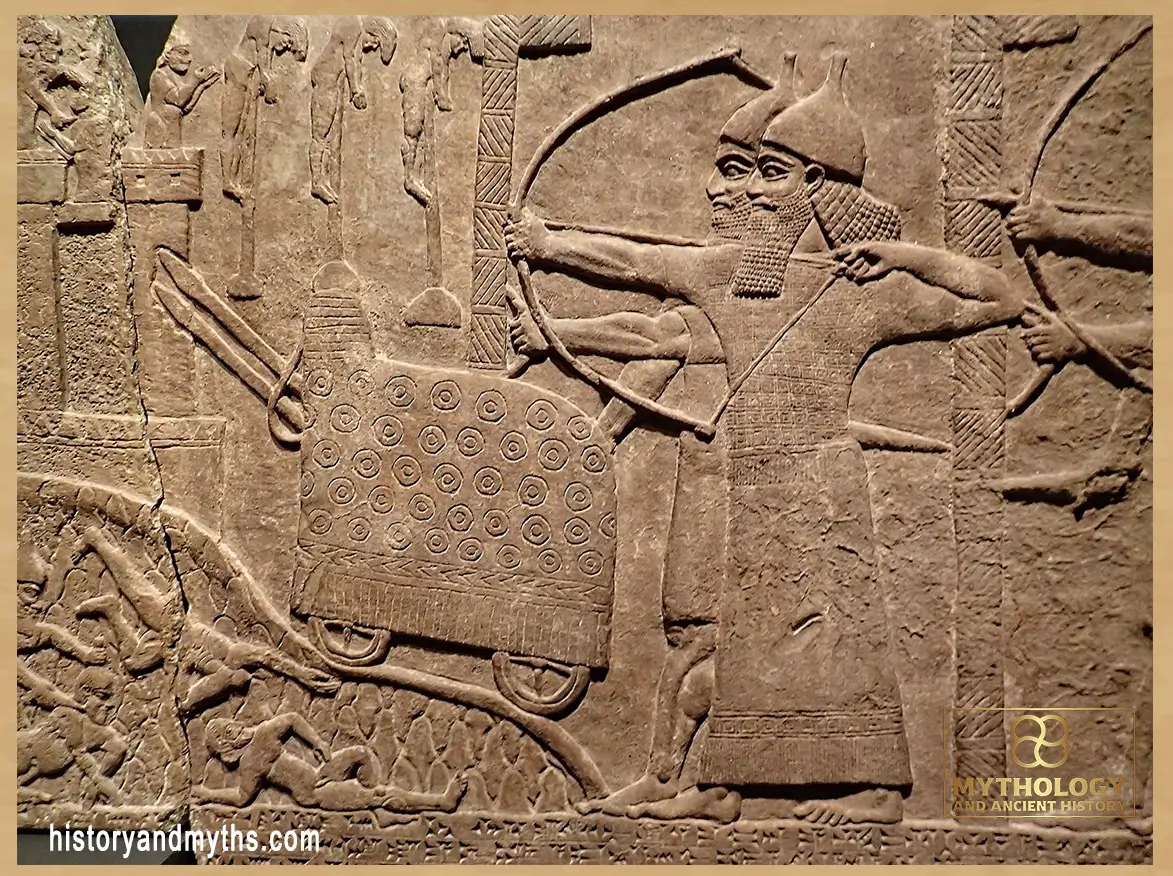
The composite bow was the primary ranged weapon. Made from layers of wood, horn, and sinew, it combined flexibility with power. Although difficult to manufacture, it offered greater range and penetration than simple wooden bows. States invested in specialized workshops to produce and maintain these weapons.
Arrowheads were mass-produced in bronze and later iron. Different shapes served different purposes. Narrow points penetrated armor, while broader tips caused wider wounds. This variety indicates deliberate tactical planning rather than random production.
Archers usually operated in protected positions. They were placed behind infantry lines or on elevated ground, allowing sustained fire without direct exposure. Shields and light armor further reduced vulnerability.
Supply was critical. Campaign records show constant concern with arrow production and transport. Without steady resupply, archer units quickly lost effectiveness. Ranged warfare therefore depended on logistics as much as skill.
By integrating archers into coordinated formations, Mesopotamian armies maximized battlefield control. Distance became a weapon, not merely a defensive measure.
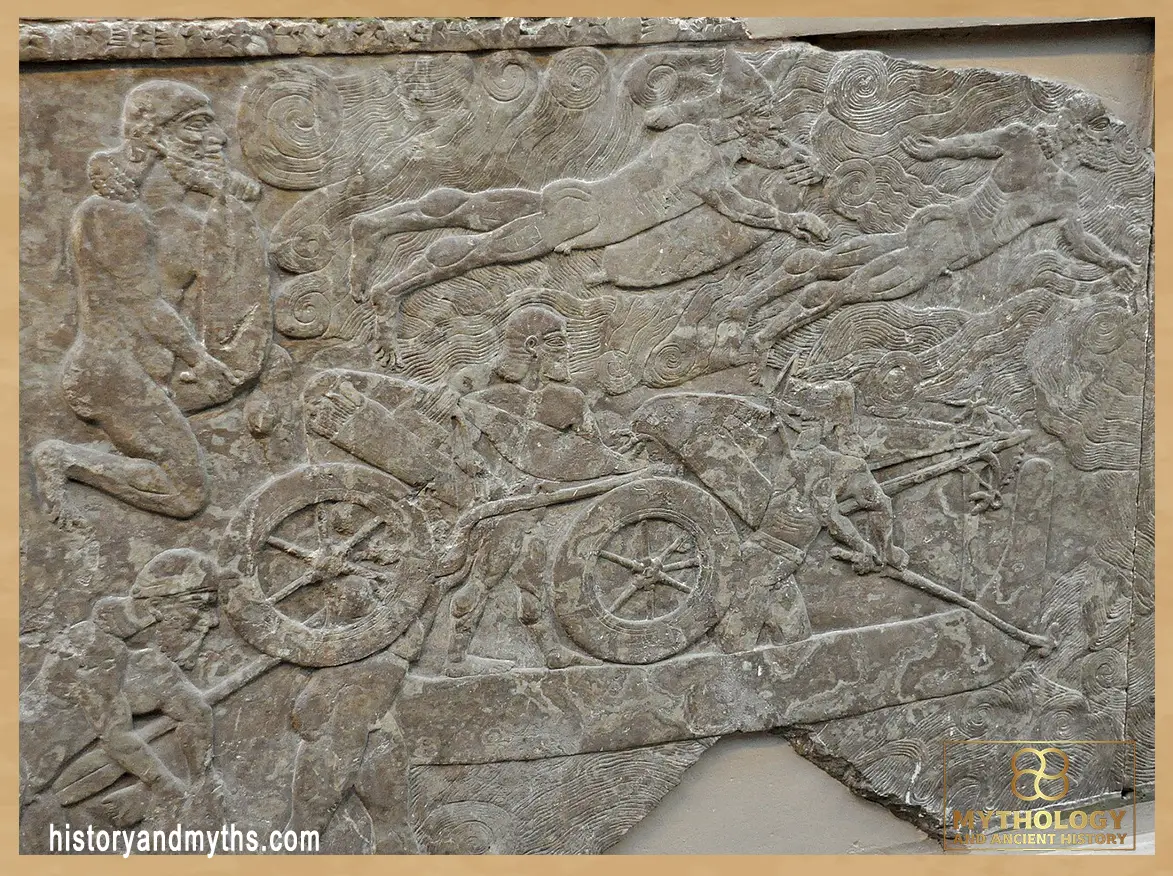
Chariots and Mobile Units
War chariots provided mobility and command support rather than mass assault power. In Mesopotamia, their primary function was coordination, communication, and rapid response across the battlefield.
Early chariots were light, two-wheeled vehicles pulled by equids and later horses. They carried a driver and a warrior, usually an archer or officer. This arrangement allowed leaders to observe troop movements and issue instructions quickly.
Chariots enhanced battlefield visibility. Commanders used elevated platforms to monitor formations, identify weaknesses, and redirect units. Mobility made it possible to reinforce threatened sectors or exploit openings.
In combat, chariots supported infantry and archers. They delivered missile fire, disrupted enemy lines, and protected flanks. However, they were vulnerable on rough terrain and ineffective in narrow urban environments.
Maintenance and training limited their numbers. Chariot crews required specialized skills, and animals demanded constant care. As infantry and cavalry became more effective, chariots gradually lost strategic importance.
Their main contribution remained organizational. Chariots connected command with action, reducing delays and improving coordination in complex engagements.
Siege Weapons and Military Engineering
City walls defined power in Mesopotamia. Controlling territory required the ability to breach fortifications. Siege warfare therefore became a technical discipline rather than an improvised assault.
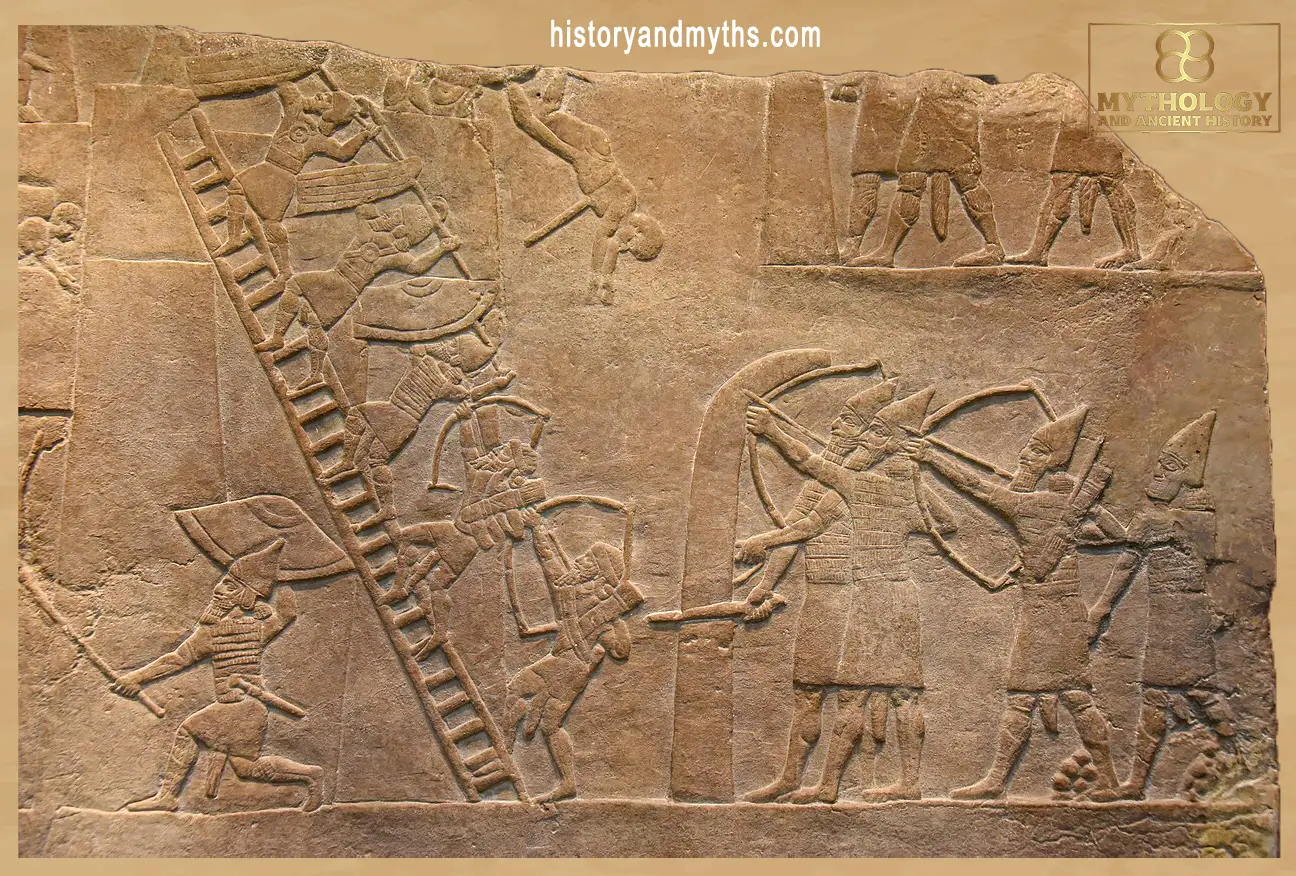
The battering ram was the most effective siege weapon. Mounted on wheeled frames and protected by coverings, it allowed sustained impact against gates and weak wall sections. Its construction required coordinated engineering and material planning.
Assyrian reliefs show soldiers building ramps to reach elevated defenses. These earthen structures enabled direct assault where walls could not be broken quickly. Engineering units operated alongside combat forces but followed distinct technical procedures.
Ladders and scaling equipment provided secondary access points. While risky, they created pressure on defenders by forcing attention across multiple sectors.
Siege operations demanded organization beyond combat. Supply lines had to remain stable during prolonged blockades. Workers, soldiers, and engineers were coordinated under structured command.
Success in siege warfare reflected planning more than aggression. Breaking a city depended on logistics, discipline, and technical capability as much as on weapons.
How Mesopotamian Armies Sustained Military Power
- Centralized weapon workshops controlled by the state
- Standardized production of spears, armor, and arrows
- Long-distance supply networks for metals
- Permanent military storage depots
- Specialized engineering and siege units
- Administrative control of equipment distribution
© historyandmyths.com — Educational use
Armor and Defensive Equipment
Protection evolved alongside weapon technology. As blades hardened and projectiles gained force, soldiers required more reliable defensive equipment to survive sustained combat.
Helmets were among the earliest protective items. Initially made from leather or simple metal plates, they gradually developed into shaped bronze and later iron forms that covered the head and neck. Their purpose was functional: reduce fatal head injuries in close combat.
Body armor varied by status. Elite soldiers wore scale armor composed of small metal plates sewn onto fabric or leather. This design balanced flexibility with protection. Regular infantry often relied on layered textiles or lighter materials, reflecting cost and availability constraints.
Shields were essential for both offense and defense. Large rectangular or circular shields protected formations and allowed coordinated advances. Shield walls increased collective survivability, reinforcing the importance of discipline over individual movement.
Defensive equipment was not uniform. Access depended on rank, role, and economic capacity. However, the existence of standardized armor for elite units indicates centralized production and distribution.
Armor did not make soldiers invulnerable. It reduced risk, prolonged engagement capacity, and preserved trained manpower. Protection was therefore an investment in stability as much as survival.
Elite vs. Regular Equipment
Not all soldiers carried the same equipment. Military hierarchy was visible in material differences. Elite units received stronger armor, better-forged weapons, and more consistent resupply.
Royal guards and specialized troops were equipped with scale armor, reinforced helmets, and high-quality blades. Their role required durability and battlefield reliability. Investment in their equipment reflected political priority as much as tactical necessity.
Regular infantry carried simpler gear. Spears, light shields, and minimal body protection were common. Standardization reduced cost and simplified replacement, allowing rapid mobilization without excessive resource strain.
Differences in equipment also shaped battlefield roles. Heavily equipped troops formed stable cores in formations, while lightly armed soldiers provided mobility and support.
Equipment distribution followed administrative planning rather than random allocation. Material quality reflected function, rank, and strategic importance within the army.
Continue Reading
Weapons and Battlefield Tactics
Weapons in Mesopotamian armies were selected to support collective movement rather than individual combat. Equipment choices reflected how units were expected to fight, hold ground, and advance.
Infantry formations relied on spears and shields to maintain spacing and control enemy contact. Tight ranks reduced vulnerability and maximized defensive strength. Individual skill mattered less than coordinated positioning.
Archers shaped engagements before physical contact. Sustained arrow fire weakened formations, disrupted morale, and created openings for infantry advances. Timing and placement were more important than volume alone.
Chariots and mobile units connected different sections of the battlefield. Their role was to transmit commands, reinforce pressure points, and exploit temporary advantages.
Siege equipment dictated urban tactics. Prolonged blockades, ramp construction, and focused breaches replaced spontaneous assaults. Success depended on patience and coordination.
Tactical flexibility was limited by equipment design. Heavy armor favored stable formations. Light gear supported rapid movement. Commanders adjusted deployments according to terrain, enemy type, and supply conditions.
Battlefield success emerged from alignment between weapons, training, and organization. Technology was effective only when integrated into disciplined systems.
The Assyrian Model: Military Innovation at Its Peak
The Neo-Assyrian Empire marked the highest stage of military development in Mesopotamia. Earlier states had advanced weapon production, but Assyria transformed it into a centralized, large-scale system.
Weapons and armor were manufactured in state-controlled workshops. Materials were collected, processed, and distributed under administrative supervision. This ensured uniform quality and rapid replacement after campaigns.
Standardization became a defining feature. Spears, shields, helmets, and arrowheads followed consistent designs. Soldiers trained with identical equipment, improving coordination and reducing logistical complications.
Assyrian rulers encouraged technological experimentation. Iron production expanded, armor became more complex, and siege tools were refined. Innovation was supported by imperial resources and constant military demand.
Supply networks connected workshops, arsenals, and frontline units. Equipment moved through regulated channels rather than private trade. This reduced dependency on local markets and increased operational reliability.
Assyrian dominance did not rest on superior courage alone. It was built on industrial organization, administrative control, and continuous technical improvement. Military power became a managed system rather than a temporary advantage.
Limits and Technical Weaknesses
Despite advanced equipment, Mesopotamian armies faced persistent technical constraints. Weapons and armor depended on stable supply chains, skilled labor, and political control. Disruption in any of these areas reduced military effectiveness.
Metal production required access to distant resources. Tin, iron ore, and quality timber were often imported. Trade interruptions, rebellion, or territorial loss directly affected weapon manufacturing and maintenance.
Equipment deteriorated quickly under campaign conditions. Blades dulled, armor corroded, and wooden components weakened. Repair capacity was limited in remote regions, forcing reliance on central workshops.
Standardization improved efficiency but reduced flexibility. Uniform designs were difficult to adapt to unexpected terrain or unfamiliar enemies. Innovation slowed when administrative routines became rigid.
Heavy equipment also imposed logistical burdens. Transporting armor, arrows, and siege tools consumed animals, labor, and storage space. Long campaigns strained supply systems and increased vulnerability.
Technological superiority was therefore conditional. It functioned only within stable political and administrative frameworks. When those systems weakened, military advantage declined rapidly.
Key Takeaways
- Mesopotamian weapons were centrally produced and regulated.
- Infantry formations determined battlefield outcomes.
- Archery shaped engagements before close combat.
- Siege engineering enabled imperial expansion.
- Elite equipment reflected political priorities.
- Military power depended on logistics and administration.
Frequently Asked Questions
What were the main weapons used in Mesopotamia?
Spears, bows, daggers, swords, and siege equipment formed the core arsenal.
Did Mesopotamian armies use iron weapons?
Yes, especially during the Neo-Assyrian period.
How important were archers in battle?
They weakened enemy formations before direct combat.
Who received the best armor?
Royal guards and elite units.
How were weapons produced?
In state-controlled workshops.
What role did chariots play?
Mainly command, mobility, and communication.
Why were sieges important?
Because cities were central to political control.
Sources & Rights
- Van De Mieroop, Marc. A History of the Ancient Near East. Wiley-Blackwell.
- Radner, Karen. Ancient Assyria. Oxford University Press.
- Dalley, Stephanie. The Legacy of Mesopotamia. Oxford.
- Grayson, A.K. Assyrian Rulers of the Early First Millennium BC.
- Oates, Joan. Babylon. Thames & Hudson.
Written by H. Moses — All rights reserved © Mythology and History