Mesopotamian Army Structure: How Ancient Military Command Worked
The military strength of Mesopotamian civilizations did not come from superior weapons alone. It came from organization. Long before modern armies existed, rulers in Sumer, Akkad, and Assyria built command systems that controlled recruitment, discipline, logistics, and decision-making through written administration.
Armies were not temporary groups formed in emergencies. They operated as structured institutions embedded in state bureaucracy. Orders were recorded, personnel were registered, supplies were calculated, and responsibilities were clearly assigned. Warfare functioned through management as much as through force.
This article explains how Mesopotamian armies were organized in practice: who commanded, who supervised, who supplied, and who enforced discipline. Instead of focusing on battles, it analyzes the internal structure that allowed these armies to operate efficiently across long campaigns and vast territories.
How the Army Became a State Institution
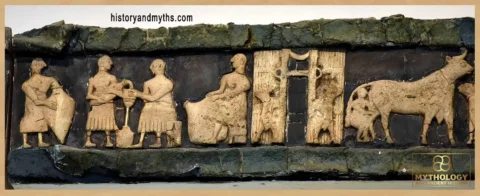
Early Mesopotamian warfare relied on local mobilization. City-states initially drew fighters from agricultural communities when conflict arose. These forces were assembled temporarily and dissolved after campaigns. Command depended largely on personal authority and local elites rather than permanent institutions.
This model changed as political systems became more centralized. Expanding territories required continuous military readiness, predictable manpower, and stable leadership. Rulers could no longer rely on seasonal militias. They needed structures capable of operating independently of local interests.
Administrative reforms transformed military organization. Provincial officials became responsible for supplying soldiers, maintaining records, and enforcing obligations. Military service was integrated into taxation and labor systems. Soldiers were registered in documents alongside workers and taxpayers.
Civil and military authority increasingly overlapped. Governors supervised both economic production and troop mobilization. Supply officers managed warehouses that served civilian and military needs. Scribes documented movements, payments, and disciplinary actions. The army became an extension of state administration rather than a separate entity.
By the Akkadian and Old Babylonian periods, this institutional framework was firmly established. Military power was no longer based on personal loyalty alone. It rested on documentation, standardized procedures, and bureaucratic supervision. This transformation laid the foundation for the highly organized Assyrian military system that would later dominate the region.
| Rank / Position | Main Responsibility | Historical Period |
|---|---|---|
| King (Supreme Commander) | Strategic authority and campaign approval | All periods |
| Turtanu (Chief General) | Operational command of major campaigns | Neo-Assyrian |
| Regional Commander | Control of frontier and provincial forces | Akkadian–Assyrian |
| Unit Officer | Supervision of combat units | All periods |
| Logistics Officer | Supply and ration management | Old Babylonian–Assyrian |
| Military Scribe | Personnel and record administration | All periods |
The King as Supreme Commander
In Mesopotamia, military authority was formally concentrated in the person of the king. He was presented as the supreme commander, responsible for initiating campaigns, appointing officers, and defining strategic objectives. Warfare was treated as an extension of royal power rather than an autonomous institution.
Royal inscriptions consistently emphasized this role. Kings described themselves as leaders of armies, conquerors of enemies, and protectors of order. Victory was framed as personal achievement, reinforcing political legitimacy through military success. Command was therefore not only practical but symbolic.
In practice, kings did not manage daily operations alone. Large campaigns required delegation. Senior officers planned routes, supervised logistics, and directed field operations. The king retained ultimate authority, but execution depended on professional commanders and administrators.
Decision-making followed bureaucratic procedures. Reports from governors, scouts, and generals were transmitted to the court. Campaigns were adjusted based on supply conditions, local resistance, and political priorities. Royal command functioned through information networks rather than personal presence alone.
Limits also existed. Military failure could weaken royal authority, encourage rebellion, or invite foreign intervention. For this reason, kings carefully balanced personal involvement with institutional support. Supreme command was powerful, but it depended on the stability of the administrative system beneath it.
High Command and Generals
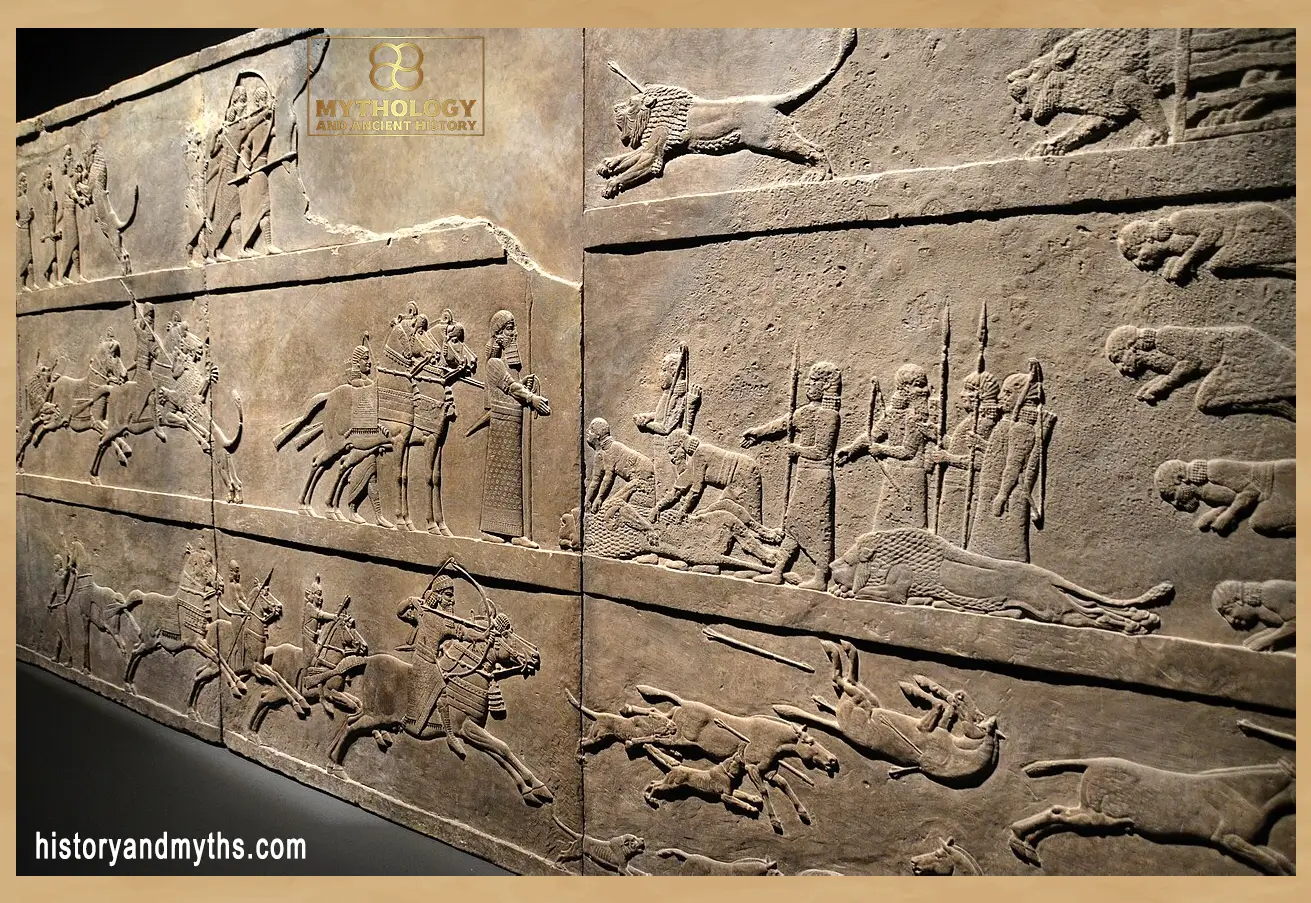
Below the king operated a small group of senior commanders who formed the operational core of Mesopotamian armies. These officers translated royal directives into concrete military plans. They supervised recruitment, coordinated movement, and managed large-scale campaigns across multiple regions.
In the Assyrian period, the most important of these figures was the Turtanu, often described as the highest-ranking general. He functioned as the king’s principal military deputy, capable of leading major expeditions independently. When the king remained in the capital, the Turtanu assumed full command in the field, including diplomatic and administrative authority.
Other high-ranking commanders were assigned to strategic zones. Some controlled frontier regions, others supervised newly conquered territories. Their responsibilities extended beyond combat. They organized garrisons, monitored local elites, and ensured regular tribute and manpower delivery. Military command was inseparable from regional governance.
Planning was a central function of high command. Generals assessed terrain, water access, supply routes, and political conditions before campaigns began. They coordinated with logistics officers and provincial administrators to prepare resources in advance. Successful operations depended more on preparation than on improvisation.
Accountability was strict. Commanders were evaluated based on results, discipline, and loyalty. Failure could lead to dismissal, confiscation of property, or execution. Promotion, on the other hand, brought land grants and political influence. High command therefore operated within a system of rewards and risks that reinforced obedience and performance.
Through this structure, Mesopotamian armies maintained continuity across campaigns. Leadership did not collapse with individual deaths or defeats. It was embedded in a professional hierarchy designed to preserve operational stability.
Middle Officers and Military Discipline
Between senior commanders and ordinary soldiers stood a layer of middle officers responsible for daily control and enforcement. These figures formed the backbone of military discipline. Without them, centralized command could not function in practice.
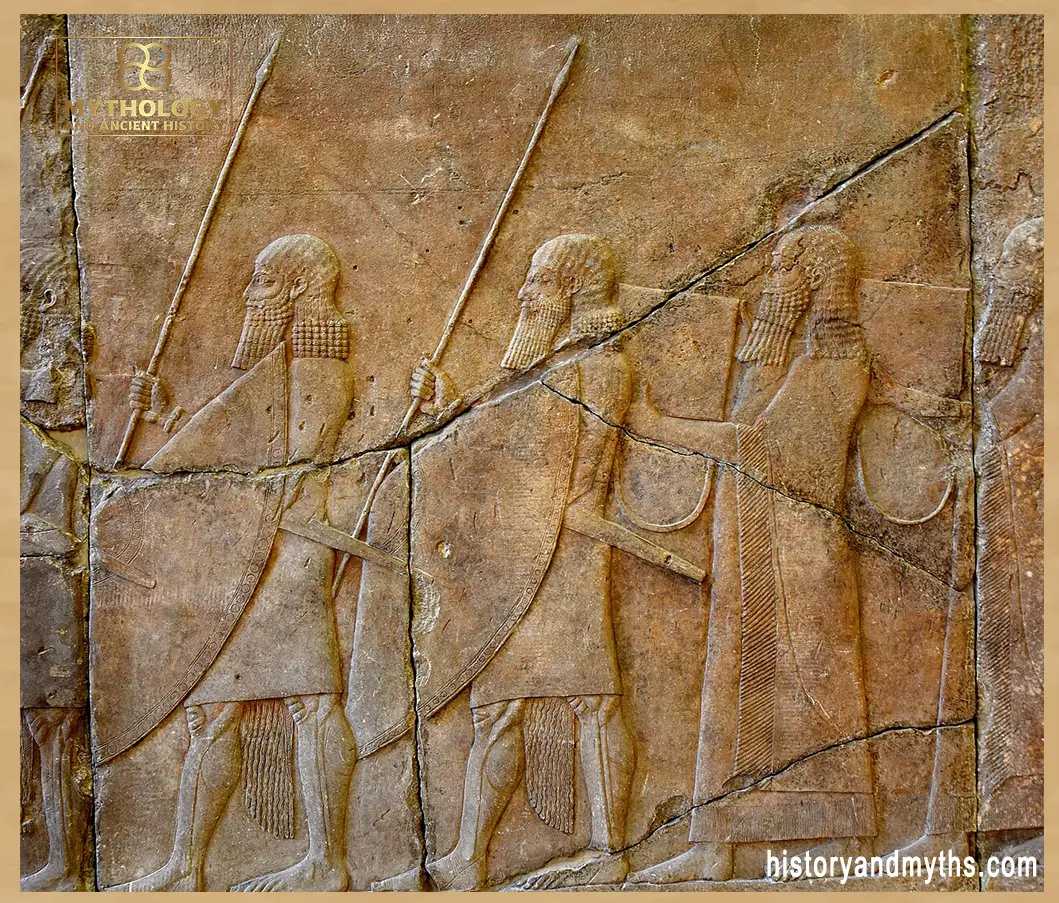
Middle officers supervised small units, maintained formation, and ensured compliance with orders. They monitored attendance, equipment condition, and readiness. In camp and on the march, they controlled movement, rest periods, and guard duties. Their authority was constant and immediate.
Discipline was enforced through clear procedures. Infractions such as desertion, insubordination, or negligence were recorded and reported. Punishments ranged from loss of rations and status to physical penalties and execution. Enforcement was designed to be predictable rather than arbitrary, reinforcing institutional authority.
These officers also played an administrative role. They kept basic records of personnel, injuries, and casualties. Reports were forwarded to higher command, creating a continuous flow of information. Military control relied as much on documentation as on coercion.
Promotion often depended on reliability rather than noble status. Soldiers who demonstrated loyalty and competence could rise to supervisory positions. This created internal incentives for conformity and performance, reducing dependence on external enforcement.
Through this system, discipline became routine rather than exceptional. Order was maintained not through constant royal intervention, but through embedded layers of supervision that operated at every level of the army.
Administrative Staff within the Army
Behind visible combat units operated a specialized administrative apparatus that sustained military organization. Scribes, clerks, and logistics officers ensured that armies functioned as regulated institutions rather than improvised forces.
Military scribes maintained registers of personnel, equipment, and obligations. They recorded recruitment quotas, service periods, injuries, deaths, and disciplinary actions. These records linked soldiers to provincial administrations and central archives, making manpower traceable and controllable.
Supply officers managed warehouses and transport. They calculated ration requirements, organized convoys, and monitored distribution. Grain, beer, textiles, and animals were allocated according to rank and unit size. Shortages or losses were documented and investigated, reducing waste and corruption.
Financial administrators handled payments, booty distribution, and compensation. Even when soldiers were paid in kind rather than silver, values were standardized. This allowed military service to be integrated into broader fiscal systems.
Communication staff transmitted orders and reports between field units and central authorities. Couriers and record keepers ensured that information moved reliably across long distances. Delays or inaccuracies were treated as serious administrative failures.
This bureaucratic infrastructure transformed armies into mobile administrative systems. Military effectiveness depended not only on courage or numbers, but on continuous documentation, supervision, and logistical coordination.
Field Unit Organization
Mesopotamian armies were divided into functional units designed for specific operational tasks. Organization in the field reflected practical requirements rather than abstract numerical models. Units were structured around combat roles, movement efficiency, and logistical support.
Infantry formed the core of most forces. These soldiers operated in coordinated groups under designated leaders, maintaining formation during advances and defensive positions. Archers provided ranged support, weakening enemy lines before direct engagement. Their placement was carefully controlled to maximize effectiveness and prevent disorder.
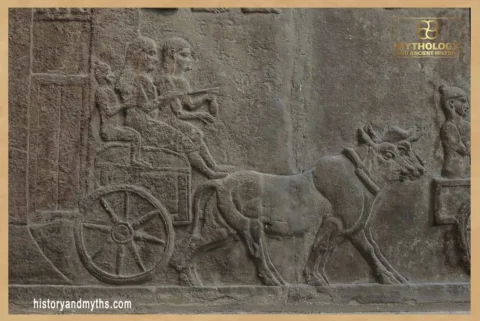
Chariot crews and mobile units served primarily as command and communication platforms. They allowed officers to supervise wider sections of the battlefield and transmit instructions quickly. Their value lay more in coordination than in shock assault.
Engineering units handled construction and technical tasks. They built ramps, bridges, temporary fortifications, and siege equipment. These specialists operated alongside combat troops but followed separate chains of command focused on technical execution.
Support units managed transport, animal handling, and camp maintenance. Guards protected supply convoys and storage areas. Medical and recovery functions, though limited by modern standards, were integrated into camp routines through designated attendants.
This division of labor enabled Mesopotamian armies to operate as coordinated systems. Each unit performed a defined function within a larger operational framework, reducing dependence on individual initiative and increasing institutional reliability.
How an Assyrian Campaign Was Organized
- Royal authorization and campaign orders
- Provincial mobilization of troops and supplies
- Assembly at strategic locations
- Formation of marching columns
- Protection of supply convoys
- Field command coordination
- Post-campaign reporting and redistribution
© historyandmyths.com — Educational Use
Structure During Campaigns and Marches
During campaigns, Mesopotamian armies followed strict movement protocols. Marching order was designed to protect command staff, supply convoys, and communication lines. Scouts advanced ahead of main forces, while rear units secured vulnerable transport columns.
Units moved in coordinated blocks rather than scattered formations. Rest points, water access, and storage locations were selected in advance. Officers regulated pace and spacing to prevent exhaustion and disorder.
Supply protection was central. Dedicated guards accompanied food and equipment transports. Loss of provisions could terminate campaigns regardless of battlefield success. Logistics therefore shaped operational decisions.
Communication remained continuous. Field reports were transmitted to commanders through messengers and relay systems. Adjustments were made based on terrain, resistance, and resource availability.
This structured mobility allowed armies to operate far from home bases without collapsing into chaos. Campaign movement functioned as a controlled administrative process rather than spontaneous migration.
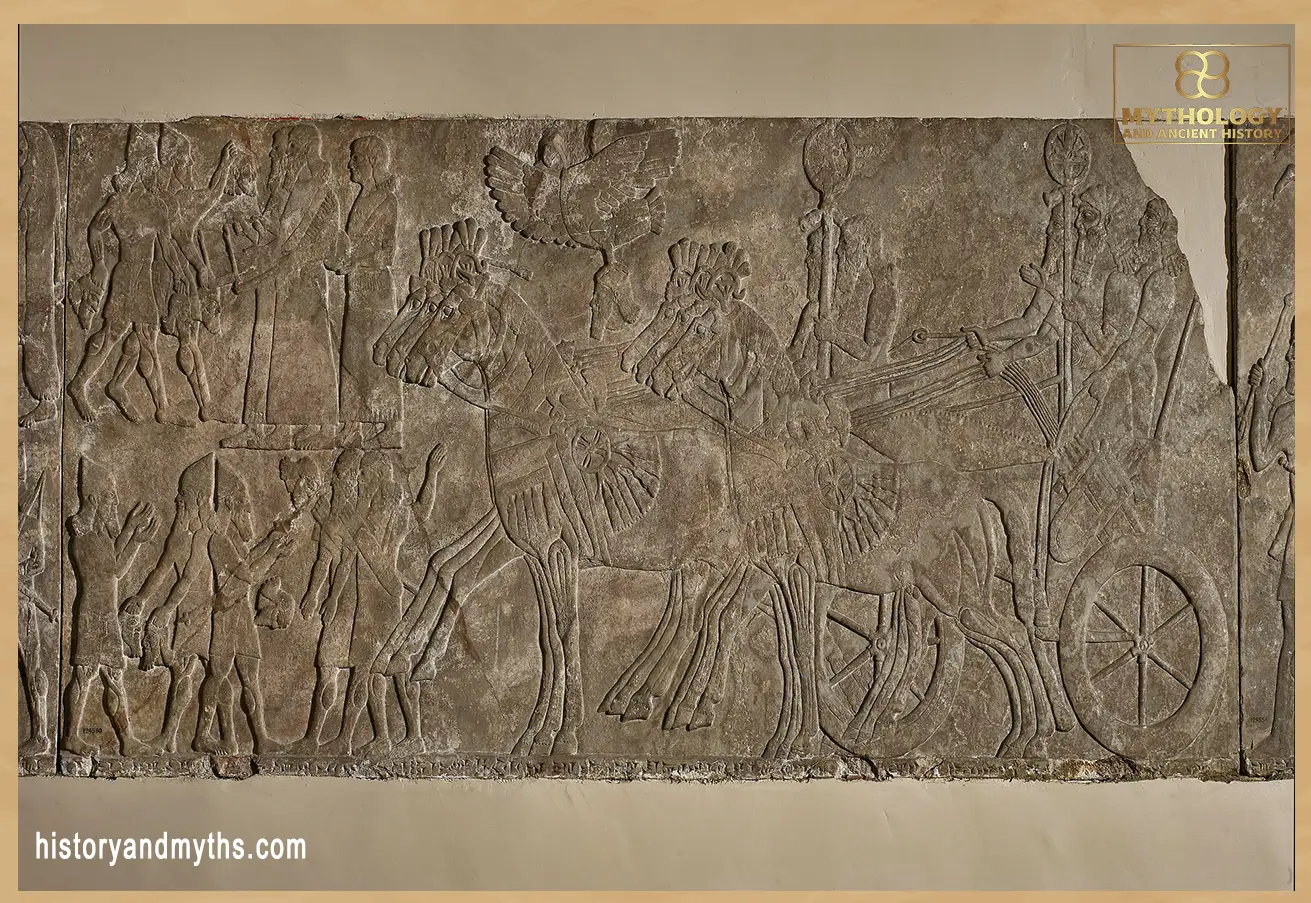
Accountability, Rewards, and Punishment
Mesopotamian military organization relied on accountability at every level. Service, performance, and discipline were documented and evaluated. Authority did not operate without oversight.
Rewards reinforced loyalty. Successful officers received land grants, promotions, or shares of captured wealth. Soldiers could gain status through reliability and battlefield effectiveness. Advancement depended on demonstrable service rather than lineage alone.
Punishment was equally structured. Desertion, disobedience, or failure in command triggered formal penalties. Sanctions ranged from loss of rations and rank to execution in severe cases. Enforcement was designed to deter breakdown of order.
Commanders were not exempt. Failed campaigns, negligence, or suspected disloyalty could result in removal or severe reprisal. Responsibility flowed upward as well as downward.
Through regulated incentives and penalties, the army maintained cohesion without constant direct royal intervention. Discipline was institutionalized, not improvised.
Continue Reading
The Assyrian Model: Peak Military Organization
The Neo-Assyrian Empire represented the most advanced form of military organization in Mesopotamia. Earlier systems had integrated administration and command, but Assyria transformed this integration into permanent institutional structure.
The army was maintained year-round. Units were standardized, leadership was professionalized, and logistics operated through pre-planned provincial networks. Recruitment, provisioning, and deployment followed predictable administrative routines rather than emergency mobilization.
Command authority was clearly layered. The king remained supreme commander, but operational control flowed through high-ranking generals and specialized officers. Military governance extended into conquered territories through garrisons and appointed administrators.
Documentation reached a new level of precision. Personnel lists, tribute records, and campaign reports were systematically archived. Information management became a strategic asset, allowing rapid response to rebellion or external threat.
This model produced sustained expansion but also required constant resource extraction. Its strength lay in coordination and discipline. Its vulnerability lay in overextension. Even at its peak, the Assyrian system depended on uninterrupted administrative control.
The Assyrian army did not rely on numerical superiority alone. It relied on structure. Organization—not aggression—was the foundation of its dominance.
Key Takeaways
- Mesopotamian armies operated as bureaucratic institutions.
- Command authority followed clear hierarchical structures.
- Logistics and documentation sustained military operations.
- Middle officers enforced discipline and accountability.
- Administrative staff controlled manpower and supplies.
- The Assyrian system represented peak military organization.
Frequently Asked Questions
Who commanded Mesopotamian armies?
The king served as supreme commander, supported by senior generals and officers.
What was the role of the Turtanu?
The Turtanu acted as chief general and led major campaigns in the Assyrian period.
How were soldiers organized?
They were divided into functional units under designated officers.
Did armies rely on written records?
Yes. Personnel, supplies, and discipline were documented by military scribes.
How was discipline enforced?
Through regulated punishments and administrative supervision.
Were all soldiers professionals?
No. Many served seasonally alongside agricultural labor.
Why was Assyria so militarily effective?
Because of permanent organization, logistics, and centralized command.
Sources & Rights
- Hamblin, William J. Warfare in the Ancient Near East to 1600 BC. London: Routledge, 2006.
- Radner, Karen. Ancient Assyria. Oxford: Oxford University Press, 2015.
- Parpola, Simo, ed. Letters from Assyrian and Babylonian Scholars. Helsinki, 1993.
- Dalley, Stephanie. Letters from Mesopotamia. Winona Lake: Eisenbrauns, 2004.
- Gomi, Tohru. “The Army of the Kings of Ur.” CDLI Journal, 2009.
- British Museum. Neo-Assyrian Palace Reliefs Collection.
Written by H. Moses — All rights reserved © Mythology and History