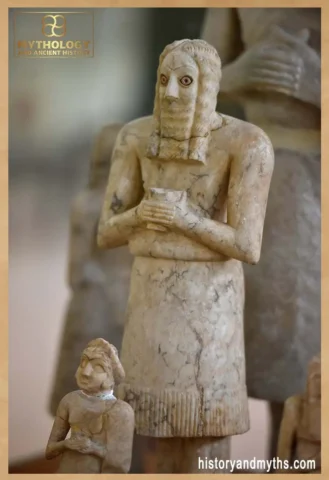
Assyrian Reliefs: Power, War, and Political Art in Mesopotamia
Mesopotamian reliefs were state-controlled stone carvings used to document power, enforce authority, and shape political memory in ancient Assyria and Babylonia. Carved on palace walls and ceremonial corridors, these low-relief panels transformed military victories, royal rituals, and divine favor into permanent visual narratives.
Rather than serving decorative purposes, reliefs functioned as ideological instruments. They presented kings as invincible rulers, enemies as defeated subjects, and the empire as a divinely protected order. Through carefully organized scenes, repetition, and symbolic framing, relief artists controlled how history was seen, remembered, and interpreted.
This article examines Mesopotamian reliefs as visual systems of governance. By analyzing their placement, narrative structure, production methods, and political meaning, it reveals how carved images became one of the most powerful tools of imperial communication in the ancient Near East.
What Were Mesopotamian Reliefs?
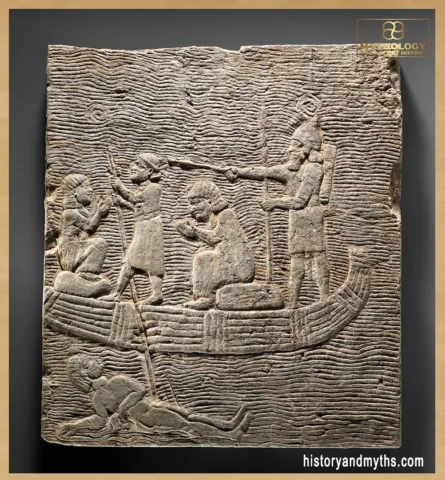
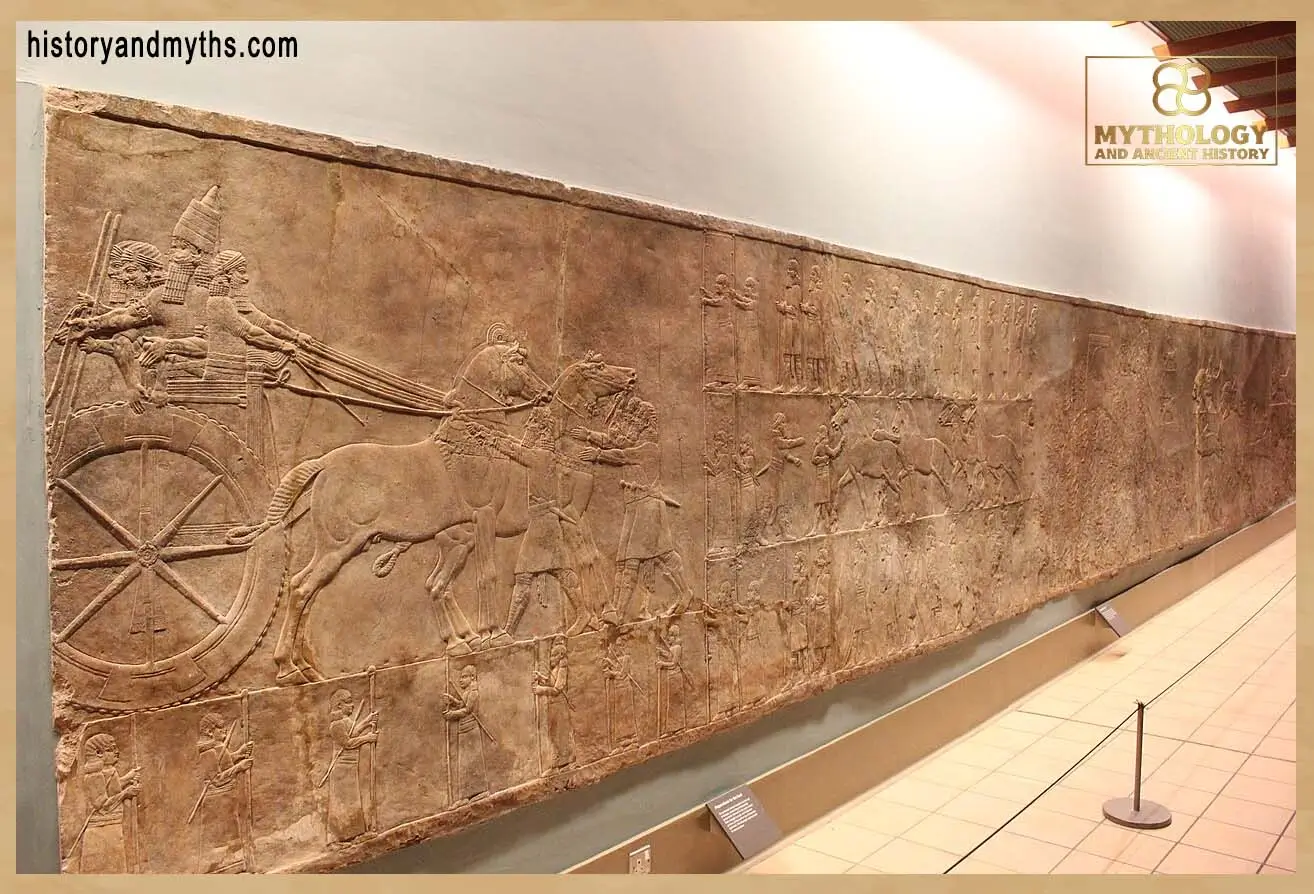
Mesopotamian reliefs were shallow stone carvings installed on the walls of palaces, temples, and ceremonial spaces, especially during the Neo-Assyrian period. Unlike free-standing statues, these works were integrated into architecture and designed to be read as continuous visual narratives. Most surviving examples were carved on gypsum or alabaster panels and arranged in long horizontal sequences.
Their primary function was communicative rather than decorative. Reliefs recorded military campaigns, royal rituals, hunting scenes, and tribute ceremonies in standardized visual formats. Through these images, rulers transformed political events into permanent public records that reinforced authority and ideological control.
Reliefs operated within a controlled visual system. Composition, figure placement, and thematic repetition followed strict conventions. Kings appeared at the center of action, enemies were portrayed as disordered, and divine symbols framed political success. These patterns ensured that viewers interpreted scenes according to official state narratives.
Definition and Materials
Technically, Mesopotamian reliefs belong to the category of low-relief sculpture, in which figures project only slightly from the background surface. This method allowed artists to cover large architectural spaces without compromising structural stability. Most panels were carved from soft stone, particularly gypsum and alabaster, which were abundant in northern Mesopotamia.
After carving, many reliefs were originally painted in bright pigments, though most color has disappeared. Surface polishing and fine incision enhanced visual clarity under natural palace lighting. These technical choices optimized both durability and legibility.
Reliefs vs Free-Standing Sculpture
Unlike independent statues, reliefs were not meant to be viewed in isolation. Their meaning depended on spatial context, sequence, and architectural placement. A single panel carried limited significance; its full message emerged only when read alongside adjacent scenes.
Free-standing sculptures emphasized permanence and divine presence, while reliefs emphasized action, movement, and historical narrative. This distinction reflects different institutional functions: statues supported worship and ritual, whereas reliefs supported political communication and imperial memory.
By embedding images within walls, rulers ensured that political narratives became inseparable from royal architecture. Power was not only represented—it was physically built into the palace environment.
| Aspect | Mesopotamian Reliefs |
|---|---|
| Material | Gypsum, alabaster, limestone |
| Main Locations | Palaces, throne rooms, ceremonial corridors |
| Primary Themes | War, tribute, rituals, royal authority |
| Function | Political propaganda and ideological control |
| Audience | Elites, diplomats, palace officials |
| Production | State-supervised workshops |
| Period of Peak Use | Neo-Assyrian Period (9th–7th century BCE) |
Where Were Reliefs Displayed?
Mesopotamian reliefs were placed in carefully selected architectural spaces where they could shape perception, control movement, and reinforce authority. Their location was never random. Every corridor, hall, and gateway was part of a designed political experience.
Palace Corridors
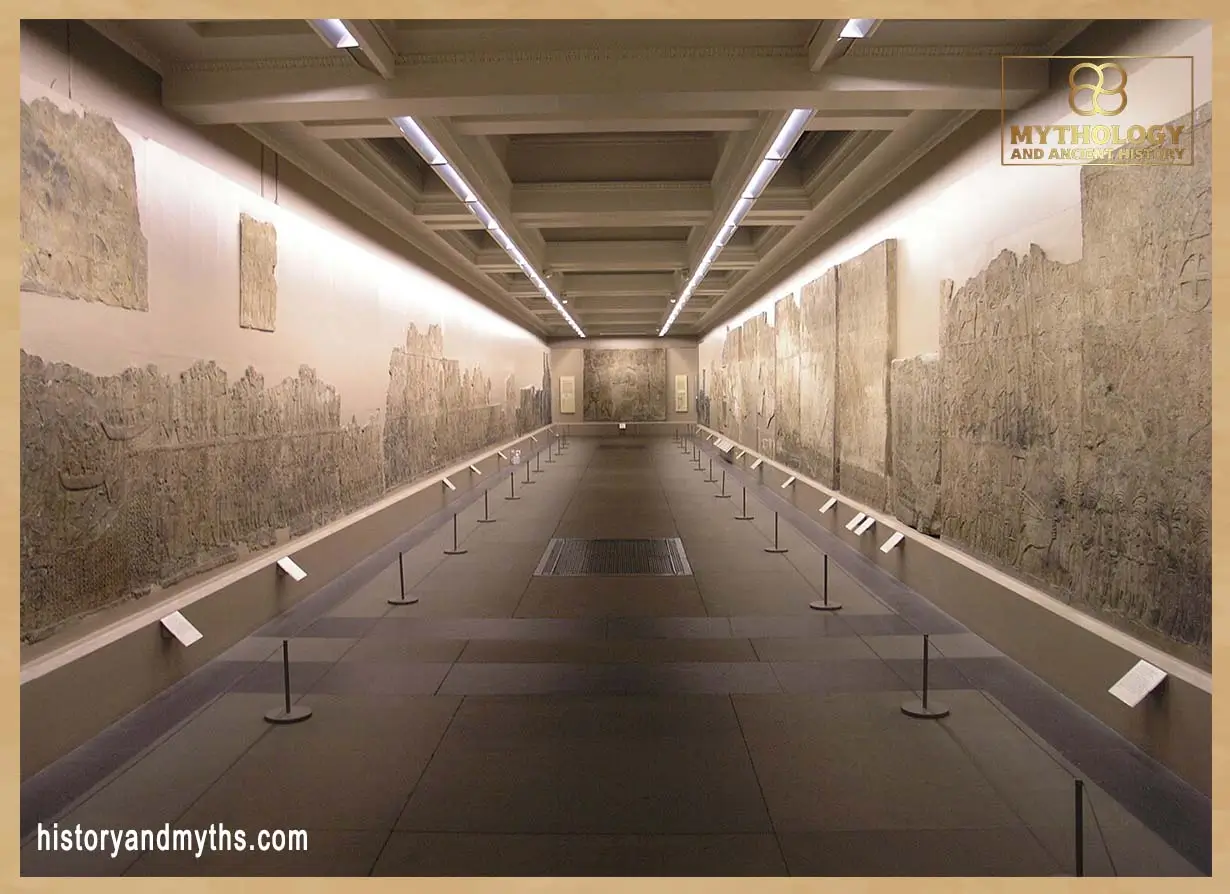
Most reliefs were installed along long palace corridors that connected ceremonial and administrative spaces. These passages forced visitors to walk beside continuous visual narratives of conquest, ritual, and royal power. As officials, envoys, or provincial governors moved through the palace, they were surrounded by images of imperial dominance.
This arrangement turned physical movement into ideological exposure. Walking through the palace meant walking through the king’s victories and legitimacy.
Throne Rooms
Throne rooms represented the symbolic center of royal authority. Reliefs placed there emphasized divine approval, military success, and dynastic continuity. Scenes of tribute, hunting, and ritual framed the ruler’s seat, visually confirming his status as both political leader and divinely favored figure.
In this setting, reliefs functioned as silent witnesses that reinforced hierarchy during audiences and ceremonies.
Gates and Processional Routes
Some reliefs appeared near palace entrances, courtyards, and ceremonial routes. These areas served as transitional spaces between the public and royal domains. Images placed here prepared visitors psychologically before direct contact with authority.
By controlling visual experience at key points of entry, rulers managed expectations and reinforced obedience.
Rock Reliefs Outside Cities
Beyond palace complexes, some reliefs were carved directly into natural rock surfaces near roads, rivers, and mountain passes. These rock reliefs marked territorial control and imperial presence in frontier regions.
Unlike palace reliefs, which targeted elites, rock reliefs addressed broader audiences. They transformed landscapes into political statements, announcing royal power across geographic space.
Reliefs as Political Propaganda
Mesopotamian reliefs functioned as visual instruments of state propaganda long before the concept existed in modern political theory. They did not merely record events; they constructed official versions of reality designed to legitimize power and suppress alternative interpretations.
War and Conquest Scenes
Military campaigns formed the central theme of most Assyrian relief programs. Battles, sieges, and marches were presented in carefully ordered sequences that emphasized discipline, coordination, and inevitability of victory. Enemy cities were shown collapsing, while Assyrian forces advanced without disorder.
Defeat was never portrayed as uncertain. Every scene reinforced the idea that imperial expansion was both unstoppable and divinely supported.
Tribute and Submission
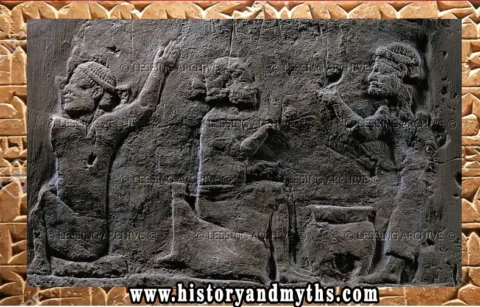
Reliefs frequently depicted foreign delegations bringing gifts, animals, and luxury goods to the Assyrian court. These scenes represented political submission rather than economic exchange. Subjects were shown bowing, lowering their heads, and offering tribute under royal supervision.
Through these images, empire was transformed into a visible hierarchy. Political dependency became a permanent visual fact.
Royal Hunting
Hunting scenes, especially lion hunts, served as symbolic extensions of warfare. The king’s ability to defeat powerful animals demonstrated physical strength, courage, and divine favor. Lions represented chaos and danger; their defeat symbolized the ruler’s capacity to maintain cosmic and political order.
These scenes reinforced leadership legitimacy without depicting human enemies.
Enemy Representation
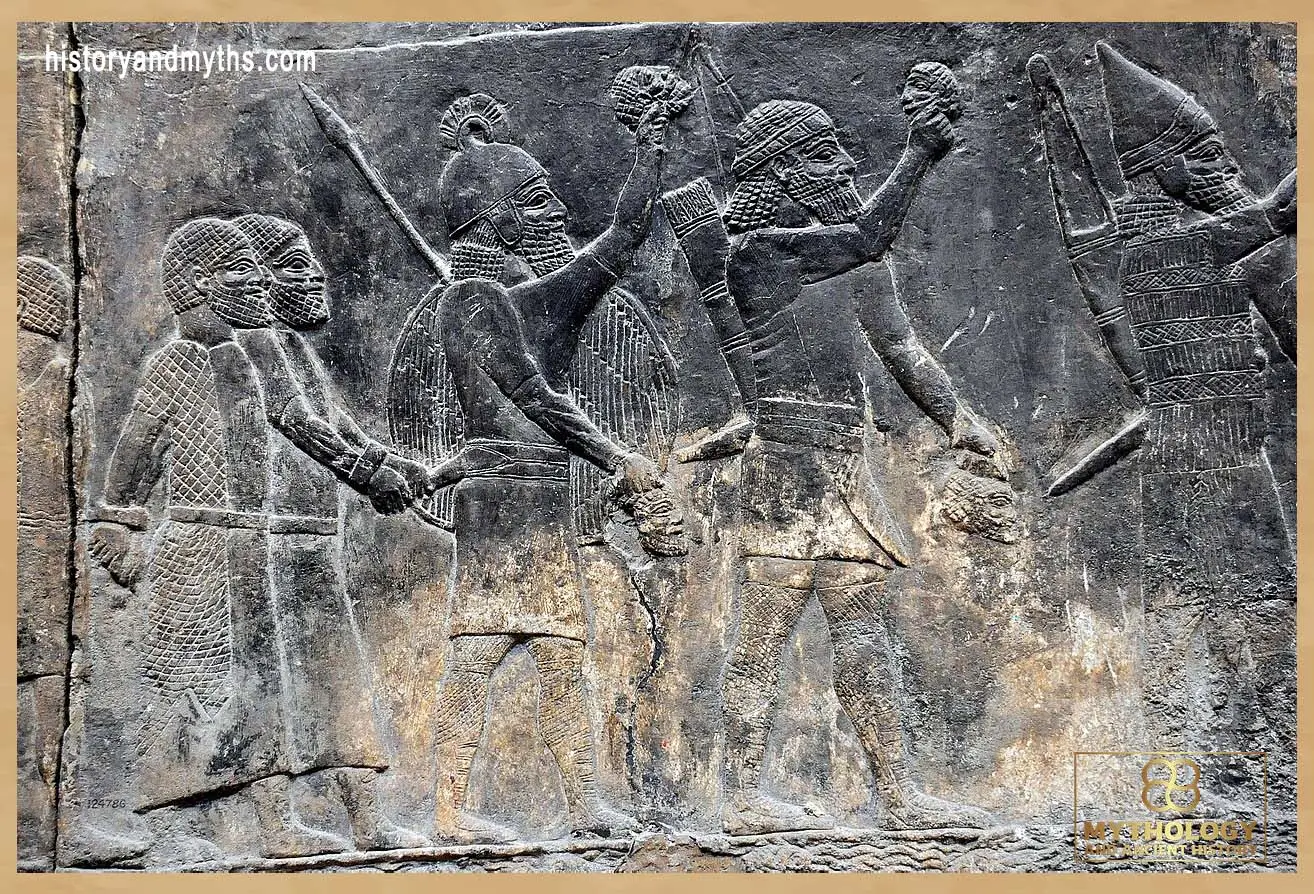
Opponents were portrayed as disorganized, fearful, and physically inferior. Captives appeared naked, wounded, or restrained. Executions and punishments were shown without concealment. Violence was not hidden; it was institutionalized as part of political messaging.
By controlling how enemies appeared, reliefs eliminated sympathy and justified domination.
Narrative Techniques in Relief Art
Mesopotamian reliefs were carefully designed visual narratives that guided viewers through controlled interpretations of events. Artists did not aim to reproduce reality as it occurred, but to construct stories that served political and ideological objectives.
Sequential Storytelling
Relief panels were arranged in continuous horizontal bands that unfolded like visual chronicles. Battles, marches, rituals, and celebrations were presented in ordered sequences, allowing viewers to follow events step by step.
This technique created the illusion of historical completeness while filtering out failure, confusion, and contradiction.
Repetition and Framing
Key motifs—such as the king, divine symbols, and victorious troops—were repeatedly inserted into different scenes. Borders, trees, mountains, and architectural elements framed compositions and directed attention toward central figures.
Repetition reinforced authority. Framing limited alternative readings.
Controlled Viewpoints
Reliefs were carved from fixed perspectives that favored clarity over realism. Scenes were flattened, overlapping figures were carefully spaced, and important actors were positioned in unobstructed views.
This eliminated visual ambiguity. Viewers were guided toward predetermined interpretations.
Visual Editing
Artists selected, combined, and rearranged episodes to produce coherent ideological narratives. Separate events could be merged into single sequences, while undesirable moments were omitted entirely.
In modern terms, reliefs functioned as edited political documentaries carved in stone.
Why Reliefs Were Central to Assyrian Power
- They transformed military campaigns into permanent political records.
- They integrated ideology directly into palace architecture.
- They controlled how history was visually remembered.
- They reinforced divine legitimacy of kingship.
- They psychologically influenced visitors and officials.
© historyandmyths.com — Educational Use
Religion and Myth in Reliefs
Religious symbolism formed an essential layer of meaning within Mesopotamian relief programs. Political authority was never presented as purely human. Every major victory, ritual, and royal action was framed as part of a divinely sanctioned cosmic order.
Divine Protection
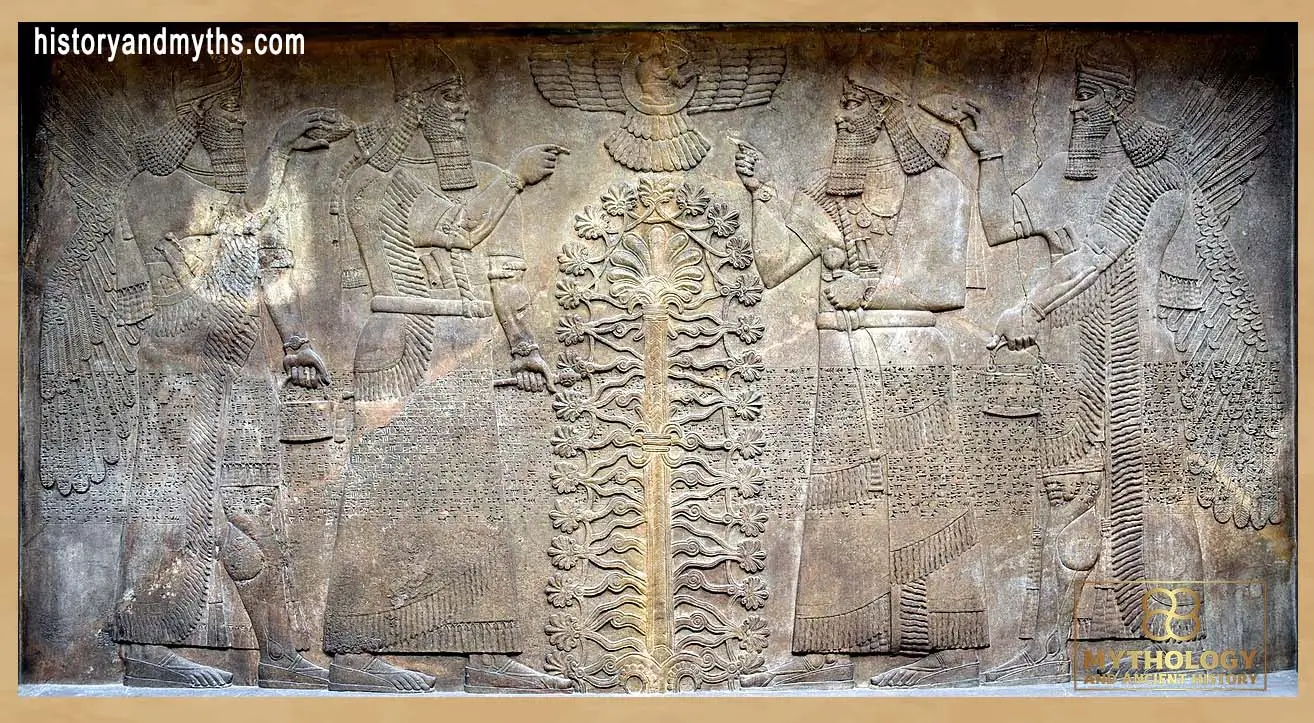
Kings were frequently shown receiving blessings from major deities or standing beneath sacred symbols such as the winged disk. Protective spirits and hybrid beings appeared near royal figures, visually reinforcing the idea that divine forces actively guarded imperial power.
These images communicated that opposition to the ruler was equivalent to opposition to the gods.
Sacred Trees and Symbols
The so-called “sacred tree” motif appeared repeatedly in Neo-Assyrian reliefs. Surrounded by winged figures and royal attendants, it symbolized fertility, cosmic balance, and divine order. Although its precise theological meaning remains debated, its constant repetition indicates strong ideological importance.
Other symbols—including rosettes, solar disks, and ritual vessels—functioned as visual references to divine presence and ritual authority.
Ritual Processions
Reliefs often depicted ceremonial processions involving priests, musicians, and royal attendants. These scenes emphasized orderly movement, synchronized gestures, and hierarchical spacing.
By presenting ritual as perfectly organized and uninterrupted, reliefs projected an image of religious stability and institutional control.
Production and Workshop Control
Mesopotamian reliefs were not created by individual artists working independently. They were produced within tightly regulated institutional systems controlled by the royal administration. Every stage—from design to installation—was supervised to ensure ideological consistency and political reliability.
State Supervision
Relief production was directed by palace officials and high-ranking administrators. These authorities approved themes, layouts, and symbolic content before carving began. Artistic decisions were therefore political decisions shaped by state priorities.
Scribes often participated in planning processes, translating royal campaigns and rituals into visual programs.
Standardized Templates
Artists worked from established models that defined proportions, poses, and compositional structures. Kings, soldiers, enemies, and deities followed fixed visual formulas that limited personal interpretation.
These templates allowed multiple workshops to produce unified artistic programs across different palaces and reigns.
Quality Control
Finished panels were inspected before installation. Errors, inconsistencies, or deviations from official imagery were corrected or discarded. This system maintained visual discipline and prevented unauthorized symbolism.
Uniformity was not a limitation—it was a strategic requirement.
Labor Organization
Large relief projects required coordinated teams of quarry workers, transporters, carvers, polishers, and installers. Labor was organized hierarchically, with master craftsmen supervising apprentices and assistants.
This industrial-scale organization reflects the bureaucratic capacity of the Neo-Assyrian state.
Continue Reading
Who Was Meant to See the Reliefs?
Mesopotamian reliefs were designed for carefully defined audiences. They were not intended for unrestricted public viewing, but for selected groups whose loyalty, obedience, and perception of power mattered most to the state.
Diplomats and Foreign Visitors
Foreign envoys and tribute-bearers were among the primary targets of palace relief programs. As they moved through decorated corridors, they encountered visual records of conquest, punishment, and domination.
These images communicated political messages before any formal negotiation began. Diplomacy started with intimidation.
Provincial Elites
Local governors, military officers, and regional administrators regularly visited imperial centers. Reliefs reminded them of central authority and reinforced hierarchical dependence.
By surrounding elites with visual evidence of royal power, the state reduced the risk of dissent and fragmentation.
Palace Officials
Court administrators, scribes, and attendants operated daily within relief-filled spaces. Continuous exposure normalized imperial ideology and reinforced institutional loyalty.
Visual repetition functioned as long-term political conditioning.
Psychological Impact
Reliefs shaped emotional responses as much as intellectual understanding. Scale, violence, repetition, and narrative clarity generated awe, fear, and submission.
Power was not only explained—it was felt.
Why Neo-Assyrian Reliefs Dominated
Neo-Assyrian reliefs surpassed earlier Mesopotamian traditions in scale, complexity, and political function because they emerged within a uniquely centralized and expansionist state system. Their dominance was not artistic coincidence, but the result of structural advantages.
Military Expansion
Continuous military campaigns provided both subject matter and ideological urgency. Victories needed to be documented, justified, and displayed. Reliefs became the primary medium for transforming conquest into permanent imperial memory.
Economic Resources
The Neo-Assyrian state controlled extensive tribute networks and trade routes. Access to labor, stone, and transport infrastructure allowed large-scale artistic programs that earlier kingdoms could not sustain.
Centralized Bureaucracy
A highly organized administrative system coordinated artistic production across multiple cities and reigns. Standardized planning, funding, and supervision enabled visual consistency on an imperial scale.
Ideological Discipline
Neo-Assyrian rulers developed a unified political theology that linked kingship, warfare, and divine favor. Reliefs served as visual expressions of this ideology. Their clarity, repetition, and narrative structure reflected tight ideological control.
Archaeology and Survival
The survival of Mesopotamian reliefs is the result of material durability, burial conditions, and historical circumstance rather than deliberate preservation. Most surviving examples come from northern Mesopotamia, where gypsum and alabaster panels were protected by collapsed palace structures.
Excavation History
Nineteenth- and early twentieth-century excavations in sites such as Nimrud, Nineveh, and Khorsabad prioritized monumental palace reliefs. Smaller or damaged pieces were often ignored, creating a biased archaeological record focused on imperial imagery.
Museum Dispersion
Reliefs were removed and distributed to museums in Europe, North America, and the Middle East. This dispersal fragmented original narrative sequences and altered contextual interpretation.
Loss and Destruction
War, looting, environmental damage, and deliberate iconoclasm have destroyed many reliefs, especially in recent decades. What survives represents only a fraction of original production.
Legacy of Mesopotamian Relief Art
Mesopotamian reliefs established one of the earliest systematic traditions of political storytelling in visual form. By combining narrative sequencing, symbolic framing, and architectural integration, they transformed stone surfaces into instruments of governance and historical control.
Later Near Eastern empires adopted similar strategies of monumental display and ideological imagery. The use of reliefs to communicate authority, discipline elites, and shape collective memory became a durable model for imperial representation.
In modern scholarship, Assyrian reliefs remain essential sources for reconstructing military practices, court rituals, and state ideology. Their continued relevance lies not in aesthetic admiration, but in their capacity to reveal how early states used images to organize power, obedience, and belief.
Key Takeaways
- Mesopotamian reliefs were tools of governance, not decoration.
- They functioned as visual propaganda and historical control systems.
- Placement within palaces shaped political perception.
- Standardized workshops ensured ideological consistency.
- Reliefs linked royal authority to divine approval.
- Their survival reflects both durability and archaeological bias.
Frequently Asked Questions
What were Assyrian reliefs used for?
They were used to document military victories, rituals, and royal authority as visual propaganda.
Where were Mesopotamian reliefs placed?
Mainly in palace corridors, throne rooms, and ceremonial spaces.
Were these reliefs historically accurate?
They reflected official state narratives rather than objective history.
Why do most surviving reliefs come from Assyria?
Because of centralized production, durable materials, and extensive palace programs.
Were reliefs originally colored?
Yes, many were painted, although most pigments have disappeared.
Who controlled their production?
Royal administrators supervised workshops and approved designs.
What do reliefs reveal about Assyrian ideology?
They show how power, religion, and warfare were visually integrated.
Sources & Rights
- Albenda, Pauline. The Palace of Sargon, King of Assyria. Paris.
- Boardman, John. The Art of the Ancient Near East. London.
- Curtis, John. Assyrian Reliefs and Sculpture. British Museum.
- Frankfort, Henri. Art and Architecture of the Ancient Orient. Yale University Press.
- Kuhrt, Amélie. The Ancient Near East. Routledge.
- Layard, Austen Henry. Nineveh and Its Remains. London.
- Reade, Julian. Assyrian Sculpture. British Museum Press.
- Russell, John Malcolm. The Writing on the Wall. Eisenbrauns.
- Winter, Irene. On Art in the Ancient Near East. Brill.
- Zainab Bahrani. The Graven Image. University of Pennsylvania Press.
- Oates, Joan. Babylon. Thames & Hudson.
- Van De Mieroop, Marc. A History of the Ancient Near East. Wiley.
Written by H. Moses — All rights reserved © Mythology and History