Burial of the Poor in Ancient Egypt: Simple Graves and Real Life
Poor Egyptians were not “thrown away” in death. Their burials were simpler, cheaper, and often closer to the desert’s raw practicality—pit graves, basic wrapping, and few goods—but they still followed a clear goal: separating the dead safely, protecting identity, and giving the family a socially “proper” way to let someone pass on.
Poverty did not erase belief in the afterlife. What it changed was the toolkit. The wealthy could buy extra layers of protection—full embalming, decorated coffins, long spells, and permanent tomb architecture. The poor worked with minimal materials and limited time, using the environment itself as part of the solution.
That is why “burial of the poor” is best understood as a system of constraints. It is less about religion disappearing, and more about religion being reduced to its most affordable and workable form. A simple grave could still be meaningful if it achieved what mattered most: a recognizable burial, a controlled separation from the world of the living, and a sense that the dead had not been abandoned.
This article breaks down what the simplest Egyptian burials looked like, what was optional versus essential, and how class shaped the archaeological record—without confusing poor burial with elite funerary ideals.
Burial of the Poor: What “Simple” Actually Looked Like
A poor burial in Ancient Egypt was usually defined by what it didn’t have: no monumental tomb, no expensive coffin set, no long funerary text program, and often no professional embalming. But “simple” didn’t mean careless. It meant the family relied on the fastest, cheapest path to the same core outcome—getting the body out of daily life, placed in a recognized burial space, and treated in a way that still felt socially acceptable.
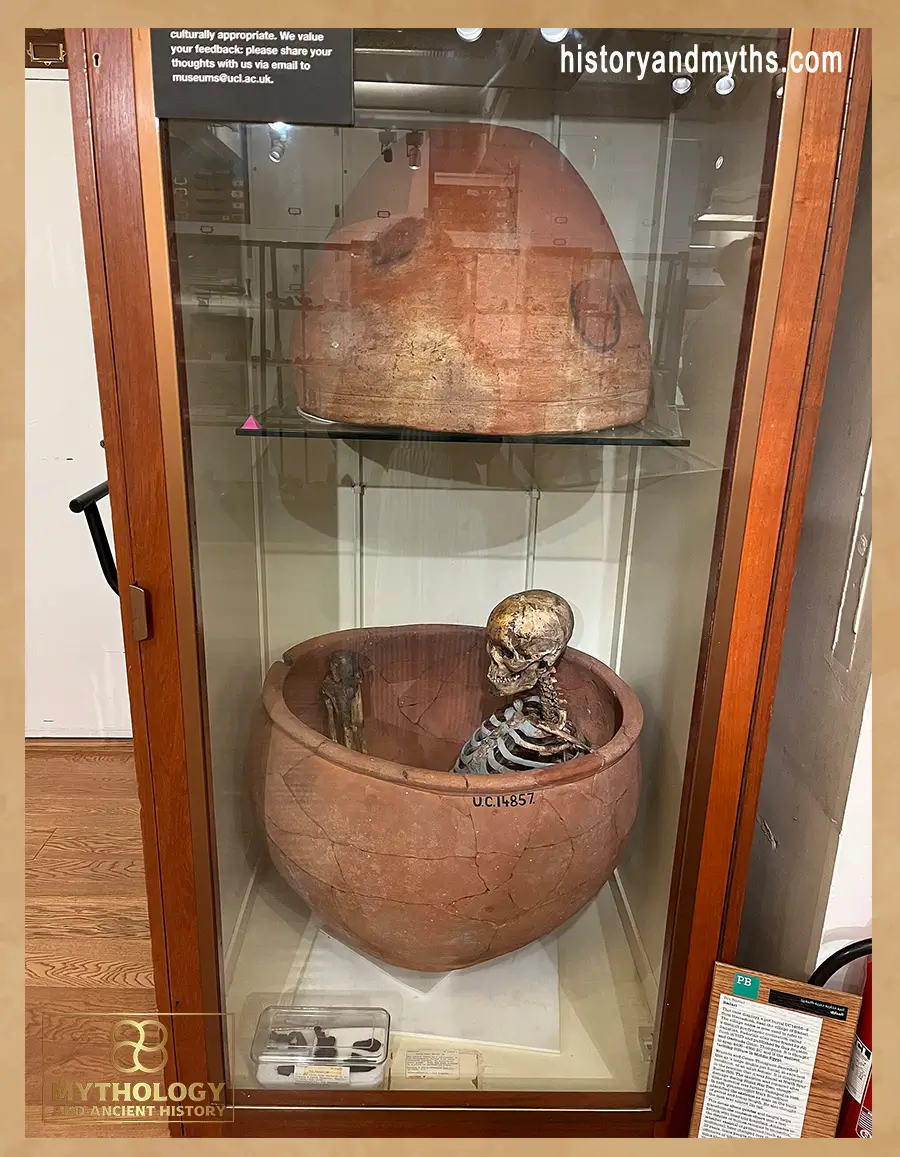
The most common baseline was practical and direct: a shallow grave or small pit, basic wrapping if available, and very limited objects placed with the dead. In desert environments, the sand itself could become part of the burial method, because dryness and heat reduced decay and sometimes preserved remains without intentional mummification. That natural effect mattered because it lowered the cost of achieving something that looked, to the living, like “preservation” without paying for full embalming.
When grave goods appear in poor burials, they tend to be minimal and functional rather than display-driven—small containers, modest personal items, or simple amuletic protection when it could be afforded. The pattern is consistent: the burial is doing the least amount of “extra work,” while still communicating that the person was buried, remembered, and separated properly from the living world.
So the real definition of poor burial is not “no ritual.” It is compressed ritual—a reduced version of the same cultural logic, shaped by money, labor, and access to materials.
| Aspect | Common Practice | Purpose |
|---|---|---|
| Grave Type | Shallow pit or simple grave | Separate the dead from daily life |
| Body Treatment | Minimal wrapping or reed mat | Basic care and protection |
| Preservation | Natural drying in desert sand | Low-cost body preservation |
| Grave Goods | Few or none | Symbolic or personal value only |
| Burial Location | Community or workers’ cemeteries | Social recognition of death |
Pit Graves, Sand, and “Natural Mummification”: The Cheapest Form of Preservation
Long before embalming became a widespread ideal, Egypt’s landscape offered a brutal advantage: the desert could preserve a body without expensive intervention. For poor families, this wasn’t a spiritual luxury—it was a practical solution that made a simple burial feel more stable and “complete” than it otherwise would.
A shallow pit in dry sand did two things at once. It hid the dead from animals and daily life, and it placed the body in an environment where moisture could drain away quickly. In some cases, that dryness slowed decay enough that the remains stayed recognizable far longer than they would in wetter climates. That accidental preservation created a powerful impression: the body was not instantly lost, even without elite-level embalming.
This is one reason poor burials can’t be treated as “less Egyptian.” They used a different method, but they still aimed at the same basic goal—continuity. If the dead person could remain identifiable, even partially, the burial gained emotional and symbolic weight: the person was still “there,” still held within a known place, and still treated as someone whose transition mattered.
Later embalming technologies made preservation more intentional, but the poor often lived at the edge of that system. Their burials show how Egyptians could rely on the environment as a substitute for costly ritual equipment—turning geography into the most affordable form of afterlife insurance.
Did the Poor Get Mummified? Degrees of Embalming, Not a Yes-or-No
In Ancient Egypt, embalming was a spectrum, and poverty didn’t always mean “no preservation”—it often meant partial preservation, cheaper methods, or none at all depending on place, period, and family resources.
Full elite mummification required specialists, time, materials, and access: resins, natron treatment, careful wrapping, and sometimes a broader package of funerary spending that included coffins, masks, and texts. That full system was expensive, and it’s exactly why elite burials look so different archaeologically.
Poor families, however, could still pursue limited forms of body care when possible. A body might be wrapped more simply, treated less thoroughly, or preserved indirectly through desert burial conditions rather than through formal embalming. In some communities, families could also imitate parts of the process—enough to feel they had done something “proper,” without buying the complete version.
So the right question isn’t “Were the poor mummified?” The better question is: How much preservation could they afford, and what counted as “enough”? Poor burial shows the Egyptian afterlife logic under pressure—where belief remains strong, but the material expression is forced into the smallest workable shape.
What the Poor Could Afford: Wrappings, Mats, and the Cheapest Grave Goods
If elite burials were built around display and long-term security, poor burials were built around immediacy and limits. Families worked with whatever they could secure quickly—because death doesn’t wait for money, and the community still expected a recognizable burial.
The most common “equipment” was simple: basic wrapping if cloth was available, or reed mats and modest coverings when linen was too expensive. These materials weren’t glamorous, but they served the key purpose of separating the body from direct exposure and giving the burial a minimum sense of care. In a culture where treatment of the dead reflected on the living, that minimum mattered.
Grave goods, when present, were usually small and practical rather than symbolic luxury. A poor burial might include a simple vessel, a personal item, or a minor protective object if the family could spare it. The pattern is not abundance—it’s selectivity. The family chooses one or two items that feel meaningful or socially expected, not an inventory designed to impress.
This is where poor burial becomes historically revealing. It shows what Egyptians considered the non-negotiable core of funerary respect: not gold, not inscriptions, not architecture—but the act of placing the dead in a marked context with at least a minimal package of care. Everything else was optional, and poverty forced that truth to the surface.
When resources were limited, Egyptian funerary belief did not disappear.
It was reduced to its most affordable and functional form: place, care, and recognition.
© historyandmyths.com — Educational use
Workers’ Cemeteries and Community Burials: Evidence from Everyday Egypt
Poor burial becomes much clearer when we stop looking at royal cemeteries and start looking at the places built for labor communities. These cemeteries show the reality of death for people who lived close to state projects and urban work—families and workers whose burials were shaped by tight budgets, limited space, and shared traditions.
What matters most is that these were not random graves scattered without care. They were organized spaces, used repeatedly, where burial followed community logic rather than elite fashion. Even when the graves are small and the goods are minimal, the cemetery itself proves intention: people were being buried within a recognized social framework, not discarded.
These sites also show something competitors rarely explain: “the poor” were not a single class. Within worker communities you can often detect variation—some graves are slightly better built, slightly deeper, slightly more equipped. That difference reflects hierarchy inside everyday life: supervisors, skilled specialists, and more stable households could afford small upgrades, while the lowest levels stayed near the bare minimum.
So workers’ cemeteries are essential for understanding poor burial properly. They show that poverty didn’t remove funerary culture. It compressed it into a form that could survive under constraint—collective, practical, and still socially meaningful.
What Was “Essential” for a Proper Burial? The Minimum That Still Counted
For poor Egyptians, the hardest part of funerary duty wasn’t belief—it was cost. The family had to decide what mattered most when they couldn’t afford the full package of elite protection. That pressure exposes something important: Egyptian burial wasn’t defined by luxury items, but by a small set of actions that made a death socially and ritually “valid.”
The first essential was a recognized place of burial. Even a shallow grave mattered because it separated the dead from daily life and marked the person as someone who belonged to a community. Being placed in the ground—rather than left exposed—was the basic proof that the dead had been acknowledged, not rejected.
The second essential was some degree of bodily care, even if minimal. It might be simple wrapping, a mat, or just careful positioning. The point was not perfection. The point was that the body was treated as human and protected from immediate harm. That boundary between “handled with care” and “handled like waste” was culturally enormous.
The third essential was a visible sign of memory or intention. Poor graves rarely had long inscriptions or stone monuments, but they could still include tiny signals—a small object, a vessel, or an arrangement that shows someone actively performed the burial rather than simply disposing of a corpse.
Once these essentials were achieved, everything else became optional. Elite burials add layers—texts, equipment, architecture, status display—but poor burials teach us what the Egyptians considered the true baseline: separation, care, and recognition. That minimum was the difference between an ordinary death and a death that felt spiritually and socially safe.
Rich vs Poor Burials: Not Luxury Versus Neglect, but Different Afterlife Tools
The contrast between rich and poor burials in Ancient Egypt is often framed too simply: wealth equals care, poverty equals absence. The archaeological record tells a more precise story. What changed with wealth was not belief in the afterlife, but access to additional layers of insurance.
Elite burials invested heavily in redundancy. Multiple coffins, long funerary texts, specialist embalming, decorated tombs, and large quantities of goods all served the same purpose: reducing risk. If one element failed, another might compensate. The afterlife was treated like a system that could be fortified with enough resources.
Poor burials worked in the opposite direction. They stripped that system down to its most affordable core and accepted higher risk. There was usually no backup plan—no spare coffins, no extensive spells, no architectural permanence. Instead, the burial relied on environment, social recognition, and basic bodily care to achieve the same fundamental goal: a legitimate transition from life to death.
Seen this way, the difference is not moral or emotional. It is structural. Wealth allowed Egyptians to buy certainty; poverty forced them to accept sufficiency. Both approaches were culturally valid. They simply operated with different tools, different margins of safety, and different expectations about what “enough” looked like when death arrived.
- Poor Egyptians received simpler burials, not careless ones.
- Shallow graves and desert sand provided low-cost preservation.
- Mummification existed in degrees, not as an all-or-nothing practice.
- Reed mats and minimal wrapping replaced expensive coffins.
- Workers’ cemeteries show structured community burial.
- The essentials were place, care, and social recognition.
How were poor people buried in Ancient Egypt?
They were usually buried in shallow graves with minimal wrapping and few goods.
Did poor Egyptians get mummified?
Some received partial preservation, but full embalming was rare.
Were poor burials disrespectful?
No. They followed accepted cultural norms within economic limits.
Where were the poor buried?
Often in community or workers’ cemeteries near settlements.
Did poor graves include objects?
Sometimes small personal or symbolic items, but rarely luxury goods.
What mattered most in a poor burial?
A recognized grave, basic care of the body, and social acknowledgment.
How did poor burials differ from elite burials?
The difference was resources and scale, not belief in the afterlife.
Sources & Rights
- Grajetzki, Wolfram. Burial Customs in Ancient Egypt: Life in Death for Rich and Poor. London: Duckworth, 2003.
- Ikram, Salima. Death and Burial in Ancient Egypt. Harlow: Pearson Longman, 2003.
- Taylor, John H. Death and the Afterlife in Ancient Egypt. Chicago: University of Chicago Press, 2001.
- Assmann, Jan. Death and Salvation in Ancient Egypt. Translated by David Lorton. Ithaca: Cornell University Press, 2005.
- Baines, John, and Jaromír Málek. Atlas of Ancient Egypt. New York: Facts On File, 1980.
- Quirke, Stephen. Ancient Egyptian Religion. London: British Museum Press, 1992.
- Quirke, Stephen. Exploring Religion in Ancient Egypt. Chichester: Wiley-Blackwell, 2015.
- Meskell, Lynn. Private Life in New Kingdom Egypt. Princeton: Princeton University Press, 2002.
- Robins, Gay. Women in Ancient Egypt. Cambridge, MA: Harvard University Press, 1993.
- Dodson, Aidan, and Salima Ikram. The Tomb in Ancient Egypt: Royal and Private Sepulchres from the Early Dynastic Period to the Romans. London: Thames & Hudson, 2008.
- Harrington, Nicola. Living with the Dead: Ancestor Worship and Mortuary Ritual in Ancient Egypt. Oxford: Oxbow Books, 2013.
- Wilkinson, Richard H. The Complete Gods and Goddesses of Ancient Egypt. London: Thames & Hudson, 2003.
- Lichtheim, Miriam. Ancient Egyptian Literature. Vols. 1–3. Berkeley: University of California Press, 1973–1980.
- Roth, Ann Macy. “Social Change in the Old Kingdom: Elite and Non-Elite Mortuary Evidence.” In Proceedings of the Fifth International Congress of Egyptologists. Cairo: Supreme Council of Antiquities, 1988.
- Bickel, Susanne. “Cemetery Organization and Social Stratification in Ancient Egypt.” In Egyptian Archaeology conference volumes. London: Egypt Exploration Society, various years.
- Teeter, Emily. Religion and Ritual in Ancient Egypt. Cambridge: Cambridge University Press, 2011.
- Tyldesley, Joyce. Daughters of Isis: Women of Ancient Egypt. London: Penguin Books, 1995.
- Van Gennep, Arnold. The Rites of Passage. Translated by Monika B. Vizedom and Gabrielle L. Caffee. Chicago: University of Chicago Press, 1960.
- Wendrich, Willeke, ed. UCLA Encyclopedia of Egyptology. Los Angeles: University of California, Los Angeles, 2008–.
- Brewer, Douglas J., and Emily Teeter. Egypt and the Egyptians. Cambridge: Cambridge University Press, 2007.
- Trigger, Bruce G., Barry J. Kemp, David O’Connor, and Alan B. Lloyd. Ancient Egypt: A Social History. Cambridge: Cambridge University Press, 1983.
- Kemp, Barry J. Ancient Egypt: Anatomy of a Civilization. 2nd ed. London: Routledge, 2006.
- Lehner, Mark. The Complete Pyramids. London: Thames & Hudson, 1997.
- Arnold, Dieter. Building in Egypt: Pharaonic Stone Masonry. Oxford: Oxford University Press, 1991.
- O’Connor, David. “Mortuary Landscapes and Social Memory in Ancient Egypt.” In Egyptian Archaeology and Society. London: Egypt Exploration Society, various years.
Written by H. Moses — All rights reserved © Mythology and History