Royal Succession Crises in Ancient Egypt: Power and Legitimacy
Royal succession crises in Ancient Egypt were political emergencies: if legitimacy was not secured fast, power became negotiable, rivals mobilized, and the state risked fragmentation. This article explains why succession was so volatile, what typically triggered disputes, and how Egyptian institutions tried to “lock” authority through rapid coronation, official narratives, elite alignment, and punitive justice.

Source: Wikimedia Commons — Photo by Khruner (Own work), Creative Commons Attribution–ShareAlike 4.0 International (CC BY-SA 4.0).
Why Succession Was a Political Emergency
In a centralized monarchy, the most dangerous moment is not war—it is uncertainty at the top. Ancient Egypt concentrated authority in one institution: kingship. When a king died, the state did not simply “lose a person.” It entered a short period where orders could be questioned, loyalties could shift, and ambition could become politically possible. Succession was dangerous because it created a temporary space where power was no longer fixed.
The risk was not chaos in the streets; it was negotiation behind walls. Elite factions could reinterpret legitimacy, argue over the rightful heir, or delay recognition until concessions were granted. Even if the royal lineage was clear, the transition still required public closure. Without a decisive resolution, authority remained provisional—and provisional authority invites challenge.
This is why Egypt treated succession as an emergency that demanded rapid stabilization. The immediate goal was not celebration, theology, or symbolism. It was to end ambiguity before it produced rivals. In that sense, succession crises were less about personal conflict and more about institutional vulnerability: the state needed continuity, and continuity could only be secured when legitimacy became unquestionable again.
| Crisis Factor | What It Creates | How Egypt Contained It |
|---|---|---|
| Succession ambiguity | Competing claims and negotiable authority. | Rapid installation and public closure of the transition. |
| Elite faction competition | Bargaining, loyalty shifts, and court instability. | Align key institutions and bind recognition through witnesses. |
| Institutional imbalance | “Kingmakers” emerge (army, priesthood, regional power). | Centralize authority through official narrative and control of offices. |
| Delay and uncertainty | Time for rivals to organize and legitimize alternatives. | Speed, decisive recognition, and immediate administrative continuity. |
| Palace coup attempts | Violence or forced replacement of the chosen successor. | Punitive closure: trials, punishment, and criminalization of rivalry. |
| Legitimacy redesign | A new political solution replaces a vulnerable succession. | Reframe rule through official forms (regency → kingship). |
| Fragmentation of authority | Multiple rulers and competing legitimacy across regions. | Re-consolidation: restore a single center of binding authority. |
The Main Triggers of Succession Crises
Succession crises rarely began with open rebellion. They began with conditions that made dispute plausible. The first trigger was a weak or ambiguous line of inheritance. If the heir was young, politically isolated, or not widely accepted, legitimacy became debatable. Egypt’s system depended on continuity, but continuity breaks the moment “who inherits?” becomes a real question rather than a settled fact.
The second trigger was elite competition. The court, senior administrators, powerful families, and military commanders had incentives to influence the next reign. A succession transition was the one time when loyalty could be renegotiated. Factions could offer support in exchange for offices, protection, or policy outcomes. The crisis emerges when multiple factions believe they can win—or when the losing side believes the cost of resisting is lower than the cost of submission.
A third trigger was institutional imbalance, especially when major power centers grew strong enough to shape legitimacy. Religious authority, military structures, and regional governors could become “kingmakers” in practice. If these groups were not aligned, succession became unstable regardless of genealogy. The problem was not simply who deserved the throne, but who could make that claim enforceable.
Finally, succession crises were amplified by timing and visibility. The longer the transition lasted, the more room rivals had to coordinate. Delay created rumor, bargaining, and uncertainty. Stability required speed: when legitimacy is slow, challenge becomes rational.
How Legitimacy Was Manufactured Under Pressure
When succession became unstable, Egyptian politics did not rely on persuasion alone. It relied on manufacturing legitimacy quickly enough that alternatives stopped being realistic. The first tool was speed. A rapid, controlled transition reduced the window in which rivals could organize. The state’s priority was to convert “the next ruler” from a claim into a fact—before dispute matured into factions.
The second tool was public activation of authority. Legitimacy needed visibility: recognition by institutions, appearance within sacred and administrative spaces, and the sense that rule had already begun. This made authority feel irreversible. Once the new king was publicly treated as king—receiving titles, issuing orders, appearing in official contexts—opposition became a challenge to an established reality rather than a debate about a future possibility.
The third tool was narrative control. In crisis conditions, legitimacy is not only inherited; it is explained. Official framing established the successor as the natural continuation of order, while competitors were cast as threats to stability. This was not merely propaganda. It was a political method for turning a contested transition into a moral and institutional boundary: the “rightful king” versus disorder.
Finally, succession crises were often resolved through punitive closure. Courts, trials, and punishment served a strategic function: they did not just remove rivals—they declared that rivalry itself was illegitimate. Once challengers were criminalized and punished, the state converted political opposition into wrongdoing. That shift matters. It closes the crisis by redefining what happened: not a contested succession, but a violation of order that had been corrected.
Three Real Succession Crisis Models (With Proof Examples)
To keep succession crises understandable without turning them into storytelling, it helps to treat them as repeatable political patterns. Ancient Egypt faced different kinds of succession instability, but most crises fit into three models: an internal palace coup, a legitimacy redesign, or full fragmentation. Each model reveals how power actually moved when “inheritance” stopped being enough.
1) Palace Coup Model: The Ramesses III “Harem Conspiracy”
This model shows succession crisis as a security event inside the royal household. The “harem conspiracy” was not a vague rumor; it was treated as a state threat, with legal consequences and formal investigation. Its political meaning is clear: even with a recognized successor, a rival coalition could attempt to force a different outcome by removing the king and rewriting succession through violence and court factionalism.
What matters here is not the drama, but the mechanism. A palace coup works because it exploits the transition moment: authority is about to change hands, the future is uncertain, and loyalty can be re-bargained. The state response—trials and punishment—was not only revenge. It was a way to seal legitimacy by declaring the alternative succession path illegal and destructive.
2) Legitimacy Redesign Model: Hatshepsut (Regent → King)
Not all succession crises look like coups. Sometimes the instability is “solved” by redefining legitimacy. Hatshepsut’s rise is a model for how kingship could be stabilized when the heir was vulnerable and the political environment demanded stronger control. Instead of open civil war, legitimacy was reframed: regency became co-rule, then kingship, supported by official forms that made the new reality difficult to reverse.
This model reveals something important: Egyptian succession was not only a family issue—it was an institutional decision about what kind of authority the moment required. The state did not always choose the simplest line of descent; it chose the structure that could preserve continuity.
3) Fragmentation Model: The Second Intermediate Period
The third model appears when legitimacy is not secured early enough and authority becomes regional. The Second Intermediate Period illustrates what happens when multiple centers of power claim rule, producing overlapping “legitimate” authorities at the same time. In this model, succession crisis expands from a court dispute into a structural breakdown: the state loses its monopoly on legitimacy.
Here, the lesson is political. When kingship stops functioning as a single binding institution, the country does not simply change rulers—it changes into competing systems. Succession becomes fragmentation, and legitimacy becomes plural. Restoring order then requires not only a new king, but a new consolidation of authority.
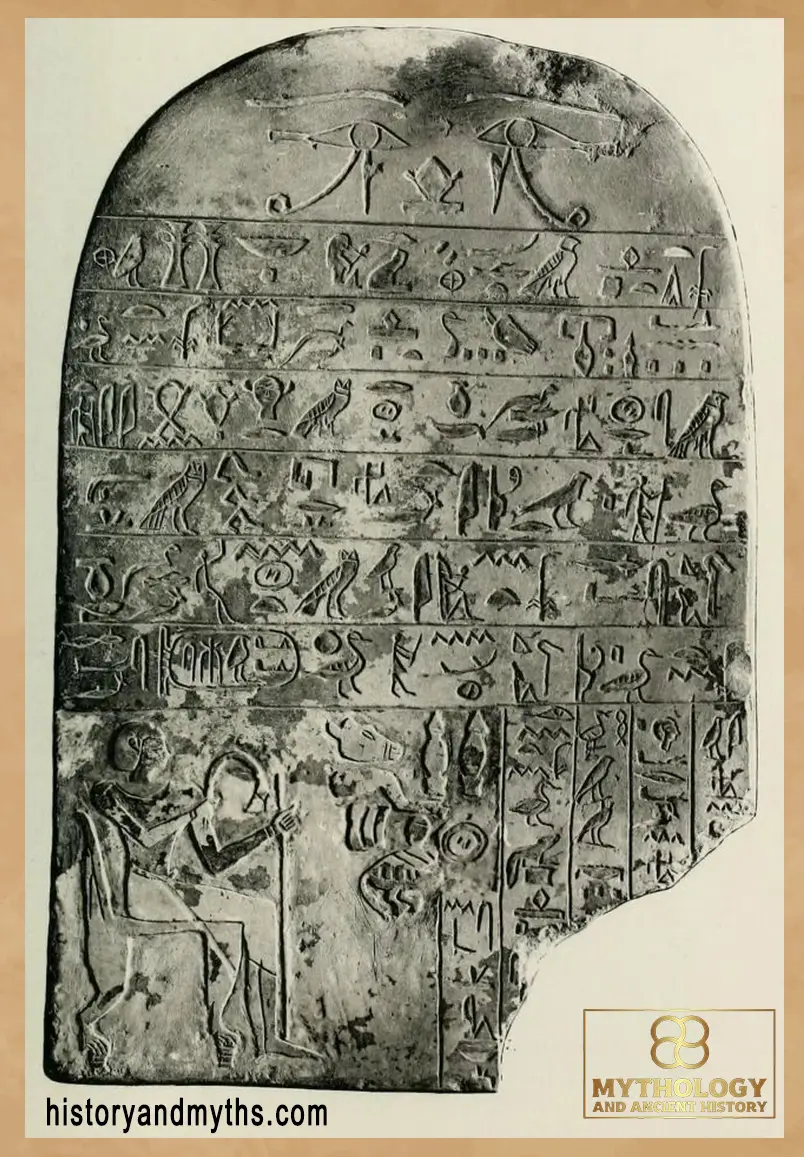
Source: Wikimedia Commons — Reginald Engelbach (published 1921, ASAE 21, pl. IV), Public Domain (author died 1946; published before 1931 in the U.S.).
unclear heirs, elite factions, institutional rivalries, and delays that gave challengers time to organize.
speed, public recognition, official narratives, elite alignment, and punitive closure—turning rivalry into illegitimacy.
What These Crises Reveal About Egyptian Power
Royal succession crises in Ancient Egypt reveal a hard political truth: kingship was presented as permanent, but its transitions were structurally fragile. The system could last for centuries, yet it remained vulnerable at the exact moment authority had to change hands. This is why legitimacy was treated as something that had to be actively secured, not passively inherited.
Across all three models—coup, redesign, fragmentation—the same principle appears. Succession was not simply about bloodline. It was about who could make authority binding fast enough. When institutions aligned, legitimacy could be stabilized through rapid closure, recognition, and control of narrative. When institutions competed, legitimacy became negotiable, and negotiation is the seed of crisis.
These patterns also explain why Egyptian political culture emphasized restoration over reinvention. Crisis was framed as disruption, not transformation. The goal was always to re-freeze authority into a single center again, because the alternative was a political landscape where power could be challenged at multiple points, indefinitely.
In the end, succession crises were not exceptions to Egyptian kingship—they were the moments that exposed how kingship truly worked. The stability of the system depended on its ability to close uncertainty quickly. When it succeeded, Egypt looked eternal. When it failed, fragmentation was not just possible—it was predictable.
- Succession crises were dangerous because authority became negotiable during transitions.
- Unclear heirs and elite faction rivalry were the most common triggers of instability.
- Legitimacy in Egypt was not inherited automatically—it had to be secured quickly.
- Speed and public closure reduced the time rivals had to organize alternatives.
- Official narratives helped turn contested succession into a settled political reality.
- Trials and punishment did more than remove rivals—they criminalized rivalry itself.
FAQ: Royal Succession Crises in Ancient Egypt
What is a royal succession crisis in Ancient Egypt?
It’s the period when the throne’s transfer becomes disputed or unstable—typically after a king’s death—so authority turns negotiable and rival claims can form.
Why were successions so politically dangerous?
Because centralized kingship left little room for ambiguity. Even short uncertainty invited elite bargaining, faction-building, and challenges to command and loyalty.
Was lineage enough to guarantee a smooth succession?
No. Bloodline could be contested or politically inconvenient. Stability depended on fast, public closure—making legitimacy binding before rivals could organize.
What usually triggered succession crises?
The most common triggers were unclear heirs, underage successors, court faction rivalry, institutional competition (army, priesthood, regional power), and delays that expanded uncertainty.
How did Egyptian rulers “manufacture” legitimacy under pressure?
By moving quickly, activating authority publicly, aligning key elites, controlling the official narrative, and using punitive closure (trials and punishment) to delegitimize rivals.
What does the Ramesses III “harem conspiracy” show?
It shows a palace-coup model: rival networks could try to replace the succession outcome through internal plots, forcing the state to respond through investigation, judgment, and deterrence.
Why is Hatshepsut a useful succession example?
Because it illustrates a legitimacy redesign model: political stability could be secured by reframing authority—from regency to full kingship—rather than relying on lineage alone.
How does the Second Intermediate Period fit into succession crises?
It represents fragmentation: when legitimacy isn’t secured early, authority can become regional and plural—multiple rulers and competing claims instead of a single binding center.
What’s the main takeaway?
Succession crises reveal that Egyptian kingship was stable in principle but fragile in transition—legitimacy had to be locked fast, or the system risked dispute and fragmentation.
Sources & Rights
- Assmann, Jan. The Mind of Egypt: History and Meaning in the Time of the Pharaohs. Cambridge, MA: Harvard University Press, 2002.
- Baines, John. “Kingship, Definition of Culture, and Legitimation.” In Ancient Egyptian Kingship, edited by David O’Connor and David P. Silverman, 3–47. Leiden: Brill, 1995.
- O’Connor, David, and David P. Silverman, eds. Ancient Egyptian Kingship. Leiden: Brill, 1995.
- Grajetzki, Wolfram. Egyptian Kings and Queens of the Middle Kingdom. London: Duckworth, 2006.
- Shaw, Ian, ed. The Oxford History of Ancient Egypt. Oxford: Oxford University Press, 2000.
- Van De Mieroop, Marc. A History of Ancient Egypt. Malden, MA: Wiley-Blackwell, 2011.
- Redford, Donald B. Egypt, Canaan, and Israel in Ancient Times. Princeton, NJ: Princeton University Press, 1992.
- Tyldesley, Joyce. Hatshepsut: The Female Pharaoh. New York: Viking, 1996.
- Ockinga, Boyo G. (with references to the judicial documentation of the Ramesses III conspiracy). In relevant chapters on late New Kingdom court politics, consult standard overviews in The Oxford History of Ancient Egypt. Oxford: Oxford University Press, 2000.
- Ritner, Robert K. The Mechanics of Ancient Egyptian Magical Practice. Chicago: The Oriental Institute of the University of Chicago, 1993.
Written by H. Moses — All rights reserved © Mythology and History