Aging in Ancient Egypt: Old Age, Respect, and Daily Survival
How did people grow old in ancient Egypt? Were elderly people respected, or did old age become a struggle for survival? And did everyone experience aging in the same way?
Old age in ancient Egypt was shaped by much more than the passing of time. A person’s occupation, social status, health, and family support determined whether later life brought authority and security or physical decline and dependence. While some officials and priests remained influential into old age, laborers often aged much earlier because of years of demanding work.
This article explores what aging really meant in ancient Egypt, how old people were treated in everyday life, why Egyptian art rarely shows physical decline, and what growing old reveals about family, work, and social values in one of history’s longest-lasting civilizations.
Aging and Old Age in Ancient Egypt
Old age in Ancient Egypt was respected, but it wasn’t romantic. Elderly people could gain authority through experience and social reputation, yet daily life in old age depended on family support, personal status, and physical ability. The idea of aging was tied to wisdom and stability, but Egyptians also spoke openly about decline aching bodies, weakening strength, and the limits of human endurance.
What makes Egypt different is that it preserved both sides at once: an ideal where long life was a blessing and a proof of good order, and a realistic view where growing old meant losing speed, health, and independence.
Related reading: Childhood and Children in Ancient Egypt
| Question | Short Answer | What It Depends On | What It Shows |
|---|---|---|---|
| Did Egyptians reach old age? | Yes, some did—but not equally. | Child survival, work type, household stability | “Average lifespan” can hide reality |
| Was old age respected? | Often, especially for reputable elders. | Status, reputation, family support | Authority could rise as the body declined |
| What made aging harder? | Physical labor and economic insecurity. | Wear-and-tear, injury risk, limited resources | Old age could become a survival problem |
| Who cared for the elderly? | Mostly families, not institutions. | Adult children, household capacity | Respect worked as a social contract |
| Why don’t we “see” aging in art? | Art idealized stability and status. | Purpose of tomb/temple imagery | Representation ≠ daily reality |
How Old Was “Old” in Ancient Egypt? (Life Expectancy vs Reality)
When people ask “Did Egyptians live long?”, they usually mean one thing: a single number. But Ancient Egypt doesn’t work that way. The key point is that average life expectancy at birth was pulled down by high infant and child mortality, so it can make the society look younger than it really was.
Once someone survived childhood, reaching middle age and sometimes old age became far more possible. That’s why Egyptian texts can speak about elders and long life, even when the statistical average looks low.
Old Age Was a Social Category, Not a Fixed Number
“Old” was often defined by what you could no longer do:
- heavy work becomes harder
- eyesight and strength decline
- dependence on others increases
So old age was recognized through function, not a birthday.
Hard Labor Shaped Aging More Than Age Itself
Two people could reach the same age with completely different bodies:
- a scribe or administrator might age slower
- a laborer might be “old” earlier because the body is worn down
That’s why old age in Egypt was uneven across society.
Long Life Was an Ideal With a Message
Egyptian culture frequently treated long life as a marker of order and good fortune. You didn’t “earn” long life only through medicine you earned it through stability: family, work, and staying aligned with accepted norms.
What Did Egyptians Consider a Good Old Age?
For ancient Egyptians, growing old was not simply a matter of reaching an advanced age. A good old age meant remaining respected, supported by family, and remembered as someone whose life had strengthened the household rather than burdened it. Longevity was valuable because it reflected continuity, experience, and social stability, not because age itself carried automatic honor.
Egyptian wisdom texts often connect long life with good conduct, self-control, and responsible living. An elder who had earned a strong reputation could continue to influence family decisions, pass on practical knowledge, and preserve traditions even after physical strength declined. Old age therefore represented the final stage of a successful social life rather than merely the last stage of a biological one.
This ideal also explains why the famous wish of living to 110 years became so meaningful. The number symbolized a complete and fulfilled life, where reputation, family, and stability endured until the very end. The greatest achievement was not simply surviving for many years, but reaching old age with dignity, authority, and lasting respect.
What Aging Looked Like: Work, Wear, and Status
Aging in Ancient Egypt wasn’t experienced as “years passing.” It was experienced as the body gradually losing reliability especially in a society where most people worked with their hands, their backs, and their endurance. For laborers, age meant slower movement, weaker joints, and a higher risk of injury turning permanent. For administrators, aging looked different: less physical damage, but more dependence on eyesight, stamina, and mental sharpness.
Status changed the meaning of old age. A man who reached senior rank could remain valuable even as his body declined, because authority came from knowledge and relationships. But a poor worker who could no longer perform hard labor was exposed fast. In that case, aging wasn’t only a biological stage it became an economic threat.
The real divide wasn’t simply “young vs old.” It was whether a person had a role that could survive physical decline. In Egypt, some jobs aged with you. Others ended you.
Elders as Authority: Wisdom, Advice, and Social Power
Old age could create real influence in Ancient Egypt because experience was a form of capital. An elder who had survived decades of work, politics, and family responsibilities could speak with weight especially in bureaucratic and religious environments where knowledge, precedent, and correct procedure mattered.
This is why Egyptian moral texts often frame age as the point where a person becomes useful in a new way. The body declines, but authority can increase. The elder becomes the one who teaches restraint, warns against mistakes, and protects continuity inside the household and workplace. In practice, that made older people valuable even when they were less physically productive.
But this authority was not automatic. It depended on reputation and position. A respected elder could advise and shape decisions; a marginalized elder could become dependent and invisible. Egyptian society could honor old age as an ideal while still leaving some individuals vulnerable when their strength faded.
Who Cared for the Elderly in Ancient Egypt?
For most people, old age was not managed by institutions it was managed by the household. If someone grew weak, the question wasn’t “retirement.” The question was whether family members could absorb the cost: food, care, and protection. In a stable household, an elder could remain central, supported by adult children and still respected as a figure of authority. In a fragile household, aging could become isolation, dependency, and quiet loss of status.
This is where the emotional logic of Egyptian society becomes practical. Respect for elders wasn’t only moral language; it was a survival arrangement. The family needed continuity, memory, and legitimacy. Elders provided that. In return, they needed care when their bodies stopped cooperating.
Old age, then, was a test of the family unit. It measured whether the household could keep functioning when a productive adult became a dependent relative. And the most difficult part of aging wasn’t death it was the slow shift from being useful through labor to being useful through presence.
Aging in Egyptian Art: Why “Old People” Rarely Look Old
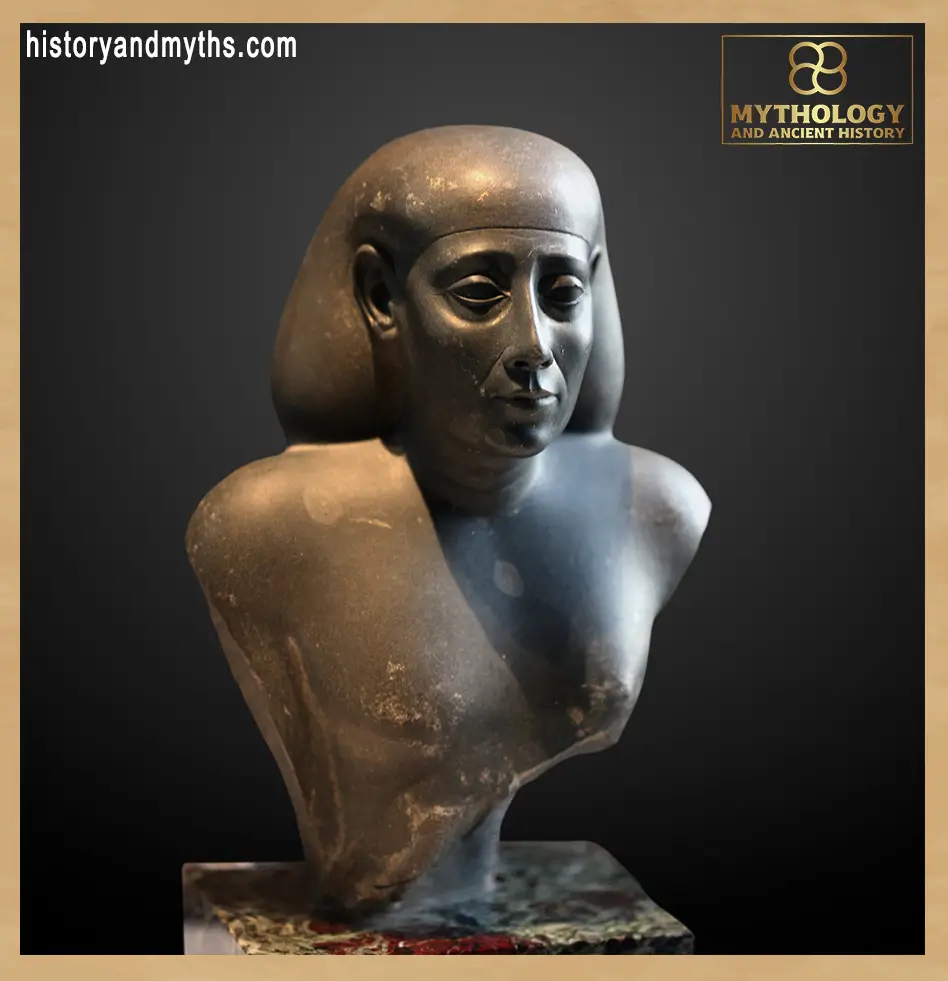
One reason aging feels invisible in Ancient Egypt is that Egyptian art was not designed to document life realistically. It was designed to project order, identity, and permanence. Statues and tomb scenes often show people in their ideal form: composed, complete, and socially stable. That style doesn’t erase old age by accident it avoids it because the visual goal is timeless authority, not temporary decline.
When old age appears clearly, it’s usually because the image has a specific purpose. Sometimes it marks character, humility, or a moral message. But in most elite art, showing weakness would undermine what the object is meant to guarantee: status that continues beyond death. That’s why many officials look “eternally capable” in stone, even if they lived long enough to feel every symptom of aging.
So the absence of wrinkled faces and broken bodies is not evidence that Egyptians didn’t age. It’s evidence that their culture preferred to represent the human body as a stable symbol especially when the image was tied to power, memory, and the afterlife.
- Survive childhood → old age becomes possible, not guaranteed.
- Work wears the body → laborers “age earlier” than officials.
- Status reshapes aging → knowledge can replace physical strength.
- Family becomes the safety net → support decides dignity or hardship.
- Culture praises long life → but texts admit decline is real.
- Art hides weakness → images preserve authority, not fatigue.
The Egyptian Ideal: Living to 110 (and What It Really Meant)
Ancient Egyptian texts often treat extreme longevity as the perfect life outcome. “Living to 110” wasn’t a statistical expectation for everyone it was a cultural statement. It represented the full arc of a successful human life: long service, stable family, reputation intact, and death arriving after a complete story rather than a sudden interruption.
That ideal mattered because it linked personal aging to the health of the world. If someone lived long, it suggested that order was holding, that society was stable enough to let a life unfold without being cut short by chaos. In that sense, longevity was not only biological. It was political and moral. It implied that the person, the household, and the system were functioning.
At the same time, the existence of the ideal proves that Egyptians knew aging was harsh. You don’t dream of an ideal lifespan unless you know how fragile life can be. The number is less important than the message: old age was the prize at the end of stability and the final stage where respect, dependence, and legacy collided.
- Old age existed in Ancient Egypt, but it depended on survival, work, and support.
- Aging was unequal: physical labor accelerated decline more than time alone.
- Elders could gain authority when experience mattered more than strength.
- Family support was the core safety system for most elderly people.
- Egyptian texts balance ideal and realism: long life was praised, decline was acknowledged.
- Art often hides aging because its goal was permanence and status, not documentation.
- Childhood and Children in Ancient Egypt — the other half of the life-cycle story.
- Family Structure in Ancient Egypt — how households carried responsibility across generations.
- Medicine and Healing in Ancient Egypt — how people dealt with sickness and decline.
- Work and Professions in Ancient Egypt — why different jobs aged bodies differently.
FAQ — Aging and Old Age in Ancient Egypt
Did people live to old age in Ancient Egypt?
Some did, especially those who survived childhood. Old age was possible, but it depended on health, work conditions, and family stability.
What age was considered “old” in Ancient Egypt?
Old age was often defined by declining physical ability and dependence, not by a fixed number. It was a functional category more than a birthday.
Were the elderly respected in Ancient Egypt?
Often yes—especially when the elder had status and a strong reputation. But respect did not automatically guarantee security.
How were elderly people supported?
Most support came from the family household. Care for aging relatives was handled through kinship duties rather than formal institutions.
Was aging harder for workers than for officials?
Yes. Physical labor caused faster wear and injury risk, while officials could retain influence through experience and knowledge.
Why doesn’t Egyptian art show many old people?
Much elite art aimed to present ideal stability and authority. Images often avoided showing weakness because their purpose was permanence.
Did Egyptians see long life as a blessing?
Yes. Long life was treated as a sign of success, stability, and proper order—an ideal end to a complete human life.
What does “living to 110” mean in Ancient Egypt?
It was an ideal model of a full life, not a normal expectation. It represents completion, reputation, and a life that ended after fulfillment.
Did aging reduce a person’s social value?
Not always. Aging could reduce physical value but increase social authority, especially for respected elders with experience.
What is the most realistic way to understand aging in Egypt?
As a trade-off: respect and authority could rise, but daily survival depended on health, work history, and family support.
Sources & Rights
- Assmann, Jan. The Mind of Egypt: History and Meaning in the Time of the Pharaohs. Cambridge, MA: Harvard University Press, 2002.
- Baines, John, and Jaromír Málek. Atlas of Ancient Egypt. New York: Facts On File, 1980.
- Bard, Kathryn A., ed. An Introduction to the Archaeology of Ancient Egypt. 2nd ed. Malden, MA: Wiley-Blackwell, 2015.
- Kemp, Barry J. Ancient Egypt: Anatomy of a Civilization. 3rd ed. London: Routledge, 2018.
- Lichtheim, Miriam. Ancient Egyptian Literature, Volume I: The Old and Middle Kingdoms. Berkeley: University of California Press, 1973.
- Parkinson, Richard B. The Tale of Sinuhe and Other Ancient Egyptian Poems. Oxford: Oxford University Press, 1997.
- Robins, Gay. The Art of Ancient Egypt. Cambridge, MA: Harvard University Press, 1997.
- Robins, Gay. Women in Ancient Egypt. Cambridge, MA: Harvard University Press, 1993.
- Shaw, Ian, ed. The Oxford History of Ancient Egypt. Oxford: Oxford University Press, 2000.
- Trigger, Bruce G., Barry J. Kemp, David O’Connor, and Alan B. Lloyd. Ancient Egypt: A Social History. Cambridge: Cambridge University Press, 1983.
- Wilkinson, Toby A. H. The Rise and Fall of Ancient Egypt. New York: Random House, 2010.
- British Museum. Collection Online: Daily Life in Ancient Egypt.
- Metropolitan Museum of Art. Life in Ancient Egypt.
Written by H. Moses — All rights reserved © Mythology and History