The Balance Between Gods, Titans, and Primordials in Greek Mythology
Greek mythology did not divide the universe into gods, Titans, and primordial beings simply to create different generations of divine characters. Each group represented a different layer of reality and played a separate role in maintaining the balance of the cosmos. Primordial forces embodied the foundations of existence itself, the Titans governed many of the great powers of the natural world, and the Olympian gods ruled the organized order that emerged after the great cosmic wars.
This balance was essential because no single divine order fully controlled the universe alone. Even after Zeus and the Olympians established their authority, older primordial powers such as Gaia, Nyx, and Tartarus continued to exist beneath the structure of the cosmos. Greek mythology therefore presents the universe not as a system where one generation completely erased the previous one, but as a layered reality where ancient forces, natural powers, and divine rulers remained connected.
The result was a cosmological system built on equilibrium rather than total domination. Chaos was contained but never destroyed, primordial realities remained beneath creation, and the Olympian gods-maintained order above them. This balance between different divine powers helped Greek mythology explain how the universe could remain stable while still containing conflict, danger, and forces older than the gods themselves.
Why Greek Mythology Divided the Cosmos Into Different Divine Orders
Greek mythology separated the universe into primordial beings, Titans, and Olympian gods because the Greeks did not see reality as controlled by one single type of divine power. Different parts of existence required different kinds of forces. Creation, nature, order, chaos, death, and civilization all belonged to separate layers of the cosmos, and each divine order represented one of those layers.
The primordial beings stood closest to the raw structure of existence itself. They were not rulers in the normal sense. Gaia represented the earth, Tartarus the abyss beneath creation, and Nyx the power of night. These entities existed before organized divine government appeared in the universe.
The Titans occupied a different position. Many of them became associated with natural systems that connected the cosmos together, such as oceans, light, memory, law, and time. They were more active than the primordial beings but still belonged to an older world that existed before Olympian civilization and hierarchy fully emerged.
The Olympian gods ruled the most organized layer of Greek mythology. They governed law, kingship, war, cities, strategy, marriage, and social order. Unlike the primordial beings, they interacted constantly with humanity and maintained the functioning structure of the civilized world.
This division helped Greek mythology explain how different kinds of power could exist at the same time without being identical. The cosmos remained stable because each divine order controlled a different aspect of reality rather than competing for complete control over every part of existence.
| Divine Order | Primary Role | Examples |
|---|---|---|
| Primordials | Foundations of existence and cosmic reality | Chaos, Gaia, Tartarus, Nyx |
| Titans | Natural and transitional cosmic forces | Oceanus, Hyperion, Themis, Mnemosyne |
| Olympians | Organized divine rule and cosmic order | Zeus, Athena, Apollo, Poseidon |
Primordials as the Foundations of Reality
The primordial beings in Greek mythology were not ordinary gods with temples, cities, or organized cults. They represented the basic conditions that made existence possible before the universe became ordered. Chaos, Gaia, Tartarus, Nyx, and Erebus were less like divine rulers and more like living aspects of reality itself.
This is why primordial powers often feel distant from human life in Greek myths. They rarely behave like the Olympian gods, who argue, form alliances, and intervene directly in mortal affairs. Primordial beings existed on a larger and more abstract level. Gaia was not simply a goddess connected to the earth — she was the earth. Tartarus was not only a prison — it was the abyss beneath creation itself.
Even Zeus and the Olympians never fully replaced these older powers. Gaia continued influencing events long after the rise of Olympus, while Nyx remained one of the few primordial forces feared even by Zeus in some traditions. Greek mythology therefore treated primordial realities as permanent parts of the cosmos rather than defeated remnants of an older age.
This balance mattered because the Olympian order depended on foundations it did not create. The gods ruled the organized world above, but primordial forces still formed the deeper structure beneath reality itself.
The Titans and the Forces of the Natural World
The Titans occupied a middle position between the primordial powers and the Olympian gods. They were not as abstract as the primordial beings, but they also did not govern the structured political world associated with Olympus. Many Titans became linked to the great systems of nature that shaped the universe itself.
Oceanus represented the encircling cosmic river surrounding the world. Hyperion became associated with heavenly light, while Themis represented divine law and natural order long before Zeus established Olympian rule. Mnemosyne embodied memory, which the Greeks considered essential to knowledge, poetry, and civilization itself.
This connection to natural and cosmic systems explains why the Titans remained important even after their defeat in the Titanomachy. Greek mythology did not erase their functions from the universe. The Olympians replaced Titan rule politically, but many Titan powers continued operating as part of the structure of reality.
The Titans therefore acted as a bridge between primordial existence and Olympian civilization. They connected the raw foundations of the cosmos to the organized world that later emerged under Zeus and the Olympian gods.
Olympian Gods and the Rule of Cosmic Order
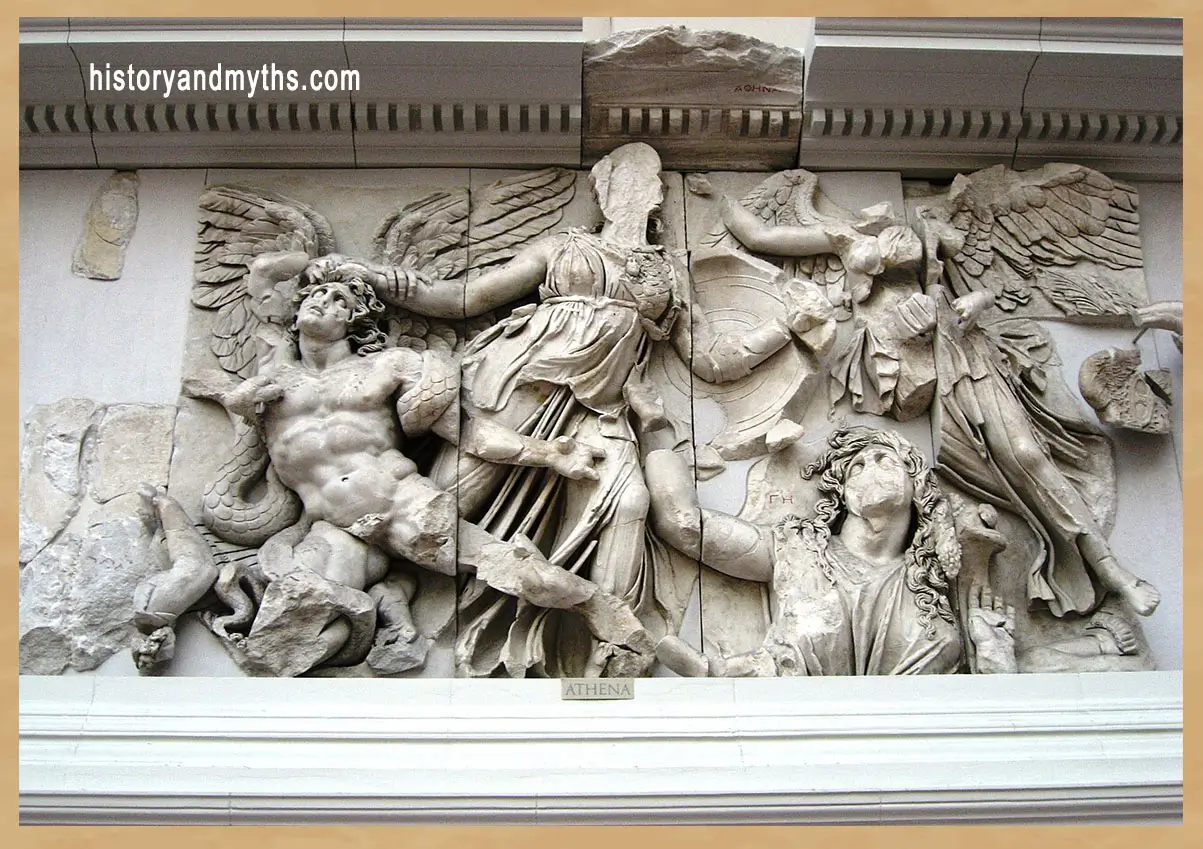
The Olympian gods represented the most organized level of power in Greek mythology. Unlike the primordial beings and many Titans, the Olympians governed systems connected to law, society, politics, war, marriage, trade, and human civilization. Their rule reflected a universe that had moved beyond raw creation into structured order.
Zeus became the central figure of this system not simply because he was powerful, but because he maintained balance between different forces inside the cosmos. Other Olympians controlled specific areas that kept the world functioning: Athena represented strategy and wisdom, Apollo governed prophecy and harmony, Demeter protected agriculture, and Poseidon ruled the sea.
This structure made Olympian rule different from earlier divine generations. The primordial powers existed as parts of reality itself, while the Titans controlled many natural forces. The Olympians, however, organized the active world of gods and humans through hierarchy, responsibility, and defined authority.
Greek mythology also shows that Olympian order depended on cooperation rather than pure domination alone. The gods argued, competed, and sometimes rebelled against one another, but the system remained stable because each deity still held a recognized role within the cosmic structure.
The Cosmic Layers of Greek Mythology
Greek mythology divided the universe into different divine orders because each layer of reality required a different type of cosmic power. Primordials formed the foundations of existence, Titans connected natural forces, and Olympian gods governed organized cosmic order.
- Primordial beings represented the oldest forces beneath creation itself.
- The Titans governed many systems tied to nature and cosmic balance.
- The Olympians ruled law, civilization, war, and divine hierarchy.
- Older cosmic powers continued existing even after the rise of Zeus.
- Greek mythology maintained balance by separating different forms of divine authority.
- The universe remained stable because chaos was contained rather than destroyed.
© historyandmyths.com
Why the Primordial Forces Never Fully Disappeared
One of the most important features of Greek mythology is that older cosmic powers rarely vanish completely after new gods rise to power. The Olympians defeated the Titans and established control over the universe, yet primordial forces such as Gaia, Nyx, and Tartarus continued to exist beneath the structure of the cosmos.
This shows that Greek mythology did not treat creation as a simple replacement system where each generation erased the one before it. Instead, older powers remained active at deeper levels of reality. Gaia continued influencing divine conflicts, Tartarus still imprisoned cosmic enemies, and primordial darkness remained part of the universe itself.
Even Zeus sometimes appears cautious around these ancient forces. In certain traditions, Nyx is portrayed as a power respected or feared even by the king of the gods. The message is clear: Olympian authority organized the cosmos, but it did not completely control every layer of existence.
This balance helped Greek mythology maintain a universe that felt stable without becoming static. Older realities remained beneath creation, reminding both gods and mortals that the foundations of the cosmos were older, deeper, and more powerful than Olympian civilization alone.
The Titans as a Bridge Between Chaos and Order
The Titans occupy a unique position in Greek mythology because they stand between two very different cosmic worlds. On one side are the primordial forces connected to raw existence and ancient chaos. On the other are the Olympian gods, who represent organized rule, hierarchy, and civilization. The Titans connect these two layers of the universe together.
This middle role explains why many Titans feel calmer and less destructive than primordial beings, yet older and more elemental than the Olympians. Oceanus governs the cosmic waters surrounding the earth, Themis represents divine law, and Mnemosyne preserves memory and knowledge. Their powers help stabilize the transition between primordial reality and Olympian order.
The myths also show that the Titans were never entirely removed from the cosmos after their defeat. Some remained imprisoned in Tartarus, but others continued functioning as essential parts of the universe itself. Greek mythology therefore treated the Titans less as monsters and more as remnants of an earlier cosmic structure that still supported the world indirectly.
Without the Titans, the universe in Greek mythology would feel divided between uncontrolled primordial forces and fully organized Olympian civilization. The Titans create the middle layer that allows these extremes to remain connected without collapsing into total chaos or rigid order.
Cosmic Balance in Greek Mythology
Greek mythology presents the universe as stable only when different kinds of cosmic forces remain in balance. Primordial beings, Titans, and Olympian gods each controlled separate layers of reality, and the survival of the cosmos depended on none of these forces disappearing completely.
The primordial powers formed the foundations of existence itself. The Titans connected many natural systems together, while the Olympian gods maintained organized order within the world above. If one layer became dominant without limits, the balance of the universe could collapse into either chaos or instability.
This idea appears repeatedly throughout Greek myths. Chaos is never fully destroyed, only contained. The Titans are defeated but not erased. Even Zeus rules through structure and cooperation rather than unlimited personal power. Greek mythology therefore treats cosmic order as something that must constantly be maintained rather than permanently guaranteed.
The result is a universe where ancient powers, natural forces, and divine rulers all continue existing at the same time. Instead of replacing one another completely, they form a layered cosmological system that keeps the world functioning despite conflict, rebellion, and the constant presence of older forces beneath reality itself.
The balance between primordial beings, Titans, and Olympian gods gave Greek mythology a layered structure that made the cosmos feel larger and more complex than a simple struggle between good and evil. Each divine order represented a different level of reality: primordial forces formed the foundations of existence, the Titans connected the powers of the natural world, and the Olympians governed organized cosmic order and human civilization.
Greek mythology also avoided presenting the universe as fully controlled by one ruling generation alone. Older powers continued existing beneath the Olympian world, natural forces remained independent in many ways, and chaos was contained rather than erased completely. This created a cosmology where stability depended on balance instead of absolute domination.
The result was a mythological system where different kinds of divine power could coexist at the same time without losing their individual roles. Primordial beings, Titans, and Olympians were not simply separate generations of gods. Together, they formed the structure that allowed the Greek universe to function without collapsing into either uncontrolled chaos or rigid order.
Key Takeaways
- Greek mythology divided the cosmos into primordial beings, Titans, and Olympian gods.
- Primordial powers represented the foundations of existence itself.
- The Titans controlled many natural and transitional cosmic systems.
- The Olympians governed organized order, law, and civilization.
- Older divine forces never fully disappeared after the rise of Zeus.
- Greek mythology maintained cosmic stability through balance rather than total domination.
- The universe remained layered, with primordial realities existing beneath Olympian order.
Frequently Asked Questions
Who were the primordial beings in Greek mythology?
Primordial beings were the oldest cosmic forces in Greek mythology, representing fundamental parts of existence such as Chaos, Gaia, Nyx, and Tartarus.
What role did the Titans play in Greek mythology?
The Titans represented many natural and cosmic systems that connected the primordial world to the later Olympian order.
How were the Olympian gods different from the Titans?
The Olympian gods ruled organized cosmic order, law, civilization, and divine hierarchy, while the Titans were linked more closely to older natural forces.
Did primordial powers disappear after Zeus became ruler?
No. Primordial forces such as Gaia, Nyx, and Tartarus continued existing beneath the Olympian cosmos.
Why was balance important in Greek mythology?
Greek mythology treated cosmic stability as a balance between different layers of divine power rather than complete control by one group alone.
Were the Titans evil in Greek mythology?
Not necessarily. Many Titans represented natural or cosmic forces rather than purely destructive powers.
What did Greek mythology say about chaos?
Greek mythology usually portrayed chaos as something ancient and permanent that could be contained but never completely destroyed.
Sources & Rights
- Hesiod. Theogony. Translated by M. L. West. Oxford University Press.
- Apollodorus. The Library of Greek Mythology. Oxford University Press.
- Homer. Iliad. Translated by Richmond Lattimore. University of Chicago Press.
- Burkert, Walter. Greek Religion. Harvard University Press.
- Graf, Fritz. Greek Mythology: An Introduction. Johns Hopkins University Press.
- Hard, Robin. The Routledge Handbook of Greek Mythology. Routledge.
- Gantz, Timothy. Early Greek Myth: A Guide to Literary and Artistic Sources. Johns Hopkins University Press.
- West, M. L. The East Face of Helicon: West Asiatic Elements in Greek Poetry and Myth. Oxford University Press.
- Vernant, Jean-Pierre. Myth and Society in Ancient Greece. Zone Books.
- Rose, H. J. A Handbook of Greek Mythology. Routledge.
- Morford, Mark, and Robert Lenardon. Classical Mythology. Oxford University Press.
- Dowden, Ken. The Uses of Greek Mythology. Routledge.
- Buxton, Richard. The Complete World of Greek Mythology. Thames & Hudson.
- Nilsson, Martin P. A History of Greek Religion. Oxford University Press.
- Detienne, Marcel. The Creation of Mythology. University of Chicago Press.
- Dodds, E. R. The Greeks and the Irrational. University of California Press.
- Otto, Walter F. The Homeric Gods. Thames & Hudson.
- Jaeger, Werner. The Theology of the Early Greek Philosophers. Oxford University Press.
- Kirk, G. S. The Nature of Greek Myths. Penguin Books.
- Lefkowitz, Mary. Greek Gods, Human Lives. Yale University Press.
- Segal, Robert A. Myth: A Very Short Introduction. Oxford University Press.
- Csapo, Eric. Theories of Mythology. Wiley-Blackwell.
- Calasso, Roberto. The Marriage of Cadmus and Harmony. Vintage Books.
- Hamilton, Edith. Mythology. Little, Brown and Company.
- Graves, Robert. The Greek Myths. Penguin Books.
- Hurwit, Jeffrey M. The Art and Culture of Early Greece. Cornell University Press.
- Boardman, John. Greek Art. Thames & Hudson.
- Eliade, Mircea. Myth and Reality. Harper & Row.
- Pausanias. Description of Greece. Harvard University Press.
- Edmonds, Radcliffe G. Greek Myth. Routledge.
Written by H. Moses — All rights reserved © Mythology and History