Narcissus and Echo: The Greek Myth of Obsession and Self-Destruction
The myth of Narcissus is often reduced to a simple warning about vanity. According to the popular version of the story, a beautiful young man becomes obsessed with his own reflection and eventually destroys himself. While this interpretation contains some truth, it overlooks the deeper question that made the myth endure for centuries: why does Narcissus become trapped by something he can never possess?
At its core, the story is not merely about self-love. It is about obsession, illusion, and the inability to distinguish desire from reality. Narcissus becomes consumed by an image that appears within reach yet remains forever unattainable. The more he pursues it, the further he drifts from the real world and the people around him.
Viewed through this lens, the myth becomes one of Greek mythology’s most powerful explorations of self-destruction. Rather than being defeated by a monster, a curse, or a rival, Narcissus is undone by his own fixation. His story examines how an obsession can gradually replace reality itself and why the pursuit of an illusion can become as dangerous as any threat found in the myths of ancient Greece.
Why Narcissus Is Usually Misunderstood
Modern discussions of Narcissus often begin and end with the idea of vanity. The myth is frequently treated as the origin of excessive self-love, leading many readers to assume that Narcissus simply admired his own beauty. Yet the ancient story is more complicated than that interpretation suggests.
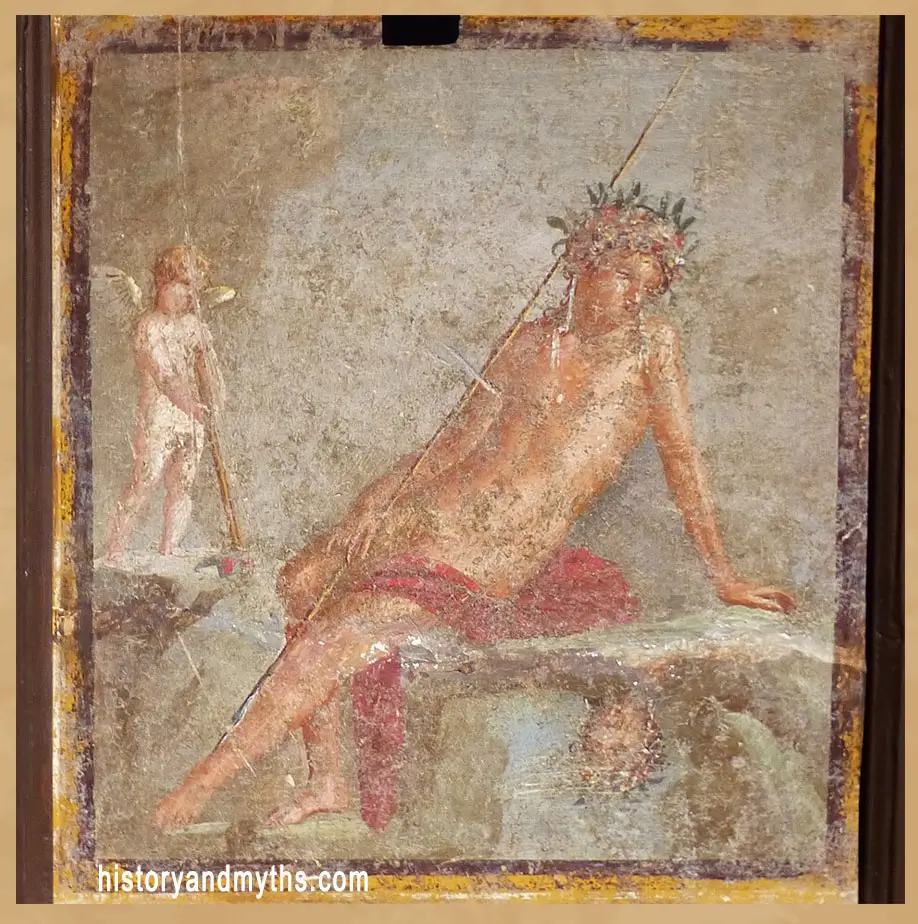
In many versions of the myth, Narcissus does not immediately recognize the figure in the water as his own reflection. What captivates him is not the knowledge that he is looking at himself, but the belief that he is looking at someone else. The image appears alive, beautiful, and seemingly within reach, yet every attempt to approach it ends in failure.
This distinction changes the meaning of the story. A person who deliberately admires himself is engaged in an act of self-awareness. Narcissus, by contrast, becomes trapped by a misunderstanding. He desires something that appears real but cannot be possessed because it does not exist as an independent being. The tragedy grows from illusion rather than simple pride.
Greek mythology often warns against failures of perception. Characters make disastrous decisions because they misunderstand prophecies, misjudge situations, or mistake appearance for reality. Narcissus belongs to this tradition. His downfall begins when he places complete trust in what he sees without understanding what he is actually looking at.
Viewed this way, the myth becomes far more than a lesson about vanity. It explores the danger of becoming consumed by an image, an idea, or a desire that exists only in appearance. The story endures because it examines a mistake that extends beyond physical beauty: the human tendency to chase things that seem attainable but remain permanently out of reach.
| Element | What It Represents | Role in the Tragedy |
|---|---|---|
| Echo | Real human connection | Rejected by Narcissus |
| The Reflection | An unattainable illusion | Becomes the object of obsession |
| Obsession | Loss of balance and perspective | Drives self-destruction |
| Punishment | Mirror of earlier choices | Creates the tragic ending |
| Transformation | Symbolic rebirth as a flower | Preserves the myth’s lesson |
The Trap of the Unattainable Image
The central tragedy of Narcissus lies in a simple contradiction: he can see what he desires, but he can never reach it. Unlike heroes who pursue distant goals or forbidden treasures, Narcissus confronts an object of desire that appears to be directly in front of him. The closer it seems, however, the more impossible it becomes to possess.
This illusion creates a unique form of suffering. Normally, people abandon desires when they recognize that something is beyond their reach. Narcissus cannot do that because the image continually suggests the opposite. Every glance promises possibility. Every attempt ends in disappointment. The cycle repeats without resolution.
Greek mythology often portrays destruction as the result of excess—too much pride, ambition, anger, or desire. In Narcissus’s case, the danger comes from fixation. He becomes incapable of directing his attention elsewhere. The reflection gradually consumes his thoughts, his time, and ultimately his life.
What makes the myth powerful is that the reflection itself never harms him. It issues no threat and takes no action. The damage comes entirely from Narcissus’s inability to break away from it. The image functions like a perfect illusion: attractive enough to inspire pursuit but empty enough to make fulfillment impossible.
This idea pushes the story beyond vanity. The myth becomes an exploration of what happens when a person organizes their life around something that can never truly be attained. Narcissus is destroyed not by the object he seeks, but by the endless pursuit itself. That distinction is what transforms a simple tale about beauty into a deeper meditation on obsession and self-destruction.
Echo and the Failure of Human Connection
The story of Echo is often treated as a separate subplot within the myth of Narcissus, yet it plays a crucial role in explaining his downfall. Echo represents a real human relationship offered to Narcissus, while the reflection represents an illusion. The contrast between the two reveals one of the myth’s central ideas.
Echo is capable of responding, feeling, and forming a genuine connection. Despite her limitations, she exists in the real world and reaches out to Narcissus directly. He rejects her completely. Later, however, he becomes consumed by an image that cannot return his affection in any meaningful way.
This reversal is significant. The myth does not simply show Narcissus choosing himself over another person. It shows him abandoning reality in favor of an illusion. A relationship that could have existed is ignored, while a relationship that can never exist becomes the focus of his life.
Greek mythology frequently explores the consequences of rejecting proper human bonds. Heroes who isolate themselves, ignore advice, or separate themselves from their communities often move closer to disaster. Narcissus follows a similar path. The more attention he gives to the reflection, the less connection he has to the people around him.
Echo’s role therefore extends beyond unrequited love. She represents the world of genuine relationships that Narcissus gradually leaves behind. His tragedy is not only that he cannot obtain what he desires. It is also that he fails to recognize the value of what was already available to him. By the time he understands his situation, the opportunity for meaningful connection has already disappeared.
Why Self-Destruction Begins With Obsession
Narcissus does not destroy himself in a single moment. His downfall unfolds gradually as fascination turns into obsession. This progression is important because it reveals how self-destruction often operates in Greek mythology. Catastrophe is rarely sudden. More often, it begins when a single desire grows so powerful that it pushes everything else aside.
At first, the reflection captures Narcissus’s attention. Soon it dominates it. Food, rest, movement, and human interaction become less important than remaining beside the water. His world grows smaller as his focus becomes narrower. The myth emphasizes this shrinking perspective because obsession depends on exclusion. The more energy devoted to one object, the less remains for everything else.
This is where the story moves beyond vanity. Narcissus is not punished simply for admiring beauty. He is consumed by an inability to let go. Even when repeated failure proves that the image cannot be reached, he continues pursuing it. Desire becomes stronger than evidence, and longing becomes stronger than reason.
Greek mythology repeatedly warns against this loss of balance. Whether the obsession involves power, immortality, revenge, or love, the pattern is similar. A single goal expands until it overwhelms every other part of life. Once that happens, destruction often follows not because the goal is evil, but because nothing else is allowed to matter.
Narcissus represents one of the clearest examples of this idea. The reflection itself is harmless. The danger lies in allowing one desire to become the center of existence. By tracing the slow transformation of attraction into obsession, the myth explains how self-destruction can emerge from within rather than from any external threat.
Why the Myth of Narcissus Still Matters
The myth of Narcissus survives because it addresses a timeless human problem: the pursuit of something that appears attainable but can never truly be possessed. Greek mythology transforms this idea into a powerful story about obsession, illusion, and the gradual process of self-destruction.
© historyandmyths.com — Educational Use
Narcissus and the Danger of Living Inside an Illusion
The reflection in the water is more than a beautiful image. It represents a false reality that gradually replaces the real one. This is what makes the myth of Narcissus so enduring. The story is not simply about desire; it is about what happens when illusion becomes more attractive than reality itself.
Narcissus reaches a point where the reflection matters more than the world around him. Real people can speak, respond, and form relationships, but they also bring uncertainty and disappointment. The image in the water demands nothing and never changes. It offers the appearance of perfection, even though it can never provide genuine connection.
Greek mythology often portrays illusion as a dangerous force because it distorts judgment. Characters become vulnerable when they stop seeing things as they truly are and begin seeing only what they wish to see. Narcissus falls into exactly this trap. The reflection becomes so important that he no longer evaluates whether it is real, attainable, or meaningful.
This idea gives the myth a broader significance. The danger is not limited to physical beauty. Any illusion can become destructive if a person begins organizing their life around it. The object of obsession may differ, but the pattern remains the same: reality is neglected while an imagined possibility takes its place.
For the Greeks, this was a warning about perception as much as desire. Narcissus is destroyed because he chooses an illusion over the world that actually exists. The tragedy lies not only in what he pursues, but in everything he abandons while pursuing it. By the end of the myth, the reflection remains unchanged, while Narcissus himself has lost everything.
Why Greek Mythology Punishes Narcissus
Greek myths rarely punish characters simply for possessing a particular trait. More often, punishment follows when a quality becomes excessive and disrupts the balance that should govern human life. Narcissus is no exception. His story is not a warning against beauty itself but against allowing a single desire to consume every other aspect of existence.
The myth begins with a pattern of rejection. Narcissus repeatedly dismisses those who seek genuine connection with him, including Echo. These actions establish a form of imbalance long before he encounters his reflection. He remains emotionally detached from others and unwilling to participate in the reciprocal relationships that hold communities together.
When he later becomes obsessed with the image in the water, the punishment reflects his earlier behavior. The connection he desires cannot be returned. Just as he once ignored the feelings of others, he now experiences a longing that can never be fulfilled. The myth creates a symmetry between his actions and his fate.
This pattern appears frequently in Greek mythology. Punishments often mirror the mistakes that produced them. Rather than imposing an arbitrary penalty, the myths allow a character’s flaws to generate consequences that grow naturally from their choices. Narcissus becomes trapped by the same emotional isolation that he previously imposed on others.
The result is a tragedy that feels inevitable rather than accidental. Greek mythology presents Narcissus’s downfall as the final outcome of a life spent valuing appearances over relationships and illusion over reality. His punishment is not merely death. It is the realization that the object of his devotion was never truly attainable in the first place.
Narcissus as a Symbol of Self-Destruction
What has allowed the myth of Narcissus to survive for more than two thousand years is its symbolic depth. The story is rooted in a specific character and a specific tragedy, yet its central idea extends far beyond the world of Greek mythology. Narcissus becomes a symbol of how people can contribute to their own downfall without recognizing the danger until it is too late.
Unlike many mythological figures, he is not destroyed by an enemy, a monster, or an angry god. The force that ruins him comes from within. His choices, perceptions, and obsessions gradually create the conditions for his collapse. This makes the myth fundamentally different from stories that focus on external threats.
The reflection itself symbolizes an ideal that can never be fully possessed. Whether interpreted as beauty, desire, ambition, or perfection, the image represents something that appears attainable while remaining permanently beyond reach. Narcissus sacrifices reality in pursuit of that illusion, and the sacrifice ultimately costs him everything.
This symbolism helps explain why the myth continues to resonate across different cultures and eras. The details may belong to ancient Greece, but the underlying pattern is universal. People can become trapped by dreams, ambitions, identities, or desires that gradually disconnect them from reality. The myth gives that process a memorable form through the image of a young man staring into still water.
Seen in this light, Narcissus is not merely a warning against vanity. He is a warning against any obsession that becomes more important than life itself. Greek mythology transforms his fate into a broader lesson about illusion, fixation, and the subtle ways self-destruction can emerge from the pursuit of something that was never truly attainable.
The myth of Narcissus is often remembered as a story about beauty and vanity, yet its deeper meaning lies elsewhere. At its heart, the myth examines how obsession can distort perception, weaken human connections, and gradually replace reality with illusion. Narcissus does not fall because he is beautiful. He falls because he becomes unable to separate what he desires from what actually exists.
Through Echo, the myth contrasts genuine relationships with imagined ones. Through the reflection, it explores the danger of pursuing something that can never be possessed. And through Narcissus’s fate, it demonstrates how self-destruction can emerge not from external enemies but from an unchecked fixation that consumes every other part of life.
This is why the story remains one of the most enduring myths of the ancient world. Its power comes not from the image in the water itself, but from what that image represents. Greek mythology uses Narcissus to show that the greatest dangers are sometimes not the threats that confront us from outside, but the illusions we choose to pursue until they become impossible to escape.
Key Takeaways
- The myth of Narcissus is about obsession and illusion more than simple vanity.
- Narcissus becomes trapped by an image he can see but never possess.
- Echo represents the real human connection he rejects.
- The reflection symbolizes an unattainable ideal.
- Self-destruction begins when obsession replaces balance and reality.
- Greek mythology uses Narcissus to explore the consequences of distorted perception.
- The myth remains relevant because it examines universal patterns of fixation and loss.
Frequently Asked Questions
Who was Narcissus in Greek mythology?
Narcissus was a beautiful youth whose obsession with his reflection led to his downfall and transformation into the narcissus flower.
What is the myth of Narcissus about?
The myth explores obsession, illusion, self-destruction, and the inability to distinguish appearance from reality.
Did Narcissus know he was looking at himself?
In many versions of the myth, he initially does not recognize the reflection as his own image.
Who was Echo?
Echo was a mountain nymph who fell in love with Narcissus but was rejected, eventually fading away until only her voice remained.
Why is Narcissus considered a symbol of self-destruction?
He becomes consumed by an unattainable illusion and gradually abandons reality, relationships, and survival itself.
What does the reflection symbolize?
It symbolizes an ideal that appears attainable but can never truly be possessed.
Why did Greek mythology punish Narcissus?
The myth suggests that his emotional isolation and rejection of others ultimately returned to him in a mirrored form.
What lesson does the myth teach?
It warns against obsession, distorted perception, and allowing illusion to replace meaningful human connections.
Sources & Rights
- Ovid. Metamorphoses, Book III.
- Pausanias. Description of Greece.
- Conon. Narrations.
- Apollodorus. Library.
- Robert Graves. The Greek Myths.
- Timothy Gantz. Early Greek Myth.
- Karl Kerényi. The Heroes of the Greeks.
- Richard Buxton. The Complete World of Greek Mythology.
- Walter Burkert. Greek Religion.
- Jennifer Larson. Understanding Greek Mythology.
- Sarah Iles Johnston. Ancient Greek Religion.
- Robin Hard. The Routledge Handbook of Greek Mythology.
- Edith Hall. Introducing the Ancient Greeks.
- Gregory Nagy. The Ancient Greek Hero in 24 Hours.
- William Hansen. Classical Mythology.
- Robert Parker. On Greek Religion.
- Fritz Graf. Greek Mythology.
- Emma Griffiths. Greek Myth: A Very Short Introduction.
- H.J. Rose. A Handbook of Greek Mythology.
- Mark P.O. Morford & Robert Lenardon. Classical Mythology.
Written by H. Moses — All rights reserved © Mythology and History