Eternal Punishment in Greek Mythology: Crimes That Defied the Gods
In Greek mythology, eternal punishment was reserved for only a small number of individuals. Most souls entered the underworld and continued their existence without endless torment. Those who received eternal punishments were different. They had crossed boundaries that the Greeks considered fundamental to the stability of the cosmos, whether by defying the gods, abusing sacred obligations, or attempting to place themselves above the limits assigned to mortals.
This is why figures such as Sisyphus, Tantalus, and Ixion remained important long after their stories were first told. Their punishments were not random acts of divine cruelty. Each penalty reflected a specific violation and transformed that offense into a permanent warning. The punishment itself became part of the lesson, ensuring that the crime could never be separated from its consequence.
Understanding eternal punishment in Greek mythology therefore requires looking beyond famous myths of suffering in the underworld. These stories reveal how the Greeks understood justice, authority, and the dangers of crossing sacred boundaries. Rather than creating a system of universal damnation, Greek mythology reserved endless punishment for those who threatened the moral and cosmic order on which both gods and humans depended.
Why Most Souls Were Not Eternally Punished
Modern readers often assume that ancient underworlds functioned like later concepts of hell, where large numbers of souls were condemned to endless suffering. Greek mythology presents a very different picture. Most people who died were not subjected to eternal punishment. Instead, they entered the underworld and continued a shadowy existence that was neither especially rewarding nor endlessly torturous.
This distinction is important because it shows that eternal punishment was never intended as the normal fate of humanity. The Greeks reserved such penalties for exceptional cases involving serious violations of divine order. Ordinary mistakes, personal flaws, or everyday wrongdoing rarely resulted in the kind of endless suffering associated with figures like Sisyphus or Tantalus.
The underworld therefore served a different purpose from a system of universal judgment. It was primarily a destination for the dead rather than a place designed to punish everyone who had committed moral failings during life. Only a small number of mythological offenders became examples of eternal punishment.
By limiting endless punishment to rare cases, Greek mythology gave those stories greater power. The suffering of figures such as Sisyphus, Tantalus, and Ixion stood out precisely because it was unusual. Their fates marked the boundaries of acceptable behavior and demonstrated what could happen when someone violated principles the Greeks considered essential to the relationship between mortals, gods, and the cosmic order itself.
| Mythological Figure | Offense | Punishment |
|---|---|---|
| Sisyphus | Defied divine authority and attempted to escape death | Pushes a stone uphill forever |
| Tantalus | Abused divine trust and sacred privilege | Eternal hunger and thirst |
| Ixion | Violated hospitality and challenged divine boundaries | Bound to a revolving wheel forever |
| Danaids | Murder of their husbands | Fill leaking vessels for eternity |
Punishment for Challenging Divine Authority
Many of the most famous examples of eternal punishment in Greek mythology share a common feature: the offender did not simply commit a crime against another person. Instead, they challenged the authority of the gods or attempted to place themselves above the limits assigned to mortals.
Sisyphus repeatedly deceived both humans and divine powers, even trying to escape death itself. Tantalus abused his privileged relationship with the gods and violated sacred trust. Ixion broke the rules of hospitality after receiving divine mercy and then attempted to pursue Hera, the queen of the gods. Although their stories differ, each figure crossed boundaries that protected the relationship between gods and mortals.
The Greeks viewed these actions as more dangerous than ordinary wrongdoing because they threatened the structure of the cosmos. Divine authority was not merely political power. It represented the order that kept the world functioning. To challenge that order was to challenge the balance on which both gods and humans depended.
For this reason, the punishments given to these figures were not temporary corrections. They became permanent examples of what happened when arrogance, betrayal, or defiance exceeded acceptable limits. Their stories taught that intelligence, status, or power could never place a mortal above the laws governing the universe itself.
Punishment for Violating Sacred Boundaries
Greek mythology often treated certain boundaries as sacred. These limits separated mortals from gods, guests from hosts, and acceptable behavior from acts that threatened social and cosmic stability. Eternal punishment was frequently reserved for individuals who deliberately crossed those boundaries.
One of the clearest examples is the violation of xenia, the sacred code of hospitality protected by Zeus. Hospitality was more than good manners in the Greek world. It created trust between strangers and helped maintain order in a society where travel and alliances were essential. When a person abused that trust, the offense carried religious as well as social consequences.
Other myths focus on individuals who ignored the limits of human status. Some attempted to gain privileges reserved for the gods, while others believed divine rules did not apply to them. The problem was not ambition alone but the refusal to recognize boundaries that defined the proper place of mortals within the cosmos.
This helps explain why Greek punishments often seem severe to modern readers. The myths were not judging isolated actions only. They were responding to violations that threatened principles the Greeks considered necessary for both society and the universe. Eternal punishment marked those boundaries and reinforced the idea that some limits existed for a reason and could not be crossed without consequence.
Why Greek Punishments Were Symbolic
The punishments found in Greek mythology were rarely random. In many cases, the suffering reflected the original offense, turning the punishment into a permanent reminder of the crime itself. This is one reason these stories remained memorable for centuries.
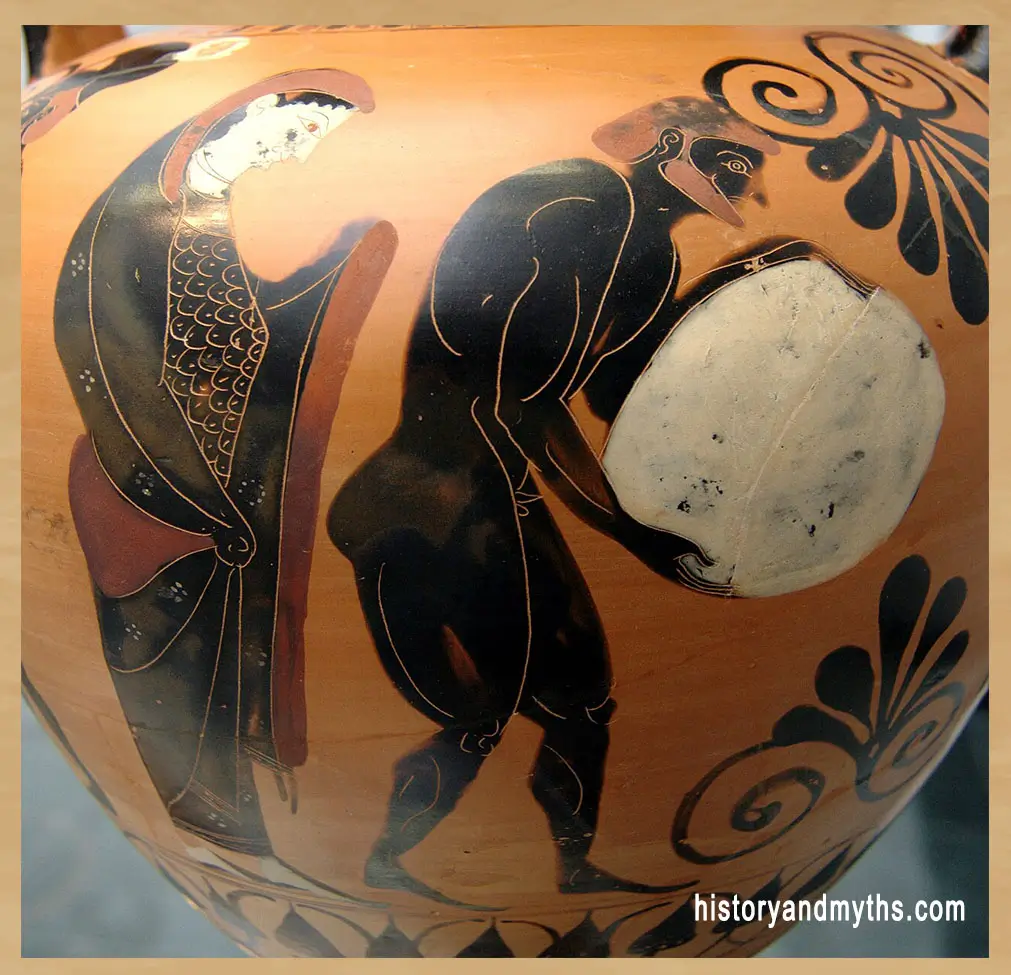
Sisyphus spent eternity pushing a stone uphill only to watch it roll back down again. His punishment mirrors a life built on deception and attempts to outsmart forces that could not ultimately be defeated. Tantalus stands forever near food and water that remain just out of reach, reflecting the abuse of privileges he once possessed. Ixion is bound to a revolving wheel, symbolizing the endless consequences of actions he refused to restrain.
This approach made punishment easier to understand. Rather than simply inflicting pain, the myths connected cause and consequence in a visible way. The offender became trapped inside a symbolic version of the very behavior that led to their downfall.
As a result, these stories functioned as more than tales of suffering. They taught moral lessons through imagery that audiences could immediately recognize. The punishment explained the crime, and the crime explained the punishment, creating myths that were both memorable and meaningful long after the original stories were told.
Eternal Punishment as a Warning System
The purpose of eternal punishment in Greek mythology was not simply to describe what happened after death. These stories also served as warnings for the living. By giving a small number of offenders highly visible and unforgettable punishments, the myths reinforced the values that Greek society considered essential.
The figures who received eternal punishments were often well known for specific acts of arrogance, betrayal, impiety, or disrespect toward divine authority. Their stories transformed abstract moral ideas into concrete examples. Instead of telling audiences that certain behaviors were dangerous, the myths showed the consequences through memorable narratives that could be passed from generation to generation.
This educational role helps explain why the punished individuals became some of the most famous characters in Greek mythology. The goal was not to create a detailed system of afterlife justice but to establish clear boundaries. Listeners were expected to recognize the mistake, understand the principle that had been violated, and learn from the outcome.
In this sense, eternal punishment functioned as a cultural warning system. The myths reminded people that actions had consequences and that certain limits—whether social, moral, or divine—were not meant to be ignored. The stories endured because they taught lessons that extended far beyond the fate of the individuals involved.
Eternal Punishment in Greek Mythology
Greek mythology did not condemn most souls to endless suffering. Eternal punishment was reserved for a small number of offenders whose actions violated sacred boundaries, challenged divine authority, or threatened the moral and cosmic order maintained by the gods.
- Most souls were not eternally punished.
- Eternal punishment was an exceptional fate.
- The punishment often symbolized the original crime.
- Divine authority and sacred obligations were heavily protected.
- These myths functioned as warnings for the living.
- Greek punishment myths reveal key Greek values about order and limits.
© historyandmyths.com
What Eternal Punishment Reveals About Greek Values
The myths of eternal punishment offer a useful window into the values that shaped Greek thought. The offenders are rarely punished for ordinary mistakes or personal weaknesses. Instead, they are condemned for actions that threaten relationships the Greeks considered essential, including respect for the gods, hospitality, trust, moderation, and recognition of human limits.
A recurring theme is the rejection of excessive pride. Many punished figures act as though intelligence, status, or special privileges place them above the rules that govern everyone else. Greek mythology consistently presents this attitude as dangerous because it disrupts the balance between mortals and divine authority.
The stories also show the importance of reciprocity and obligation. Hospitality, loyalty, and respect for sacred agreements were not viewed as optional virtues. They helped maintain social order in a world where cooperation between families, cities, travelers, and rulers was necessary for stability. Violating those obligations carried consequences that extended beyond the individual act itself.
Seen together, these myths suggest that Greek justice was less concerned with punishing every wrongdoing and more concerned with protecting the foundations of order. Eternal punishment was reserved for those who attacked principles that held the human and divine worlds together. That focus reveals what the Greeks feared most: not ordinary failure, but behavior capable of undermining the moral and cosmic structures on which society depended.
Continue Reading
Why Punishment Was Eternal Instead of Temporary
Greek mythology rarely explains eternal punishment as simple revenge. The endless nature of these penalties reflects the belief that certain violations could not be undone once they had been committed. The offender had crossed a boundary so significant that returning to normal existence was no longer possible.
Many of the punished figures attacked principles that sustained the relationship between gods and mortals. Their actions were not temporary disruptions but direct challenges to the structure of cosmic order itself. As a result, the punishment remained permanent because the offense was seen as permanently damaging.
The endless cycle experienced by figures such as Sisyphus and Ixion also reinforced the lesson for future generations. A temporary punishment might eventually be forgotten, but an eternal one transformed the offender into a lasting symbol of the boundary they had violated.
Were the Gods Themselves Subject to Punishment?
Greek mythology contains many conflicts among the gods, yet divine punishments rarely resemble the eternal penalties imposed on mortals. Gods could be challenged, humiliated, restrained, or temporarily removed from power, but they were generally not condemned to endless suffering in the way human offenders were.
This difference reflects the structure of the Greek cosmos. Eternal punishment functioned primarily as a warning to mortals who attempted to exceed the limits of their position. The myths focused on maintaining the boundary between humanity and divinity rather than creating a system in which all beings faced identical consequences.
The contrast highlights an important aspect of Greek thought: cosmic order depended on each being remaining within its proper role. Mortals who attempted to transcend those limits faced the harshest punishments because they threatened the balance the myths sought to preserve.
Eternal Punishment vs Modern Ideas of Hell
Modern readers often compare Greek eternal punishment to later concepts of hell, but the two systems are not the same. In many religious traditions, hell functions as a destination for large numbers of condemned souls. Greek mythology presents a far more limited model.
Most souls in the Greek underworld were not subjected to endless torment. They continued a subdued existence after death, while only a handful of exceptional offenders received eternal punishments. The focus was not on universal judgment but on specific examples that illustrated the consequences of violating sacred boundaries.
Understanding this distinction helps place Greek mythology in its proper context. Eternal punishment was an extraordinary fate reserved for a few symbolic figures, not the standard outcome awaiting ordinary people after death.
Eternal punishment occupied a small but important place in Greek mythology. Most souls were not condemned to endless suffering, which made the punishments of figures such as Sisyphus, Tantalus, and Ixion stand out as exceptional cases rather than ordinary outcomes. Their stories were designed to mark the boundaries of acceptable behavior and to demonstrate what could happen when those boundaries were deliberately crossed.
The myths also reveal that Greek ideas about justice extended beyond simple reward and punishment. Eternal suffering was reserved for offenses that challenged divine authority, violated sacred obligations, or threatened the balance between mortals, gods, and the wider cosmos. The punishment itself often reflected the crime, turning each story into a lasting lesson about cause and consequence.
Viewed together, these myths show that eternal punishment was not the foundation of the Greek afterlife but a warning mechanism within it. By focusing on a handful of memorable offenders, Greek mythology reinforced the values that sustained both society and cosmic order. The result was a system in which endless punishment remained rare, but its symbolic message remained impossible to ignore.
Key Takeaways
- Eternal punishment was rare in Greek mythology.
- Most souls entered the underworld without endless torment.
- Offenders were punished for violating sacred cosmic boundaries.
- Many punishments symbolically reflected the original crime.
- Greek myths used punishment stories as moral and cultural warnings.
- Divine authority and hospitality were among the most protected values.
- Greek eternal punishment differed significantly from later concepts of hell.
Frequently Asked Questions
What was eternal punishment in Greek mythology?
Eternal punishment was a rare form of endless suffering imposed on individuals who committed serious offenses against divine authority or sacred order.
Who received eternal punishment in Greek mythology?
Famous examples include Sisyphus, Tantalus, Ixion, and the Danaids.
Why was Sisyphus punished forever?
Sisyphus repeatedly challenged divine authority and attempted to escape death, leading to his endless task of pushing a stone uphill.
Did all souls suffer after death in Greek mythology?
No. Most souls entered the underworld without experiencing eternal punishment.
Why were Greek punishments symbolic?
The punishment often reflected the original crime, creating a direct connection between the offense and its consequence.
Was Greek eternal punishment similar to hell?
No. Greek mythology reserved eternal punishment for a few exceptional offenders rather than all condemned souls.
What values do these myths reflect?
They emphasize respect for divine authority, sacred obligations, moderation, and the limits of human power.
Why were some punishments eternal?
The myths portray certain violations as attacks on the foundations of cosmic order, making the consequences permanent.
Sources & Rights
- Homer. Odyssey. Translated by Robert Fagles. Penguin Classics.
- Hesiod. Theogony. Translated by M. L. West. Oxford University Press.
- Apollodorus. The Library of Greek Mythology. Oxford University Press.
- Pindar. Olympian Odes. Harvard University Press.
- Virgil. Aeneid. Oxford World’s Classics.
- Burkert, Walter. Greek Religion. Harvard University Press.
- Graf, Fritz. Greek Mythology: An Introduction. Johns Hopkins University Press.
- Gantz, Timothy. Early Greek Myth. Johns Hopkins University Press.
- Hard, Robin. The Routledge Handbook of Greek Mythology. Routledge.
- Buxton, Richard. The Complete World of Greek Mythology. Thames & Hudson.
- Edmonds, Radcliffe G. Myths of the Underworld Journey. Cambridge University Press.
- Johnston, Sarah Iles. Restless Dead. University of California Press.
- Bremmer, Jan. The Rise and Fall of the Afterlife. Routledge.
- Garland, Robert. The Greek Way of Death. Cornell University Press.
- Dodds, E. R. The Greeks and the Irrational. University of California Press.
- Vernant, Jean-Pierre. Myth and Society in Ancient Greece. Zone Books.
- Segal, Charles. Greek Myth as Poetry and History. University of North Carolina Press.
- Rose, H. J. A Handbook of Greek Mythology. Routledge.
- Morford, Mark, and Robert Lenardon. Classical Mythology. Oxford University Press.
- Nilsson, Martin P. A History of Greek Religion. Oxford University Press.
Written by H. Moses — All rights reserved © Mythology and History