Internal Revolts in Ancient Egypt: Uprisings and State Response
Internal revolts in Ancient Egypt were not always full-scale rebellions they were moments when the state’s system failed under pressure. Strikes, unrest, and breakdowns in law and order reveal how power actually worked: when food, pay, security, or legitimacy collapsed, people resisted, institutions fractured, and the government had to restore control fast.
This article focuses on internal unrest as a real-world crisis: why it happened, how it spread, how the state contained it, and what the strongest surviving evidence shows especially the Deir el-Medina strike and the later tomb-robbery investigations.
What “Internal Revolt” Meant in Ancient Egypt
In Egypt, internal revolt didn’t always look like armies marching on the capital. Most of the time, it appeared as breakdowns inside the system and that matters, because it shows where the state was weakest.
Labor Revolts (Strikes and Work Stoppages)
This is the most “documentable” type. Workers didn’t need weapons to challenge the state stopping essential work was enough. A strike exposed failures in wages, rations, and logistics, and it forced the administration to respond.
Local Unrest (Provincial Disobedience and Power Drift)
Sometimes revolt meant the center simply couldn’t enforce decisions. Local authorities became more independent, corruption increased, and loyalty became negotiable. You don’t need a civil war for the state to lose control silence and non-compliance can do it.
Security Breakdown (Crime as a Political Symptom)
When law and order collapses, it’s not just “crime” it’s evidence that officials are weak, compromised, or unpaid. Tomb robberies in the late New Kingdom show how internal insecurity can become systemic, not incidental.
Elite Instability (Palace-Level Threats)
Elite revolts are real, but they belong to a different category: succession coups, factional struggles, and court conspiracies. We treat them as a separate mechanism because their drivers are power and legitimacy, not rations and survival.
| Type of Revolt | Main Trigger | What It Looks Like | State Response (Typical) | What It Reveals |
|---|---|---|---|---|
| Labor revolt | Delayed rations / pay | Work stoppage, organized pressure | Negotiation → emergency supply → restore routine | The system depends on distribution |
| Local unrest | Weak central control, local abuse | Non-compliance, drifting loyalty | Replace officials → tighter oversight → selective enforcement | Authority can fail quietly |
| Security breakdown | Economic stress + corruption | Theft spikes, sacred spaces targeted | Investigations → trials → public punishment | Deterrence is collapsing |
| Elite instability | Succession conflict, factions | Conspiracies, coups, court pressure | Trials, purges, legitimacy messaging | Power depends on recognition |
Why Internal Revolts Happened (The Real Triggers)
Internal unrest in Ancient Egypt usually came from material pressure plus administrative failure. People did not revolt because they “hated the state.” They revolted because the state stopped working in ways that made daily life tolerable.
Delayed Pay and Broken Distribution
When rations, wages, or deliveries failed, the problem was immediate. For many workers, pay was survival. A delay could trigger collective action faster than ideology ever could.
Corruption and Local Abuse
Even a strong central government could be undermined by weak or corrupt local officials. If resources were withheld, stolen, or redistributed unfairly, resentment became organized. Revolt often begins as a demand for basic fairness, not revolution.
Political Weakness at the Center
Transitions of power, weak kings, or competing factions reduce confidence. When people believe “nobody is really in control,” defiance becomes less risky and more common.
Economic Stress and Shortages
Shortages amplify every failure. Once food supply tightens, prices rise and institutions get strained. The population may not plan rebellion, but pressure pushes them into confrontation.
Collapsing Security
When policing and courts stop functioning, disorder spreads. Crime and revolt can feed each other: insecurity makes the state look weak, and weakness invites more disorder.
Case Study 1: The Deir el-Medina Strike (How a Revolt Actually Worked)
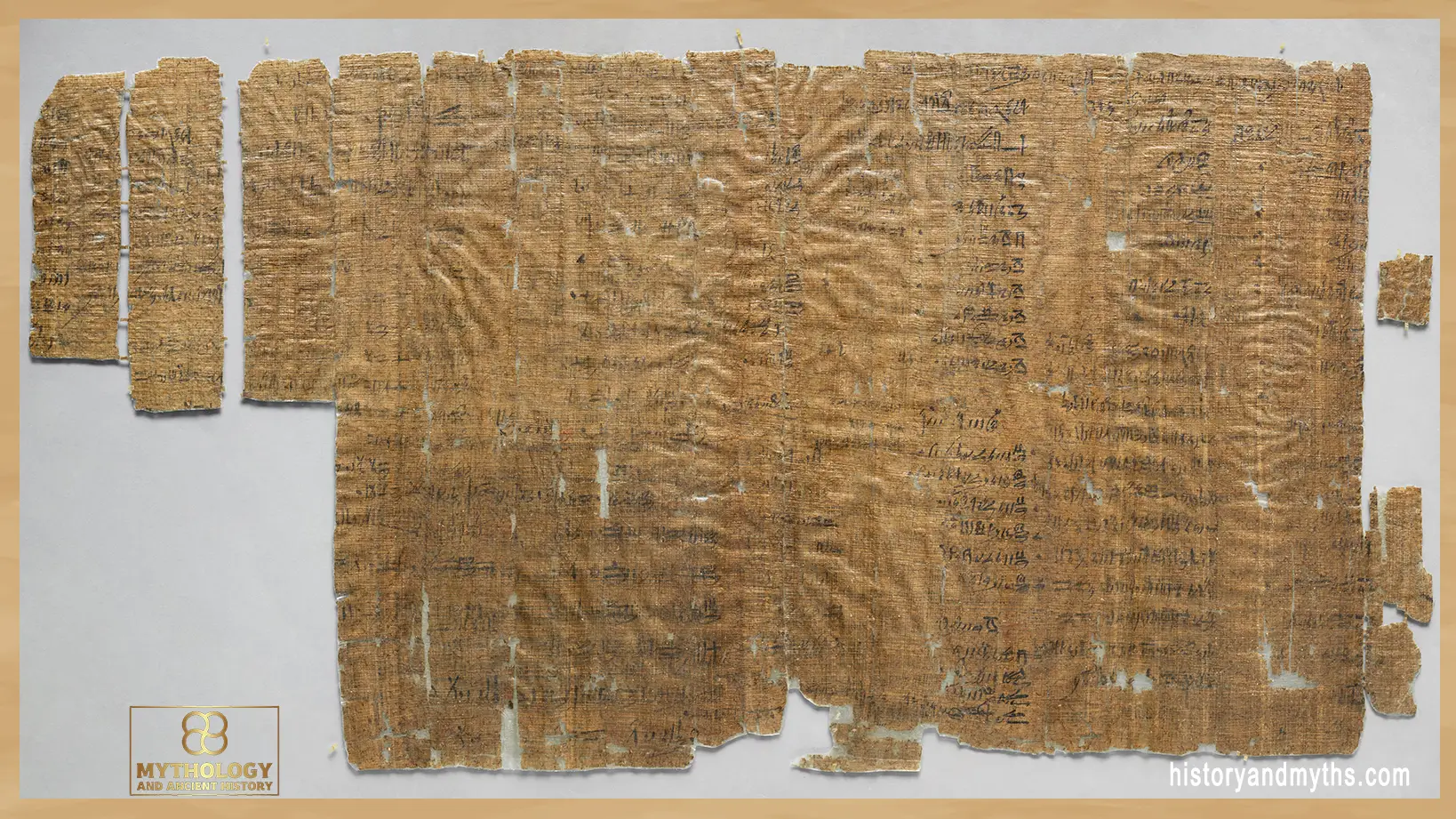
The Deir el-Medina strike is the clearest internal revolt in Egyptian history because it’s not reconstructed from rumors it’s documented as an administrative crisis. The workers were state employees. They built royal tombs. When their rations stopped arriving on time, they used the only weapon they needed: they stopped working.
The Trigger Was Simple: Delayed Rations
This revolt didn’t start as politics. It started as logistics. If the state could not deliver food payments, the system collapsed at the most basic level.
The Protest Was Organized, Not Chaotic
The workers didn’t “riot.” They moved together, occupied spaces of authority, and forced officials to face the problem. That tells you something important: this was a disciplined community using coordinated pressure.
The Core Demand Was Administrative: “Pay Us What We Are Owed”
They weren’t calling for a new king. They demanded enforcement of the existing contract. That is why this event matters for understanding revolt: it shows an internal challenge that targeted failure, not legitimacy.
The State’s Response Was Crisis Management
Officials negotiated, promised supplies, and tried to restore normal function. The goal wasn’t punishment first it was containment. The state needed the workforce, and it needed the revolt to end without spreading.
Why This Strike Is Historically Powerful
It reveals that even in a highly controlled ancient state, the system depended on functioning distribution. When that broke, order could be challenged from below without any army, just by refusing to perform essential work.
Case Study 2: Tomb Robberies (When Unrest Turns Into Systemic Breakdown)
Tomb robberies in the late New Kingdom are not just crime stories. They are evidence of a state under strain where law, wages, and authority weakened enough that sacred spaces became targets and officials could no longer guarantee control.
Why Tomb Robbery Signals a Deeper Crisis
In a stable system, elite tombs are protected by fear, surveillance, and punishment. When robberies become frequent, it means deterrence is failing. People are no longer convinced that the state can see everything or punish everyone.
Poverty Alone Doesn’t Explain It
Economic stress pushes people toward desperate actions, but these cases also suggest administrative collapse: weak policing, compromised officials, and a justice system forced into damage control rather than prevention.
Investigations Reveal the State Fighting for Authority
What makes these events valuable is that Egypt left investigation records and court procedures. The state tried to reassert control through interrogation, punishment, and public demonstration that order still existed.
The Political Meaning: Sacred Order Was Breaking
Tombs were not only private property they were tied to religion, legitimacy, and elite power. Attacking them is a form of internal disorder that hits the state’s moral foundation. When this happens, foreign policy becomes irrelevant: the real threat is inside.
- Pressure builds: pay delays, shortages, corruption, or weak central control.
- Trust collapses: people stop believing the system will deliver fairness or safety.
- Action starts: strikes, refusal, sabotage, unrest, or organized theft networks.
- The state reacts: emergency supplies + negotiations, then selective punishment.
- Authority is repaired: officials replaced, oversight tightened, legitimacy restored.
- Long-term lesson: revolt shows where power depends on logistics, not ideology.
Were Internal Revolts Common in Ancient Egypt?
One misconception is that Ancient Egypt experienced frequent popular rebellions. In reality, large-scale uprisings were relatively rare. Most internal crises developed because central authority weakened, allowing local rulers, officials, or powerful institutions to act more independently.
The First Intermediate Period illustrates this pattern well. Egypt became politically divided between rival regional centers, but the conflict was driven mainly by competing elites rather than a nationwide revolt against the pharaoh. Similar situations appeared during later periods whenever the government lost the ability to control resources, enforce law, or maintain loyalty across the country.
This explains why the Deir el-Medina strike remains so important. Unlike broader political fragmentation, it is one of the few surviving examples of an organized protest by ordinary workers that can be reconstructed in detail from contemporary records. Together, these events show that internal unrest in Ancient Egypt usually reflected weakening state institutions more than widespread revolutionary movements.
How the Egyptian State Contained Revolts (Negotiation → Pressure → Punishment)
Egyptian authority survived internal revolts not because it never faced crisis, but because it had a practical containment logic. The state didn’t always respond with violence first. It responded with whatever restored control fastest.
Negotiation and Immediate Fixes (Stop the Bleeding)
When revolt was driven by basic survival pay, food, shortages the quickest solution was to restore supplies. Officials could promise deliveries, release rations from local storage, or reorder distribution. This was not kindness. It was crisis containment.
Administrative Repair (Find the Failure Point)
The state often treated unrest as a system breakdown: a failed official, a blocked supply chain, stolen goods, or local corruption. Once the source was identified, authority could be rebuilt by replacing officials, issuing new orders, or reinforcing oversight.
Pressure and Selective Enforcement (Target the Risk)
A smart state punishes strategically. Instead of mass punishment that can create wider hatred, selective punishment isolates “ringleaders,” warns others, and allows the majority to return to normal life without feeling trapped in permanent conflict.
Public Justice as a Message
In breakdown situations like tomb robberies, trials and punishments were not only legal actions they were political messaging. The purpose was to restore fear, predictability, and the idea that the state still controlled reality.
Legitimacy Narratives (The State Rebuilds Confidence)
After unrest, authority had to be rebuilt psychologically. Order in Ancient Egypt was tied to stability, so officials needed to show that the system was functioning again—not only materially, but socially.
- Internal revolt wasn’t always a rebellion: it often meant the state stopped functioning under pressure.
- Labor revolts were the clearest evidence: the Deir el-Medina strike shows organized protest driven by delayed rations.
- Unrest grew from administration failure: corruption and broken distribution triggered collective action faster than ideology.
- Security breakdown is political: tomb robberies signal collapsing deterrence, weak policing, and compromised officials.
- The state contained crises in stages: negotiation and emergency fixes first, then pressure and selective punishment.
- Written procedures mattered: investigations and trials restored authority by making control visible again.
- Revolts reveal how power works: logistics, credibility, and enforcement kept the system stable—until they failed.
FAQ — Internal Revolts in Ancient Egypt
What counted as an internal revolt in Ancient Egypt?
It could include strikes, local disobedience, security breakdowns, and organized unrest—often triggered by administrative failure rather than ideology.
Was the Deir el-Medina strike a real “revolt”?
Yes. It was a documented act of collective pressure against state failure, where workers stopped essential labor until rations were restored.
Why did the Deir el-Medina workers strike?
Their food wages were delayed. The strike began as a survival crisis and turned into an organized protest that forced officials to respond.
Did Egyptians revolt to overthrow the pharaoh?
Sometimes unrest had political consequences, but many internal revolts were aimed at fixing pay, corruption, and security—not replacing the ruler.
How do tomb robberies relate to internal unrest?
They show a deeper breakdown of deterrence and authority. When tombs were targeted repeatedly, it signaled weak enforcement and systemic strain.
What were the main causes of internal unrest?
Delayed pay and shortages, corruption, weak central control during instability, and collapsing security were the most common triggers.
How did the Egyptian state respond to revolts?
It usually followed a containment logic: negotiation and emergency fixes first, then selective enforcement, trials, and public punishment to restore deterrence.
Were revolts organized or spontaneous?
Both existed. The best-documented examples show organized action, where communities coordinated pressure instead of chaotic violence.
Did internal revolts weaken Egypt permanently?
Not always. Some crises were contained quickly, but repeated unrest exposed structural weaknesses that could accumulate over time.
What do internal revolts reveal about power in Ancient Egypt?
They show that stability depended on logistics, fair distribution, and credible enforcement. When these failed, authority could be challenged from within.
Sources & Rights
- Morris, Ellen F. The Architecture of Imperialism: Military Bases and the Evolution of Foreign Policy in Egypt’s New Kingdom. Leiden: Brill, 2005.
- Janssen, Jac. J. Commodity Prices from the Ramessid Period: An Economic Study of the Village of Necropolis Workmen at Thebes. Leiden: Brill, 1975.
- Černý, Jaroslav. A Community of Workmen at Thebes in the Ramesside Period. Cairo: Institut Français d’Archéologie Orientale, 1973.
- McDowell, A. G. Village Life in Ancient Egypt: Laundry Lists and Love Songs. Oxford: Oxford University Press, 1999.
- Toivari-Viitala, Jaana. Women at Deir el-Medina: A Study of the Status and Roles of the Female Inhabitants in the Workmen’s Community during the Ramesside Period. Leiden: Brill, 2001.
- Wente, Edward F. Letters from Ancient Egypt. Atlanta: Scholars Press, 1990.
- Eyre, Christopher. The Use of Documents in Pharaonic Egypt. Oxford: Oxford University Press, 2013.
- Haring, Ben. Divine Households: Administrative and Economic Aspects of the New Kingdom Royal Memorial Temples in Western Thebes. Leiden: Nederlands Instituut voor het Nabije Oosten, 1997.
- Peet, T. Eric. The Great Tomb-Robberies of the Twentieth Egyptian Dynasty. Oxford: Clarendon Press, 1930.
- Grajetzki, Wolfram. Law and Society in Ancient Egypt. London: Duckworth, 2009.
- Kemp, Barry J. Ancient Egypt: Anatomy of a Civilization. 3rd ed. London: Routledge, 2018.
- Shaw, Ian, ed. The Oxford History of Ancient Egypt. Oxford: Oxford University Press, 2000.
- Trigger, Bruce G., Barry J. Kemp, David O’Connor, and Alan B. Lloyd. Ancient Egypt: A Social History. Cambridge: Cambridge University Press, 1983.