Memorial Practices in Ancient Egypt: How the Dead Were Remembered
Memorial practices in Ancient Egypt were not about mourning or burial. They were long-term strategies to preserve a person’s name, identity, and social presence after death ensuring that the dead remained remembered, relevant, and protected from the danger of being forgotten.
Memorial practices began only after death rituals and mourning had ended. Where funerary rites secured the body and the afterlife, memorial practices secured memory over time. This distinction matters, because remembrance was not emotional closure it was survival in a different form.
For Egyptians, death did not end social existence. Forgetting did. A person continued to exist only as long as their name was spoken, read, or recognized. Memorial practices were therefore designed to maintain presence, not grief. They anchored the dead within family, community, and historical continuity.
This article explains what memorial practices were, how they differed from funerary ritual, why memory mattered more than monuments, and how Egyptians protected themselves from the ultimate danger: erasure.
Memory as Survival: Why Remembrance Mattered More Than Ritual
In Egyptian thought, survival after death depended on more than successful burial. It depended on ongoing recognition. A properly buried person could still disappear if their name vanished from use. Memorial practices existed to prevent this second, irreversible death.
Rituals occurred once. Memory had to be renewed continuously. Names were spoken, read, and re-encountered through inscriptions, family traditions, and physical markers. This repetition was not symbolic; it was functional. Each act of remembrance reinforced the deceased’s continued existence within the human world.
This explains why memorial practices were simple but persistent. They did not require priests or temples. They required time, attention, and repetition. The dead survived not through spectacle, but through use.
| Aspect | Memorial Practices | Funerary Rituals | Mourning |
|---|---|---|---|
| Timeframe | Long-term, ongoing | Limited to burial period | Temporary |
| Primary Goal | Prevent forgetting | Secure afterlife | Express loss |
| Key Medium | Name, memory, visibility | Ritual actions | Emotion and behavior |
| Social Function | Preserve identity | Ensure transition | Restore balance |
Memorial Practices Versus Funerary Rituals: A Necessary Separation
Funerary rituals addressed the moment of death; memorial practices addressed time after death. This separation is essential to understanding how Egyptians thought about survival. Burial secured the body and the transition to the afterlife. Memorial practices ensured that this transition was not undone by neglect or forgetting.
Funerary rituals were standardized and finite. Memorial practices were open-ended and adaptable. They did not follow a fixed calendar or priestly schedule. Instead, they depended on family memory, social recognition, and continued use of names and images. This made them more fragile but also more personal.
By separating ritual from remembrance, Egyptians acknowledged a hard truth: death could be managed through ceremony, but memory required ongoing effort. The danger was not improper burial; it was disappearance from collective awareness. Memorial practices existed to guard against that loss.
The Name as a Memorial Tool: Keeping the Dead Present
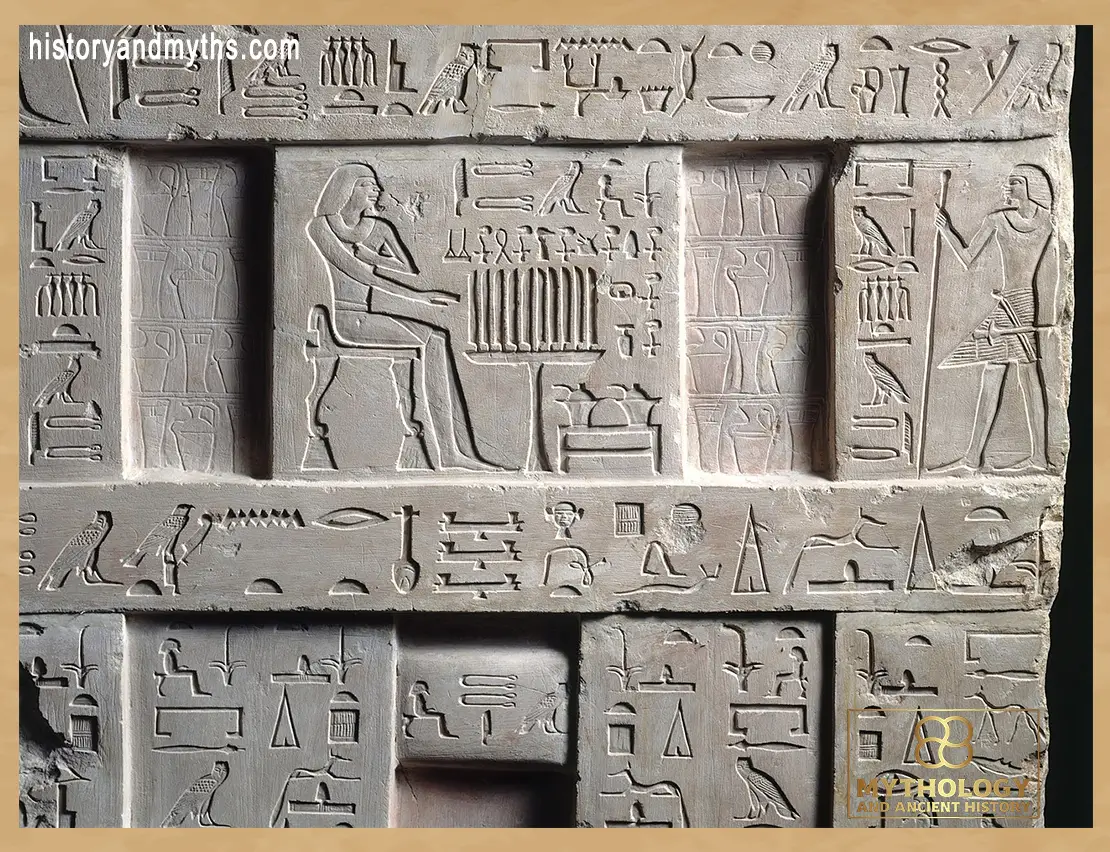
The most powerful memorial practice in Ancient Egypt was the preservation of the name. A name was not a label; it was a carrier of existence. As long as a name could be read or spoken, the person it belonged to remained socially active, even after death.
This is why names appear repeatedly on stelae, walls, statues, and everyday objects. The goal was not decoration or vanity, but durability. Writing a name increased the chances that someone family, visitor, or stranger would encounter it and pronounce it, renewing the dead person’s presence in the living world.
Forgetting a name was catastrophic. It meant exclusion from memory and from social continuity. Memorial practices therefore focused less on elaborate monuments and more on legibility, repetition, and visibility. Survival depended not on how impressive a memorial was, but on whether it continued to function as a reminder over time.
Physical Memorials: Objects Designed to Be Encountered
Memorial objects in Ancient Egypt were not passive markers. They were designed to be seen, read, and engaged with repeatedly. Stelae, statues, false doors, and inscribed offerings were placed where interaction was likely along processional routes, in shared tomb spaces, or within family-controlled areas.
These objects worked because they invited encounter. A passerby reading a name or recognizing a figure participated in remembrance, even unintentionally. This made memory communal rather than private. The dead relied not only on descendants but on society at large to sustain their presence.
Importantly, memorials did not need to be grand. Modest inscriptions could be just as effective if they remained accessible. What mattered was continued exposure. Memorial practices were therefore pragmatic, prioritizing visibility and durability over scale or luxury.
Family, Reuse, and the Renewal of Memory
Memorial practices were reinforced through family continuity and the reuse of burial spaces. Tombs were rarely sealed forever. They were revisited, modified, and reused by later generations, allowing memory to be renewed rather than frozen in time.
This reuse served two purposes. Practically, it conserved resources. Symbolically, it reaffirmed lineage. Each return to a tomb reactivated the presence of earlier family members and reaffirmed their place within the living household. The dead remained part of the family narrative, not relics of a closed past.
Reuse also created layers of memory. Names and images accumulated rather than replaced one another. Memorial practice thus functioned as an evolving archive, where identity was preserved through repetition and association rather than isolation. Memory survived because it was shared across generations.
A person did not truly die at burial. They died when their name disappeared from use.
Memorial practices existed to block this second death by keeping identity visible,
spoken, and socially active.
© historyandmyths.com — Educational use
Forgetting as a Second Death: What Memorial Practices Prevented
In Egyptian thought, forgetting was not neutral. It was destructive. A person who was no longer remembered did not simply fade from social awareness; they ceased to exist in any meaningful way. This idea turns memory into a protective force and explains why memorial practices carried such weight.
The first death ended biological life. The second death erasure ended social and symbolic life. Memorial practices existed specifically to block this outcome. By keeping names visible and identities recognizable, Egyptians resisted the collapse of a person into anonymity.
This fear of erasure shaped how memory was managed. Memorials were not created for emotional comfort alone, but as safeguards against disappearance. Remembering was an obligation, not a sentiment. Through sustained remembrance, the dead remained present, and the living protected themselves from the instability that forgetting would bring.
Deliberate Erasure: When Memory Was Intentionally Destroyed
Memorial practices were designed to preserve memory, but Ancient Egyptians also understood that memory could be deliberately erased. In rare political or religious circumstances, the destruction of a person’s name and image was intended to remove them from public remembrance rather than simply punish them.
This practice is most clearly associated with damnatio memoriae, a modern term used to describe the systematic erasure of an individual’s memory. Although the expression is Roman, similar actions occurred in Ancient Egypt. Royal names were chiseled from monuments, statues were damaged, and inscriptions were altered to prevent future generations from recognizing certain rulers.
Famous examples include the attempts to erase the memory of Hatshepsut after her reign and the widespread removal of references to Akhenaten following the Amarna Period. These campaigns demonstrate how seriously Egyptians viewed remembrance. Destroying a person’s memorial was not merely political vandalism it threatened the survival of their public identity long after death.
Such cases were exceptional rather than ordinary. For most Egyptians, memorial practices sought to preserve names across generations. Yet these deliberate acts of erasure reveal the opposite side of the same belief: if memory ensured continued existence, then destroying memory became one of the harshest punishments imaginable.
Memorial Practices Across Time: Did Memory Change?
Memorial practices in Ancient Egypt were not static. While the core fear of forgetting remained constant, the methods of sustaining memory evolved across periods. In the Old Kingdom, memorialization was closely tied to monumental architecture and formal inscriptions. Memory was anchored in permanence: stone, scale, and centralized visibility.
By the Middle Kingdom, this emphasis shifted. Memorial practices became more text-driven and individualized. Stelae multiplied, autobiographical statements expanded, and names appeared in more accessible contexts. Memory no longer relied solely on elite monuments; it became portable and reproducible. This change reflects broader social shifts, including the spread of literacy and the diversification of social identity.
In the New Kingdom and later periods, memorial practices extended further into everyday life. Names circulated through administrative texts, legal documents, and reused spaces. Memory was no longer secured only by permanence but by frequency of encounter. The dead survived not because they were carved into stone once, but because their names continued to appear in active contexts.
This evolution shows that remembrance adapted to social reality. Egyptians adjusted how memory was preserved, not why it mattered.
Elite and Non-Elite Memory: Who Was Remembered and How?
Memorial practices differed sharply between social groups, but not in importance only in method. Elite individuals invested in durable, highly visible memorials: large stelae, statues, and tomb inscriptions designed to attract attention over generations. Their memory depended on public recognition.
Non-elite Egyptians relied on quieter strategies. Names were preserved through family reuse of tombs, small inscriptions, and oral transmission within households. These memorials were less permanent materially, but often more stable socially, because they were maintained through direct lineage rather than public space.
This distinction matters. Elite memory aimed at endurance through material dominance; non-elite memory aimed at survival through continuity of use. Both strategies responded to the same threat forgetting but operated within different constraints.
Importantly, neither form was inferior. Memorial effectiveness depended not on wealth, but on whether memory remained active. A modest name remembered daily could outlast a grand monument ignored by time.
Beyond the Tomb: Memory in Texts, Titles, and Daily Use
Memorial practices were not confined to tombs or memorial objects. Memory extended into administrative, legal, and social systems. Names of the dead appeared in contracts, genealogies, and titles passed down or referenced by descendants. This created a form of remembrance embedded in daily function rather than ritual.
By invoking deceased individuals in documents or social identity, Egyptians kept memory operational. The dead continued to matter because they were referenced in living systems. Memory here was not symbolic; it was instrumental.
This explains why remembrance was so resilient. Even if a tomb fell into disuse, a name could survive elsewhere in text, speech, or inherited role. Memorial practices thus operated across multiple layers of society, ensuring that memory was distributed rather than centralized.
Through this dispersion, Egyptians reduced the risk of erasure. Memory survived not because it was sacred, but because it was used.
- Memorial practices began after burial and mourning ended.
- Remembering the name was essential to survival after death.
- Forgetting was understood as a second, final death.
- Memorials worked through repetition, not spectacle.
- Both elites and non-elites practiced remembrance differently.
- Memory extended beyond tombs into daily and administrative life.
What were memorial practices in Ancient Egypt?
They were long-term actions meant to preserve memory and identity after death.
How were memorial practices different from burial rituals?
Burial secured the afterlife, while memorial practices secured remembrance over time.
Why was forgetting feared?
Forgetting erased social existence and caused a second, final death.
Were memorial practices religious?
They were social and cultural, not acts of worship.
Did ordinary people practice memorialization?
Yes. Non-elites relied on family continuity and name reuse.
Where did memorial practices take place?
In tombs, households, texts, and everyday social spaces.
Did memorial practices change over time?
Yes. Methods evolved, but the fear of forgetting remained constant.
Sources & Rights
- Assmann, Jan. Death and Salvation in Ancient Egypt. Ithaca: Cornell University Press, 2005.
- Assmann, Jan. Cultural Memory and Early Civilization. Cambridge: Cambridge University Press, 2011.
- Ikram, Salima. Death and Burial in Ancient Egypt. Harlow: Pearson Longman, 2003.
- Taylor, John H. Death and the Afterlife in Ancient Egypt. Chicago: University of Chicago Press, 2001.
- Grajetzki, Wolfram. Burial Customs in Ancient Egypt. London: Duckworth, 2003.
- Quirke, Stephen. Exploring Religion in Ancient Egypt. Chichester: Wiley-Blackwell, 2015.
- Meskell, Lynn. Private Life in New Kingdom Egypt. Princeton: Princeton University Press, 2002.
- Baines, John. “Ancient Egyptian Concepts of the Self.” In Self and Society, London, 1985.
- Allen, James P. Middle Egyptian Literature. Cambridge: Cambridge University Press, 2015.
- Wilkinson, Richard H. The Complete Gods and Goddesses of Ancient Egypt. London: Thames & Hudson, 2003.
- Richards, Janet. Society and Death in Ancient Egypt. Cambridge: Cambridge University Press, 2005.
- O’Connor, David. “Belief and Memory in Ancient Egypt.” Journal of Egyptian Archaeology.
- van Dijk, Jacobus. “Memory and Identity in Egyptian Funerary Culture.” UCLA Encyclopedia of Egyptology.
Written by H. Moses — All rights reserved © Mythology and History