Coming of Age in Ancient Egypt: Puberty, Responsibility, Adult Roles
Coming of age in ancient Egypt was not one fixed ceremony with a universal script. It was a social transition marked by puberty, first work responsibilities, and readiness for marriage and household duty. The exact timing varied by class and gender, but the goal was the same: turning a child into a socially accountable adult.
This article explains what “adulthood” meant in everyday Egyptian life, the clearest signs that childhood ended, how boys and girls experienced the transition differently, and why the Egyptian model was more practical and status-based than modern legal age systems.
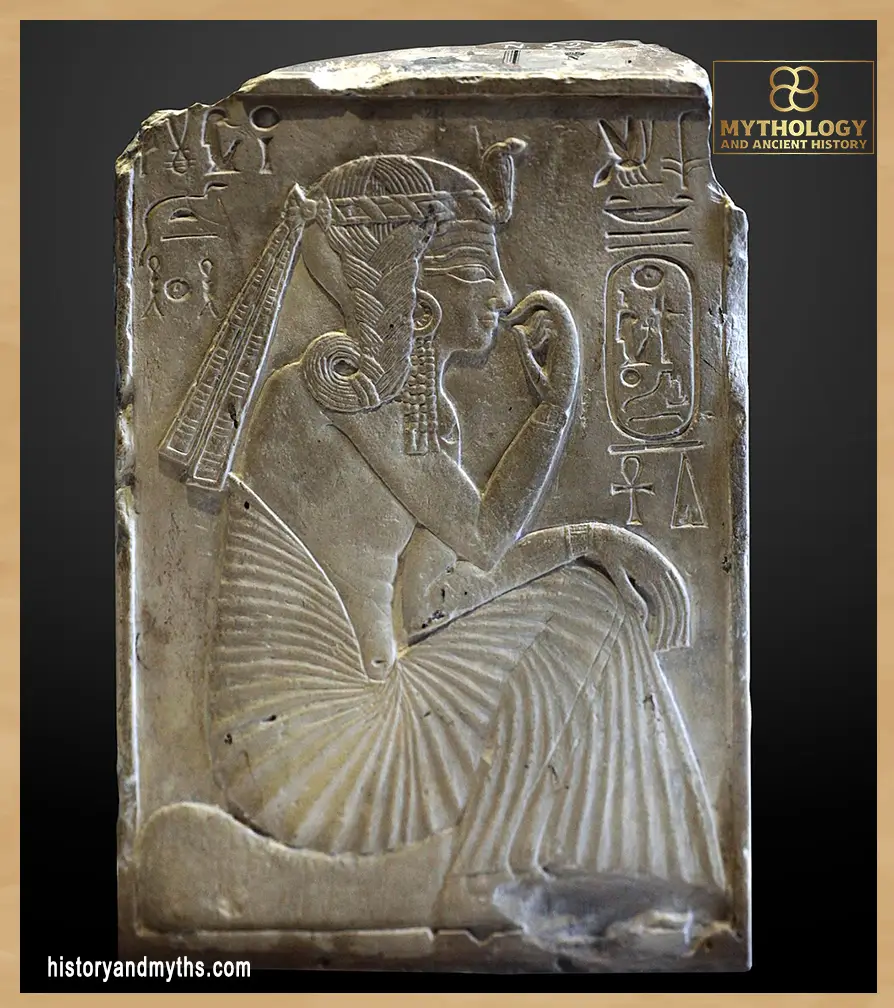
Stele of Ramesses II as a child (Louvre, N 522) — cropped detail — Photo: Rama — Source: Wikimedia Commons (CC BY-SA 3.0 FR)
What “Coming of Age” Meant in Ancient Egypt
In ancient Egypt, adulthood was not defined by a birthday the way modern legal systems do. It was defined by a shift in expectations: a person became “grown” when the community could rely on them to behave responsibly, work productively, and participate in adult social roles without constant supervision. That made coming of age less like a single ritual and more like a social upgrade that became real when others started treating you differently.
The transition had three practical markers. First came physical maturity, which mattered because it signaled readiness for adult roles and social boundaries. Second came work: once a child entered training, labor, or service, they were no longer treated as someone merely being raised, but as someone contributing and learning discipline. Third came marriageability and household responsibility, which placed a person inside adult networks of reputation, obligation, and control.
So the key point is simple but important: coming of age in ancient Egypt was a process of becoming socially accountable. The community did not need a universal ceremony to recognize it, because the proof appeared in work, behavior, and the new responsibilities that followed.
| Transition Marker | What Changed | Why It Mattered | What Society Expected Next |
|---|---|---|---|
| Physical maturity | Stronger social boundaries and higher behavioral expectations | Signals readiness for adult roles and consequences | Controlled conduct and adult responsibility |
| First serious work | From “helping” to regular labor and training | Proves reliability and usefulness to the household | Discipline, skill, and obedience to authority |
| Reputation pressure | Mistakes become socially costly | Reputation affects trust, marriage, and protection | Self-control and predictable behavior |
| Marriageability | Shift toward adult household roles | Creates long-term obligations and alliances | Household stability and responsibility |
| Institutional entry | Workshops, estates, temples, or elite training define adult identity | Adulthood becomes enforceable inside structured hierarchies | Performance, loyalty, and accountability |
Was There a Fixed Age for Adulthood?
Ancient Egypt did not operate with one clear, universal “legal age of adulthood” in the way a modern state does. What we can see instead is a flexible pattern: adulthood was recognized when a person crossed into adult roles, and that could happen earlier or later depending on family needs, social class, and opportunity. A household that depended on labor would treat maturity as something proven by usefulness, while an elite household could stretch childhood longer through education, protection, and controlled entry into adult life.
In practice, age mattered less than capability and timing. Puberty created new social rules and new expectations, but it did not automatically make someone an adult in every sense. The real shift happened when others started assigning adult responsibilities: regular work, heavier discipline, formal training, or preparation for marriage. When those changes began, society stopped seeing the person as “in progress” and started seeing them as accountable.
That is why trying to pin Egyptian adulthood to one number often produces weak answers. The better historical approach is to track what changed: increased labor, stricter moral expectations, and the growing pressure to protect reputation. Those are the signals that tell you when childhood ended, even when the calendar does not.
The Real Signs of Adulthood: Work, Discipline, and Reputation
In everyday Egyptian life, the clearest sign that childhood was ending was not a ceremony but a shift in workload. A young person became “older” when their labor stopped being occasional help and became regular responsibility. That responsibility could take different forms—apprenticeship, household production, service work, or training—but the social message was the same: this person now matters to the functioning of the home and is expected to perform reliably.
Discipline also changed with that transition. A child could be corrected and guided, but an older youth was expected to control themselves. Mistakes became less tolerable because they affected reputation, relationships, and future options. Coming of age was therefore tied to behavior as much as to physical maturity. Adulthood meant learning restraint, timing, obedience to household rules, and awareness of consequences—especially in settings where authority was strict and social standing was fragile.
Reputation was the third marker, and often the most decisive. Once a youth’s actions could damage the family’s name or disrupt social order, they were treated as an adult in the one way that truly matters: they were held responsible. That responsibility was social before it was legal. It lived in gossip, trust, marriage prospects, and the willingness of others to work with or protect the person. In that system, adulthood was a lived status—earned by discipline, confirmed by work, and enforced through reputation.
Boys vs. Girls: Two Different Paths Into Adult Life
For boys, coming of age was usually made visible through work and training. The shift into adulthood was often framed as learning discipline, mastering a craft, serving in an institutional environment, or preparing for a role where performance mattered more than potential. A boy became a man when he could be trusted with tasks that affected production, income, or authority. That transition could be gradual, but it had a clear direction: increased responsibility, stricter supervision early on, and then more independence once competence was proven.
For girls, the transition into adulthood was often defined more sharply by social boundaries and reputation. Physical maturity mattered because it changed expectations around protection, behavior, and marriageability. The household’s priority was to manage risk: not only physical risk, but reputational risk that could affect marriage arrangements, alliances, and social standing. This made coming of age for girls feel less like expanding freedom and more like moving into a controlled adult identity with higher consequences.
The difference was not about value; it was about social function. Boys were pushed toward productivity and public reliability, while girls were often pushed toward household stability and safeguarded reputation. Both paths involved discipline and expectation, but the pressure points were different. Coming of age, in practice, was society assigning the person a role it needed them to fulfill—and then enforcing that role through work, norms, and social judgment.
Elite Youth vs. Common Youth: Not the Same Transition
For elite families, coming of age could be managed slowly and strategically. Their children were protected longer, educated more, and introduced into adult life in controlled steps. Adulthood was less about immediate labor and more about learning how to operate inside hierarchy—how to speak correctly, behave in formal settings, and build alliances. The transition was still real, but it was designed to produce status, not just survival. In that world, adulthood meant being ready to represent the household publicly and safely.
For common families, the transition was faster and more practical. Childhood ended when labor became necessary. Work was not a future goal; it was the structure of daily life. A young person might move from small tasks to full contributions quickly because the household depended on it. This meant the social meaning of adulthood was often earned through usefulness, endurance, and reliability rather than through education or ceremony.
The result is that “coming of age” in ancient Egypt cannot be described with one model. The elite path emphasizes training and controlled exposure to adult roles, while the common path emphasizes early responsibility and direct contribution. Both are forms of adulthood, but they are adulthood designed for different realities. One prepares you for power and stability; the other prepares you to keep the household functioning from day to day.
- Family Life in Ancient Egypt: Inside the Egyptian Home
- Daily Life of Ordinary People in Ancient Egypt: Work, Family
- Baby Naming in Ancient Egypt: Rituals, Meaning, and Protection
- Guardianship and Minors in Ancient Egypt: Protecting Children by Law
- Childhood Discipline in Ancient Egypt | How Society Shaped Obedience
- Motherhood and Childhood in Ancient Egypt: Pregnancy, Birth, Care
- Childhood in Ancient Egypt: How Children Lived, Learned, and Worked
Did Ancient Egypt Have Formal Coming-of-Age Rituals?
There is no strong evidence for a single, standardized coming-of-age ceremony practiced universally across ancient Egypt. What we do see is a culture where major life transitions were taken seriously, even when they were not marked by one public ritual. In that context, “coming of age” was real, but it was expressed through social change rather than a scripted event: a youth’s body changed, their responsibilities increased, and the community’s expectations tightened around them.
That does not mean the transition was invisible. Daily life created its own ritual structure. A young person might move into new routines of cleanliness, grooming, dress, and controlled behavior. They might be placed under stricter authority or moved into a workplace environment where discipline was enforced more harshly than inside the home. Those shifts can function like rituals because they repeat, they signal change, and they are socially recognized, even if no priest stands beside them announcing adulthood.
The most historically safe conclusion is that Egypt treated adulthood as a practical threshold. The transition could be acknowledged through family customs, workplace initiation, or community recognition, and it could vary widely across class and region. The ceremony, if it existed in some households, was not the defining feature. The defining feature was the new social contract: you are now expected to behave, work, and be judged as an adult.
Who Recognized That a Child Had Become an Adult?
In ancient Egypt, adulthood was not something granted by a government, a priest, or a written certificate. It was recognized by the people who depended on the individual every day. Parents, employers, workshop masters, temple officials, and local communities all played a role in determining when someone was ready to be treated as an adult.
Recognition came through behavior rather than ceremony. Once a young person could perform regular duties, follow discipline without constant supervision, protect the family’s reputation, and accept adult obligations, society gradually stopped treating them as a child. The transition was therefore confirmed through daily experience instead of a single public event.
This practical system reflected the priorities of Egyptian society. Adult status existed because communities needed reliable people to maintain households, workshops, estates, and institutions. In other words, adulthood was recognized when trust replaced dependence, making social responsibility more important than chronological age.
The Real Purpose: Turning Children Into Responsible Adults
Coming of age in ancient Egypt was not a celebration of freedom. It was a moment when society began demanding reliability. Childhood allowed mistakes because the child was still forming. Adulthood reduced that tolerance because the person now affected real outcomes: household survival, family reputation, marriage stability, workplace order, and social trust. The transition therefore served a clear purpose—creating people who could be held accountable.
This is why the process often felt strict. It trained self-control, stamina, obedience to rules, and awareness of consequences. It also trained the most important adult skill in a tightly structured society: knowing your place and performing it well. Whether someone became a worker, a spouse, a craft trainee, or an elite junior official, the core expectation was the same. Adult life meant fulfilling roles without destabilizing the system that protected you.
So the best way to describe “coming of age” in Egypt is as a social upgrade with a price. You gained recognition, new duties, and greater seriousness in how others treated you, but you also entered a world where reputation mattered and failure carried higher costs. That is what made the transition real, even when it was not announced with a single public ceremony.
Conclusion
Coming of age in ancient Egypt was a process, not a single rite. It was marked by physical maturity, rising work obligations, and the tightening rules of reputation and marriageability. Adulthood began when society stopped treating someone as a child-in-training and started holding them fully responsible.
- Coming of age in ancient Egypt was a social process, not one fixed ceremony.
- Adulthood began when work, discipline, and reputation became serious expectations.
- Boys often transitioned through training and productivity; girls through maturity and protected reputation.
- Elite youth experienced controlled preparation, while common youth faced early responsibility.
- The purpose of adulthood was accountability: being reliable inside family and hierarchy.
FAQ
Did ancient Egypt have a coming-of-age ceremony?
There is no strong evidence for one universal ceremony. Adulthood was usually recognized through growing responsibilities, discipline, and social expectations.
What was the main sign that someone became an adult?
The clearest sign was increased accountability: regular work duties, stricter behavior rules, and reputational consequences.
Did boys and girls come of age in the same way?
Not exactly. Boys often transitioned through training and productivity, while girls faced sharper social boundaries tied to maturity and reputation.
At what age did Egyptians become adults?
There was no single fixed age. The transition depended on household need, social class, and when a young person entered adult work and social roles.
Was marriage linked to adulthood?
Yes. Readiness for marriage and household duty was one of the strongest markers that childhood had ended.
Did elite children experience a different transition?
Yes. Elite youth often had longer preparation through education and controlled entry into adult roles, unlike common youth who took on work early.
Why did coming of age matter so much socially?
Because it marked the point when society expected reliable behavior and held a person fully responsible for work, reputation, and obligations.
Sources & Rights
- Bard, Kathryn A. An Introduction to the Archaeology of Ancient Egypt. 2nd ed. Wiley-Blackwell, 2015.
- Brier, Bob, and Hoyt Hobbs. Daily Life of the Ancient Egyptians. 2nd ed. Greenwood Press, 2008.
- David, Rosalie. The Experience of Ancient Egypt. Routledge, 2000.
- David, Rosalie. Religion and Magic in Ancient Egypt. Penguin Books, 2002.
- Ikram, Salima. Ancient Egypt: An Introduction. Cambridge University Press, 2011.
- Janssen, Rosalind, and Jac J. Janssen. Growing Up in Ancient Egypt. Rubicon Press, 1990.
- Lesko, Leonard H., ed. The Oxford Encyclopedia of Ancient Egypt. 3 vols. Oxford University Press, 2001.
- McDowell, Andrea G. Village Life in Ancient Egypt: Laundry Lists and Love Songs. Oxford University Press, 1999.
- Meskell, Lynn. Private Life in New Kingdom Egypt. Princeton University Press, 2002.
- Robins, Gay. Women in Ancient Egypt. Harvard University Press, 1993.
- Robins, Gay. The Art of Ancient Egypt. Harvard University Press, 2008.
- Szpakowska, Kasia. Daily Life in Ancient Egypt: Recreating Lahun. Blackwell Publishing, 2008.
- Teeter, Emily. Religion and Ritual in Ancient Egypt. Cambridge University Press, 2011.
- Tyldesley, Joyce. Daughters of Isis: Women of Ancient Egypt. Penguin Books, 1995.
- Wilkinson, Richard H. The Complete Gods and Goddesses of Ancient Egypt. Thames & Hudson, 2003.
- Wilkinson, Toby. The Rise and Fall of Ancient Egypt. Random House, 2010.
- The British Museum. Collection Online: Ancient Egypt.
- The Metropolitan Museum of Art. Heilbrunn Timeline of Art History: Ancient Egypt.
- Petrie Museum of Egyptian and Sudanese Archaeology. Collections Online.
- UCLA Encyclopedia of Egyptology. Articles on Childhood, Family, Education, and Daily Life in Ancient Egypt.
Written by H. Moses — All rights reserved © History and Myths