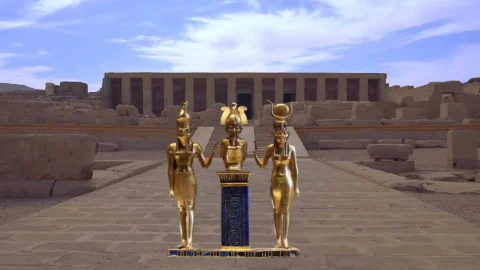
Mourning Practices in Ancient Egypt: How Grief Became Ritual
Ancient Egyptian mourning was not just private grief—it was a controlled ritual performance meant to protect the dead, restore social order, and activate the afterlife transition. Families, temple-trained lamenters, and symbolic roles linked to Isis and Nephthys used voice, gesture, and procession to “work” the funeral into meaning.
Mourning in Ancient Egypt was loud, public, and carefully staged—but it wasn’t chaotic. It was structured like a ritual technology: specific actions, specific words, and specific roles designed to guide a person from death into a new, stable identity beyond the grave.
To modern eyes, the most striking details are the visible ones—wailing women, torn clothing, dust, hair pulled loose, and processions moving toward the tomb. But the real core of mourning was deeper than expression. It was a religious language of transformation: grief was shaped into a formal act that could help the dead “become” what the afterlife required.
This article breaks mourning down as the Egyptians themselves seem to have understood it: not as a single emotional moment, but as a sequence of performed stages—before burial, during the procession, at the tomb, and in the days after—each with its own logic, social function, and symbolic weight.
What Mourning Meant in Ancient Egypt (More Than Grief)
In ancient Egypt, mourning wasn’t treated as a private emotion that simply “happened” after death. It was a public, ritualized reaction with a job to do: it marked that a person had crossed a dangerous boundary, and it signaled that the living community was now responsible for completing the transition properly.
That difference matters. Grief could be real and personal, but mourning practices were designed to be repeatable and recognizable—the same actions, the same sounds, the same visual signals—so everyone understood what was happening and what came next. Death wasn’t only a family crisis; it was a social event, a religious rupture, and a threat to order if handled incorrectly.
This is why Egyptian mourning looks like performance, even when it’s sincere. The Egyptians shaped sorrow into ritual form because ritual form was considered effective. A funeral without visible mourning could look incomplete, emotionally suspicious, or spiritually risky—because it failed to show that the dead person’s departure was being acknowledged, controlled, and answered in the “correct” cultural language.
So the most accurate way to read Egyptian mourning is as structured grief with a purpose: it comforted the living, honored the dead, and helped rebuild stability after the shock of loss—socially on earth, and symbolically in the afterlife.
| Aspect | Role in Mourning | Purpose |
|---|---|---|
| Family Mourning | Public display of grief | Affirm social bonds and obligation |
| Ritual Lamenters | Structured wailing and gestures | Activate ritual transition |
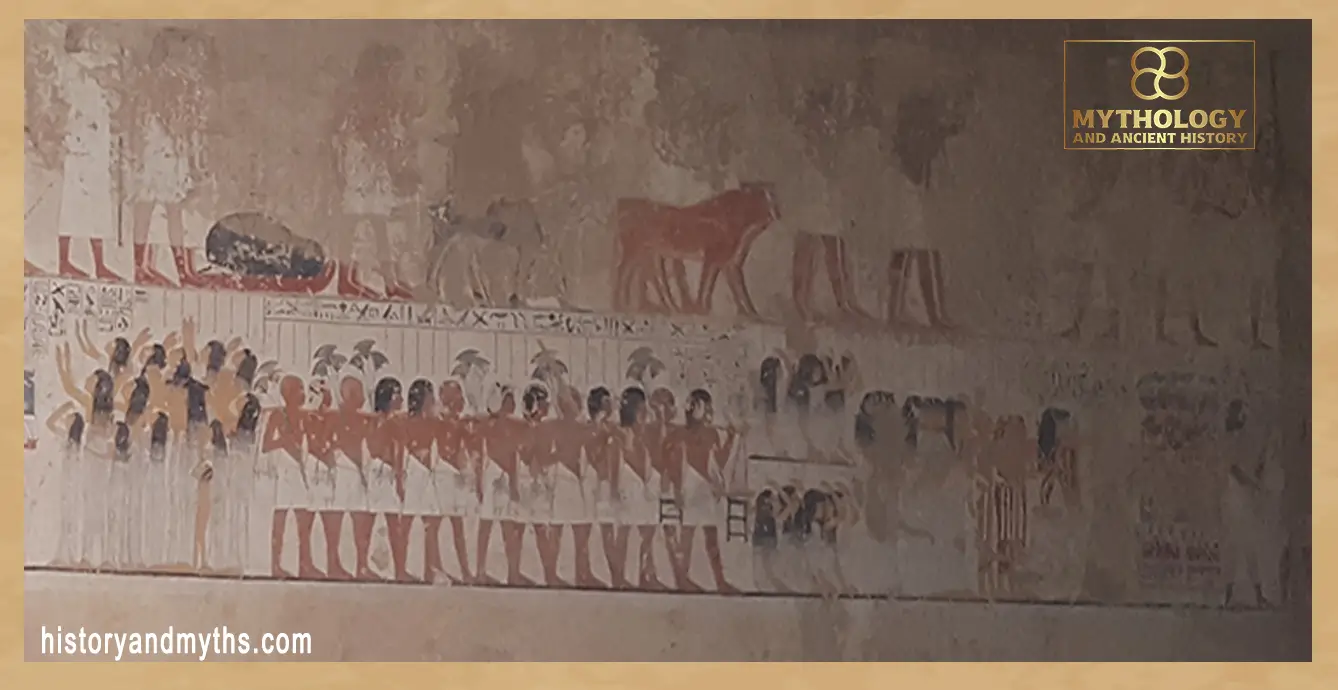
| Funeral Procession | Collective movement toward tomb | Public confirmation of death |
| Hair & Body Gestures | Visible signs of disorder | Mark rupture before restoration |
| Divine Models | Isis and Nephthys | Legitimize human mourning acts |
Who Mourned the Dead? Family, Ritual Women, and “Official Grief”
Mourning in Ancient Egypt wasn’t limited to the immediate family, and it wasn’t always spontaneous. Different people mourned for different reasons—and their roles mattered because mourning wasn’t just emotion, it was a visible statement that the death was being handled properly.
At the most basic level, the family carried the social weight of the loss. Their grief confirmed that the dead person had real ties, real status, and a place in the living network that had now been broken. Public mourning also protected reputation: it showed that the dead were not abandoned, forgotten, or treated as insignificant.
But Egyptian funerals also point to a second layer: ritual mourners, often women performing specialized actions—lamenting, gesturing, and intensifying the scene in a controlled way. These figures weren’t “fake.” Their job was closer to religious function than acting. They turned the funeral into a structured event where grief became legible, powerful, and ritually effective.
And above both layers, there was a third category: official grief, where mourning becomes a social signal as much as a personal one. High-status deaths, especially in elite contexts, required grief to be visible on a scale that matched the rank of the person who died. In that setting, mourning was partly about loss—and partly about authority, continuity, and public order.
Mourning as a Funeral “Stage”: The Procession, the Noise, and the Display
The funeral procession wasn’t just transportation from a house to a tomb. In Egyptian culture, it functioned like a moving ritual space where mourning had to be seen and heard, because the transition of the dead had to be publicly confirmed.
This is where mourning becomes most visibly “designed.” The raised voices, the repeated lamenting, and the dramatic gestures weren’t random emotional overflow—they created a controlled atmosphere of crisis and response. The message was clear: something has broken (a death), and the living are actively repairing it through the correct social and religious behavior.
In practice, the procession allowed mourning to do three things at once. First, it made the loss undeniable: the community witnesses the separation. Second, it created emotional authority: grief becomes proof that the dead mattered and deserved proper rites. Third, it framed the burial itself as a transformation, not an ending—because the entire movement toward the tomb signals that the dead are being guided forward, not simply discarded.
That is why Egyptian mourning often looks intense in funerary scenes. The intensity is the point. The procession turns mourning into a public mechanism that pushes the dead toward a stable afterlife identity, while also keeping the living socially aligned and morally “correct” in how they respond to death.
Isis and Nephthys: The Divine Model Behind Human Mourning
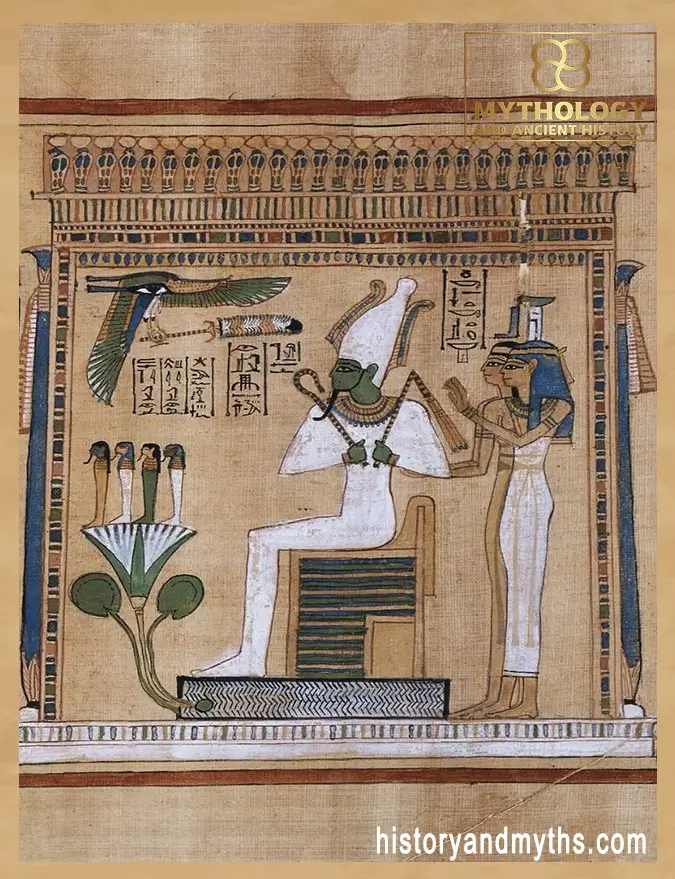
Egyptian mourning wasn’t only human behavior—it was shaped by a divine script. The strongest template came from the Osiris myth, where Isis and Nephthys mourn the dead god and help restore him into a transformed state. That matters because it turns mourning into something more than sadness: it becomes a force that does work.
In this model, lamentation is not passive. The sound of grief is treated as an active ritual tool—calling, protecting, and guiding. When mourners echo Isis and Nephthys, they aren’t just “honoring the dead.” They are symbolically repeating the moment where loss is turned into restoration: a death becomes a passage, and the dead becomes someone who can be reassembled, defended, and re-established.
This is why Egyptian mourning scenes often feel repetitive in pose and intensity. The repetition isn’t artistic laziness—it reflects a belief that mourning needed to match a recognizable sacred pattern. The mourners are not simply reacting; they are performing a proven formula tied to cosmic order, legitimacy, and rebirth.
So when you see mourning framed through Isis and Nephthys, you’re seeing the logic of Egyptian death culture in its sharpest form: the funeral is not just about what happened to the body, but about preventing disorder from winning. Mourning becomes a ritual declaration that the dead will not vanish into silence—because the gods themselves once refused to accept that outcome.
Hair, Dust, and Gesture: Why the Body Became Part of Mourning
Egyptian mourning wasn’t expressed only through words. It was written onto the body—through hair, posture, and deliberate signs of disorder—because the Egyptians understood death as a rupture that had to be made visible before it could be repaired.
Hair is one of the clearest signals. Loose, disheveled hair isn’t just “sadness styling.” It’s controlled disarray: a visual statement that normal life has been interrupted. In a culture that valued order, grooming, and controlled appearance, breaking that order was meaningful. Mourning hair turns the body itself into proof that something serious has happened.
Dust and contact with the ground work the same way. Covering the body with earth-like signs or moving in low, grief-marked postures connects the living mourner to the dead person’s new reality—silence, soil, separation. It’s a harsh but effective visual language: the living temporarily adopt the marks of what death represents, then step back out once the funeral transition is completed.
Gestures—raising arms, bending forward, pulling hair, moving in repeated positions—are not random theatrical grief. They function as a ritual vocabulary the audience can read instantly. The point is not individuality; the point is recognition. A funeral with recognizable mourning signals is a funeral that looks “correct,” socially legitimate, and spiritually complete.
So these bodily actions weren’t there to decorate the scene. They were a disciplined way to turn grief into something structurally useful: a public language of rupture, loyalty, and transition—performed so the dead could move forward and the living could return to stability.
Every cry, gesture, and role was designed to make death socially visible and spiritually manageable.
Mourning transformed loss into a controlled process that protected the dead, reaffirmed order, and mirrored divine precedent.
© historyandmyths.com — Educational use
Did Mourning Differ by Status? Royal Deaths, Elite Funerals, and Ordinary Grief
Mourning in Ancient Egypt followed shared cultural rules, but it wasn’t socially “equal.” The higher the status of the dead person, the more mourning had to look like a public event—because rank demanded a visible response, not just private sorrow.
For elites, mourning amplified reputation. A grand funeral with formal lamentation signaled that the deceased carried weight in society and deserved a transition performed with full seriousness. The scale of display wasn’t only emotional—it was political and social. It showed that the household, the institution, or the network around the dead person was still strong, organized, and capable of honoring its obligations.
Royal contexts pushed this even further into “official grief.” When authority dies, grief becomes a managed public signal: the loss is acknowledged, continuity is asserted, and disorder is contained. Mourning here functions like controlled communication—confirming legitimacy while staging the community’s unified response.
Ordinary people, by contrast, likely mourned with fewer resources and less spectacle, but the logic stayed the same. Even when the burial was simpler, the core signs of mourning—audible lament, visible grief, recognized gestures—still mattered because they framed death as a transition being actively handled, not a disappearance.
So the difference wasn’t that common people “didn’t mourn properly.” The difference is that social rank shaped how much mourning had to be expanded into a public statement. In every case, mourning wasn’t just about feeling—it was about making loss visible, socially valid, and ritually safe.
What Mourning Was Supposed to Achieve (Social Order + Afterlife Logic)
Egyptian mourning wasn’t performed just to “express loss.” It was meant to produce outcomes—both in society and in the spiritual logic surrounding death. That’s why the same mourning signals appear again and again: repetition made it reliable, and reliability made it effective.
Socially, mourning confirmed that the dead person still mattered after death. It protected reputation, reinforced family legitimacy, and publicly marked that the living were fulfilling their obligations. A death without recognized mourning could look like abandonment, shame, or social collapse—so mourning acted as a stabilizer that absorbed the shock and re-ordered the community around the loss.
Religiously, mourning treated death as a dangerous transition that needed active handling. Loud lamentation, formal gestures, and the symbolic model of Isis and Nephthys all point to the same idea: grief, when shaped into ritual form, could help defend the dead against silence, disappearance, and cosmic disorder. Mourning was one of the ways the living “held the line” while the dead crossed into a new state.
In that sense, Egyptian mourning wasn’t a decorative layer on top of burial customs. It was a mechanism that made death culturally manageable: it turned chaos into a script, fear into action, and loss into a process with rules—so the dead could be integrated into the afterlife, and the living could return to normal life without leaving the rupture open.
- Mourning was a public ritual, not private grief.
- Lamentation functioned as a controlled religious performance.
- Isis and Nephthys provided the divine model for human mourners.
- Body gestures and hair symbolized temporary disorder.
- Status determined scale, not meaning, of mourning.
- The goal was stability—socially and in the afterlife.
Why was mourning public in Ancient Egypt?
Because death was a social rupture that required visible acknowledgment to restore order.
Were professional mourners real or symbolic?
They were real ritual specialists performing recognized religious functions.
Why are Isis and Nephthys linked to mourning?
They served as the divine prototype for lamentation and restoration after death.
Did everyone mourn the same way?
The core rituals were shared, but scale and visibility varied by social status.
Why was hair so important in mourning scenes?
Disordered hair symbolized a temporary break from normal life and order.
Was mourning emotional or religious?
It was both, but its form was controlled by religious logic.
What happened after mourning ended?
The living returned to order once the dead was ritually stabilized.
Sources & Rights
- Assmann, Jan. Death and Salvation in Ancient Egypt. Translated by David Lorton. Ithaca: Cornell University Press, 2005.
- Assmann, Jan. The Search for God in Ancient Egypt. Translated by David Lorton. Ithaca: Cornell University Press, 2001.
- Baines, John, and Jaromír Málek. Atlas of Ancient Egypt. New York: Facts On File, 1980.
- Bickel, Susanne, and Antonio Loprieno, eds. Proceedings of the Conference on Egyptian Ritual (various studies). Basel: Universität Basel, various years.
- Bleiberg, Edward, ed. Arts and Humanities Through the Eras: Ancient Egypt. Detroit: Gale, 2005.
- Boyd, Elizabeth. The Meaning of Funeral Rites in Ancient Egypt. Studies in Egyptology series. London: Kegan Paul International, 1994.
- Bryan, Betsy M. “The Social Dimensions of Death in Ancient Egypt.” In Egyptian Archaeology and Society, edited volumes, various pages. London: Egypt Exploration Society, various years.
- Dodson, Aidan, and Salima Ikram. The Tomb in Ancient Egypt: Royal and Private Sepulchres from the Early Dynastic Period to the Romans. London: Thames & Hudson, 2008.
- Faulkner, Raymond O. The Ancient Egyptian Book of the Dead. Edited by Carol Andrews. London: British Museum Press, 1985.
- Friedman, Florence Dunn, ed. Gifts of the Nile: Ancient Egyptian Faience. London: British Museum Press, 1998.
- Goelet, Ogden. “A Commentary on the Corpus of Funeral Recitations.” In The Egyptian Book of the Dead: The Book of Going Forth by Day, edited by Eva von Dassow and others. San Francisco: Chronicle Books, 1994.
- Harrington, Nicola. Living with the Dead: Ancestor Worship and Mortuary Ritual in Ancient Egypt. Oxford: Oxbow Books, 2013.
- Ikram, Salima. Death and Burial in Ancient Egypt. Harlow: Pearson Longman, 2003.
- Kitchen, Kenneth A. Ramesside Inscriptions: Translated and Annotated. Oxford: Blackwell, 1993–2008.
- Lichtheim, Miriam. Ancient Egyptian Literature. 3 vols. Berkeley: University of California Press, 1973–1980.
- Meskell, Lynn. Private Life in New Kingdom Egypt. Princeton: Princeton University Press, 2002.
- Ockinga, Boyo G. “The Role of Lamentation in Egyptian Mortuary Culture.” In Proceedings of Egyptological Conferences, edited volumes, various pages. Oxford: BAR International Series, various years.
- Pinch, Geraldine. Egyptian Mythology: A Guide to the Gods, Goddesses, and Traditions of Ancient Egypt. Oxford: Oxford University Press, 2002.
- Quirke, Stephen. Ancient Egyptian Religion. London: British Museum Press, 1992.
- Quirke, Stephen. Exploring Religion in Ancient Egypt. Chichester: Wiley-Blackwell, 2015.
- Robins, Gay. Women in Ancient Egypt. Cambridge, MA: Harvard University Press, 1993.
- Roth, Ann Macy. “The Practical Economics of Tomb Building in the Old Kingdom.” In Egyptian Archaeology conference volumes, various pages. London: Egypt Exploration Society, various years.
- Taylor, John H. Death and the Afterlife in Ancient Egypt. Chicago: University of Chicago Press, 2001.
- Taylor, John H., ed. Journey Through the Afterlife: Ancient Egyptian Book of the Dead. Cambridge, MA: Harvard University Press, 2010.
- Teeter, Emily. Religion and Ritual in Ancient Egypt. Cambridge: Cambridge University Press, 2011.
- Tooley, Angela, and John H. Taylor. Egyptian Shabtis. London: British Museum Press, 1994.
- Tyldesley, Joyce. Daughters of Isis: Women of Ancient Egypt. London: Penguin Books, 1995.
- van Gennep, Arnold. The Rites of Passage. Translated by Monika B. Vizedom and Gabrielle L. Caffee. Chicago: University of Chicago Press, 1960.
- Wendrich, Willeke, ed. UCLA Encyclopedia of Egyptology. Los Angeles: University of California, Los Angeles, 2008–.
- Wilkinson, Richard H. The Complete Gods and Goddesses of Ancient Egypt. London: Thames & Hudson, 2003.
- Witte, Mareike, and Jacco Dieleman, eds. Form and Function of Ritual Texts in Ancient Egypt. Leiden: Brill, 2013.
- Zivie-Coche, Christiane. Religion and Ritual in Ancient Egypt. Translated works and studies. Paris: Éditions du CNRS, various years.
Written by H. Moses — All rights reserved © Mythology and History