Vassal States in Mesopotamia: How Babylon and Assyria Ruled
Vassal states were not weak satellites passively controlled by powerful empires. In many ancient systems, they functioned as carefully managed political instruments that allowed imperial centers to expand influence without the costs of permanent occupation. Through tribute, treaties, military obligations, and controlled autonomy, dominant powers transformed local kingdoms into extensions of imperial authority. From Assyria and Babylon to Persia and Rome, indirect rule through vassalage became one of the most efficient methods of long-term domination. Understanding how these systems operated reveals how empires maintained stability, managed rebellion, and balanced coercion with cooperation.
What Are Vassal States?
A vassal state is a politically subordinate kingdom or territory that retains internal autonomy while accepting the authority of a dominant power. Unlike directly governed provinces, vassal states maintained their own rulers, legal traditions, and local administrations. In exchange, they were required to provide tribute, military support, and diplomatic loyalty to the imperial center.
This arrangement created a layered system of control. Sovereignty was divided rather than eliminated. The imperial power handled foreign policy, major security decisions, and succession approval, while local rulers managed daily governance. As a result, vassalage functioned as a form of indirect rule that preserved the appearance of independence while embedding dependency into political structures.
Core Features of Vassal Relationships
Vassal systems were regulated through formal agreements and institutionalized obligations. These relationships were not informal alliances but legally and ritually defined frameworks.
Tribute and Taxation
Vassal rulers delivered regular payments in silver, agricultural goods, luxury items, or labor. Tribute symbolized submission and financed imperial administration and warfare.
Military Obligations
Dependent states were required to supply troops, logistics, or strategic access during campaigns. Refusal was treated as rebellion rather than neutrality.
Political Loyalty
Foreign diplomacy was restricted. Vassals could not form independent alliances or wage wars without imperial consent. Loyalty was reinforced through oaths and ritual ceremonies.
Treaties and Hostages
Many systems relied on written treaties and the exchange of hostages from royal families. These mechanisms ensured compliance and discouraged defection.
Vassal States, Provinces, Colonies, and Allies
Understanding vassalage requires distinguishing it from other forms of political control.
Vassal States
Retained local rulers and institutions but operated under imperial supervision. Autonomy existed only within defined limits.
Provinces
Were governed directly by imperial officials. Local sovereignty was eliminated, and administration was centralized.
Colonies
Involved settlement populations that displaced or dominated local societies. Authority was exercised through demographic control rather than treaties.
Allies
Maintained formal independence and could renegotiate obligations. Unlike vassals, allies possessed limited diplomatic flexibility.
These distinctions mattered in practice. Empires selected vassalage when direct control was costly, risky, or politically destabilizing. It allowed expansion without overextending administrative capacity.
In operational terms, vassal states functioned as semi-autonomous buffers, revenue sources, and military auxiliaries. They reduced imperial exposure while extending strategic reach, making them central to premodern systems of large-scale governance.
| Category | Details |
|---|---|
| Political Status | Semi-autonomous dependent state |
| Main Obligation | Tribute and loyalty |
| Military Role | Auxiliary troops and logistics |
| Diplomatic Rights | Restricted by imperial authority |
| Local Governance | Maintained under supervision |
| Succession Control | Requires imperial approval |
| Risk Factor | High vulnerability to annexation |
Why Empires Chose Indirect Rule
Direct territorial control was expensive, administratively complex, and politically unstable in the ancient world. Maintaining permanent garrisons, bureaucratic staffs, and supply networks across distant regions strained even the most powerful states. For this reason, many empires adopted indirect rule through vassal systems as a strategic alternative. Vassalage reduced operational costs while preserving effective dominance.
Reducing Military and Administrative Costs
Permanent occupation required continuous troop deployment and logistical support. In regions with difficult terrain, hostile populations, or weak infrastructure, these costs escalated rapidly. By ruling through local authorities, imperial centers transferred much of the burden of governance, taxation, and order maintenance to dependent elites.
Local rulers already possessed administrative networks and social legitimacy. Utilizing these structures allowed empires to extract resources without constructing parallel institutions. The result was a more flexible and economically efficient form of expansion.
Managing Political Stability
Direct rule often provoked sustained resistance. Removing established elites disrupted social hierarchies and undermined traditional authority systems. Vassal arrangements minimized this disruption by preserving familiar leadership structures.
Subjects were more likely to accept domination when mediated through their own rulers. Loyalty to local dynasties softened perceptions of foreign control and reduced the likelihood of mass revolt. Indirect rule thus functioned as a stabilizing mechanism.
Extending Control Beyond Core Regions
Empires expanded faster than they could administratively absorb territory. Vassalage enabled rapid territorial growth without immediate institutional integration. Peripheral regions could be brought under influence while remaining formally autonomous.
This approach created layered spheres of control. Core provinces were tightly governed, while outer zones operated under looser supervision. Such gradation allowed imperial systems to adapt to regional conditions.
Preserving Strategic Flexibility
Vassal states functioned as buffers between imperial centers and rival powers. They absorbed military pressure, monitored frontier movements, and delayed invasions. Their existence reduced direct confrontation between major states.
Indirect rule also allowed empires to recalibrate relationships without full-scale reconquest. Loyal vassals could be rewarded with privileges, while disloyal ones could be replaced or downgraded to provincial status. This adaptability strengthened long-term control.
Exploiting Elite Cooperation
Vassal systems depended on collaboration with local ruling classes. In exchange for protection and status, elites accepted dependency and enforced imperial policies within their territories. This partnership converted potential opponents into stakeholders in imperial stability.
Through tribute privileges, dynastic recognition, and ceremonial honors, empires integrated foreign rulers into hierarchical political orders. Power was exercised less through constant coercion and more through managed dependency.
Indirect rule therefore represented a rational response to the structural limits of ancient state capacity. It allowed empires to govern large spaces with limited resources, balancing coercion with cooperation in pursuit of durable domination.
How Vassal Systems Worked
Vassal systems operated through standardized mechanisms that translated political subordination into daily administrative practice. These arrangements were maintained not by vague influence but by enforceable obligations embedded in economic, military, legal, and diplomatic structures. Effective vassalage required constant monitoring and institutional reinforcement.
Tribute and Resource Extraction
The foundation of vassal dependency was regular tribute. Payments took the form of silver, agricultural surplus, livestock, manufactured goods, or specialized labor. These transfers were scheduled, recorded, and audited through administrative channels.
Tribute served multiple functions. Economically, it financed imperial armies, construction programs, and court expenses. Politically, it reaffirmed subordination. Delays or reductions were interpreted as acts of defiance rather than financial difficulties, often triggering punitive responses.
In many systems, tribute obligations were calibrated to local productivity. Excessive demands risked economic collapse and rebellion, while insufficient extraction weakened imperial authority. Successful empires adjusted tribute levels to sustain long-term dependency.
Military Support and Strategic Obligations
Vassal states were integrated into imperial military systems. They supplied auxiliary troops, transport animals, provisions, and access to fortifications and roads. Some were required to host garrisons or allow transit rights for imperial armies.
Participation in campaigns reinforced loyalty and reduced opportunities for independent military development. By embedding dependent forces within imperial command structures, empires limited the capacity of vassals to organize autonomous resistance.
Failure to fulfill military obligations was treated as political betrayal. It justified direct intervention and often resulted in regime replacement.
Treaties, Oaths, and Legal Frameworks
Vassal relationships were formalized through treaties and sworn agreements. These documents specified tribute levels, defense duties, succession procedures, and diplomatic restrictions. In the Near Eastern tradition, treaties were reinforced by religious sanctions, invoking divine punishment for violation.
Oaths transformed political dependency into moral obligation. Breaking them was framed as sacrilege as well as rebellion, strengthening ideological control.
Legal recognition of vassal rulers depended on imperial approval. Successions, territorial disputes, and dynastic claims were often validated by the dominant power, reinforcing hierarchical authority.
Hostages, Surveillance, and Elite Control
Many systems relied on hostage exchanges, typically involving royal relatives or high-ranking nobles. These individuals were educated and maintained at imperial courts, creating personal ties while ensuring compliance.
Hostages functioned as political insurance. Their presence discouraged rebellion and facilitated elite acculturation. Over time, this practice produced ruling classes aligned culturally and ideologically with imperial centers.
Surveillance complemented these measures. Provincial inspectors, diplomatic envoys, and informants monitored political developments. Reports allowed early detection of unrest and coordinated intervention.
Economic Integration and Dependency
Beyond tribute, vassal states were incorporated into imperial trade networks. They depended on access to markets, credit systems, and distribution routes controlled by the dominant power. Economic isolation became a tool of discipline.
Infrastructure projects—roads, canals, ports—were often designed to channel commerce toward imperial centers. This spatial organization reinforced dependency by limiting alternative economic partnerships.
In practice, vassal systems operated as multilayered control networks. Military force, legal authority, religious legitimacy, and economic integration worked together to sustain dominance. When one element weakened, others compensated. When several failed simultaneously, the system collapsed.
How Vassal Control Was Maintained
- Tribute: Regular financial and material payments.
- Treaties: Legal and religious loyalty agreements.
- Hostages: Elite family members held at court.
- Surveillance: Inspectors and informants.
- Elite Rewards: Titles, gifts, and protection.
Vassal systems succeeded when coercion and incentive remained balanced. Disruption of this balance triggered instability.
© historyandmyths.com — Educational use
Near Eastern Model: Assyria, Babylon, and Persia
The most sophisticated systems of vassal rule in the ancient world developed in the Near East. Assyria, Babylon, and Persia each relied on dependent states, but they applied the model differently according to their political culture, military capacity, and ideological priorities. Comparing these three systems reveals how indirect rule evolved from coercive domination to managed cooperation.
Assyria: Vassalage through Fear and Surveillance
The Neo-Assyrian Empire built its vassal network on systematic intimidation. Dependent rulers were bound by detailed treaties that emphasized absolute loyalty and severe punishment for disobedience. These agreements invoked divine curses, threatening destruction, famine, and dynastic extinction for violators.
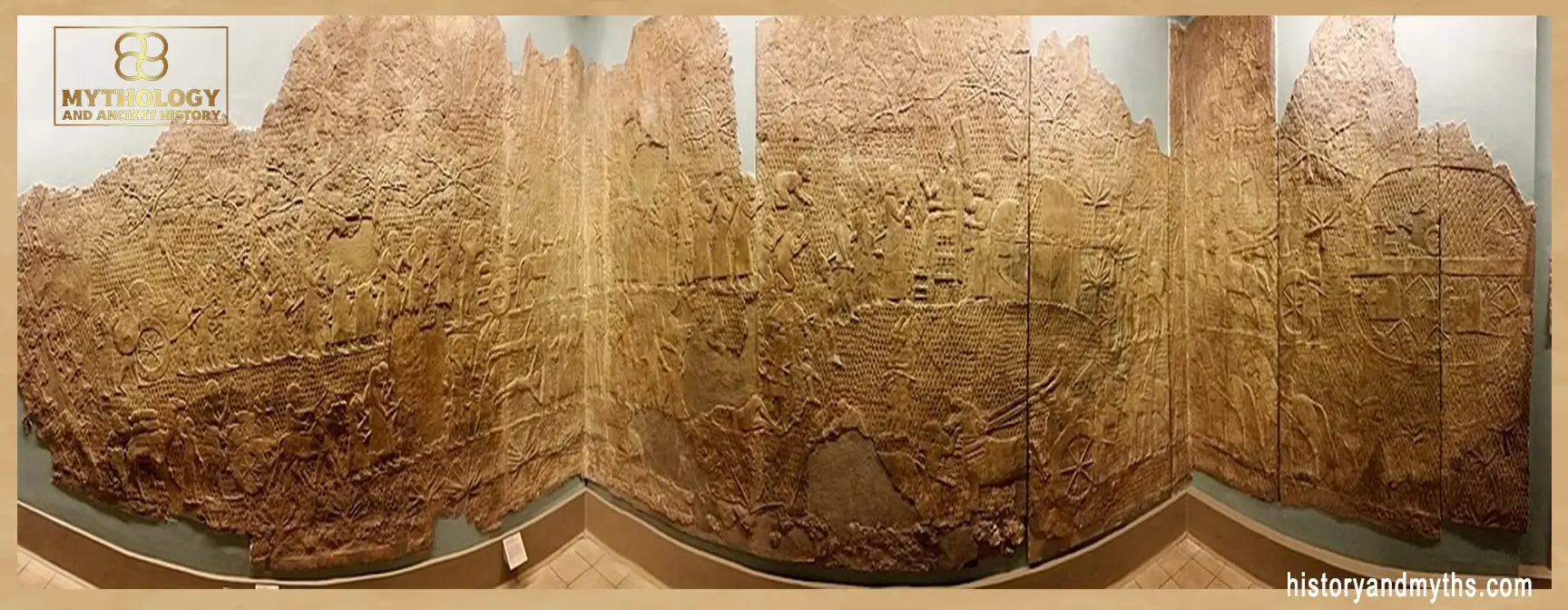
Assyrian vassals paid heavy tribute and were required to support military campaigns. Their rulers were closely monitored through envoys and intelligence networks. Rebellion was met with deportations, executions, and territorial reorganization.
Vassalage under Assyria functioned as conditional survival. Loyalty was maintained primarily through fear rather than partnership. This system was effective in the short term but generated chronic instability. Many vassals defected when central authority weakened, accelerating Assyria’s collapse.
Babylon: Vassalage through Ritual and Political Integration
The Neo-Babylonian Empire inherited much of Assyria’s territorial framework but modified its approach. Babylonian rulers relied less on public terror and more on religious legitimacy and elite cooperation. Vassal kings were incorporated into a symbolic hierarchy centered on Marduk and Babylon’s sacred status.
Tribute and military obligations remained central, but enforcement was more selective. Babylon preferred regime stability over constant intervention. Rebellions, such as those in Judah, were punished decisively, yet loyal vassals were allowed significant internal autonomy.
Religious ceremonies, diplomatic exchanges, and temple patronage reinforced dependency. Political submission was framed as participation in a divinely sanctioned order. This ideological strategy reduced administrative pressure but made the system vulnerable to elite disaffection, as seen under Nabonidus.
Persia: Vassalage through Administrative Flexibility
The Achaemenid Empire transformed Near Eastern vassalage into a more institutionalized system. Persian rulers combined indirect control with bureaucratic oversight. Many former vassal states became semi-autonomous regions governed by local dynasts under imperial supervision.
Persia tolerated religious diversity, local law, and traditional elites as long as tribute and loyalty were maintained. This reduced resistance and facilitated long-term stability. Instead of mass deportations, Persians emphasized continuity and cooperation.
Vassal rulers were integrated into imperial networks through court service, taxation systems, and ceremonial recognition. Persian policy relied less on intimidation and more on predictable governance. As a result, dependent states were less prone to sudden rebellion.
Comparative Assessment
Assyria, Babylon, and Persia used the same basic tools—tribute, treaties, and elite control—but prioritized them differently:
- Assyria emphasized coercion and surveillance.
- Babylon emphasized ritual legitimacy and elite integration.
- Persia emphasized administrative coordination and tolerance.
This evolution reflects increasing awareness of the limits of brute force. Over time, Near Eastern empires learned that durable vassalage required institutional incentives as well as punishment.
The Near Eastern model demonstrates that indirect rule was not a static formula. It was a flexible strategy continuously adjusted to political realities, imperial capacity, and local conditions.
Rebellion and Collapse: When Vassal Systems Failed
Vassal systems were stable only as long as imperial authority appeared strong and predictable. When central power weakened, dependent states reassessed their loyalty. Rebellion was usually a calculated response to shifting political conditions, not an emotional rejection of subordination.
Triggers of Rebellion
The most common cause was perceived imperial decline. Succession crises, military defeats, or internal conflicts signaled vulnerability. Vassal rulers interpreted these moments as opportunities to renegotiate or escape dependency.
Economic pressure also played a role. Excessive tribute, resource shortages, or trade disruption undermined local stability. When imperial demands threatened elite survival, rebellion became a rational option.
External encouragement further intensified unrest. Rival powers often supported vassal revolts to weaken dominant states, as Egypt did in the Levant against Babylon and Rome did in Parthian border regions.
Patterns of Imperial Response
Empires responded selectively. Minor defiance was punished through increased tribute or leadership replacement. Major revolts triggered military intervention, deportation, or annexation.
Successful suppression reinforced authority temporarily but often damaged long-term cooperation. Harsh reprisals weakened elite trust and increased future instability.
Structural Limits of Vassal Rule
Vassal systems depended on balanced coercion and incentive. When punishment outweighed benefits, loyalty collapsed. When incentives exceeded control, autonomy expanded into independence.
Most vassal networks ultimately failed because they lacked permanent institutional integration. Their survival depended on continuous imperial strength. Once that strength declined, dependency rapidly unraveled.
Vassal States vs Direct Rule
Empires chose between vassalage and direct rule based on cost, risk, and strategic priority. Each model offered different advantages and limitations.
Vassal Rule
Under vassalage, local rulers remained in power and managed internal affairs. Empires extracted tribute, troops, and loyalty without building full administrative systems.
Advantages
- Lower military and bureaucratic costs
- Greater local stability
- Faster territorial expansion
Limitations
- Weaker long-term control
- Higher risk of rebellion
- Dependence on elite cooperation
Direct Rule
Direct rule replaced local elites with imperial officials. Administration, taxation, and justice were centralized under imperial authority.
Advantages
- Stronger political control
- More reliable revenue
- Reduced diplomatic uncertainty
Limitations
- High administrative costs
- Greater popular resistance
- Slower expansion
Strategic Choice
Empires used vassalage in peripheral or unstable regions and direct rule in core territories. Many states shifted between the two systems as conditions changed.
Vassalage maximized reach. Direct rule maximized control. Successful empires balanced both according to circumstance.
Continue Reading
Did Vassal States Have Real Power?
Vassal states did not function as passive extensions of imperial authority. Within structural limits, many exercised meaningful political agency. Their power lay not in sovereignty, but in negotiation, mediation, and strategic adaptation.
Limited Autonomy and Internal Control
Most vassal rulers retained authority over taxation, law enforcement, religious institutions, and local administration. They appointed officials, managed courts, and regulated economic activity. As long as tribute and loyalty were maintained, imperial powers rarely interfered in daily governance.
This internal autonomy allowed vassal kings to shape social and economic policy. In practice, many ruled more directly over their populations than distant imperial authorities ever could.
Diplomatic Maneuvering
Dependent rulers often exploited rivalries between major powers. By shifting allegiance, delaying commitments, or offering selective cooperation, they increased bargaining leverage. Border states between Babylon and Egypt, or Rome and Parthia, frequently used this strategy to preserve room for maneuver.
Such diplomacy required careful calculation. Misjudging imperial strength could trigger invasion or deposition. Successful vassals mastered timing rather than confrontation.
Elite Brokerage and Mediation
Vassal rulers acted as intermediaries between imperial centers and local societies. They translated imperial demands into acceptable policies and mediated popular discontent. This brokerage role enhanced their domestic authority.
In return, empires relied on vassals to maintain order without direct intervention. This mutual dependence gave skilled rulers significant informal influence.
Constraints and Ultimate Dependence
Despite these advantages, autonomy remained conditional. Succession required approval, foreign alliances were restricted, and major policy shifts demanded consent. When imperial interests were threatened, local authority could be revoked instantly.
Deposition, annexation, or forced exile remained constant risks. Real power existed only within boundaries defined by imperial tolerance.
In effect, vassal states possessed operational freedom but lacked strategic independence. Their influence depended on navigating dependency rather than escaping it.
Legacy and Modern Parallels
The system of vassalage did not disappear with the fall of ancient empires. Its core logic—indirect control through dependent authorities—has persisted in various forms across history. While institutional frameworks have changed, the underlying strategy remains recognizable.
Transmission to Later Imperial Systems
Persian, Hellenistic, and Roman practices influenced medieval and early modern forms of political dependency. Feudal relationships in Europe, tributary networks in East Asia, and protectorate systems in early modern empires all reflected similar principles: limited autonomy in exchange for protection and recognition.
These systems adapted ancient mechanisms—tribute, oaths, elite integration, and military obligation—to new legal and religious contexts. The persistence of these patterns suggests that indirect rule solved recurring structural problems of large-scale governance.
Informal Empire and Modern Dependency
In the modern period, formal vassalage declined, but informal dependency expanded. Powerful states increasingly exercised influence through economic pressure, security guarantees, political mediation, and institutional alignment rather than direct annexation.
Client governments, satellite states, and protectorates operated under conditions comparable to ancient vassalage. Sovereignty existed on paper, while strategic decisions were shaped externally. Control shifted from tribute and hostages to loans, treaties, and military assistance.
Strategic Value of Indirect Control
Indirect domination continues to appeal because it minimizes administrative burden and political liability. Supporting dependent regimes allows major powers to project influence without assuming full responsibility for governance outcomes.
At the same time, modern systems face similar vulnerabilities. When central authority weakens, dependent partners reassess loyalty. Shifts in power balance still generate defections, realignments, and instability.
Historical Significance
The vassal-state model illustrates a fundamental principle of political organization: power is most durable when exercised through intermediaries. Ancient empires refined this principle through treaties, ritual, and elite management. Later systems translated it into economic, diplomatic, and institutional forms.
Understanding vassalage therefore provides more than historical insight. It reveals how dominance adapts to structural limits and why indirect rule remains a central strategy in both ancient and modern geopolitics.
Key Takeaways
- Vassal states were tools of indirect imperial rule.
- They reduced military and administrative costs.
- Tribute and treaties structured dependency.
- Local elites mediated imperial authority.
- Rebellion followed perceived imperial weakness.
- Persia and Rome refined long-term vassal management.
Frequently Asked Questions
What is a vassal state?
A semi-independent state controlled by a dominant power.
Why did empires use vassal systems?
To reduce costs and maintain stability.
Did vassal states have independence?
They controlled internal affairs but lacked foreign autonomy.
How was loyalty enforced?
Through tribute, treaties, and hostages.
Why did vassal states rebel?
When imperial power appeared weak.
How did Rome use client states?
As buffers and transitional authorities.
Could vassal states become provinces?
Yes, when strategic conditions changed.
Do modern systems resemble vassalage?
Yes, through informal political dependency.
Sources & Rights
- Briant, Pierre. From Cyrus to Alexander.
- Beaulieu, Paul-Alain. The Reign of Nabonidus.
- Brinkman, J. A. Political History of Post-Kassite Babylonia.
- Dalley, Stephanie. Babylonian Treaties and Oaths.
- George, Andrew. Babylonian Topographical Texts.
- Glassner, Jean-Jacques. Mesopotamian Chronicles.
- Grayson, A. K. Assyrian and Babylonian Chronicles.
- Joannès, Francis. The Age of Empires.
- Kuhrt, Amélie. The Persian Empire.
- Leick, Gwendolyn. Mesopotamia.
- Mattingly, David. Imperialism, Power, and Identity.
- Millar, Fergus. The Roman Near East.
- Oates, Joan. Babylon.
- Radner, Karen. State Correspondence.
- Rollinger, Robert. Herodotus and the Near East.
- Saggs, H. W. F. The Greatness That Was Babylon.
- Stolper, Matthew. Entrepreneurs and Empire.
- Van De Mieroop, Marc. A History of the Ancient Near East.
- Waters, Matt. Ancient Persia.
- Wiseman, D. J. Chronicles of Chaldean Kings.
- Zawadzki, Stefan. Garments of the Gods.
Written by H. Moses — All rights reserved © Mythology and History