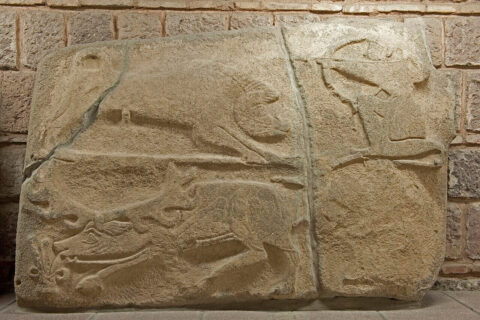
The Tale of Zalpa: 30 Sons, 30 Daughters, and a Forbidden Marriage
The Tale of Zalpa (CTH 3) tells the story of a queen of Kanesh who gave birth to thirty sons in a single year and abandoned them in baskets on a river. Rescued and raised by the gods in Zalpa, the brothers eventually returned to Kanesh, where their mother had since given birth to thirty daughters. Unable to recognize her sons, the queen arranged marriages between the two groups, prompting the youngest brother to warn against marrying their own sisters.
The surviving Hittite text is damaged at this crucial moment, leaving it uncertain whether the warning was obeyed. The narrative then shifts to political conflicts between Zalpa and early Hittite rulers, ending with the city’s destruction. Whether the family story was intended to explain these events remains a subject of scholarly debate.
The Queen of Kanesh and Her Thirty Sons
The story begins with an unnamed queen of Kanesh who gives birth to thirty sons within a single year. Astonished by their number, she exclaims at how many children she has borne. She then places the infants in baskets, fills the gaps with a substance usually translated as grease, and sends them down a river. The text records her reaction but offers no clear explanation for abandoning them.
The river carries the baskets to the sea near Zalpuwa, where the gods rescue the children and raise them. The deities are not named, and the story provides no details about the boys’ upbringing. The brothers survive under divine protection, far from their mother and their birthplace.
Several years later, the queen gives birth to thirty daughters. Unlike her sons, she keeps the girls and raises them herself in Kanesh. The tale never explains why she abandoned the boys but chose to raise their sisters.
The Journey from Zalpa Back to Kanesh
On their journey from Zalpa to Neša (Kanesh), the brothers reach a town called Tamarmara, driving a donkey. They ask the townspeople to heat an inner chamber, then make a puzzling remark about the animal. The Hittite verb describing its behavior is partly damaged and difficult to interpret. Harry Hoffner translates it as climbing, while Calvert Watkins understands it as sexual mounting. The precise meaning of the exchange remains uncertain.
The conversation then turns to childbirth. The brothers explain that women normally give birth to one or two sons at a time, whereas their mother bore thirty. The townspeople respond with news about the queen of Kanesh, who had given birth to thirty daughters after her sons disappeared years earlier.
The brothers realize that the queen must be their mother. Having learned where to find her, they continue toward Kanesh.
The Marriage Arrangement and the Youngest Son’s Warning
When the brothers arrived in Neša, the gods changed their appearance, preventing their mother from recognizing them. Unaware of their identity, the queen gave her thirty daughters to them in marriage. The text states that the older brothers did not recognize the women as their sisters, but the youngest understood their relationship and objected.
He warned his brothers against marrying their own sisters or having sexual relations with them. His words make the prohibition clear, but the next line presents a problem. The manuscript is damaged, and its reconstruction has produced two different interpretations.
Harry Hoffner reads the disputed passage as a continuation of the youngest brother’s warning, suggesting that the forbidden relations did not take place. Ilan Peled proposes a different reconstruction in which the brothers slept with their sisters despite the warning. Peled acknowledges, however, that the wording is disputed and the outcome cannot be established with certainty.
The surviving account therefore leaves the central question unresolved: whether the brothers obeyed the warning or crossed the boundary it was meant to protect.
Why Was Marriage Between Siblings Forbidden?
The surviving Hittite laws prohibit several forms of incest, including sexual relations between parents and children, but do not explicitly address relations between brothers and sisters. Other Hittite texts, however, show that such relationships were forbidden.
The clearest evidence comes from a treaty between King Šuppiluliuma I and Huqqana, ruler of Hayasa (CTH 42). The Hittite king explains that sexual relations with one’s sister or female cousin violate the customs of Hatti and are punishable by death. His warning also reveals a contrast between Hittite practices and those he attributed to Hayasa, where such relationships were apparently tolerated.
Religious evidence supports this prohibition. A surviving colophon from a purification ritual (CTH 445) identifies sexual relations with one’s mother, sister, or daughter as ḫurkel, a term used for grave sexual offenses regarded as abominations.
These sources establish that the prohibition extended beyond the surviving law collection. However, Šuppiluliuma’s treaty dates to a later period than the events traditionally associated with the Tale of Zalpa, so its prescribed punishment cannot automatically be applied to the earlier narrative.
From Myth to War: The Conflict with Zalpa
After the story of the thirty siblings breaks off, a fragment mentions an offering to the Earth Goddess and words spoken by the Sun God, often interpreted as a blessing for Zalpa’s prosperity. The narrative then moves to conflicts between the city and the rulers of Hatti.
The first confrontation is difficult to reconstruct. A fragment mentions a king of Zalpa and his chamberlain Alluwa, who is implicated in the killing of a royal daughter. Fighting followed, and Alluwa died in a subsequent defeat. Later, the elders of Zalpa requested a prince from the Hittite royal family to govern their city. The king’s grandfather sent his son Ḫakkarpili, but exchanges involving a man named Kišwa suggest that the prince may have turned against Hittite authority. A large gap in the tablets leaves the outcome unknown.
When the account resumes, another prince, Ḫappi, is encouraging resistance in Zalpa. He claims that his father does not favor him and recalls going to Hatti expecting to die, accompanied by a hundred Zalpan soldiers who survived the journey. The Hittite king responds by marching to Ḫaraḫšu, where he defeats Zalpa’s forces. Ḫappi escapes, but Taman(n)aššu, another figure involved in the rebellion, is captured alive and taken to Ḫattuša.
Read Also:
Hattusa: The Lost Capital of the Hittite Empire
The king later lays siege to Zalpa. According to the older manuscript, the siege lasts two years, during which he demands the surrender of Ḫappi and another figure called Tabarna. The inhabitants refuse. The king eventually returns to Ḫattuša to perform religious duties, leaving someone identified as the “old king” to continue the siege.
The manuscripts differ in their account of Zalpa’s fate. The older version describes the city’s destruction, while a later copy records its capture. Petra Goedegebuure offers another interpretation of the older text, arguing that Zalpa’s own troops destroyed the city rather than the Hittite forces. The identities of the rulers involved also remain disputed, making it difficult to place these conflicts within a precise sequence of Hittite reigns.
Where Were Kanesh and Zalpa?
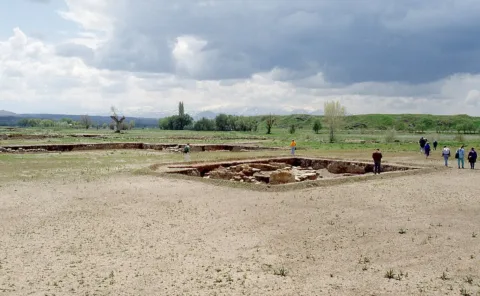
Kanesh, also known as Neša, is securely identified with Kültepe, about 20 kilometers northeast of Kayseri in central Turkey. Excavations have uncovered monumental buildings, residential quarters, and more than 23,000 cuneiform tablets, many from the houses of Assyrian merchants. These records document Kanesh’s importance as a trading center during the early second millennium BCE.
The location of Zalpa (Zalpuwa) remains uncertain. The tale describes the abandoned children reaching the sea near Zalpa, leading many scholars to place the city on the southern Black Sea coast, near the mouth of the Kızılırmak River, known to the Hittites as Maraššantiya. The Bafra region is a strong candidate, and the archaeological site of İkiztepe has been proposed, but no identification has been conclusively established.
Identifying Zalpa is further complicated by ancient references to other settlements with the same or similar names, including a city in northern Syria. These places should not automatically be confused with the Zalpa of the tale.
The Proclamation of Anitta (CTH 1) provides separate evidence of political rivalry between Neša and Zalpuwa. According to Anitta, an earlier ruler named Uhna had taken a deity from Neša to Zalpuwa. Anitta claims to have recovered the deity and brought Zalpuwa’s king, Ḫuzziya, back to Neša alive.
This royal account establishes that relations between the two cities featured in early Hittite political traditions. It does not confirm the existence of the queen or the events involving her sixty children.
Why Did the Hittites Preserve the Tale?
The Tale of Zalpa survives in several copies, indicating that Hittite scribes preserved it across different periods. Its combination of myth and political history has prompted competing explanations of what the narrative was intended to convey.
Itamar Singer interprets the incest episode as a mythical explanation for Zalpa’s downfall and the rise of Hattuša’s ruling dynasty. Gary Holland and Marina Zorman similarly see forbidden kinship and successive rebellions as connected offenses that culminate in the city’s destruction. This interpretation, however, depends on a relationship between the two parts of the narrative that the surviving text does not explicitly establish.
Amir Gilan challenges the idea that the opening story justifies Zalpa’s destruction. The proposed marriages take place in Neša, and most participants are unaware of their family relationships. Why should Zalpa be punished for their actions? Gilan instead reads the thirty sons as a warning about the dangers of an excessively large royal family. The later conflicts involving princes such as Ḫakkarpili and Ḫappi support his argument that rival members of the dynasty could threaten political stability.
Read Also:Who Were the Hittites? History, Origins and Empire
Scholars have also questioned whether the mythical and historical sections originally formed a single composition. Holland and Zorman defend their unity through similarities in narrative structure and recurring themes, but the original relationship between the two sections remains debated.
The historical setting presents another problem. Alwin Kloekhorst argues that Neša was the royal capital under Ḫuzziya I and Labarna I, and during the early reign of Ḫattušili I, before the court moved to Ḫattuša. This could explain why Neša dominates the myth while Ḫattuša appears in the military narrative. In 2025, James Burgin published a newly joined fragment naming Ḫuzziya, whom he identifies as Ḫuzziya I, a possible founder of the Hittite kingdom. The discovery provides new evidence for identifying the rulers mentioned in the text, although it does not resolve the debate over its chronology.
Conclusion
The Tale of Zalpa begins with a royal family divided between Kanesh and Zalpa and ends with a struggle for control of the city. The youngest brother’s warning survives, but the damaged text leaves the outcome of the proposed marriages unknown. Nor is it clear whether the opening myth was intended to explain Zalpa’s later conflicts. The narrative preserves both family tragedy and political history, offering insight into early Hittite storytelling without providing a definitive connection between them.
Sources & Primary Texts
The following translations and scholarly studies provide the textual, historical, and archaeological basis for this article.
- Hoffner, Harry A., Jr. (1997).
The Queen of Kanesh and the Tale of Zalpa.
In The Context of Scripture, Vol. 1, pp. 181–182.
English translation of the Hittite narrative. - Holland, Gary B., and Marina Zorman. (2007).
The Tale of Zalpa: Myth, Morality, and Coherence in a Hittite Narrative.
Critical edition and analysis of the surviving manuscripts. - Peled, Ilan. (2017).
Gender and Sex Crimes in the Ancient Near East: Law and Custom.
In Law and Gender Across the Ancient Near East and Beyond, pp. 27–40. University of Chicago. - Gilan, Amir. (2007).
How Many Princes Can the Land Bear? Some Thoughts on the Zalpa Text (CTH 3).
Studi Micenei ed Egeo-Anatolici, 49, pp. 305–318. - Singer, Itamar. (2007).
Mythological Aspects in the Hittite Colonization of Anatolia.
Electronic Antiquity, 11(1). - Sir Gavaz, Özlem. (2006).
About the Location of Zalpa the Hittite Town.
Anadolu / Anatolia, 31. - Kloekhorst, Alwin. (2021).
A New Interpretation of the Old Hittite Zalpa-Text (CTH 3.1): Neša as the Capital under Ḫuzziya I, Labarna I, and Ḫattušili I.
Journal of the American Oriental Society, 141(3). - Goedegebuure, Petra.
Zalpa Self-Destructs: A New Ending for Zalpa and the Zalpa Text.
Research paper presenting an alternative linguistic interpretation of the narrative’s ending. - Burgin, James. (2025).
A New Join to the Zalpa Text, or: How Many Homonymies Can One Text Bear?.
Journal of Cuneiform Studies, 77, pp. 5–32.
Copyright & Attribution
© 2026 History & Myths. All rights reserved. Original article written by H. Moses.
This article is based on ancient Hittite texts and published academic research. Historical interpretations are presented with reference to the cited scholarship. Source materials and images remain subject to their respective copyright and licensing terms.