Who Were the Hittites? History, Origins and Empire
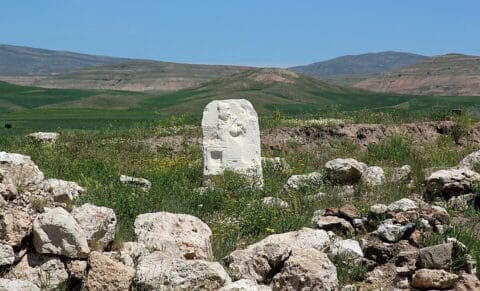
The Hittites established a powerful kingdom in central Anatolia, in present-day Turkey, around 1650 BCE. From their capital at Hattusa, they built an empire that dominated much of Anatolia and northern Syria. At its height, it was one of the major powers of the ancient Near East, competing with Egypt for influence over the region.
The Hittites spoke an Indo-European language, while their civilization drew on traditions from older Anatolian societies. Thousands of surviving clay tablets preserve their laws, treaties, religious rituals, and royal records. Their empire collapsed around 1200 BCE, but elements of Hittite culture and political traditions survived in the kingdoms of southeastern Anatolia and northern Syria.
Where Did the Hittites Live?
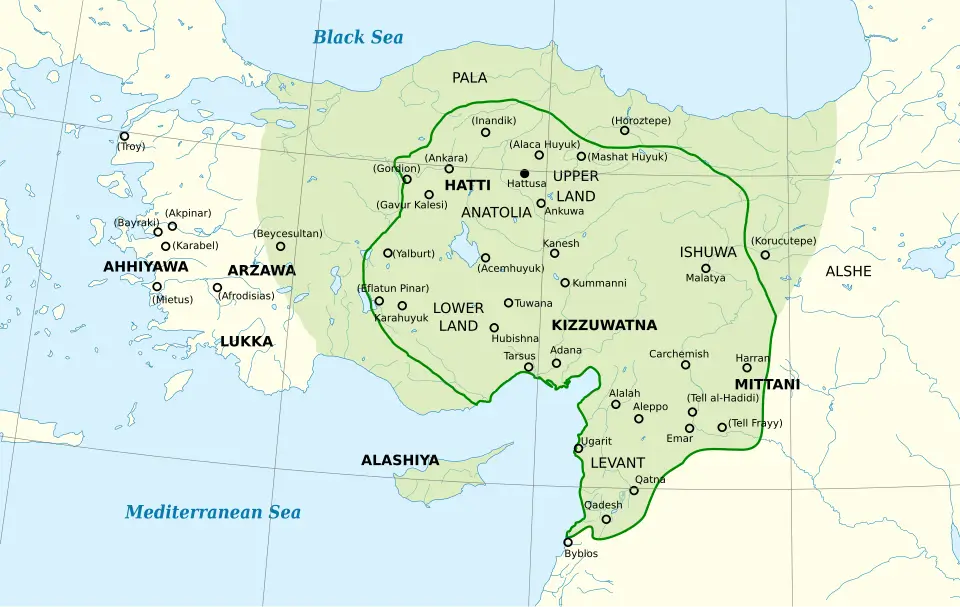
The Hittite homeland lay in north-central Anatolia, within the great bend of the Kızılırmak River, known to the Hittites as the Marassantiya and later to the Greeks as the Halys. Their capital, Hattusa, stood near present-day Boğazkale in Çorum Province, amid the highlands south of the Black Sea.
During the fourteenth and thirteenth centuries BCE, Hittite power extended across much of central and southern Anatolia into northern Syria. In the west, its influence reached kingdoms closer to the Aegean coast, although control there was often unstable. To the east, Carchemish on the Euphrates became an important center of Hittite authority.
The empire never had fixed borders. Mountainous terrain complicated military campaigns, while rival kingdoms and local resistance repeatedly challenged Hittite control. Many places recorded in Hittite texts have yet to be securely identified, so the precise extent of the empire at different periods remains uncertain.
Where Did the Hittites Come From?
Before the rise of the Hittite kingdom, central Anatolia was known as the Land of Hatti. Its earlier inhabitants included the Hattians, who spoke Hattic, a language unrelated to the Indo-European language of the Hittites.
The origins of the Hittite-speaking population remain uncertain. Linguistic evidence connects their language to the wider Indo-European family, but scholars disagree about when its speakers entered Anatolia and which route they followed. Migration from Europe has been proposed, particularly during the third millennium BCE, although no single route or migration event has been firmly established.
By the nineteenth and eighteenth centuries BCE, Hittite speakers were living in central Anatolia. Assyrian merchants operating at Kanesh, also called Nesa, near modern Kültepe, left thousands of commercial records. Written in Old Assyrian, these tablets preserve local personal names and some of the earliest recognizable Hittite words.
The Hittite kingdom emerged from this mixed cultural setting. Hattian religious practices and place names remained influential, while Luwian-speaking communities also contributed to Anatolia’s cultural landscape. The rise of Hittite political power did not erase these earlier traditions.
The Hittite Language and Written Records
Hittite is the earliest Indo-European language preserved in extensive written texts. It belonged to the Anatolian branch of the language family, alongside Luwian and Palaic. Its speakers called it Nesili, meaning “the language of Nesa.”
Hittite scribes wrote on clay tablets using cuneiform, a writing system borrowed from Mesopotamia. Hittite was the main language of the kingdom’s surviving administrative and religious records, while Akkadian was widely used in international diplomacy. The archives also preserve texts or passages in Hattic, Hurrian, Luwian, and Palaic.
Thousands of tablets discovered at Hattusa contain royal proclamations, treaties, laws, diplomatic correspondence, prayers, and ritual instructions. They provide much of the written evidence used to reconstruct Hittite history.
Another writing system, Anatolian hieroglyphs, appeared on seals and stone monuments. Although once called “Hittite hieroglyphs,” its longer surviving inscriptions record Luwian, a separate but related language.
These records are not a complete account of Hittite life. Royal texts often reflect the interests of the court, and many tablets survive only in fragments. Archaeological discoveries and documents from neighboring civilizations help historians interpret what the Hittite archives leave unexplained.
The Rise of the Hittite Kingdom
The Hittite kingdom emerged from struggles among rival Anatolian rulers. In the early second millennium BCE, Pithana, king of Kussara, captured Nesa. His son Anitta later conquered Hattusa and, according to his own proclamation, destroyed the city and cursed anyone who rebuilt it.
The kingdom began taking shape during the seventeenth century BCE. Labarna appears in Hittite tradition as an early ruler, although his precise relationship to Hattusili I remains uncertain. Hattusili established Hattusa as the royal center and led campaigns across Anatolia and into northern Syria, capturing cities that later proved difficult to hold.
His grandson and successor, Mursili I, conquered Aleppo before marching against Babylon around 1595 BCE, according to the conventional chronology. The campaign ended Babylon’s ruling dynasty, but the Hittites did not remain to govern the city.
Mursili was later assassinated, triggering decades of palace conspiracies and struggles over succession. Rival claimants weakened the monarchy and undermined its control over conquered territories.
In the sixteenth century BCE, King Telipinu attempted to end these disputes through a royal edict. It established an order of succession that favored sons of the highest rank, followed by lower-ranking sons. If no male heir existed, the husband of a first-ranking royal daughter could inherit the throne. The edict also condemned the murders and reprisals that had repeatedly destabilized the royal family.
Hattusa: Capital of the Hittite Empire
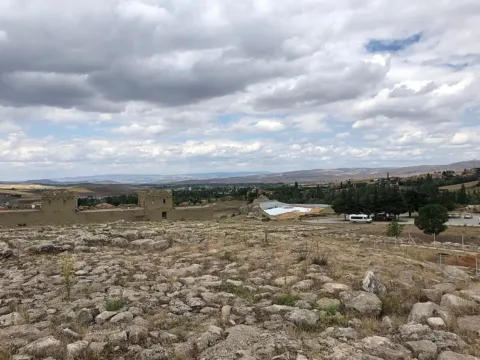
Hattusa was the principal political and religious center of the Hittite kingdom. Its ruins, near modern Boğazkale in Turkey’s Çorum Province, include royal buildings, temples, administrative complexes, and extensive fortifications. The archaeological site became a UNESCO World Heritage Site in 1986.
The city occupied upper and lower districts. The royal citadel at Büyükkale contained palatial and administrative buildings, while the Lower City housed residential neighborhoods and the Great Temple. Numerous smaller temples stood in the Upper City. Large grain-storage facilities and water reservoirs helped sustain the population.
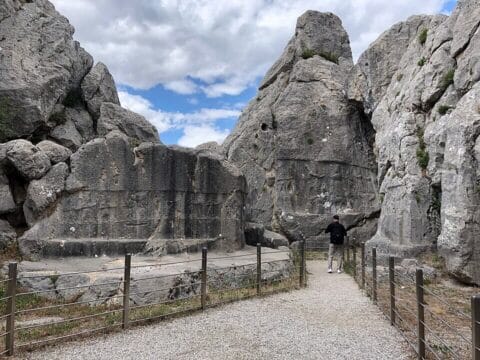
More than eight kilometers of defensive walls surrounded Hattusa. Its monumental entrances included the Lion Gate, King’s Gate, and Sphinx Gate. About two kilometers northeast of the city stood Yazılıkaya, a rock sanctuary decorated with reliefs of Hittite and Hurrian deities.
Hattusa was not always the royal residence. During periods of instability, Samuha served as an important royal and religious center. In the thirteenth century BCE, Muwatalli II transferred the capital to Tarhuntassa in southern Anatolia. Scholars have proposed military, political, and religious reasons for the move, but his motives remain uncertain. His son and successor, Mursili III, also known as Urhi-Teshub, returned the capital to Hattusa.
Read More: Hittite Cities and Archaeology
Explore another important Hittite royal center and the cuneiform discoveries that reveal its history.
Samuha: The Hittite Royal City and Cuneiform Archive Found in 2026
How the Hittites Built an Empire
Hittite expansion gained new momentum during the fifteenth century BCE. Tudhaliya I, sometimes designated Tudhaliya I/II, campaigned in western Anatolia and northern Syria, but these gains proved difficult to defend. By the reign of Tudhaliya III in the fourteenth century BCE, attacks from neighboring peoples threatened even the kingdom’s central territories.
Tudhaliya III began restoring Hittite control, a process continued by his successor, Suppiluliuma I (c. 1350 to 1322 BCE). Suppiluliuma secured the Anatolian heartland before launching major campaigns into Syria, where Mitanni and Egypt had competed for influence.
His victories broke much of Mitanni’s power in Syria and brought important cities under Hittite control. He installed his sons as rulers of Aleppo and Carchemish, strengthening the royal family’s authority in the region. Suppiluliuma also supported Shattiwaza, a claimant to the Mitannian throne, and established him as ruler of a dependent kingdom.
After Suppiluliuma’s death and the brief reign of Arnuwanda II, Mursili II inherited a kingdom facing rebellion and a devastating epidemic. He defeated Arzawa in western Anatolia and reorganized its territories under local rulers loyal to Hattusa. His campaigns against the Kaska peoples also sought to secure the northern frontier.
These conquests established the Hittites as one of the dominant powers of the Late Bronze Age. Their empire combined territories ruled from Hattusa with kingdoms governed by members of the royal family or local dynasties under Hittite authority.
How Was the Hittite Empire Governed?
The Hittite Empire was a hereditary monarchy. The king commanded the army, appointed senior officials, issued legal decisions, and directed foreign policy. He also performed religious duties, particularly ceremonies associated with the protection and prosperity of the kingdom.
Within the Anatolian heartland, royal officials supervised regional administration, security, supplies, and labor obligations. Written instructions defined the duties of commanders, governors, and palace personnel. Scribes maintained records of land grants, legal decisions, and other government affairs.
Outside the central territories, many kingdoms retained their own rulers under treaties with Hattusa. These agreements could require tribute, military assistance, loyalty to the Hittite king, and restrictions on independent diplomacy. Some also regulated succession and the return of fugitives. Carchemish, governed by a branch of the Hittite royal family, became a major administrative center for imperial interests in northern Syria.
Royal women could also exercise considerable influence. The title Tawananna carried important religious authority, while queens such as Puduhepa, wife of Hattusili III, played an active role in diplomacy. Surviving correspondence records her involvement in relations with the Egyptian court.
Hittite law covered property, theft, marriage, inheritance, personal injury, and other disputes. Many offenses carried financial compensation, although penalties depended on the circumstances and social status of those involved.
An assembly known as the panku appears in early Hittite records, particularly in connection with judicial matters and disputes within the royal family. It operated under royal authority rather than functioning as an independent parliament. Its importance during the later imperial period is less clear.
The Hittite Army and Warfare
The Hittite army drew its strength from infantry, horse-drawn chariots, and troops supplied by dependent kingdoms. Royal princes and senior commanders led campaigns when the king was absent, while additional soldiers could be mobilized for major military operations.
Infantry fought with spears, bows, axes, and swords, using shields and protective equipment suited to their roles. Chariots provided speed and mobility on open terrain. Egyptian reliefs depicting the Battle of Kadesh show Hittite chariots carrying three men, although crew arrangements may have varied.
Hittite warfare included pitched battles, sieges, raids, and campaigns against rebellious territories. Moving armies across Anatolia’s mountainous landscape required careful planning. Food, fodder, and secure supply routes were essential, while military instructions emphasized discipline, guard duties, and frontier security.
Horse training was another important part of warfare. Cuneiform tablets preserve a detailed training program attributed to Kikkuli, a horse trainer from Mitanni. His instructions covered exercise, feeding, watering, and the conditioning of chariot horses.
Contrary to a persistent popular claim, the Hittites did not build their military dominance on iron weapons. Bronze remained the principal material for weapons during the Late Bronze Age. Iron was known and worked, but there is no evidence that Hittite armies used it on a large scale or that the kingdom monopolized iron production.
Hittite Religion, Society and Daily Life
The Hittites worshipped numerous deities drawn from Anatolian, Hattian, Hurrian, and other religious traditions. Their texts speak of the “thousand gods of Hatti,” reflecting the diversity of local cults. The Storm God and the Sun Goddess of Arinna held prominent positions, while Hurrian deities such as Teshub and Hebat became increasingly influential in royal worship.
Religious life involved prayers, food and drink offerings, animal sacrifices, and seasonal festivals. Major ceremonies could last for weeks, with the king and queen taking part in processions and rituals. Priests performed purification rites, and divination helped determine whether the gods were displeased or what actions they required. Provincial communities also maintained local shrines and festivals, many documented in surviving cult inventories.
Agriculture supported much of Hittite society. Farmers cultivated barley, wheat, grapes, and other crops, while herders raised sheep, goats, and cattle. Agricultural produce supplied households, temples, and royal institutions.
Towns supported potters, metalworkers, textile producers, builders, and merchants. Social distinctions separated the royal family, landholders, ordinary workers, and people held in servitude. Hittite legal texts distinguish between free and unfree individuals, although their precise status could vary.
Family life was also regulated by law. Surviving provisions address marriage payments, dowries, separation, inheritance, and the division of property. Women held certain legal rights, but their position depended on family circumstances and social status within a predominantly male-dominated society.
The Hittites and the Great Powers
During the Late Bronze Age, Hittite foreign policy was shaped by competition with Egypt, Mitanni, and Assyria. Northern Syria was particularly important because its cities controlled routes connecting Anatolia, Mesopotamia, and the Mediterranean. Local rulers frequently found themselves caught between rival empires.
Mitanni had been a dominant power in northern Syria before Hittite expansion weakened its influence. Assyria subsequently gained control of much of Mitanni’s former territory, bringing a new rival closer to the Hittite eastern frontier. By the thirteenth century BCE, Assyrian expansion had become a serious concern for Hattusa.
The Battle of Kadesh
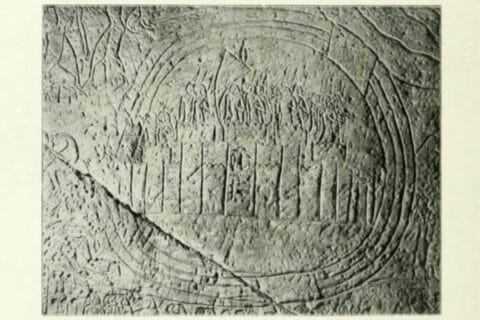
Around 1274 BCE, Pharaoh Ramesses II marched into Syria to challenge Hittite control of Kadesh, near the Orontes River. King Muwatalli II assembled a coalition army and launched a surprise chariot attack against part of the Egyptian force.
Ramesses survived the assault and later celebrated the battle as a great victory in temple inscriptions and reliefs. These accounts glorified the pharaoh and cannot be treated as impartial military reports. The outcome remains disputed, but Egypt failed to capture Kadesh, which stayed under Hittite control.
From Rivalry to Peace
The fighting did not end at Kadesh. Around 1259 BCE, approximately fifteen years after the battle, Ramesses II and Hattusili III concluded a peace treaty that ended hostilities and formalized their mutual obligations.
The agreement promised assistance against external enemies and internal rebellions, prohibited renewed hostilities, and included provisions for returning fugitives. Its terms survive in Egyptian hieroglyphic inscriptions and Akkadian cuneiform tablets from Hattusa. It is among the earliest surviving international peace treaties, though agreements between states existed centuries earlier.
Assyrian expansion and Hattusili’s contested claim to the throne may have encouraged closer relations with Egypt. Diplomatic ties strengthened further when a Hittite princess married Ramesses II, years after the treaty.
Read More: The Hittites and Ancient Egypt
Ancient Egyptian Treaties: Peace Deals, Alliances, and Power
How the Egyptian-Hittite treaty worked and why its diplomatic obligations mattered.
What If Ramses II Had Lost the Battle of Kadesh?
An alternate-history scenario exploring the possible consequences of a decisive Egyptian defeat.
Why Did the Hittite Empire Collapse?
The Hittite Empire collapsed around 1200 BCE, but no surviving account establishes exactly how its central government came to an end. Records from the reign of Suppiluliuma II, the last known Hittite great king, describe military campaigns and conflicts, then disappear without explaining the kingdom’s final years.
Invasions by the Sea Peoples were once widely blamed for the collapse. Egyptian inscriptions describe widespread destruction across the eastern Mediterranean, but they do not establish who brought down the Hittite government. Excavations at Hattusa suggest that the royal administration had abandoned the capital before parts of the city were destroyed by fire. The reasons for the evacuation remain unknown.
Climate may have added to the crisis. A 2023 study published in Nature examined ancient juniper tree rings from central Anatolia and identified an unusually severe drought around 1198 to 1196 BCE. Three consecutive years of extreme dryness could have severely reduced harvests and strained food supplies in the Hittite heartland. The dates closely match the period of imperial collapse, although the study does not establish that drought caused it.
The kingdom was also facing political and military difficulties. Dynastic rivalries, unrest in dependent territories, and pressure from neighboring powers threatened its stability. Disruptions to regional trade and food supplies may have made these problems harder to manage.
Historians cannot yet determine which pressures proved decisive or how they interacted. What the evidence establishes is the disappearance of the centralized imperial government, while the circumstances surrounding its final breakdown remain uncertain.
What Happened After the Hittite Empire?
After the collapse of the Hittite Empire, several kingdoms continued or emerged across southeastern Anatolia and northern Syria. Historians call them the Neo-Hittite kingdoms, although they were independent states with different populations and cultural traditions, not a restored Hittite Empire.
Carchemish provides the clearest example of dynastic continuity. Governed by a branch of the Hittite royal family before the collapse, it remained an important regional power. Its ruler Kuzi-Teshub, a descendant of Suppiluliuma I, claimed the title of Great King. His descendants also ruled at Melid, near modern Malatya. Other regional states included Kummuh and the kingdoms of Tabal.
These kingdoms preserved elements of Hittite royal traditions, religion, and monumental art. Many inscriptions used Anatolian hieroglyphs to record Luwian, a language related to Hittite. Aramaic-speaking communities also became increasingly prominent, particularly in northern Syria.
From the ninth century BCE onward, Assyrian expansion threatened their independence. Some kingdoms paid tribute, while others resisted military campaigns. In 717 BCE, Sargon II conquered Carchemish. Further Assyrian annexations, including Kummuh in 708 BCE, brought many of these states under imperial control.
Conclusion
The Hittites emerged from Anatolia’s older cultural landscape and built one of the great powers of the Late Bronze Age. Their surviving texts reveal a kingdom shaped by warfare, diplomacy, law, and religious traditions drawn from several cultures.
The empire’s collapse remains incompletely understood, but the history of its successor kingdoms shows that political authority and cultural identity did not always disappear together.
Hittite History Timeline: Key Dates
A quick overview of the major events in Hittite history, from the rise of the kingdom to the end of its successor states.
| Date | Historical Event |
|---|---|
| c. 1650 BCE | Hattusili I establishes Hattusa as the royal capital of the emerging Hittite kingdom. |
| c. 1595 BCE | Mursili I sacks Babylon, according to the conventional chronology. |
| 15th century BCE | Rulers including Tudhaliya I/II expand Hittite influence, although territorial control remains unstable. |
| 14th century BCE | Suppiluliuma I restores Hittite power and expands imperial control into northern Syria. |
| c. 1274 BCE | The Hittites under Muwatalli II confront Ramesses II of Egypt at the Battle of Kadesh. |
| c. 1259 BCE | Hattusili III and Ramesses II conclude the Egyptian-Hittite peace treaty. |
| c. 1200 BCE | The centralized Hittite Empire collapses during the wider Late Bronze Age crisis. |
| Early Iron Age | Neo-Hittite kingdoms preserve elements of Hittite political and cultural traditions. |
| 717 BCE | Assyrian king Sargon II conquers Carchemish, one of the principal Neo-Hittite kingdoms. |
Note: Dates are approximate. The chronology of some early Hittite rulers remains debated.
Academic Sources and Further Reading
The following scholarly publications, ancient-text collections, and archaeological resources provide evidence for the history, language, institutions, and legacy of Hittite civilization.
Historical and Academic Studies
- Bryce, Trevor (2005).
The Kingdom of the Hittites, 2nd edition.
Oxford University Press.A comprehensive study of Hittite political history, royal succession, military expansion, and imperial decline.Oxford Academic - Weeden, Mark (2022).
“The Hittite Empire.”
In The Oxford History of the Ancient Near East, Volume III.
Oxford University Press.An examination of Hittite state formation, imperial administration, regional power, and the challenges of maintaining political control.Oxford Academic, DOI - Bryce, Trevor (2002).
Life and Society in the Hittite World.
Oxford University Press.A detailed study of Hittite religion, everyday life, social institutions, and cultural practices.Oxford Academic - Melchert, H. Craig (2012).
“Indo-Europeans.”
In The Oxford Handbook of Ancient Anatolia.
Oxford University Press.A linguistic assessment of the origins and development of Indo-European languages in Anatolia.Oxford Academic, DOI - Glatz, Claudia (2012).
“The Hittite State and Empire from Archaeological Evidence.”
In The Oxford Handbook of Ancient Anatolia.
Oxford University Press.Archaeological perspectives on Hittite territorial control, material culture, and relations between imperial and local communities.Oxford Academic, DOI - Bryce, Trevor (2012).
The World of the Neo-Hittite Kingdoms: A Political and Military History.
Oxford University Press.A specialized history of the successor kingdoms in southeastern Anatolia and northern Syria.Oxford Academic
Primary Texts and Documentary Evidence
- Beckman, Gary M. (1999).
Hittite Diplomatic Texts, 2nd edition.
Society of Biblical Literature.Scholarly translations of Hittite treaties and diplomatic documents, essential for understanding imperial foreign relations.SBL Press - Hethitologie-Portal Mainz.
Catalogue of Hittite Texts (CTH).A scholarly catalogue of Hittite historical records, royal decrees, treaties, rituals, and other surviving textual sources.Hethitologie-Portal Mainz - Corpus of Hittite Laws (CHiL).
Hethitologie-Portal Mainz.A research project devoted to the critical edition and interpretation of surviving Hittite legal texts.Corpus of Hittite Laws
Archaeology and Scientific Research
- Manning, Sturt W., et al. (2023).
“Severe multi-year drought coincident with Hittite collapse around 1198–1196 BC.”
Nature, 614, 719–724.Tree-ring evidence for a severe drought during the period of imperial collapse, without establishing drought as its sole cause.Nature, Open Access - UNESCO World Heritage Centre.
Hattusha: The Hittite Capital.Archaeological documentation of the ancient capital, including its temples, royal buildings, fortifications, and Yazılıkaya sanctuary.UNESCO World Heritage Centre
Research note: Hittite chronology, population origins, and the causes of imperial collapse remain subjects of scholarly debate. Ancient royal accounts are interpreted alongside archaeological, linguistic, and environmental evidence.
Copyright Notice
© 2026 History & Myths. All rights reserved.
The original writing and editorial presentation of this article are protected by copyright. Readers may share links to this page, but republication or substantial reproduction requires prior permission, except where permitted by applicable law. Historical facts, ancient texts, and third-party materials remain subject to their respective rights and applicable copyright rules.
Image Credits & Licenses
Hattusa City Walls: © Raicem (2021).
Source |
CC BY-SA 4.0
Yazılıkaya Temple: © Raicem (2021).
Source |
CC BY-SA 4.0
Relief of Kadesh: James Henry Breasted (1908).
Source |
Public Domain
Hittite Empire Map: Ikonact, based on work by Sémhur (2013).
Source |
CC BY-SA 3.0