Kessi: The Hunter Who Neglected the Gods in Hittite Mythology
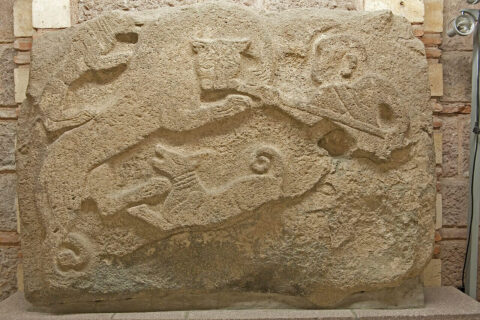
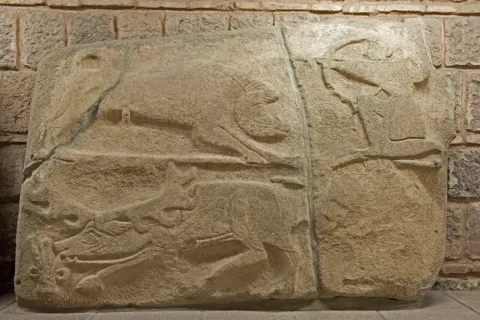
Kessi (Kešši) was a hunter in an ancient tale of Hurrian origin, preserved in fragmentary Hurrian, Hittite, and Akkadian texts. After marrying the beautiful Šintalimeni, he became so devoted to his wife that he stopped hunting, neglected his mother, and failed to make offerings to the gods. When he returned to the mountains, the angry gods hid the animals from him, leaving him without prey and eventually suffering from hunger and illness.
The surviving story also recounts seven disturbing dreams, but much of their interpretation has been lost. Catalogued as CTH 361, the Tale of Kessi remains incomplete, and its original ending is unknown.
Who Was Kessi in Hurrian and Hittite Mythology?
Kešši takes his name from the Hurrian word for “hunter.” He is a human character in a literary tradition of Hurrian origin, rather than a god or a documented historical figure. Unlike the Kumarbi Cycle, which focuses on struggles among deities, his tale places an ordinary human household at the center of the story.
His wife, Šintalimeni, is identified in the Hittite text as the sister of Udupšarri, a man described as wicked. Kessi’s mother is another important character, confronting him over his behavior and later attempting to interpret his dreams.
The work is known as the Tale of Kessi or Song of Kessi. These titles refer to a narrative preserved in different versions, whose surviving contents do not always agree.
The Tablets That Preserve the Story of Kessi
The Tale of Kessi, catalogued as CTH 361, survives in fragmentary Hittite, Hurrian, and Akkadian texts. Much of the evidence comes from Hattusa, the Hittite capital. Manuscripts such as KUB 33.121 and KUB 17.1 preserve parallel passages, allowing scholars to compare damaged sections. KUB 33.121 is written in New Hittite script, dating its surviving copy to the Late Bronze Age, though the original Hurrian composition may be older.
The Hurrian work was considerably longer. KUB 47.1 preserves part of its sixth tablet, while a colophon on KUB 47.2 identifies the fourteenth tablet of the Song of Kessi and states that the composition was not finished. The series therefore extended to at least fifteen tablets, although only scattered fragments survive.
The story also reached Egypt. An Akkadian fragment discovered at Tell el-Amarna, known as EA 341, preserves the names Kessi and Udibšarri. Too damaged to reveal a continuous episode, it nevertheless establishes that the tale circulated beyond Anatolia during the Late Bronze Age.
The Hurrian and Hittite versions differ in content. They represent related adaptations of the same literary tradition, not surviving chapters that can be assembled into a single continuous narrative.
Kessi’s Marriage and His Neglected Duties
Kessi’s wife, Šintalimeni, is described in the Hittite text as exceptionally beautiful. Absorbed in his marriage, he stops hunting in the mountains and neglects the bread offerings and libations owed to the gods.
His mother confronts him, complaining that he cares only for his wife and no longer brings her anything from the mountains. Her words show that his absence from hunting has also affected someone who depended on him. The surviving passage gives no indication that Šintalimeni encouraged him to abandon his responsibilities.
Kessi responds by taking up his spear, calling his hunting dogs, and setting out for Mount Natara.
Why Did Kessi’s Hunting Expedition Fail?
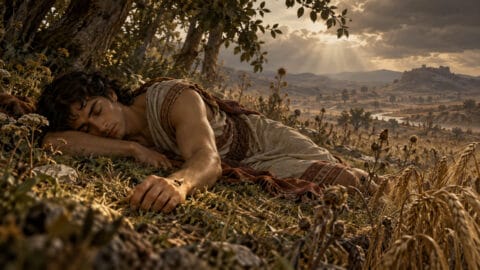
On Mount Natara, Kessi finds no game. The gods, angered by his neglected offerings, have hidden the animals from him. He spends three months wandering through the mountains, reluctant to return to the city empty-handed. During this ordeal, he suffers from hunger, thirst, and a severe illness.
The following lines are badly damaged. They mention the “sons of the gods” and a deity associated with Kessi’s father, but the fragments do not establish what role these figures played in the events that followed.
The Seven Dreams of Kessi and Their Meaning
The Hittite account describes seven dreams, but the first is lost and only traces of the second survive. The third mentions something being brought from Mount Natara toward the city of Pera, though the damaged text does not reveal the full scene.
The fourth dream is more vivid. A huge basalt boulder falls from the sky, crushing servants and a man associated with divine service. In the fifth, Kessi sees deities associated with his father kindling a fire.
The sixth dream shows Kessi wearing a wooden collar, with an object associated with women’s dress near his feet. Scholars differ over whether this object was a wooden shoe or an ankle ornament. Birgit Christiansen interprets the scene as a possible symbol of Kessi’s subordination to his wife, rather than a meaning explicitly given in the story.
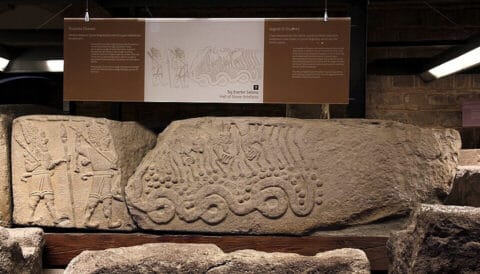
In the seventh dream, Kessi pursues lions and encounters serpents and mysterious creatures called damnaššara at a gate. These have been variously identified as sphinxes or bull-headed beings. When he wakes, he tells his mother what he has seen and fears that returning to the mountains could mean his death. She begins to explain the dreams, but her interpretation is largely lost.
Alice Mouton considers these visions symbolic warnings of divine punishment, comparable in literary function to the dreams in the Epic of Gilgamesh. Their precise predictions, however, cannot be recovered from the surviving text.
What Does the Hurrian Version Add to the Story?
The Hurrian Song of Kessi preserves glimpses of episodes missing from the Hittite account. One involves an assembly of elders where Kessi apparently confronts his wife. Scholars have also identified discussions concerning his refusal to hunt, references to omens, and appeals for success in hunting.
The fragments introduce a wider divine presence, including IŠTAR, the Sun God, and the Moon God. Unfortunately, the surrounding passages are too damaged to establish their precise roles in the narrative.
These details point to a story extending beyond Kessi’s failed hunt and troubling dreams. It included disputes involving other people, divine intervention, and attempts to understand signs of future events. How these episodes developed, or how they related to the events preserved in Hittite, remains uncertain.
What Does the Story of Kessi Reveal About Hittite Beliefs?
In Hittite religion, offerings of bread and drink were essential to maintaining proper relations with the gods. Kessi’s misfortune reflects the belief that neglecting these obligations could provoke divine anger. His inability to find game shows how closely religious duties and human well-being were connected in the story.
The tale also reflects expectations surrounding family responsibilities. Kessi’s mother depends on his hunting, and her complaint suggests that marriage did not release him from his obligations to her. His devotion to his wife becomes a problem when it displaces those commitments.
Whether the story was intended as a moral warning, entertainment, or both remains uncertain. Its Hurrian origins also caution against treating it as a direct account of everyday Hittite family life. The tale reveals social and religious values expressed through literature, rather than a complete picture of how people actually lived.
Conclusion
The surviving tablets never reveal how Kessi’s troubles ended. They do, however, show how a hunter’s family life, livelihood, and religious obligations could become closely entangled. The longer Hurrian tradition suggests a more complex narrative than the Hittite fragments alone preserve, but much of it remains beyond recovery. Kessi’s story offers a rare glimpse into an ancient literary tradition where human choices and divine power shaped one another.
Sources & Primary Texts
Primary Texts and Manuscript Records
- TITUS, Corpus of Hittite Mythological Texts, CTH 361. Hittite text edition, including KUB 33.121, KUB 36.62, KBo 57.15, and KUB 17.1.
- LAMAN, CTH 361: Tale of the Hunter Kešši and His Beautiful Wife. Catalogue of Hittite and Hurrian manuscript witnesses.
- Cuneiform Digital Library Initiative, EA 341 (P270840). Akkadian literary fragment from Tell el-Amarna, Egypt.
Academic Studies and Translations
- Hoffner, Harry A., Jr. (1998). Hittite Myths, 2nd edition, edited by Gary M. Beckman. Society of Biblical Literature, pp. 87–89.
Publisher. - Bachvarova, Mary R. (2016). From Hittite to Homer: The Anatolian Background of Ancient Greek Epic. Cambridge University Press, Chapter 2.
Publisher. - Dijkstra, Meindert (2008). “New Joins in the Hurrian Epic of Kešši and Their Ramifications.” Ugarit-Forschungen 40, pp. 205–223.
Academic catalogue. - Christiansen, Birgit (2022). “Love and Affection in Hittite Texts.” In The Routledge Handbook of Emotions in the Ancient Near East, edited by Karen Sonik and Ulrike Steinert, pp. 725–738.
LMU Munich. - Mouton, Alice (2004). “Messages from the Gods: An Aspect of Hittite Dreams.” Oriental Institute News & Notes 180. University of Chicago.
University publication. - Collins, Billie Jean (2002). “Animals in Hittite Literature.” In A History of the Animal World in the Ancient Near East, pp. 237–250. Brill.
Academic catalogue.