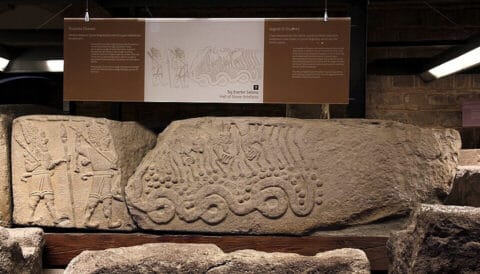
Gurparanzah: The Archer Who Defeated 60 Kings in Hittite Mythology
Gurparanzah (Gurparanzaḫ) was a legendary king of Ailanuwa whose adventures survive in a fragmentary Hittite epic rooted in Hurrian literary traditions. A skilled hunter and archer, he travels to Akkad, where he defeats an assembly of sixty kings and seventy nobles in an archery contest. His marriage to Tatizuli becomes troubled, drawing the intervention of Aranzaḫ, the deified Tigris River.
Catalogued as CTH 362, the Epic of Gurparanzah survives only in damaged tablets, leaving the outcome of the marriage dispute and the story’s original ending unknown.
Who Was Gurparanzah in Hittite Mythology?
Gurparanzah is described as the king of Ailanuwa, a land whose location remains unknown. Franca Pecchioli Daddi has proposed identifying it with Alilanum, a settlement near the Sinjar Mountains and the Upper Khabur region. Records from Mari mention Alilanum during the reign of Zimri-Lim in the eighteenth century BCE, when it was ruled by a man with the Hurrian name Masum-atal. The proposed identification remains uncertain, and no independent historical evidence confirms Gurparanzah’s existence.
His name reflects Hurrian linguistic traditions. Scholars connect its first element, gurp-, with a word for a weapon or quiver, while Aranzaḫ is the Hurrian name of the Tigris River. Tatizuli’s name has been linked to the Hurrian verb tad-, meaning “to love.” Two other names in the epic, Eniadali and Ešiadali, have been interpreted as “God is strong” and “The land is strong.”
These names support the story’s Hurrian cultural background, although they do not establish when or in which language the original narrative was composed.
The Hittite Tablets That Preserve the Epic
The Epic of Gurparanzah, catalogued as CTH 362, survives in fragmentary cuneiform tablets from Hattusa. KUB 36.67 is written in New Hittite script, dating the surviving manuscript to the Late Bronze Age without establishing when the story was first composed.
KUB 36.67 preserves the hunting, archery, and marriage episodes. Rukiye Akdoğan identified physical joins with AnAr 12164 and KBo 22.98, using matching column lines, paragraph divisions, and traces of scribal erasure. She also proposed that KBo 26.104 belonged to the same tablet, although its placement is less certain.
The arrangement of these fragments has prompted disagreements among scholars. Pecchioli Daddi proposed changes to the reconstruction, while Akdoğan used the tablet’s surviving physical features to reassess the placement of its columns. These questions affect the order in which some episodes can be read.
KUB 17.9 preserves the intervention of the deified Tigris River. Its damaged colophon identifies it as the second tablet of the composition, indicating that the narrative extended beyond a single tablet.
Scholars classify the work as a heroic epic, although the surviving colophon does not preserve the sign for “song” (SÌR). No Hurrian-language original has been identified, leaving the story’s earlier transmission uncertain.
Gurparanzah’s Hunt and Journey to Akkad
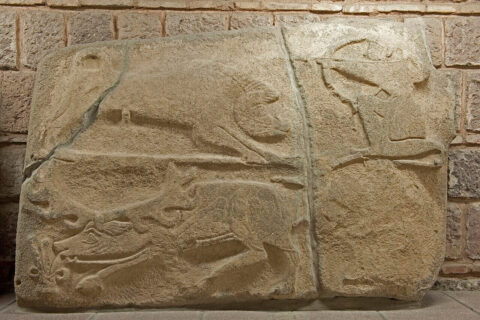
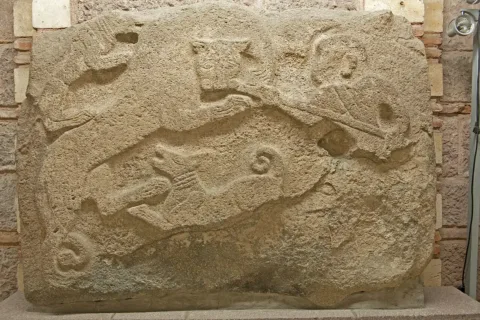
The surviving fragments describe Gurparanzah hunting wild animals, apparently killing a leopard and a bear, although both identifications rely partly on restored text. The hunt involves Impakru, a figure associated with Akkad whom scholars generally identify as its fictional king.
The company then enters Akkad, where Gurparanzah is seated at Impakru’s right hand and identified as his son-in-law. This relationship is already established in the surviving passage, before the archery contest.
Franca Pecchioli Daddi suggests that Gurparanzah’s performance during the hunt prompted Impakru to choose him as a husband for his daughter, Tatizuli. The interpretation explains their relationship, but the selection itself is not preserved as a complete scene.
The Archery Contest Against Sixty Kings
After a feast in Akkad, the assembled guests call for bows. Quivers and an object possibly used as an archery target are prepared and placed before Gurparanzah.
He begins shooting, and the narrator compares the flight of his arrow to that of a bird. The Hittite text credits him with defeating sixty men and seventy nobles in archery. A later passage refers to sixty kings and seventy nobles, explaining why the contest is commonly described as a victory over sixty kings.
The tablets preserve the result but provide little information about the rules or how the competition was conducted.
Gurparanzah’s Marriage to Tatizuli
After the feast and archery contest, Gurparanzah is escorted toward the wedding chamber. Fine oil is sprinkled before him, the approach to the chamber is prepared, and he climbs steps toward the bed.
His wife, Tatizuli, appears to postpone their union. The damaged dialogue mentions another day and includes a prohibition, but does not preserve her full explanation.
Franca Pecchioli Daddi interprets the disagreement as Tatizuli’s refusal to consummate the marriage until her father provides a suitable dowry, allowing the couple to establish an independent household. This interpretation relies partly on reconstructing missing passages rather than a complete surviving conversation.
Other fragments mention a storage building and preserve part of a speech by Impakru to the assembled kings and nobles. Their connection to the dispute remains uncertain, and the surviving text does not reveal how the disagreement was settled.
Why Did the River Tigris Help Gurparanzah?
Aranzaḫ, the deified Tigris River, appears as Gurparanzah’s protector during his marital troubles. In KUB 17.9, the river travels like an eagle toward Akkad, where he finds the hero weeping among other warriors.
The passage also mentions Nuadu, whose identification remains uncertain. Aranzaḫ asks Gurparanzah why he is crying. His damaged reply refers to a young woman and marriage gifts, apparently connecting his distress to the dispute with Tatizuli.
Aranzaḫ then travels to the Mother Goddess and the Fate Goddess. They welcome him with food and drink, and the text counts at least seven successive rounds of eating and drinking.
Scholars interpret the river’s journey as an attempt to secure divine help for Gurparanzah. However, the surviving fragments do not reveal the goddesses’ response or whether the marriage dispute was resolved.
What Does the Epic Reveal About Hurrian-Hittite Storytelling?
Although preserved in Hittite, the epic is set in Akkad and features characters with Hurrian names. Amir Gilan places it among the foreign heroic narratives known to Hittite scribes, contrasting this literary tradition with the absence of comparable surviving epics celebrating Hittite kings themselves.
Franca Pecchioli Daddi suggests that the composition may have developed from an orally transmitted Hurrian foundation myth concerning the origins of a local dynasty. The marriage plot and the involvement of the Mother Goddess and Fate Goddess could fit such an interpretation, but the surviving tablets preserve no account of a dynasty’s foundation.
The epic illustrates how stories from different cultural traditions were adapted into Hittite literature without providing a historical record of the events they describe.
Conclusion
Gurparanzah’s story survives through episodes of heroic achievement, personal conflict, and divine assistance, but its ending remains lost. Its importance lies in what those fragments reveal about the movement of heroic traditions between Mesopotamia, the Hurrian world, and Hittite Anatolia.
Sources & Primary Texts
Primary Texts and Manuscript Records
- TITUS, Corpus of Hittite Mythological Texts, CTH 362.1.
German translation of the surviving Hittite epic, including the hunting, archery, and marriage episodes. - Hethitologie-Portal Mainz, CTH 362.
Manuscript concordance recording KUB 36.67, KUB 17.9, KBo 22.98, AnAr 12164, and related fragments.
Academic Studies
- Pecchioli Daddi, Franca (2003).
“From Akkad to Hattuša: The History of Gurparanzaḫ and the River That Gave Him Its Name.”
In Semitic and Assyriological Studies Presented to Pelio Fronzaroli, pp. 476–494. Harrassowitz Verlag.
University of Florence. - Akdoğan, Rukiye (2007).
“Gurparanzah Destanına Birleşen Yeni Bir Tablet Parçası.”
In VI Congresso Internazionale di Ittitologia, Part I, Studi Micenei ed Egeo-Anatolici 49, pp. 1–20.
Study and tablet analysis. - Gilan, Amir (2009).
“Epic and History in Hittite Anatolia: In Search of a Local Hero.”
In Epic and History, pp. 51–65. Wiley-Blackwell.
Publisher / DOI. - Kıymet, Kurtuluş (2019).
“Hitit Metinlerinde Akad Çağı ile İlgili Kayıtlar.”
Tarih Araştırmaları Dergisi 38(66), pp. 1–66.
Journal / DOI.