Halki: The Hittite Grain Deity and Its Worship
Halki was the Hittite deity of grain, one of the most important sources of food in Bronze Age Anatolia. The name itself means “grain” in Hittite. Although Halki is usually described as a goddess, some texts indicate that the deity could also be male, suggesting differences between local religious traditions.
Halki’s importance is especially clear in the religious ceremonies of Hattusa, the Hittite capital. During the KI.LAM festival, the king and queen visited Halki’s temple, while officials from other cities presented food supplies nearby. These rituals reveal a connection between the worship of grain and the practical need to provision the kingdom’s religious and political center. Surviving texts also associate Halki with the Hattian deity Kait and the Mesopotamian goddess Nisaba, although the precise nature of these relationships remains a subject of scholarly debate.
Who Was Halki in Hittite Religion?
Halki appears among the deities named in the Hittite myth of Telipinu (KUB 17.10 III 31–32), alongside Miyatanzipa and Telipinu. Their association in the text places Halki within a divine world concerned with vegetation and agricultural life, although the passage does not assign the grain deity a distinct role in the narrative.
Ritual records provide clearer evidence of Halki’s worship. They describe ceremonial toasts to the deity, visits to Halki’s shrine, and a priest serving the cult. These references establish that Halki had a recognized place in Hittite religious practice, with dedicated rituals and cult personnel.
Was Halki a Goddess or a God?
Halki was generally identified as a goddess, but not every Hittite reference points to a female deity. Some texts use feminine designations, including DUMU.MUNUS (daughter or girl) and KI.SIKIL (young woman). These support the female identity of Halki, particularly in the religious tradition of Hattusa.
Evidence for a male Halki also survives. Piotr Taracha discusses KBo 52.20 + E 780, a fragment associated with northern Anatolia that appears to describe a male grain deity through relationships with other gods. The evidence from Nerik is less straightforward. Although a male form has been proposed for its local cult, KUB 27.68 explicitly lists Halki among the city’s goddesses.
The distinction may reflect separate local traditions rather than a single deity who changed gender. Both male and female forms are attested, but the surviving texts do not establish whether communities regarded them as different gods or regional forms of the same deity.
Halki, Kait, and Nisaba: Names and Religious Connections
Halki’s identity was closely linked to grain deities from neighboring cultures. In KUB 28.75, a priest invokes Halki in Hittite before continuing in Hattic, addressing the goddess Kait as a queen. The passage also gives her the name Ḫāyamma. Scholar Mark Weeden has suggested a possible connection with Haya, a Mesopotamian god associated with Nisaba, but the name’s origin remains uncertain.
Nisaba, also known as Nidaba, was the Mesopotamian goddess of grain and writing. Hittite scribes sometimes represented Halki with the Sumerian logogram dNISABA, using the name of a deity with a similar agricultural association. This scribal convention did not necessarily mean that Halki and Nisaba shared an identical cult or religious identity.
The same writing practices extended to Kumarbi, a major male deity of the Hurrian pantheon. In certain Hurro-Hittite god lists, scribes represented Kumarbi using either dNISABA or the name Halki. These correspondences crossed differences in gender and divine status, making the context essential for identifying which deity a text actually refers to.
Where Was Halki Worshiped?
The earliest evidence for Halki comes from Old Assyrian tablets found at Kaneš (modern Kültepe), a major trading center in central Anatolia. The deity’s name appears in personal names, including Halkiaššu, an official active during the reign of King Waršama. These references suggest that Halki was already known in the region, but reveal little about the deity’s worship at that time.
At Hattusa, the Hittite capital, festival texts document a temple dedicated to Halki. Its location has been investigated through references in the tablets, although no excavated building has been securely identified as the deity’s sanctuary.
The cult inventory KUB 42.100+, compiled under Tudhaliya IV, provides more detailed evidence from Nerik in northern Anatolia. It records that Muwatalli II commissioned a statuette of Halki, which stood before the Storm God of Nerik in his shrine. The same text describes a prince visiting Halki’s shrine immediately upon arriving in the city during a religious journey.
Halki also appears in the local religious traditions of Karaḫna and Ištanuwa. These references indicate that the deity was worshiped beyond the major Hittite religious centers, although the surviving accounts provide fewer details about these local cults.
Halki and the KI.LAM Festival at Hattusa
Halki’s temple was an important setting for the KI.LAM festival, a three-day celebration at Hattusa associated with the autumn festival of nuntarriyašḫaš. The ceremonies included royal processions, offerings to several deities, and the presentation of food supplies from towns across the Hittite kingdom.
After watching a procession of divine symbols and sacred animal figures made from precious metals, the king and queen travelled by chariot to the gate of Halki’s temple. Nearby, officials known as AGRIG, who oversaw regional storehouses, presented provisions on behalf of towns including Ankuwa, Nenassa, and Tuwanuwa.
KBo 10.24 describes Ankuwa’s contribution in detail. Bread, beer, an ox, and sheep were displayed near the temple gate. A herald announced the town’s name as its administrator bowed before the king. These goods appear to have represented the towns’ wider contributions to the capital’s food supply rather than the full quantities delivered.
Alfonso Archi interprets this ceremony as a religious expression of the Hittite administrative system. By presenting provisions before Halki’s temple, officials connected their responsibility for supplying the capital with the worship of the grain deity. The king and queen witnessed these contributions as part of the kingdom’s public religious life.
Halki in Hittite Ritual Texts
In IBoT 2.80, ritual practitioners invoke Halki and the Sun Goddess of the Earth through pits dug into the ground. Such pits served as channels for communicating with deities, particularly those associated with the underworld. Halki’s inclusion in this ceremony shows that the grain deity participated in rituals involving the earth, but does not establish that Halki possessed underworld powers.
Another revealing passage, KBo 20.101, mentions Halki alongside a daughter or young girl bearing the same name. Veronika Milanova, drawing on an interpretation by Volkert Haas, identifies them as a mother and daughter who may represent mature grain and new seed. This possible symbolism of agricultural renewal has invited comparisons with the Greek goddesses Demeter and Kore. However, the Hittite fragment preserves no corresponding myth or evidence of a direct connection between the two traditions.
What Remains Unknown About Halki?
No complete myth centered on Halki survives in Hittite literature. Unlike Telipinu, whose disappearance disrupts the natural world, Halki has no preserved narrative describing the deity’s actions or personality. Most surviving references concern rituals and worship rather than mythology.
Halki’s association with grain suggests a connection to agricultural abundance, but the texts do not clearly establish whether the deity controlled rainfall, determined harvest yields, or influenced human fertility. These functions should not be assumed simply because Halki was a grain deity.
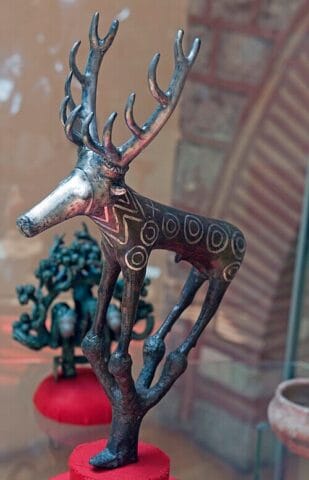
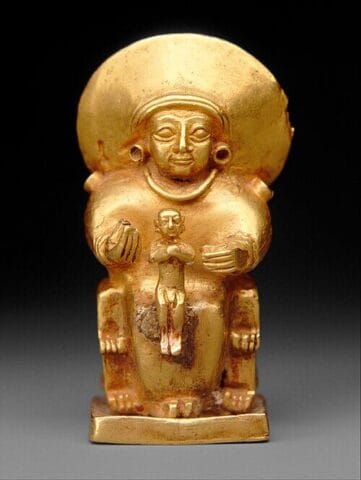
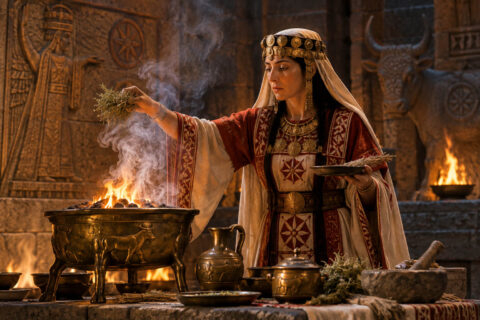
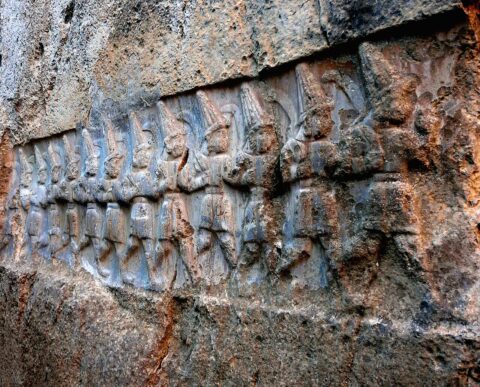
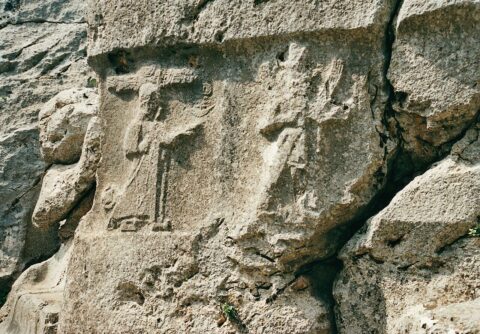
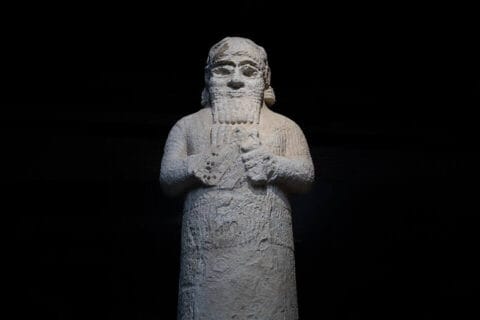
Halki’s appearance is equally uncertain. Although a cult image is recorded at Nerik, no surviving statue or relief has been securely identified as the deity. Modern depictions of Halki are therefore imaginative reconstructions rather than representations based on an identified ancient image.
Read Also
Conclusion
Halki’s worship illustrates the place of grain in Hittite religious and political life. The deity received offerings in local cults, while ceremonies at Hattusa connected the worship of grain with the kingdom’s food supply. Although no complete myth of Halki survives, the ritual records reveal how an essential agricultural resource became part of the Hittite divine world.
Sources & Primary Texts
Academic Sources
- Taracha, Piotr (2013). “How Many Grain-deities Halki/NISABA?” In De Hattusa à Memphis: Jacques Freu in honorem, pp. 119–129.
- Weeden, Mark (2009). “The Akkadian Words for Grain and the God Haya.” Die Welt des Orients 39(1), pp. 77–107.
- Archi, Alfonso (2015). “Hittite Religious Landscapes.” In Sacred Landscapes of Hittites and Luwians, pp. 11–25.
- Puhvel, Jaan (1991). Hittite Etymological Dictionary, Vol. 3: Words Beginning with H. Berlin: Mouton de Gruyter, pp. 37–38.
- Cammarosano, Michele (2018). Hittite Local Cults. Atlanta: SBL Press.
- Milanova, Veronika (2020). “MUNUS/f duttariyata/i- and Some Other Indo-European Maidens.” In Hrozny and Hittite: The First Hundred Years, pp. 277–294.
- van den Hout, Theo (2024). “Hittite Foodways: The King as the Provider of His People.” In Eating and Drinking in the Ancient Near East, pp. 25–42.
Primary Hittite Texts
- KUB 17.10: The Telipinu myth, including references to Halki.
- KUB 28.75: Hittite and Hattic invocations involving Halki and Kait.
- KBo 10.24 (CTH 627): KI.LAM festival ceremonies and the presentation of provisions.
- KUB 27.68 + KUB 42.100: Cult inventory evidence concerning Halki at Nerik.
- KBo 20.101: Ritual reference to Halki and a daughter or young woman bearing the same name.
- IBoT 2.80: Ritual invocation involving Halki and the Sun Goddess of the Earth.