Lelwani: The Hittite Deity of the Underworld
Lelwani was an underworld deity worshipped in Bronze Age Anatolia, with roots in the older Hattian religious tradition. Early texts describe Lelwani as a male god, even granting the title of “king,” while later royal prayers address the deity as a goddess. This difference reflects the complex religious traditions absorbed by the Hittites, although scholars disagree about how Lelwani’s identity developed.
Despite this association with the underworld, Lelwani was not concerned with death alone. Hittite rituals included offerings to the deity, while royal prayers sought protection against illness and premature death. Queen Puduhepa appealed to Lelwani to preserve the life of her husband, King Hattusili III. Lelwani was also associated with underworld goddesses such as the Hurrian Allani and Mesopotamian Ereshkigal, though these divine figures were not necessarily identical in every tradition.
Lelwani’s Hattian Origins and Name
Lelwani originated in the religious traditions of the Hattians, the pre-Indo-European inhabitants of north-central Anatolia. When the Hittites established their kingdom in this region, they incorporated many Hattian deities and rituals into their own religious practices. Lelwani was among the gods whose worship continued within the Hittite tradition.
An important witness to these older beliefs is KBo 37.1, a bilingual Hattian-Hittite ritual text concerning the construction of a palace. Its mythological passage places Lelwani alongside the Hattian Storm God Taru. Both approve the building of a palace for the Sun Goddess at Liḫzina, while the divine smith Ḫašammili participates in the construction. The passage establishes Lelwani’s place within an inherited Hattian divine tradition rather than a cult introduced from Mesopotamia.
The name appears as Lelwani, with Leluwani also found in modern references and Lelvani in older scholarship. Its original meaning remains uncertain. Although Lelwani’s association with the underworld is well established, there is no securely demonstrated linguistic derivation of the name that explains this function.
Was Lelwani Originally a Male God?
The earliest evidence commonly cited for Lelwani’s masculine identity comes from the Hattian-Hittite bilingual text KBo 37.1. Lelwani bears the Hattian title katte, meaning “king,” rendered in Hittite as LUGAL-uš. The same title is given to the Storm God Taru.
A later prayer associated with Muršili II, preserved in KBo 4.6 (CTH 380), still addresses Lelwani as “my lord.” Yet in a prayer composed by Queen Puduḫepa during the reign of Hattusili III, Lelwani is unmistakably addressed as a goddess and repeatedly called “my lady.”
This difference is often explained through the growing influence of Hurrian religion, particularly the identification of Lelwani with female underworld deities. However, the interpretation is not universally accepted. Volkert Haas regarded the early masculine titles as clear evidence, while Giulia Torri questioned whether Lelwani should necessarily be understood as originally male.
The surviving texts therefore establish that Lelwani could be represented as both male and female. They do not establish precisely when this difference emerged or whether it reflected a single, permanent change throughout Hittite religion.
Lelwani’s Role in the Hittite Underworld
Lelwani’s authority over the underworld was closely connected with the length of human life. According to the interpretation of Hittite religious texts by Alfonso Archi, Lelwani determined when a person’s life would end. This explains the deity’s association with Ištuštaya and Papaya, two Hattian goddesses responsible for determining the span of human life.
Lelwani also appears in rituals connecting the living world with the realm of the dead. One Hittite ceremony invokes the deity to open the gates of the underworld, allowing its inhabitants, the underworld gods, to emerge and receive offerings. This suggests authority over access to the realm below, rather than simply an association with death.
That authority extended into matters of human obligation. Palace officials swore oaths to Lelwani, while political treaties could be deposited in the deity’s temple. Archi interprets these practices as evidence that Lelwani could punish those who violated their commitments.
The surviving texts establish these connections with death, lifespan, and divine punishment, but do not provide a detailed account of Lelwani judging individual souls or determining their fate after death.
Lelwani, Allani, and Ereshkigal: Religious Connections
Hittite scribes used names from different religious traditions to identify underworld deities, but these names did not always refer to the same figure. Lelwani, of Hattian origin, was sometimes designated by the Akkadian name Allatum. This name was also associated with Allani, the Hurrian goddess of the underworld. Ereshkigal, meanwhile, was the Mesopotamian goddess who ruled the realm of the dead.
The distinctions are visible in Hittite religious texts. In the treaty between Šuppiluliuma I and Ḫukkana of Ḫayaša (KBo 5.3), Lelwani, designated as Allatum, and the Sun-goddess of the Earth appear separately among the divine witnesses. The latter goddess was also identified with Ereshkigal in Hittite tradition. Their separate appearance shows why Lelwani and the Sun-goddess of the Earth should not automatically be treated as identical.
The relationship with Allani is similarly complex. In the Hurrian-Hittite Song of Release (CTH 789), Allani is identified with the Sun-goddess of the Earth in the Hittite interpretation of the narrative. Scholar Ulrike Lorenz-Link argues that this identification helped make a Hurrian goddess understandable within Hittite religious concepts, rather than proving that the two had always been the same deity.
How Was Lelwani Worshipped?
Lelwani’s worship was closely associated with the ḫešta-house, a sacred building in Hattusa. Although its function has sometimes been interpreted in connection with funerary practices, the building served as a temple of Lelwani and should be distinguished from the separate royal mausoleum known as the Stone House.
An Old Hittite festival text, KBo 17.15, provides direct evidence of the offerings made there. The chief cook and an anointed priest presented meat from five sheep to each deity in a group headed by Lelwani. The recipients included Šiwatt, Ištuštaya, Papaya, Ḫašammili, and several others. These ceremonies placed Lelwani within an established group of deities worshipped through prescribed offerings.
The cult also formed part of the royal festival calendar. In his annals, Muršili II records returning to Hattusa to celebrate Lelwani’s great festival at the ḫešta-house, having already performed ceremonies for the Storm Gods of Hatti and Zippalanda. Other festival texts connect Lelwani’s worship with purulli, a celebration associated with the seasonal ritual cycle, although its precise relationship with Hittite New Year ceremonies remains debated.
While the written records establish the importance of the ḫešta-house, its identification with a particular excavated structure at Hattusa remains uncertain.
Royal Prayers to Lelwani: Illness and the Protection of Kings
One of the clearest examples of Lelwani’s involvement in royal healing rituals survives in KBo 4.6 (CTH 380), a prayer for the recovery of Gaššuliyawiya. The text records that she had seen Lelwani in a dream at Šamuḫa before falling ill. To secure her recovery, offerings of livestock, food, and drink accompanied an elaborately dressed woman presented as a tarpalli, a substitute intended to divert divine anger from the patient. The woman’s subsequent fate is not recorded. Although traditionally attributed to Muršili II’s reign, the prayer’s precise date and the identity of its speaker remain disputed.
During the reign of Hattusili III, Queen Puduḫepa appealed to Lelwani for her husband’s survival. In her prayer to the Sun-goddess of Arinna (CTH 384), Puduḫepa also appealed to Lelwani, asking the deity to reject hostile words against Hattusili and intercede with the other gods to prolong his life.
Puduḫepa promised that, if Lelwani preserved Hattusili’s life, she would commission a life-size silver statue of the king, not of the deity, with its head, hands, and feet made of gold. The text does not establish whether the statue was ever produced.
A separate collection of Puduḫepa’s vows to Lelwani survives under CTH 585. Together, these documents show how the Hittite royal household sought divine intervention through personal petitions, substitution rituals, and promises of valuable offerings.
What Can We Actually Know About Lelwani?
Most surviving evidence for Lelwani comes from ritual instructions, prayers, and festival records rather than mythological narratives. The Hattian palace-building passage in KBo 37.1 provides a brief mythological reference, but no complete independent story centered on Lelwani is known.
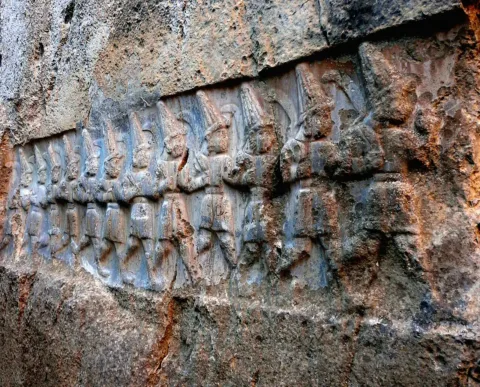
The archaeological evidence is less conclusive. Although texts identify the ḫešta-house as a place of worship, its precise location remains disputed. Büyükkale and the rock sanctuary of Yazılıkaya have both been proposed, without a universally accepted identification.
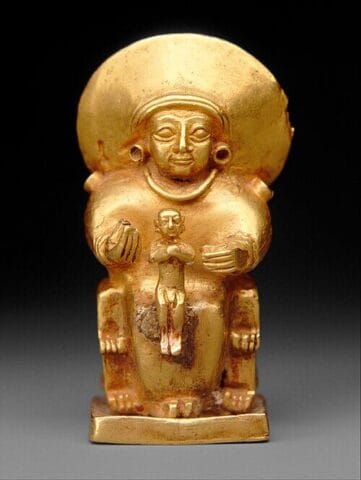
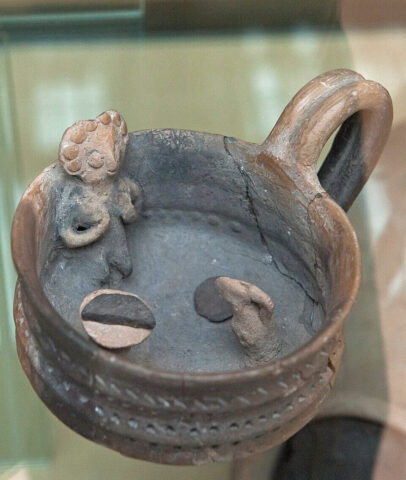
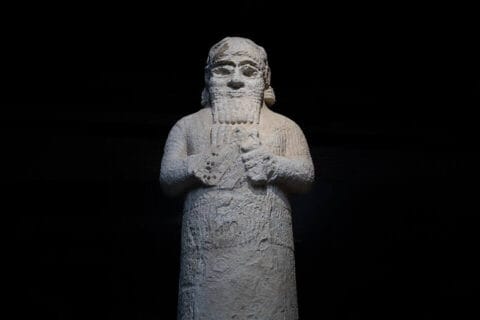
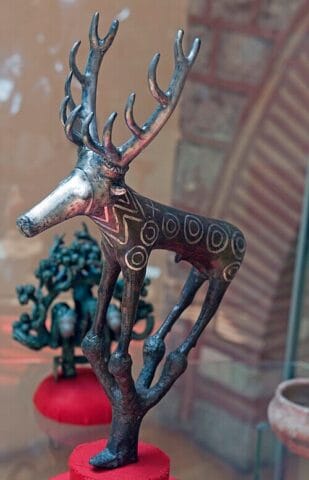
No surviving statue or relief can be securely identified as a depiction of Lelwani.
These limitations leave Lelwani’s physical appearance and much of the cult’s early development unknown, even though the written sources preserve substantial evidence of its place in Hittite religious life.
Conclusion
Lelwani’s importance in Hittite religion extended beyond the realm of the dead. A deity associated with the limits of human life could also be asked to extend those limits. Royal prayers and ritual vows reveal a belief that illness, divine anger, and premature death might be averted through divine favor.
Although Lelwani’s identity changed across religious traditions, the surviving evidence points to a consistent concern: the possibility of securing a longer life from a deity who held power over its end.
Academic Sources & Primary Texts
Primary Hittite Texts
- KBo 37.1. Hattian-Hittite bilingual text concerning the construction of a divine palace.
Evidence for Lelwani’s Hattian background and the title katte. Discussed in Archi (2013). - CTH 380 (KBo 4.6). Prayer to Lelwani for the recovery of Gaššuliyawiya.
Evidence for royal healing petitions and the substitute ritual. Translated in Singer (2002), pp. 71-73. - CTH 384 (KUB 21.27). Prayer of Queen Puduḫepa to the Sun-goddess of Arinna, including an appeal to Lelwani.
Documents the request to prolong Hattusili III’s life and the promise of a precious statue. Translated in Singer (2002), pp. 101-105. - CTH 585. Vows of Queen Puduḫepa.
A separate collection of royal vows, including those concerning Lelwani. Edited in Otten and Souček (1965). - KBo 17.15. Old Hittite festival text.
Records offerings to Lelwani and associated deities in the ḫešta-house. Discussed in Steitler (2023), p. 166. - KBo 5.3 and CTH 789. The treaty of Šuppiluliuma I with Ḫukkana, and the Hurrian-Hittite Song of Release.
Evidence for distinctions and religious identifications among underworld deities.
Academic Studies & Translations
- Singer, Itamar. Hittite Prayers. Edited by Harry A. Hoffner Jr. Writings from the Ancient World 11. Atlanta: Society of Biblical Literature, 2002.
English translations of royal prayers involving Lelwani. - Archi, Alfonso. “The Anatolian Fate-Goddesses and their Different Traditions.” In Diversity and Standardization, 1-26. Akademie Verlag, 2013.
Hattian origins, divine titles, lifespan, and underworld associations. - Torri, Giulia. Lelwani: Il culto di una dea ittita. Rome: Dipartimento di Scienze Storiche, 1999.
Specialized study of Lelwani’s cult and religious identity. - Steitler, Charles W. “Solar and Chthonic Deities in Ancient Anatolia.” In Theonyms, Panthea and Syncretisms in Hittite Anatolia and Northern Syria, 149-179. Firenze University Press, 2023.
Evidence for Lelwani’s cult, festival offerings, and the distinctions among underworld deities. - García Trabazo, José Virgilio. “Hittite Divinities of the Underworld and the Night Goddess of Šamuḫa.” In Gods and Languages in Ancient Anatolia, 33-53. Edicions de la Universitat de Barcelona, 2024.
Religious syncretism, divine identity, and differing interpretations of Lelwani’s gender. - Lorenz-Link, Ulrike. Uralte Götter und Unterweltsgötter. Doctoral dissertation, Johannes Gutenberg University Mainz, 2016.
A textual study of the Sun-goddess of the Earth, Allani, Ereshkigal, and the ancient underworld gods. - Otten, Heinrich, and Vladimír Souček. Das Gelübde der Königin Puduḫepa an die Göttin Lelwani. Studien zu den Boğazköy-Texten 1. Wiesbaden: Harrassowitz, 1965.
Critical edition of Puduḫepa’s vows to Lelwani. - van de Peut, Lidewij E. Persuading the Divine: On the Composition of Hittite Prayers. Studien zu den Boğazköy-Texten 69. Wiesbaden: Harrassowitz, 2022.
Analysis of Hittite prayer composition, including questions of attribution and textual transmission.
© 2026
History & Myths.
Written by H. Moses. All rights reserved.