Alexandria’s Lost Royal Tombs: History and New Archaeological Clues
Alexandria’s royal tombs once housed the remains of Alexander the Great and members of the Ptolemaic dynasty. Ancient sources place these burials within the city’s royal quarter, but their precise location and eventual fate remain unknown.
In November 2026, Egyptian authorities announced that massive limestone foundations and an underground passage at Shallalat Gardens might be associated with the royal burial complex established by Ptolemy IV in the third century BCE. Despite these findings, the identity of the building remains unconfirmed.
How Did Alexander the Great’s Body Reach Egypt?
When Alexander the Great died in Babylon in 323 BCE, his burial became part of the struggle for control of his empire. Arrhidaeus, a Macedonian officer entrusted with transporting the body, spent nearly two years preparing an elaborate funeral carriage decorated with gold and reliefs.
The ancient sources disagree about the intended burial site. Pausanias states that Alexander was to be buried in Macedonia, while Diodorus Siculus refers to the sanctuary of Ammon. Both agree that Ptolemy I secured possession of the body. According to Diodorus, he met the funeral procession in Syria and escorted it to Egypt.
The accounts also differ over Alexander’s first burial place. Diodorus places his burial directly in Alexandria, whereas Pausanias records that Ptolemy I buried him at Memphis and that Ptolemy II later transferred his remains to Alexandria.
Possession of Alexander’s body gave Ptolemy a political advantage. As a former general with no direct claim to the Macedonian throne, he could strengthen his authority in Egypt by presenting himself as the protector of Alexander’s legacy.
How Ptolemy IV Created the Royal Burial Complex
During the reign of Ptolemy IV Philopator (221–204 BCE), Alexander’s tomb became part of a larger royal burial complex. According to the Greek writer Zenobius, Ptolemy IV built a funerary monument in the centre of Alexandria, where he gathered the remains of his mother, Berenice II, his ancestors, and Alexander the Great.
The creation of a shared burial site reflected the importance of dynastic worship in Ptolemaic Egypt, where deceased rulers received divine honours and royal cults became established religious institutions.
Zenobius describes the monument as a mnēma (funerary monument) but provides no details of its architecture. Whether it was a single building containing several burial chambers or a larger enclosure housing separate tombs remains uncertain.
Who Was Buried in Alexandria’s Royal Tombs?
Alexander the Great and Berenice II are the only individuals named in Zenobius’ account of the burials. His reference to the ancestors of Ptolemy IV indicates that earlier members of the dynasty were also buried there, although he does not identify them individually.
Strabo confirms that the complex contained the tombs of the Ptolemaic kings but provides neither their names nor the number of burials. Whether later rulers continued to use the same complex remains uncertain.
Cleopatra VII presents a separate case. According to Plutarch, she was buried alongside Mark Antony by order of Octavian in 30 BCE. Ancient accounts describe her funerary monument in Alexandria, but none establishes that it formed part of the earlier royal burial complex.
Where Was the Royal Burial Complex Located?
Strabo, who visited Alexandria in the late first century BCE, places the royal burial enclosure within the Basileia, the extensive district occupied by palaces and other royal institutions. The enclosure is known as the Soma (body) or Sema (tomb), reflecting different readings of its ancient name.
Zenobius places the monument in the centre of the city. Neither account, however, provides sufficiently precise landmarks to establish its location on a modern map.
Reconstructing the boundaries of the Basileia is difficult because Alexandria’s coastline and urban landscape have changed considerably since antiquity. Parts of the ancient royal quarter now lie beneath modern buildings, while others are submerged in the Eastern Harbour.
Shallalat Gardens occupies an area associated with the ancient royal quarter, making it an important site in the search for the royal tombs.
What Happened to the Royal Tombs?
The royal burial complex survived the Roman conquest of Egypt in 30 BCE. According to Suetonius, Octavian, the future emperor Augustus, honoured Alexander’s remains with a golden crown and flowers but declined to visit the tombs of the Ptolemaic kings. His response distinguished Alexander from the defeated dynasty.
Cassius Dio records that Septimius Severus ordered Alexander’s tomb sealed around 200 CE. Herodian nevertheless describes Caracalla’s visit in 215 CE, the last reliably documented imperial visit.
By the late fourth century, the historical record becomes less clear. The orator Libanius still associated Alexandria with Alexander’s remains, while the Christian preacher John Chrysostom questioned whether anyone knew the location of his tomb.
Two events have been proposed to explain the disappearance of the royal burial complex: the destruction of parts of the royal quarter under Aurelian around 272 CE and the earthquake and tsunami of 365 CE. Neither can be directly linked to the loss of the tombs. Whether the royal remains were destroyed, removed, or buried beneath later construction remains unknown.
The Archaeological Search for the Lost Royal Tombs
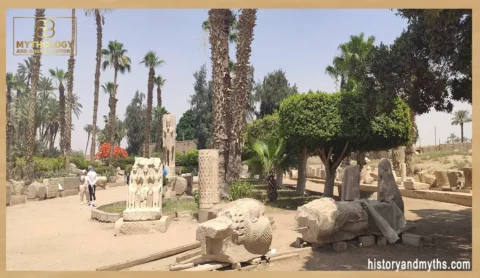
One of the best-known proposed locations is the area around the Nabi Daniel Mosque, where nineteenth-century accounts of underground chambers encouraged speculation about Alexander’s burial. No archaeological evidence has established a connection between these chambers and the royal tombs.
Another candidate emerged in 1907 with the discovery of the monumental alabaster tomb in Alexandria’s Latin Cemetery. Its architecture and early Hellenistic date have led some researchers to associate it with a member of the Macedonian elite, possibly Alexander himself. However, no identifying inscriptions or securely associated royal remains support this attribution.
Modern construction restricts access to buried structures, while deep archaeological deposits and groundwater complicate excavation. Architectural remains are particularly difficult to interpret when surrounding buildings and sections of the ancient street network cannot be fully exposed.
The Shallalat Gardens Excavations: Two Decades of Evidence
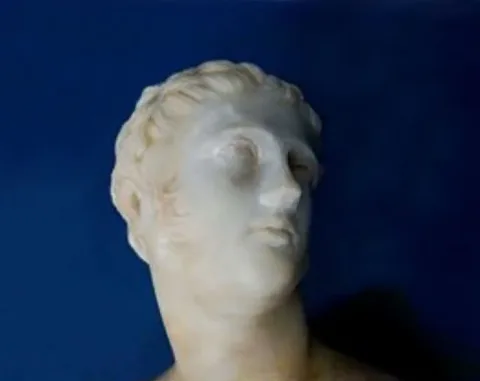
Archaeological investigations at Shallalat Gardens began in 2007 under the direction of Calliope Limneos-Papakosta. In May 2009, the Greek mission recovered a Hellenistic marble statue approximately eight metres below modern ground level, most likely depicting Alexander the Great. Fragments recovered in later seasons helped identify the figure as Alexander carrying a spear.
In 2016, excavations exposed limestone foundations of a monumental Ptolemaic building approximately ten metres below ground. Pottery from the construction layers supported its dating to the Ptolemaic period. By 2017, archaeologists had exposed 36 metres of the foundations, although the building’s complete plan remained unknown.
The mission conducted a geophysical survey covering approximately 12,000 square metres to locate buried structures and guide further excavations. Subsequent investigations revealed evidence of Roman occupation and the reuse of limestone blocks from the earlier Ptolemaic building.
On 24 April 2026, the Bibliotheca Alexandrina opened an exhibition documenting the project’s discoveries, including sections of the Hellenistic Royal Road (R1), the Roman road (L2), and a substantial underground tunnel. These discoveries provide archaeological reference points for reconstructing the layout of Alexandria’s ancient royal quarter.
Read Also
What Does the November 2026 Announcement Reveal?
In November 2026, Egyptian antiquities authorities announced the results of a scientific committee’s examination of the monumental structure at Shallalat Gardens. The exposed remains include massive limestone foundations, surrounding walls, and an underground tunnel extending northwards beneath the structure.
The foundations suggest that the building once supported a substantial superstructure. Based on the architectural remains and their location within Alexandria’s ancient royal quarter, the committee proposed a possible funerary function, potentially linking the building to the royal burial complex established by Ptolemy IV.
The new element is the proposed funerary interpretation. Earlier excavation reports had already identified the foundations as belonging to a monumental Ptolemaic building and documented the underground tunnel.
No burial chamber, royal remains, or identifying inscription was reported in the November announcement.
Could the Structure Be Ptolemy IV’s Royal Burial Complex?
The funerary interpretation rests on three main observations: the building’s Ptolemaic date, its monumental scale, and its location within the ancient royal quarter. These characteristics are consistent with the historical accounts of the royal burial complex, but could also apply to other major royal or public buildings.
Earlier excavation reports considered a possible hydraulic function for the underground tunnel. Its position beneath the foundations does not establish that it formed part of the original building. Establishing its construction date and relationship to the surrounding architecture is essential to determining its function.
A more convincing identification would require evidence specific to a royal funerary context, such as burial chambers, sarcophagus fragments, funerary inscriptions, or architectural features associated with contemporary Macedonian and Ptolemaic tombs.
Conclusion
Excavations at Shallalat Gardens have brought archaeologists closer to reconstructing Alexandria’s ancient royal quarter. Establishing the function of the monumental building would deepen our understanding of the Ptolemaic capital, even if it proves unrelated to the royal burial complex of Ptolemy IV.
Sources & Primary Texts
Primary Classical Sources
- Diodorus Siculus. Library of History, Book XVIII, 26–28.
- Pausanias. Description of Greece, 1.6.3 and 1.7.1.
- Strabo. Geography, 17.1.8.
- Zenobius. Proverbia, 3.94.
- Suetonius. The Life of Augustus, 18.1.
- Cassius Dio. Roman History, 51.16.5 and 76.13.2.
- Herodian. History of the Empire, 4.8.9.
- Plutarch. Life of Antony, 74–86.
Academic Studies
- Erskine, Andrew (2002). Life after Death: Alexandria and the Body of Alexander. Greece & Rome, Vol. 49, No. 2.
- Chugg, Andrew Michael (2002–2003). The Tomb of Alexander the Great in Alexandria. American Journal of Ancient History, New Series, 1.2.
Archaeological Reports & Official Announcements
- Hellenic Research Institute of Alexandrian Civilization (HRIAC). Shallalat Gardens Excavation Reports.
- Bibliotheca Alexandrina, Antiquities Museum (2026). Twenty Years of Excavations at Shallalat Gardens (2006–2026).
- Egyptian State Information Service (24 November 2026). Greek Mission Uncovers Massive Structure in Alexandria’s Ancient Royal Quarter.
Copyright Notice
© 2026 History & Myths. All rights reserved.
This article was independently researched, written, and edited for History & Myths. Its original text and analysis may not be reproduced, republished, or distributed without prior written permission, except as permitted by applicable copyright law.
Historical sources, archaeological findings, and third-party materials are credited to their respective authors and institutions. Images remain subject to their individual copyright and licensing terms.