What If Achilles Survived the Trojan War? Greek Mythology Scenarios
Achilles was never meant to see the end of the Trojan War.
Greek tradition makes his early death part of the price of his glory, yet Homer’s Iliad stops before that death happens. So what changes if Achilles survives the attack that should have killed him and remains at Troy until the war ends?
The answer is not simply “the Greeks win faster.” His survival would affect Ajax, Neoptolemus, Odysseus, the final assault on Troy, and even the meaning of Achilles’ own legend.
This scenario keeps the traditional story unchanged until the moment Achilles is expected to die, then follows the consequences of one difference: he lives.
How Does Achilles Die in the Traditional Myth?
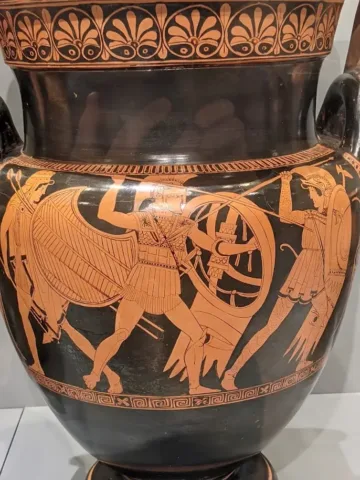
The Iliad never shows Achilles’ death. Homer ends the poem with Hector’s funeral, although Achilles already knows that his own life will be short. Near the end of the poem, Hector predicts that Paris and Apollo will kill him at the Scaean Gates.
The fuller sequence survives outside the Iliad. In the lost epic Aethiopis, known mainly through a later summary, Achilles first kills Penthesilea and then Memnon, two major allies of Troy. Soon afterward, while driving the Trojans back toward their city, he is killed by Paris with Apollo’s help.
This matters because the familiar modern image of an arrow striking Achilles’ heel is not the only ancient version, nor is it how Homer tells the story. What the older epic tradition preserves most clearly is the combination of Paris, Apollo, and Achilles’ death near Troy’s walls.
For this alternate scenario, everything before that moment remains unchanged. Achilles has defeated Memnon and is still the Greeks’ greatest warrior. The divergence begins only when the attack that should kill him fails.
The Scenario Used in This Article
Achilles survives the attack near Troy that is supposed to kill him.
Paris still strikes, and Apollo may still be involved, but the wound is not fatal.
Everything before that moment remains unchanged. Achilles has already killed
Hector, Penthesilea, and Memnon, and the war has reached its final phase.
He is wounded, but after recovering he remains capable of fighting.
Achilles does not become invulnerable, Troy does not automatically fall,
and he does not replace every other Greek hero.
Achilles simply lives long enough to take part in the end of the war.
Would Troy Fall Faster If Achilles Survived?
Probably, but not automatically.
Achilles would remain the most dangerous Greek warrior on the battlefield, and Troy had already lost Hector, Penthesilea, and Memnon. His survival would leave the defenders under even greater pressure and reduce the Greeks’ dependence on other champions in direct combat.
But the later tradition does not make Troy’s fall depend on Achilles alone. The Greeks still need Philoctetes, Neoptolemus, the removal of the Palladium, and finally the strategy that leads to the Wooden Horse.
Achilles could therefore shorten some of the fighting and make Trojan resistance harder, but he would not simply replace the chain of events required for the city’s capture.
The most likely result is not an immediate Greek victory, but a stronger Greek army entering the final stage of the war with its greatest fighter still alive.
What Happens to Ajax If Achilles Lives?
One of the clearest consequences concerns Ajax.
In the traditional story, Achilles’ death leads to a contest over his armor between Ajax and Odysseus. When the armor is awarded to Odysseus, Ajax is driven into the crisis that ends with his suicide.
If Achilles survives, that entire chain of events disappears. There is no funeral for Achilles, no immediate dispute over his armor, and therefore no reason for Ajax to suffer the same downfall at that point in the war.
This could leave the Greeks with both Achilles and Ajax alive during the final campaign against Troy, making their battlefield strength considerably greater.
It does not guarantee that Ajax survives the whole war, but his traditional death depends so directly on Achilles’ death that removing the first event makes the second far less likely.
What Changes for Neoptolemus?
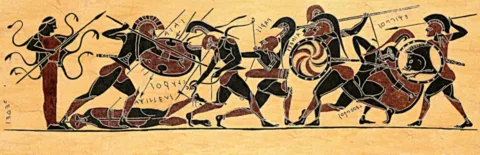
Achilles’ survival creates one of the strangest changes in the final stage of the war: Neoptolemus could arrive at Troy while his father is still alive.
In the surviving tradition, the Greeks are told that Troy cannot be taken without Neoptolemus. Odysseus and Phoenix bring him from Scyros, and after Achilles’ death he receives his father’s armor before entering battle.
If Achilles is still alive, that sequence changes immediately. Neoptolemus would still matter because the prophecy concerns his presence, not his father’s death. But he would no longer arrive as Achilles’ replacement.
Instead, the Greeks could have both generations fighting at the same time: Achilles as the established champion and Neoptolemus as the young warrior whose arrival is still required by prophecy.
That would strengthen the Greek side, but it would also alter Neoptolemus’ role. He enters the traditional story by inheriting Achilles’ weapons and reputation. With Achilles alive, he would have to build his own identity beside a father who still dominates the battlefield.
Would Odysseus Still Be Essential?
Yes. Achilles surviving would strengthen the Greek army, but it would not make Odysseus unnecessary.
In the later tradition, several steps toward Troy’s fall depend on intelligence and deception rather than battlefield strength. Odysseus helps obtain information from Helenus, brings Neoptolemus into the war, takes part in the theft of the Palladium, and is closely tied to the plan involving the Wooden Horse.
Achilles could dominate open combat, but those tasks require a different kind of skill.
That creates a more interesting balance between the two heroes. Achilles remains the Greeks’ greatest fighter, while Odysseus still drives many of the decisions that make the final capture of Troy possible.
Their roles would overlap less than modern retellings sometimes suggest. Achilles surviving would not replace cunning with strength. It would give the Greeks both at the same time.
Would Paris Still Die?
Probably. Achilles surviving does not remove the later tradition in which Philoctetes kills Paris with the bow of Heracles.
That means Paris could fail to kill Achilles and still meet essentially the same fate. His death depends on Philoctetes’ return to the war, not on Achilles being dead.
What would change is the balance of the final campaign. Paris would face a Greek army that now includes Achilles as well as Philoctetes, Ajax, and eventually Neoptolemus.
So there is no strong reason to rewrite Paris’ fate completely. His failed attack on Achilles would be a major divergence, but the chain of events leading to his own death could still continue much as it does in the traditional story.
Would Achilles Change the Sack of Troy?
Very likely, but not in a simple way.
If Achilles survives long enough to take part in Troy’s final capture, the Greeks enter the city with their strongest warrior still alive. That could change who leads the fighting once the defenses collapse.
But there is no solid reason to assume Achilles simply takes over the roles traditionally given to other heroes. Neoptolemus is closely associated with the deaths of Priam and Astyanax in later traditions, while Odysseus remains central to the strategy that gets the Greeks inside the city.
Achilles’ presence would probably make the sack more decisive militarily, but the individual fates of Troy’s royal family would remain uncertain.
This is one of the points where the scenario becomes less predictable. Achilles surviving clearly changes the balance of force, but it does not give us a reliable basis for rewriting every event inside the fallen city.
What Would Achilles Do After the War?
This is where the surviving tradition gives us the least guidance, because Achilles normally dies before Troy falls.
The most conservative possibility is that he returns to Phthia, where his father Peleus still belongs to the royal line and Achilles himself has a legitimate place in the succession. There is no strong mythological basis for turning him into a conqueror who builds a new empire after Troy.
His survival would instead force him into a life his myth normally avoids: living with the consequences of war after the glory has been won.
That possibility becomes especially interesting beside the Odyssey, where the dead Achilles famously suggests that life itself is worth more than ruling among the dead. A surviving Achilles would therefore change not only the ending of his story, but the meaning of the choice between long life and immortal fame that defines him from the beginning.
Would Achilles Still Become the Same Legendary Hero?
Probably not.
Achilles’ death before Troy falls is part of what makes his legend so powerful. He becomes the warrior who chooses glory even though he knows it will cost him his life, and later tradition remembers him not just as a fighter, but as a heroic figure whose death, tomb, and cult mattered long after the war.
If he survives, that image changes. He would still be the greatest Greek warrior at Troy, but he would no longer be defined by a brilliant life cut short at its peak.
His legend might become closer to that of a victorious king or veteran hero rather than a doomed champion.
That would not make Achilles less important, but it would change the emotional core of his myth. The hero remembered for choosing glory over life would become the man who somehow received both.
Would the Trojan Horse Still Be Needed?
Most likely, yes.
Achilles’ survival would make the Greeks stronger in open battle, but Troy’s walls remain the central military problem. The later tradition does not suggest that even Achilles could simply break through them by force.
The Wooden Horse works because it solves a problem strength alone cannot: getting Greek warriors inside the city. As long as Troy remains fortified, Odysseus’ strategy still has a clear purpose.
Achilles could therefore survive and still take part in a version of the same final deception. The difference is what happens afterward. Once the Greeks are inside, they would have Achilles, Ajax, Neoptolemus, and the other surviving champions available for the final assault.
His survival changes the force available to the Greeks, but probably not the need to outwit Troy’s defenses.
Would Achilles and Agamemnon Clash Again?
Possibly, but survival does not mean their old conflict would simply restart.
The Iliad makes the dispute between Achilles and Agamemnon central to the Greek crisis, yet the two are formally reconciled before Achilles returns to battle. By the final stage of the war, their immediate quarrel over Briseis has been settled.
That does not make their relationship easy. Achilles remains fiercely independent, while Agamemnon still holds the position of commander among the Greek kings. With Troy close to defeat, disagreements over leadership, rewards, or the treatment of captives would remain possible.
But there is little basis for assuming another major rupture. Achilles has already learned what withdrawing from the army can cost, and Agamemnon has already seen how dangerous it is to alienate him.
Their alliance would probably remain tense, but functional, until Troy falls.
Could Achilles Return Home Safely?
There is no surviving tradition that tells us what Achilles’ homecoming would look like, because his myth normally ends before that question arises.
Unlike Agamemnon, Ajax the Lesser, or Odysseus, Achilles is not given a developed nostos, a return journey from Troy. That means there is no strong basis for inventing a storm, divine punishment, or another fatal adventure simply to preserve his traditional early death.
If he survives the sack and remains on good terms with the gods, the simplest outcome is also the most plausible: he returns to Phthia.
That would create something Greek myth rarely allows Achilles to become, a warrior who lives beyond the moment of his greatest fame and has to return from epic glory to ordinary kingship, family, and age.
Would Achilles Still Be Fated to Die Young?
That is the hardest part of the scenario, because Achilles’ short life is not just an accident in the myth. It is tied to the choice that defines him.
In the Iliad, Achilles says that two fates lie before him: return home and live a long life without lasting glory, or remain at Troy and win immortal fame at the cost of an early death.
If he stays at Troy and somehow survives the death expected there, the tradition gives us no second fixed moment when fate must “correct” itself by killing him later.
So there is no good reason to invent another immediate death. In this scenario, surviving Troy means Achilles has escaped the outcome attached to his original choice.
That is precisely what makes the alternate version so significant: Achilles would keep the glory of Troy while gaining the life he believed he had sacrificed.
What Is the Most Likely Outcome?
The most plausible version of this alternate myth is not one where Achilles changes every event at Troy.
His survival would keep Ajax alive longer, strengthen the Greek army, and allow Achilles to fight beside Neoptolemus during the final stage of the war. But Odysseus, Philoctetes, the Palladium, and the Wooden Horse would probably remain important because they solve problems Achilles cannot overcome through combat alone.
Troy would still fall, perhaps with less resistance once the Greeks enter the city.
The greatest change would come afterward. Achilles could return to Phthia carrying the fame he believed required his death. Instead of becoming the perfect image of a warrior cut down at his peak, he would have to live beyond the moment that made him legendary.
That changes Achilles more profoundly than simply adding another Greek hero to the sack of Troy.
How Likely Are These Outcomes?
- Ajax does not compete for Achilles’ armor at this point, removing the immediate cause of his traditional downfall.
- Achilles remains available during the final phase of the war.
- Odysseus still plays an essential role because strength alone cannot solve every problem facing the Greeks.
Plausible
- Achilles and Neoptolemus fight at Troy at the same time.
- The Greeks face less resistance during the final campaign because Achilles and Ajax are both still alive.
- Achilles survives the sack and eventually returns to Phthia.
Speculative
- Achilles changes the fate of Priam, Astyanax, or other members of Troy’s royal family.
- He begins another major conflict with Agamemnon before the war ends.
- He becomes a great conqueror or builds a new empire after returning from Troy.
These levels reflect how directly each outcome follows from the surviving mythological tradition. The farther the scenario moves beyond events tied to Achilles’ death, the more uncertain the reconstruction becomes.
Plausible but Uncertain
Some consequences of Achilles’ survival are possible, but the surviving myths do not give enough evidence to treat them as likely.
He might share command more directly with Agamemnon, influence how captives are treated after Troy falls, or change Neoptolemus’ later development by remaining alive as his father. His presence could also alter which Greek heroes receive particular honors or spoils after the victory.
But these outcomes depend more on interpretation than on clear mythological chains of cause and effect.
The safer conclusion is that Achilles’ survival would certainly change the balance among the Greek heroes, while the political and personal consequences after Troy would remain much harder to predict.
Frequently Asked Questions
Did Achilles survive the Trojan War in Greek mythology?
No. In the traditional myth, Achilles dies before Troy falls. This article explores an alternate scenario in which the attack that should kill him is not fatal.
Would Troy have fallen faster if Achilles had survived?
Probably, but not automatically. Achilles would strengthen the Greek army, yet later traditions still make Troy’s fall depend on other heroes, prophecies, and the Wooden Horse.
Would Ajax still have died?
His traditional downfall is closely tied to the contest for Achilles’ armor. If Achilles survives, that immediate chain of events disappears, making Ajax’s death far less likely at that point.
Would Neoptolemus still come to Troy?
Yes. Later tradition treats Neoptolemus’ presence as one of the conditions for Troy’s fall, so he could still arrive even if Achilles were alive.
Would Achilles still become a legendary hero if he lived?
Yes, but his legend would change. He would still be the greatest Greek warrior at Troy, yet he would no longer be defined by a glorious life cut short before the war ended.
Primary Texts & Academic Studies
Homer, The Iliad
The essential primary source for Achilles’ character, his choice between a long life and lasting glory, his conflict with Agamemnon, the death of Hector, and the expectation that Achilles himself will die before Troy falls.
Homer, The Odyssey
Especially important for Achilles after death, including his encounter with Odysseus in the Underworld and later traditions surrounding his funeral and posthumous reputation.
M. L. West, Greek Epic Fragments: From the Seventh to the Fifth Centuries BC
Harvard University Press, Loeb Classical Library 497, 2003.
A major scholarly edition and translation of surviving fragments from the Greek Epic Cycle, including traditions that continue the Trojan War beyond the events narrated in the Iliad.
Apollodorus, The Library: Epitome
An important ancient source for later stages of the Trojan War, including Achilles’ death, Ajax and the contest for the armor, Philoctetes, Neoptolemus, the Palladium, and events leading toward the fall of Troy.
Jonathan S. Burgess, The Death and Afterlife of Achilles
Johns Hopkins University Press, 2009.
A specialized academic study of Achilles’ death traditions, destiny, burial, afterlife, and cult, drawing on literary, archaeological, and visual evidence beyond Homer.
Jonathan S. Burgess, The Tradition of the Trojan War in Homer and the Epic Cycle
Johns Hopkins University Press, 2001.
A major study of how the Iliad, Odyssey, and lost poems of the Epic Cycle preserve different parts of the wider Trojan War tradition.
Jenny Strauss Clay, “Achilles Inaugurates His Cult”
Greece & Rome, Vol. 72, Issue 1, 2025, pp. 38–64.
A recent academic study examining Achilles, Patroclus, funerary ritual, and the relationship between Homeric epic and the later cult of Achilles.
Copyright & Use
Written by H. Moses for
History & Myths.
This article is original content created for History & Myths.
Reproduction, republication, or full redistribution of this content is not permitted
without prior permission.
Short quotations may be used for educational, academic, or commentary purposes
with clear attribution and a link back to the original article.