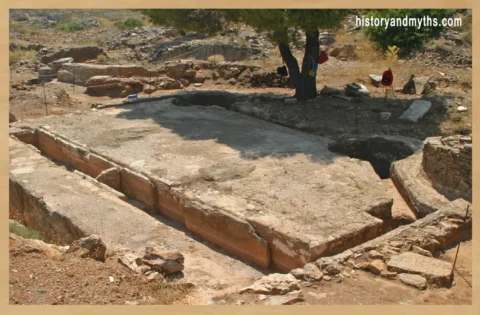
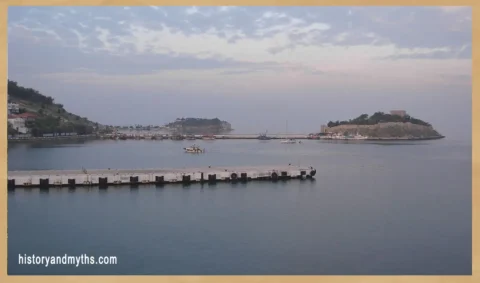
Ancient Greek Hero Cults: Why Greeks Worshipped Dead Heroes
Greek hero cults were not about admiring legendary figures—they were organized systems of worship centered on powerful dead individuals tied to specific places. Unlike gods, heroes were believed to exist beneath the ground, usually at a tomb, where rituals were performed to secure protection, favor, or influence over the local community.
In practice, these cults operated through site-based rituals. Offerings and libations were made directly at a burial site, not in a distant temple. The location mattered as much as the figure itself. A hero’s power was not universal—it was anchored to the place where they were buried, making each cult local rather than widespread.
People turned to heroes for reasons that were practical, not abstract. A hero could protect a city, legitimize its identity, or reinforce its connection to a shared past. The relationship was not about belief alone—it was about maintaining a link between the living community and a figure whose presence was thought to remain active in that specific location.
To understand Greek religion at this level, the key question is not “who were the heroes?” but “how did their presence, tied to a place, become part of a working system that served the needs of a community?”
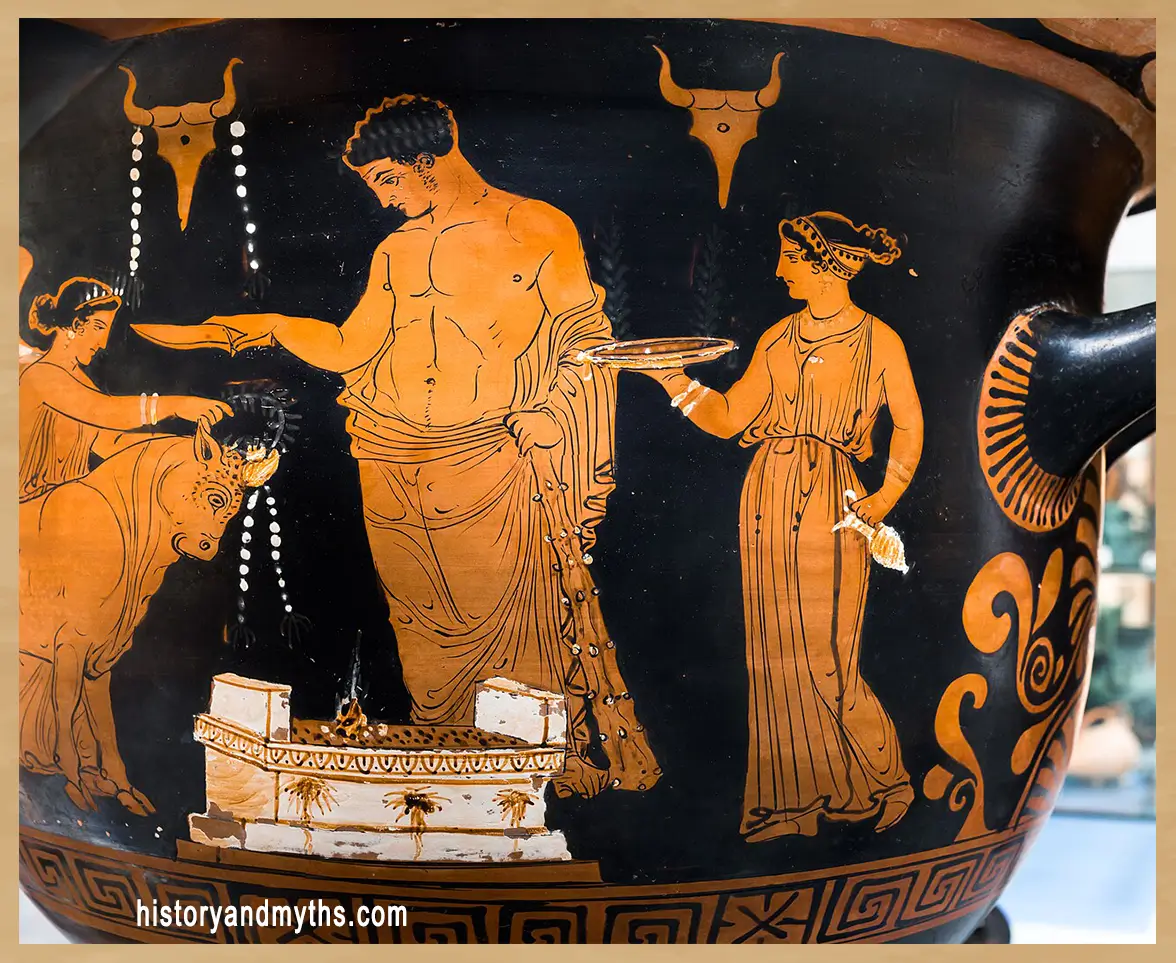
What a Hero Cult Really Was
A Greek hero cult was not a celebration of heroic stories. It was a localized system of worship centered on a dead individual whose presence was believed to remain active at a specific site, usually a tomb. The focus was not on the life of the hero, but on their continued influence after death.
This changes how the system works. Unlike gods, who were approached through temples and broad rituals, heroes were approached through the ground itself. Offerings were directed downward—libations poured into the earth, food placed at the burial site—because the hero was understood to exist below, not above. The ritual was shaped by this spatial logic.
The cult also depended on location, not just identity. A hero had power because they were tied to a particular place. The same figure could be honored differently—or not at all—outside that context. This made hero cults inherently local. They did not scale across the Greek world in the same way as major gods.
Another key point is that hero cults were functional, not narrative. The myths associated with a hero mattered less than what the cult produced in practice—protection, legitimacy, or continuity for the community. The ritual maintained a relationship that was expected to have real effects, not just symbolic meaning.
A hero cult, then, was not about remembering the past. It was about activating the presence of a dead figure within a defined place, using ritual to maintain a connection that served the needs of the living.
| Aspect | Hero Cults | God Worship |
|---|---|---|
| Nature | Dead, buried individuals | Immortal, divine beings |
| Location | Fixed to a tomb or site | Temples across regions |
| Ritual Direction | Downward (into the earth) | Upward (altar, sky) |
| Scale | Local and limited | Widespread |
| Function | Protection, identity, local power | Order, nature, universal roles |
| Authority | Place-based and specific | General and broad |
Heroes vs Gods (Key Structural Difference)
The difference between heroes and gods is not about importance—it is about how each one functions within the system. Both receive rituals, but the structure behind those rituals is fundamentally different.
Gods operate at a broader level. They are not tied to a single location and can be worshipped across different cities through temples and standardized practices. Their presence is understood as distant and elevated, and rituals are directed upward—toward the altar and sky.
Heroes, by contrast, are place-bound and underground. Their power is linked to where they are buried, and rituals are directed downward, into the earth. A hero’s influence does not extend automatically beyond that location. It must be accessed at the site itself, usually a tomb or a marked burial space.
This difference shapes the ritual form. Offerings to gods are often burned or displayed, marking a separation between the divine and the human. Hero rituals, on the other hand, tend to involve direct deposition—liquids poured, food placed, or materials left at the site—reflecting a closer, more immediate relationship with the dead.
Authority also works differently. Gods provide broad frameworks—protection, order, natural forces—while heroes provide specific, localized effects. A community might rely on a god for general stability, but on a hero for direct protection of a city, land, or group identity.
The result is two parallel systems. Gods structure religion at a wide scale, while heroes operate at the level of place and memory, creating a more immediate connection between a community and a specific figure tied to its ground.
Why Greeks Worshipped Heroes
Worshipping heroes was not about honoring the past—it was about using a known figure to secure practical outcomes in the present. A hero was valuable because he was believed to remain active in a specific place, capable of influencing what happened there.
The first function was protection. Communities treated heroes as guardians tied to their land. Because the hero was believed to exist beneath the ground, his presence created a form of localized defense—not abstract protection, but influence over what affected that specific area.
The second function was identity. A hero connected a community to a shared origin or story. This was not just symbolic. It created a recognizable link between people and place, allowing the community to define itself through a figure embedded in its landscape. The cult reinforced that connection through repeated ritual.
Another key factor was continuity. Heroes represented a stable point in time that did not change. By maintaining rituals at the same site, communities created a sense of ongoing presence, where the past remained active rather than distant. This helped anchor social order across generations.
There was also a practical dimension of legitimacy. Associating a city or group with a powerful hero could justify claims—over land, status, or authority. The hero’s presence acted as a recognized reference point that supported those claims within the accepted religious framework.
The common thread is function. Heroes were worshipped not because they were admired, but because they were useful within a system that linked place, memory, and influence.
The Role of the Tomb (Core Mechanism)
The tomb was not just where the hero was buried—it was the center of the entire cult. Without it, the system did not function. The hero’s power was not abstract or portable; it was fixed to the physical location of the burial site.
This is what made hero cults different from other forms of worship. Rituals were not directed toward a distant divine presence, but toward a specific point in the ground. Offerings were placed at or into the tomb, and libations were poured directly into the earth. The act only worked because it was performed at that exact site.
The tomb also defined access. You could not replicate the ritual elsewhere and expect the same effect. The hero’s influence was tied to proximity, which meant the community controlling the site effectively controlled the relationship. This turned the tomb into more than a religious space—it became a localized center of influence.
Another important function was continuity. The physical presence of the tomb ensured that the cult remained stable over time. Even as generations changed, the site stayed the same, allowing rituals to be repeated in a consistent and recognizable way. The hero’s presence was maintained through the persistence of the location.
In practical terms, the tomb acted as the mechanism that made everything else possible. It anchored the hero to the land, fixed the ritual to a place, and ensured that the relationship between the community and the hero remained stable, local, and repeatable.
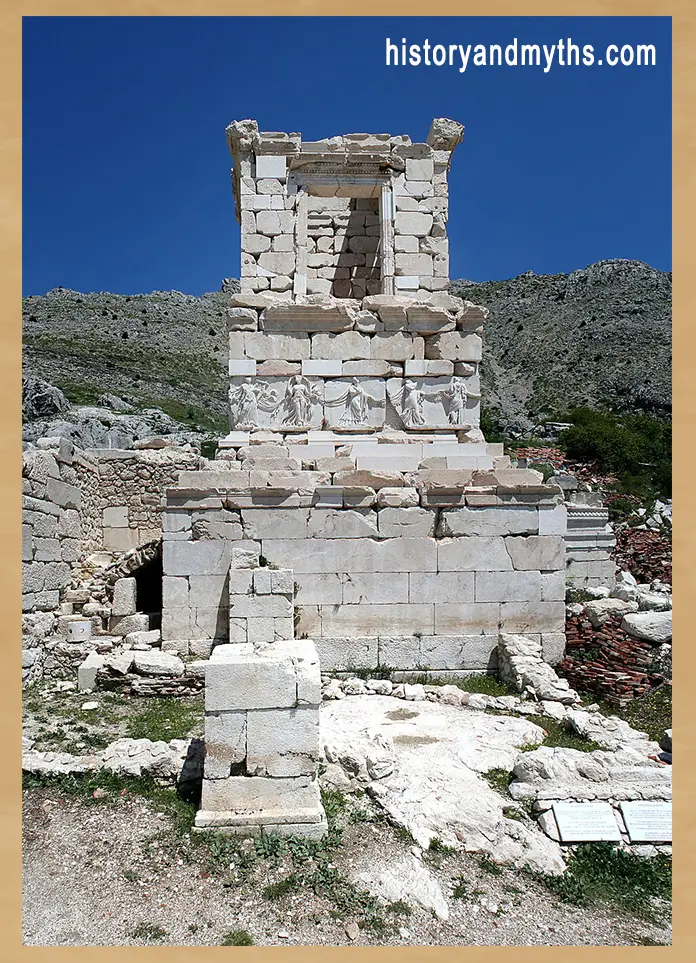
System Insight — Hero Cults Were Place-Based Power Systems
- Heroes were worshipped at tombs, not temples
- Power was tied to a specific location
- Rituals activated a local, ongoing presence
- The cult reinforced identity and territorial claims
- Memory was transformed into a form of influence
© historyandmyths.com — Educational use
How Hero Cults Worked in Practice
Hero cults operated through simple but fixed rituals performed at a specific site. The structure did not vary much because its effectiveness depended on repetition and location, not on complexity.
1-Approach to the Site
The process began at the tomb or designated location. This step was essential—the ritual only made sense in direct connection with the burial place. There was no substitute location and no portable version of the practice.
2-Offerings and Libations
Participants brought offerings suited to the context—liquids, food, or other materials—and directed them toward the ground. Libations were poured into the earth, and items were placed at the site. The logic was consistent: the offering moved downward, toward the hero’s domain.
3-Ritual Framing
The act was performed within a recognized structure—gestures, words, or sequence that marked it as valid. This framing mattered because it distinguished the ritual from a simple deposit of goods. It confirmed that the act followed accepted practice.
4-Completion and Withdrawal
Unlike many rituals directed to gods, hero cult practices did not revolve around shared consumption. The offering was left at the site, completing the exchange without redistribution. The value remained with the hero, reinforcing the idea that the act was directed toward a presence below the ground.
The key point is that hero cults did not require elaborate systems. They relied on location, repetition, and direct offering, creating a stable pattern that could be maintained over time without needing expansion or central control.
Hero Cults as Local Power Systems
Hero cults did not just express belief—they organized influence at the level of the community. Because each cult was tied to a specific site, control over that site translated into control over a recognized source of legitimacy.
The first layer is territorial authority. A hero linked to a place could be used to reinforce claims over that land. The presence of the cult signaled that the community’s relationship with the site was not recent or arbitrary, but anchored in a figure embedded in the ground. This made the cult a practical tool in defining and defending local boundaries.
The second layer is political legitimacy. Associating decisions or institutions with a hero provided a form of validation that did not depend on argument alone. The hero’s established presence functioned as a reference point accepted by the community, allowing leaders to align actions with something already recognized.
Control also worked through access and maintenance. The group responsible for managing the site—organizing rituals, maintaining the space, and preserving the connection—held influence over how the cult functioned. This did not create a centralized authority, but it did establish localized control tied to a specific place.
Another important factor is continuity under change. As political structures shifted, the hero cult remained stable because it was tied to a fixed location and repeated practice. This made it a reliable element within a changing system, capable of supporting new arrangements without losing its recognized status.
The result is that hero cults operated as more than religious practices. They became embedded mechanisms of local power, where memory, place, and ritual combined to support authority without requiring a centralized institution.
Famous Examples (Used as Case Studies, Not Stories)
Examples matter only if they show how the system operates in real contexts. The same structure appears across different figures: a tomb or site, repeated rituals, and a community using that connection for specific outcomes.
Achilles (Tomb-based influence)
The cult of Achilles illustrates how a hero’s power remained tied to a burial site. Rituals performed at his tomb were not about retelling his story, but about activating his presence in that location. The effect was local and situational—linked to those who approached the site and followed the established practice.
Theseus (Civic identity)
Theseus represents a different function. His cult was integrated into the identity of a city, reinforcing a shared origin and continuity. The rituals did not just maintain a connection to a figure; they supported how the community defined itself, using the hero as a stable reference point.
Heracles (Boundary case)
Heracles shows how the system could stretch. He appears both as a hero and as a figure with wider recognition. In practice, his cult demonstrates how local worship could expand in scope, while still relying on specific sites and repeated ritual. Even when influence widened, the structure remained grounded in place-based practice.
Across these cases, the pattern is consistent. The hero is not important because of the story alone, but because of how the cult uses that figure within a defined location. The examples do not change the system—they confirm it.
Limits of Hero Worship
Hero cults were effective within their context, but they were inherently limited systems. Their influence did not extend automatically beyond the place, the community, or the structure that sustained them.
The first limit is scale. A hero’s power was tied to a specific location, usually a tomb. This meant the cult could not expand freely across regions. Outside that site, the connection weakened or disappeared. Unlike gods, heroes did not operate on a wide, shared level.
The second limit is recognition. Not every figure classified as a “hero” had an active cult. The existence of a story did not guarantee worship. A cult required local acceptance, maintenance, and repetition. Without those, the system did not form.
Another constraint is dependence on continuity. Hero cults relied on ongoing ritual at a fixed site. If the site was neglected, lost, or no longer maintained, the connection could fade. The system did not sustain itself automatically—it required consistent practice.
There is also a limit in authority. While hero cults could support local identity or legitimacy, they did not create centralized control or universal influence. Their power remained bounded by the community that maintained them, not transferable to a broader system.
These limits are not weaknesses—they define how the system works. Hero cults were designed to operate locally, consistently, and within clear boundaries, making them stable but not expansive.
- Hero cults focused on dead individuals tied to specific places
- The tomb was the central point of ritual activity
- Heroes operated locally, unlike gods
- Rituals were directed into the ground, not upward
- Hero cults reinforced identity and community structure
- They functioned as localized systems of influence
- Their power depended on continuous ritual and site control
Frequently Asked Questions
What is a Greek hero cult?
A system of worship centered on a dead hero believed to remain active at a specific burial site.
How is a hero different from a god in Greek religion?
Heroes are dead and tied to a place, while gods are immortal and worshipped across regions.
Why did Greeks worship heroes?
For protection, identity, and maintaining a connection between community and place.
Where did hero cult rituals take place?
At tombs or burial sites associated with the hero.
Did all heroes have cults?
No. Only certain heroes were worshipped, depending on local recognition and tradition.
What was the purpose of hero cults?
To maintain a functional relationship between a community and a powerful dead figure tied to its land.
Were hero cults widespread?
No. They were local systems tied to specific places and communities.
Sources & Rights
- Burkert, Walter. Greek Religion: Archaic and Classical. Cambridge, MA: Harvard University Press, 1985.
- Ekroth, Gunnel. The Sacrificial Rituals of Greek Hero-Cults. Liège: Centre International d’Étude de la Religion Grecque Antique, 2002.
- Ekroth, Gunnel. “Heroes and Hero-Cults.” In A Companion to Greek Religion, edited by Daniel Ogden. Malden, MA: Blackwell Publishing, 2007.
- Antonaccio, Carla M. An Archaeology of Ancestors: Tomb Cult and Hero Cult in Early Greece. Lanham: Rowman & Littlefield, 1995.
- Coldstream, J. N. Geometric Greece: 900–700 BC. London: Routledge, 2003.
- Snodgrass, Anthony. Archaeology and the Emergence of Greece. Ithaca: Cornell University Press, 2006.
- Parker, Robert. On Greek Religion. Ithaca: Cornell University Press, 2011.
- Price, Simon. Religions of the Ancient Greeks. Cambridge: Cambridge University Press, 1999.
- Mikalson, Jon D. Ancient Greek Religion. Malden, MA: Wiley-Blackwell, 2005.
- Bremmer, Jan N. Greek Religion. Oxford: Oxford University Press, 1994.
- Kindt, Julia. Rethinking Greek Religion. Cambridge: Cambridge University Press, 2012.
- Versnel, H. S. Coping with the Gods: Wayward Readings in Greek Theology. Leiden: Brill, 2011.
- de Polignac, François. Cults, Territory, and the Origins of the Greek City-State. Chicago: University of Chicago Press, 1995.
- Osborne, Robin. Greece in the Making: 1200–479 BC. London: Routledge, 1996.
- Cartledge, Paul. Ancient Greece: A Very Short Introduction. Oxford: Oxford University Press, 2011.
- Hornblower, Simon, and Antony Spawforth, eds. The Oxford Classical Dictionary. 4th ed. Oxford: Oxford University Press, 2012.
- Ogden, Daniel, ed. A Companion to Greek Religion. Malden, MA: Blackwell Publishing, 2007.
- Rutherford, Ian. State Pilgrims and Sacred Observers in Ancient Greece. Cambridge: Cambridge University Press, 2013.
- Gehrke, Hans-Joachim. History of the Archaic Greek World. Malden, MA: Wiley-Blackwell, 2010.
- Lewis, David M., et al., eds. The Cambridge Ancient History, Vol. 5: The Fifth Century BC. Cambridge: Cambridge University Press, 1992.
- Boardman, John. Greek Sculpture: The Archaic Period. London: Thames & Hudson, 1978.
- Whitley, James. The Archaeology of Ancient Greece. Cambridge: Cambridge University Press, 2001.
- Beard, Mary, John North, and Simon Price. Religions of Rome. Cambridge: Cambridge University Press, 1998.
- Assmann, Jan. The Search for God in Ancient Egypt. Ithaca: Cornell University Press, 2001.
- Teeter, Emily. Religion and Ritual in Ancient Egypt. Cambridge: Cambridge University Press, 2011.
- Quirke, Stephen. Ancient Egyptian Religion. London: British Museum Press, 1992.