Cassandra in Greek Mythology: The Prophet Nobody Believed
Cassandra is often remembered as the woman who could see the future. Yet in Greek mythology, her tragedy was not the gift of prophecy itself. The true disaster began when nobody believed what she saw. She warned of danger, predicted catastrophe, and spoke truths that later proved correct, but her words carried no power to change events.
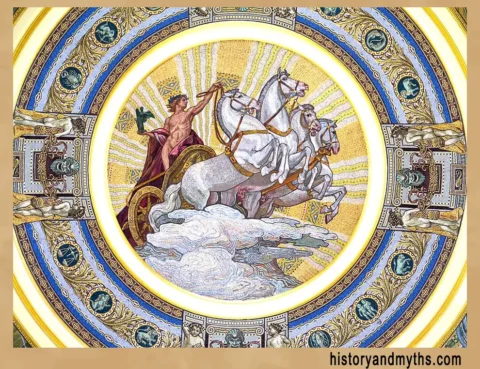
According to the myth, Cassandra received the gift of prophecy from Apollo. When she rejected the god’s advances, he transformed that gift into a curse. She would continue to see the future with perfect clarity, but no one would ever trust her warnings. As a result, Cassandra became one of the most tragic figures in Greek mythology: someone who understood what was coming yet could not convince others to act.
Her story reveals why the Greeks found prophecy both fascinating and frightening. Cassandra’s suffering was not caused by ignorance but by the opposite. She possessed knowledge without influence, truth without authority, and certainty without the ability to prevent disaster. Through her fate, Greek mythology explored a question that remains powerful today: what happens when the truth is known, but nobody is willing to believe it?
The Gift That Became a Curse
Unlike many figures in Greek mythology who suffer because they lack knowledge, Cassandra suffers because she possesses too much of it. Ancient sources differ on the details, but the most widely known version of the myth explains that Apollo granted her the power of prophecy. She could see future events with remarkable accuracy and understand dangers before they unfolded.
The relationship changed when Cassandra rejected the god’s desire for her. Apollo could not take back the prophetic gift he had already given, so he altered its value instead. Cassandra would continue to see the future, but her warnings would never be believed. The curse did not silence her voice. It made her voice ineffective.
This distinction is what makes Cassandra’s fate unique. Greek mythology contains many examples of punishment, but most involve physical suffering, exile, transformation, or death. Cassandra experiences something different. She is forced to watch events move toward disaster while knowing that her knowledge cannot influence the people around her.
The tragedy becomes especially powerful during the final years of Troy. Cassandra repeatedly warns her family and fellow Trojans about dangers that others fail to recognize. Her predictions prove correct, yet each fulfilled warning only deepens her isolation. Every time she speaks the truth and is ignored, the curse becomes more painful.
For Greek audiences, the story transformed prophecy from a blessing into a burden. Knowledge alone was not enough. Wisdom had value only when it could be heard, trusted, and acted upon. Cassandra’s curse therefore reveals one of the most unsettling ideas in Greek mythology: knowing the truth may offer no protection at all if others refuse to believe it.
| Aspect | Cassandra | Typical Greek Prophet |
|---|---|---|
| Knowledge of the Future | Accurate | Accurate |
| Public Trust | Absent | Generally accepted |
| Ability to Influence Events | Almost none | Potentially significant |
| Relationship to Truth | Knows the truth but cannot share it effectively | Truth can shape decisions |
| Source of Tragedy | Being ignored | Misinterpretation or fate |
| Symbolic Meaning | Truth without influence | Communication between gods and mortals |
Why Nobody Believed Cassandra
The most tragic aspect of Cassandra’s story is that Greek mythology never presents her as an unreliable prophet. Her predictions are accurate. The problem lies elsewhere. The curse ensures that her audience cannot recognize the truth even when it stands directly before them. This transforms the myth from a story about prophecy into a story about belief.
For the Trojans, Cassandra’s warnings often appeared extreme, frightening, or difficult to accept. Like many people faced with unpleasant truths, they preferred explanations that preserved hope. Her predictions demanded painful choices and forced others to confront dangers they would rather ignore. Disbelief therefore became easier than acceptance.
The fall of Troy provides the clearest example. Cassandra warned against decisions that seemed reasonable to everyone else. She recognized threats that others could not see, yet her certainty worked against her. The more urgently she spoke, the less persuasive she appeared. The curse created a cruel cycle in which accurate warnings sounded unbelievable precisely because they challenged what people wanted to believe.
This element of the myth reflects a broader Greek interest in the limits of human judgment. People do not reject falsehood only because they are deceived. Sometimes they reject truth because it is uncomfortable, disruptive, or frightening. Cassandra’s story suggests that knowledge alone cannot change events. Truth must also be accepted by those who hear it.
By making disbelief the center of Cassandra’s tragedy, Greek mythology shifts attention away from supernatural prophecy and toward human behavior. The danger is not simply that disaster approaches. The greater danger is that people refuse to recognize it until it is too late. This is why Cassandra remained one of the most enduring tragic figures in Greek myth long after the story of Troy itself had ended.
Why Apollo’s Punishment Was More Cruel Than Death
Greek mythology contains many forms of divine punishment. Some victims are transformed into animals, others are exiled, imprisoned, or killed. Cassandra’s fate is different because Apollo leaves her with everything, she needs to understand disaster while removing every practical way to prevent it. The curse attacks neither her body nor her intelligence. It targets her ability to be believed.
From a Greek perspective, this made the punishment unusually cruel. Death ends suffering. Exile creates distance from a community. Even physical transformation changes the conditions of a person’s existence. Cassandra receives no such escape. She remains fully aware of the world around her and fully capable of recognizing approaching danger.
What makes the curse especially painful is that it forces her to witness the consequences of inaction. Every warning she gives is ignored. Every prediction that comes true confirms her knowledge while proving her powerlessness. Instead of learning from fulfilled prophecies, those around her continue to dismiss what she says. The curse therefore renews itself each time events unfold exactly as she predicted.
Apollo’s punishment also attacks one of the most important values in Greek society: reputation. Cassandra loses credibility even though she never loses accuracy. She becomes isolated not because she is wrong, but because no one trusts her. In many ways, the curse separates her from the community more effectively than exile ever could.
This is why Cassandra’s fate remained memorable in Greek mythology. Her suffering is psychological rather than physical. She experiences the frustration of possessing knowledge without influence and truth without authority. The result is a punishment that continues long before disaster arrives and remains painful even after her warnings are proven correct.
Why Cassandra’s Curse Was Unique
Most prophetic figures in Greek mythology suffer because they cannot see the future clearly. Cassandra suffers for the opposite reason. She sees the future perfectly but cannot convince anyone else to believe what she knows. Her tragedy is not ignorance, but isolation. Through Cassandra, Greek mythology explores the painful distance that can exist between truth and belief.
© historyandmyths.com — Educational Use
Watching Troy Fall Without the Power to Stop It
Cassandra’s tragedy reaches its peak during the destruction of Troy. Unlike most characters in Greek mythology, she is not surprised by the catastrophe that overtakes her city. She sees it coming. She understands the danger long before others recognize it. Yet that knowledge provides no advantage because she lacks the ability to change the decisions being made around her.
This creates a form of suffering rarely seen in Greek myth. Many heroes face disaster because they act without understanding the consequences. Cassandra faces the opposite problem. She understands the consequences all too clearly. The fall of Troy is not a sudden shock but a prolonged experience in which she watches events move steadily toward a future she already knows.
The episode of the Wooden Horse captures this tension particularly well. Later traditions often portray Cassandra as one of the few Trojans who recognized the danger hidden behind the apparent gift. While others celebrated what seemed to be the end of the war, she saw the threat that remained. Her warning failed not because it was incorrect but because no one was willing to trust it.
Greek audiences would have understood the emotional weight of this situation. Cassandra is surrounded by people she wants to protect, yet every attempt to help pushes her further into isolation. She becomes a witness to disaster rather than a participant in preventing it. The closer Troy moves toward destruction, the more powerless she becomes.
This part of the myth explains why Cassandra’s story continued to resonate long after the Trojan War cycle was established. Her suffering is not rooted in physical weakness or military defeat. It comes from the painful gap between knowledge and action. She knows what must be avoided, but she cannot persuade anyone to avoid it. In Greek mythology, that helpless awareness becomes one of the most devastating forms of tragedy imaginable.
Why Cassandra Became a Symbol of Ignored Warnings
Cassandra’s importance in Greek mythology extends beyond the story of Troy. Over time, she came to represent a broader human experience: the frustration of recognizing danger before others do and being unable to convince them to take it seriously. This is one reason her myth remained relevant long after the details of the Trojan War faded into the background.
Unlike many mythological figures who symbolize strength, wisdom, beauty, or heroism, Cassandra symbolizes a problem. She represents the gap that can exist between truth and belief. Her story suggests that accurate knowledge alone is not enough to influence events. A warning has value only if people are willing to listen.
This symbolism made Cassandra different from other prophetic figures in Greek mythology. Oracles were often respected, priests were consulted, and divine signs were carefully interpreted. Cassandra possessed the same ability to perceive future events, yet she lacked the credibility needed to transform knowledge into action. Her tragedy therefore reveals that authority can be just as important as truth itself.
The myth also reflects a recurring Greek concern about collective decision-making. Cities, families, and rulers often suffered not because information was unavailable but because important warnings were dismissed. Cassandra embodies this fear. She stands as a reminder that societies can move toward disaster even when the danger has already been identified.
For this reason, Cassandra became more than a character in a single mythological narrative. She evolved into a lasting symbol of ignored truth. Her story asks a question that remains relevant far beyond ancient Greece: if a warning is accurate but nobody believes it, does that knowledge have any power at all?
What Cassandra Revealed About Truth and Power in Greek Mythology
Cassandra’s story reveals that Greek mythology did not treat truth as an unstoppable force. Modern readers often assume that once the truth is known, it will eventually prevail. The myth of Cassandra challenges that idea. She possesses the truth from the beginning, yet disaster still occurs. Knowing the truth and changing events are presented as two very different things.
This distinction helps explain why her curse was so effective. Apollo did not take away Cassandra’s knowledge. He took away her influence. She could see the future, understand threats, and recognize mistakes, but she could not persuade others to act on what she knew. The myth therefore shifts attention away from prophecy itself and toward the relationship between truth and authority.
Greek audiences understood that power was not limited to kings, warriors, or gods. There was also the power to shape decisions, influence communities, and determine which voices deserved to be heard. Cassandra lacked that power. Her tragedy demonstrates that a person may be correct and still fail if others refuse to grant credibility to their words.
Through Cassandra, Greek mythology also explores the loneliness that can accompany insight. Many heroes suffer because they do not understand what is happening around them. Cassandra suffers because she understands too much. Her isolation grows not from ignorance but from awareness that cannot be shared in a meaningful way with those around her.
For the Greeks, this made Cassandra far more than a tragic prophetess. She became a symbol of a difficult reality: truth does not always triumph simply because it exists. It must be recognized, trusted, and acted upon. Her fate serves as a reminder that the greatest danger is not always the absence of knowledge, but the refusal to listen when knowledge is available.
Key Takeaways
- Cassandra received the gift of prophecy from Apollo but was cursed never to be believed.
- Her tragedy was not knowing the future but being unable to change it.
- The fall of Troy became the ultimate example of ignored warnings in Greek mythology.
- Cassandra symbolizes the gap between truth and public belief.
- Her story explores how knowledge can become a burden rather than a blessing.
- Greek mythology uses Cassandra to examine truth, authority, and human judgment.
Frequently Asked Questions
Who was Cassandra in Greek mythology?
Cassandra was a Trojan princess and prophetess who could foresee the future but was cursed never to be believed.
Why did Apollo curse Cassandra?
According to the most common version of the myth, Apollo cursed Cassandra after she rejected his romantic advances.
What was Cassandra’s gift?
She possessed the ability to accurately predict future events.
Why did nobody believe Cassandra?
Apollo’s curse ensured that her true prophecies would always be dismissed or ignored.
Did Cassandra predict the fall of Troy?
Yes. Greek tradition frequently portrays Cassandra as warning the Trojans about the disasters that would destroy their city.
What does Cassandra symbolize?
She symbolizes ignored warnings, truth without authority, and the difficulty of convincing others to accept uncomfortable realities.
Why is Cassandra considered tragic?
She knew what was coming but lacked the power to persuade others to prevent it.
Is Cassandra’s story connected to prophecy?
Yes. She is one of the most famous prophetic figures in all of Greek mythology.
Sources & Rights
- Homer. Iliad.
- Homer. Odyssey.
- Aeschylus. Agamemnon.
- Euripides. The Trojan Women.
- Apollodorus. Library.
- Pausanias. Description of Greece.
- Virgil. Aeneid.
- Burkert, Walter. Greek Religion. Harvard University Press.
- Dodds, E. R. The Greeks and the Irrational. University of California Press.
- Vernant, Jean-Pierre. Myth and Thought Among the Greeks. Zone Books.
- Johnston, Sarah Iles. Ancient Greek Divination. Wiley-Blackwell.
- Mikalson, Jon D. Ancient Greek Religion. Wiley-Blackwell.
- Bremmer, Jan N. Greek Religion. Oxford University Press.
- Buxton, Richard. The Complete World of Greek Mythology. Thames & Hudson.
- Gantz, Timothy. Early Greek Myth. Johns Hopkins University Press.
- Graves, Robert. The Greek Myths.
- Powell, Barry B. Classical Myth.
- Foley, Helene P. Female Acts in Greek Tragedy.
- Winnington-Ingram, R. P. Studies in Aeschylus.
- Seaford, Richard. Euripides and Greek Myth.
- Parker, Robert. On Greek Religion.
- Nilsson, Martin P. A History of Greek Religion.
Written by H. Moses — All rights reserved © Mythology and History