How Public Fountains Worked in Ancient Greek Cities
Public fountains in Ancient Greek cities functioned as organized water distribution points where residents collected water for drinking, cooking, washing, and daily household use. Most homes did not have direct running water, so cities depended on fountain houses connected to springs, channels, or reservoirs that supplied controlled public access to clean water.
These fountain systems worked through gravity-fed flow, stone basins, and carefully designed collection areas that allowed people to fill jars and transport water across urban neighborhoods. Beyond simple water access, public fountains became part of the daily rhythm of Greek city life by shaping movement, routines, and the practical operation of urban infrastructure.
Why Greek Cities Needed Public Fountains
Ancient Greek cities needed public fountains because reliable access to water was necessary for daily urban life, yet most households could not obtain water directly inside the home. Residents depended on shared collection points where clean water could be distributed efficiently across crowded neighborhoods.
Public fountains reduced the need for individuals to travel long distances to springs, rivers, or wells every day. By concentrating water access inside organized fountain houses, cities made it easier to support growing populations, maintain daily routines, and manage public resources more effectively.
Fountains also helped stabilize urban life during dry conditions or seasonal shortages by creating controlled distribution points connected to larger water systems. In many cities, they became essential infrastructure rather than decorative public monuments.
| Public Fountain System | How It Worked in Ancient Greek Cities |
|---|---|
| Purpose of Public Fountains | Fountain houses provided organized public access to water inside crowded urban areas. |
| Water Distribution | Water moved through gravity-fed channels connected to springs, reservoirs, or underground systems. |
| Daily Water Collection | Residents carried water in ceramic jars for cooking, drinking, washing, and household use. |
| Urban Management | Cities maintained fountains through cleaning, repairs, controlled access, and water supervision. |
| Urban Importance | Public fountains shaped daily movement, infrastructure, and urban organization inside Greek cities. |
How Fountain Houses Distributed Water
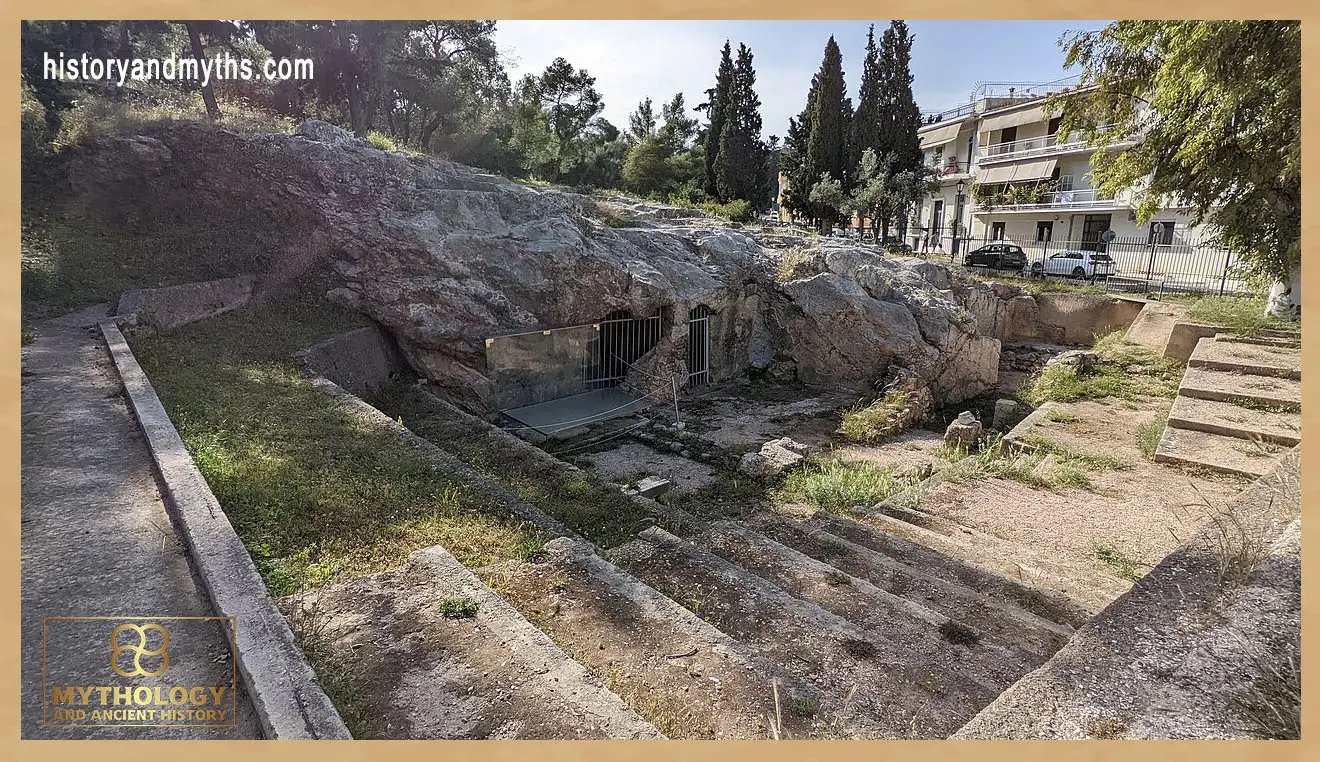
Greek fountain houses distributed water through channels that carried flow from springs, reservoirs, or underground systems into public collection basins. Most systems relied on gravity rather than mechanical pumping, allowing water to move naturally downhill into urban access points.
Stone spouts, basins, and drainage areas controlled how water entered and exited the structure. Continuous flow helped reduce stagnation while overflow channels redirected excess water away from the collection area to prevent flooding or waste around crowded public spaces.
Many fountain houses were designed to handle repeated daily use by large numbers of residents carrying jars and containers. Wide access areas and multiple outlets made it easier for people to collect water without disrupting the movement of others waiting nearby.
How People Collected Water in Daily Life
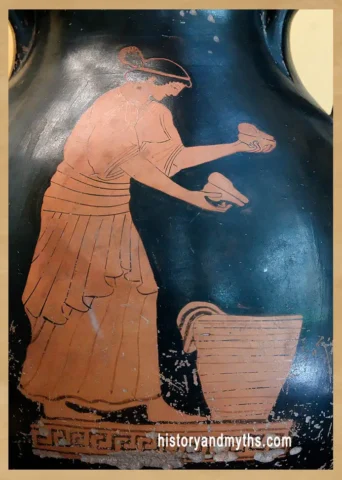
Residents usually carried water from public fountains in ceramic jars or containers that could be transported by hand, on the shoulder, or with support straps. Because water was needed constantly for cooking, drinking, washing, and household work, visiting the fountain became part of ordinary daily routine in many Greek cities.
Collection trips often happened several times a day depending on household size and distance from the fountain house. People living farther from major water points faced greater physical effort, especially in densely built urban districts where carrying heavy containers through narrow streets required time and coordination.
Public fountains also created predictable movement patterns inside the city. Residents traveled repeatedly between homes and water points, turning fountain areas into active spaces connected to the rhythm of everyday urban activity.
Why Public Fountains Were Essential in Greek Cities
Ancient Greek public fountains functioned as organized water distribution centers connected to daily urban life. Because most homes lacked direct running water, residents depended on fountain houses for drinking, cooking, washing, and household supply, making public water access one of the most important systems inside Greek cities.
© historyandmyths.com — Educational use
How Greek Cities Controlled Public Water Use
Greek cities treated public water as a managed urban resource rather than an unlimited supply available without regulation. Fountain houses required maintenance, supervision, and protection to keep water flowing safely through crowded public areas.
Workers and local authorities monitored channels, basins, and access points to remove debris, repair damaged stonework, and maintain steady circulation. Preventing contamination was especially important because large numbers of residents depended on the same shared water sources every day.
Cities also had to limit waste and uncontrolled use during periods of lower supply. Organized access points allowed officials to concentrate distribution within specific areas instead of relying entirely on scattered wells or uncontrolled collection from natural sources.
Why Public Fountains Became Important Urban Spaces
Public fountains gradually became fixed points within the structure of Greek cities because daily water collection brought constant movement into the same shared locations. People from different households crossed these spaces repeatedly while carrying out ordinary practical tasks tied to urban life.
Their location also mattered strategically. Fountain houses were often placed near roads, marketplaces, or populated districts where access could serve large numbers of residents efficiently. This made them part of the physical organization of the city rather than isolated utility structures.
As cities expanded, dependable public water access supported denser settlement and more stable daily activity. Fountain systems therefore helped Greek urban centers function more effectively by connecting infrastructure directly to everyday human movement and household needs.
Public fountains in Ancient Greece functioned as practical urban systems that distributed water through organized collection points connected to larger city infrastructure. They allowed residents to obtain reliable access to water for daily household use while helping cities manage supply more efficiently inside crowded urban environments.
Their importance extended beyond simple water delivery. Fountain houses shaped movement through the city, supported routine daily activity, and became essential parts of how Greek urban life operated on a practical level.
Key Takeaways
- Public fountains provided organized access to water in Ancient Greek cities.
- Most fountain houses operated through gravity-fed water systems connected to springs or reservoirs.
- Residents collected water daily in ceramic jars for household use.
- Fountain areas became regular urban gathering points because of repeated daily activity.
- Greek cities maintained fountain systems through repairs, cleaning, and controlled water management.
- Public fountains became essential infrastructure supporting urban growth and daily city life.
FAQ
How did public fountains work in Ancient Greece?
Public fountains distributed water through gravity-fed systems connected to springs, reservoirs, or underground channels.
Why were public fountains important in Greek cities?
Most homes lacked direct running water, so public fountains provided essential daily access to clean water.
Where did Greek fountain water come from?
Water usually came from natural springs, reservoirs, underground channels, or larger urban water systems.
How did people collect water in Ancient Greece?
Residents carried water in ceramic jars and containers for drinking, cooking, washing, and household use.
Did Greek cities maintain public fountains?
Yes. Cities repaired channels, cleaned basins, and supervised water flow to maintain reliable public access.
Were public fountains connected to urban planning?
Yes. Fountain houses were placed strategically near populated districts, roads, and important public spaces.
How did fountain houses prevent water waste?
Overflow channels redirected excess water away from collection areas to control flooding and reduce waste.
Did public fountains become social gathering places?
Yes. Repeated daily water collection brought constant movement and interaction into fountain areas.
Sources & Rights
- Camp, John McK. The Athenian Agora. London: Thames & Hudson, 1986.
- Longfellow, Brenda. Roman Imperialism and Civic Patronage: Form, Meaning, and Ideology in Monumental Fountain Complexes. Cambridge: Cambridge University Press, 2011.
- Owens, E. J. The City in the Greek and Roman World. London: Routledge, 1991.
- Hodge, A. Trevor. Roman Aqueducts & Water Supply. London: Duckworth, 2002.
- Wilson, Andrew. Water Management and Hydraulic Engineering in the Ancient World. Oxford: Oxford University Press, 2008.
- Wycherley, R. E. How the Greeks Built Cities. London: Macmillan, 1962.
- Pedley, John Griffiths. Sanctuaries and the Sacred in the Ancient Greek World. Cambridge: Cambridge University Press, 2005.
- Morris, Ian. Archaeology as Cultural History. Oxford: Blackwell, 2000.
- Waterfield, Robin. Athens: A History. London: Macmillan, 2004.
- Burford, Alison. Land and Labor in the Greek World. Baltimore: Johns Hopkins University Press, 1993.
- Hansen, Mogens Herman. An Inventory of Archaic and Classical Poleis. Oxford: Oxford University Press, 2004.
- Boardman, John. The Greeks Overseas. London: Thames & Hudson, 1999.
- Amemiya, Toru. Economy and Economics in Ancient Greece. London: Routledge, 2007.
- Vlassopoulos, Kostas. Unthinking the Greek Polis. Cambridge: Cambridge University Press, 2007.
- Foxhall, Lin. Studying Gender in Classical Antiquity. Cambridge: Cambridge University Press, 2013.
- Travlos, John. Pictorial Dictionary of Ancient Athens. London: Thames & Hudson, 1971.
- Tomlinson, R. A. Greek Architecture. London: Bristol Classical Press, 1991.
- Garland, Robert. Daily Life of the Ancient Greeks. Westport: Greenwood Press, 2009.
- Osborne, Robin. Greece in the Making. London: Routledge, 1996.
- Cartledge, Paul. Ancient Greece: A History in Eleven Cities. Oxford: Oxford University Press, 2009.
Written by H. Moses — All rights reserved © Mythology and History