How Water Supply Worked in Ancient Greek Cities
Ancient Greek cities survived through carefully managed water systems built around springs, wells, cisterns, fountains, and gravity-fed channels. Long before modern plumbing existed, cities such as Athens depended on public fountain houses, underground conduits, and daily water collection to supply homes, workshops, and public spaces. Access to clean water shaped urban life directly, since drinking, cooking, washing, religious activity, and craft production all depended on stable water supply. Managing water was therefore not a minor convenience in Greek cities, but one of the basic conditions that allowed dense urban life to function at all.
Why Water Was a Constant Urban Problem
Supplying water to a Greek city was never simple. Most urban centers developed in environments where reliable freshwater was limited, seasonal, or difficult to transport.
Many regions of Greece had rocky terrain, uneven rainfall, and dry summers that placed constant pressure on local water sources. A growing population increased demand further, especially in cities where households, workshops, fountains, baths, and religious spaces all depended on daily access to water.
Storage also mattered because rainfall could not be trusted year-round. Cities that failed to secure stable reserves faced shortages affecting food preparation, sanitation, craft production, and ordinary domestic life. Even a functioning well system could become unreliable during drought or heavy urban use.
Geography created additional challenges. Some cities sat far from major rivers, forcing residents to depend on springs, underground channels, or carefully maintained cistern networks instead of large natural water supplies.
Water management therefore became part of urban survival. Greek cities could not depend on abundance, so they developed systems designed to capture, store, protect, and distribute limited freshwater as efficiently as possible.
| Water Source or System | Main Purpose | How It Functioned |
|---|---|---|
| Natural Springs | Fresh drinking water | Fed fountain houses and channels |
| Wells | Local household supply | Accessed underground groundwater |
| Cisterns | Rainwater storage | Stored collected runoff underground |
| Aqueducts and Channels | Transporting water into cities | Used gravity-fed flow systems |
| Public Fountain Houses | Daily public distribution | Allowed residents to collect water manually |
Where Greek Cities Got Their Water
Greek cities relied on multiple water sources rather than depending on a single supply system.
Natural springs provided some of the cleanest and most reliable freshwater, especially in areas near hills or mountain slopes. Many cities built fountain houses around these springs to make collection easier for residents.
Wells supplied water directly from underground reserves. Private homes, courtyards, workshops, and public spaces often contained wells used for drinking, cooking, and daily household activity. Their usefulness depended heavily on local groundwater conditions.
Rainwater collection also played a major role. Houses and public buildings directed runoff into underground cisterns where water could be stored for later use during dry periods.
Some cities used nearby rivers or streams when geography allowed it, although flowing water was not always dependable throughout the year. Coastal settlements especially had to manage freshwater carefully because seawater contamination limited access to usable supplies.
Greek urban water systems therefore combined local geography, seasonal planning, and storage infrastructure rather than relying on one permanent source alone.
How Water Reached the City
Greek cities moved water through practical systems designed to carry freshwater from distant sources into populated areas with as little loss as possible.
Aqueducts and underground channels transported water from springs located outside the city, often using gravity rather than mechanical pumping. Builders carefully controlled slope and direction so water could continue flowing across long distances.
Terracotta pipes distributed water through sections of the urban network. Some systems supplied public fountains directly, while others connected to storage reservoirs or important civic buildings.
Underground construction protected parts of the supply from heat, contamination, and evaporation. Covered channels also reduced the risk of damage during heavy use or seasonal weather changes.
Not every neighborhood received equal access. Public fountains remained essential because many households lacked direct connections to organized supply systems, forcing residents to collect and carry water manually each day.
Greek water infrastructure depended less on technological complexity and more on careful engineering, terrain management, and continuous maintenance.
Public Fountains and Daily Water Collection
Public fountain houses stood at the center of daily water access in many Greek cities.
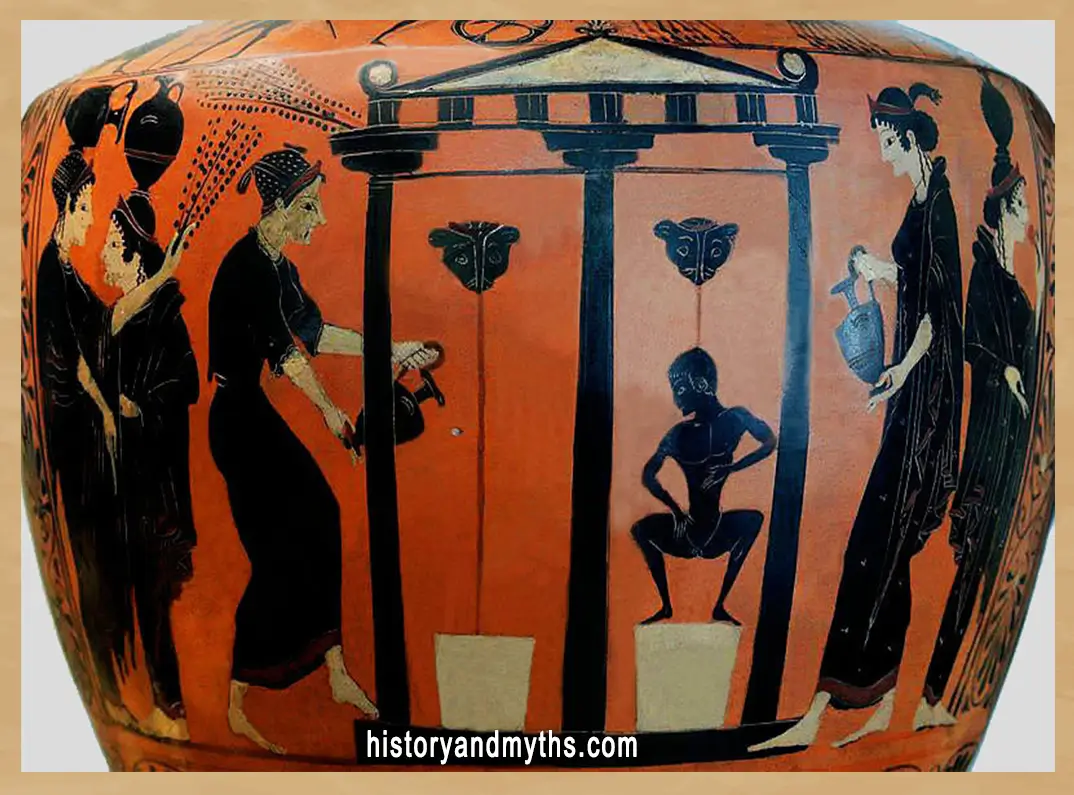
Residents visited these spaces constantly to collect water for drinking, cooking, washing, and household work. Women, servants, and enslaved workers often carried jars between homes and fountains several times each day, making water collection part of ordinary urban routine.
Fountain houses were designed to manage continuous public use. Stone basins, spouts, steps, and covered structures helped organize movement around the water source while protecting supply quality as much as possible.
These locations also became social spaces. Conversations, local news, and everyday interaction circulated naturally where people gathered repeatedly for essential tasks.
Access to nearby fountains affected daily convenience directly. Neighborhoods located farther from reliable water points faced greater physical labor and slower domestic routines, especially during crowded periods or dry seasons.
Water Storage Inside Homes
Most Greek households stored water because direct access to flowing supply was limited or unreliable.
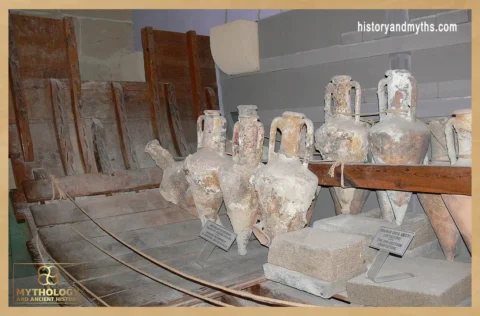
Large ceramic jars and underground cisterns allowed families to keep reserves for cooking, drinking, washing, and domestic work throughout the day. Homes with interior courtyards often collected rainwater through drainage systems feeding underground storage chambers.
Water management inside the household required planning. Families needed enough stored supply to handle daily use without making constant trips to public fountains, especially during busy periods or temporary shortages.
Storage conditions also affected water quality. Covered containers helped reduce contamination, evaporation, and dirt entering the supply, particularly during hot weather.
Household storage therefore functioned as an essential extension of the wider urban water system rather than as a separate domestic convenience.
- Greek cities relied on springs, wells, cisterns, and gravity-fed channels for freshwater
- Public fountain houses became central gathering points for daily water collection
- Water systems required continuous maintenance and urban supervision
- Households stored water carefully because direct supply remained limited
- Drought and seasonal shortages shaped urban planning across the Greek world
© historyandmyths.com — Educational use
Who Maintained the Water System
Greek water systems depended on continuous maintenance to remain usable inside crowded urban environments.
Workers repaired damaged pipes, cleared blocked channels, cleaned fountain areas, and monitored water flow from springs or storage points into the city. Without regular upkeep, underground conduits could collapse, leak, or become contaminated.
City authorities supervised parts of this infrastructure because water access affected public stability directly. Fountains, reservoirs, and distribution systems required organization similar to roads, markets, or defensive structures.
Maintenance also involved protecting water sources themselves. Springs and collection areas needed monitoring to reduce waste, pollution, or unauthorized diversion of supply.
Much of this labor remained physically demanding and largely invisible in elite Greek literature, yet urban life depended heavily on the workers who kept water moving through the city each day.
How Greek Cities Handled Drought and Shortages
Periods of drought placed immediate pressure on Greek cities because water reserves could decline quickly during long dry seasons.
Stored rainwater and underground cisterns became especially important when wells weakened or natural springs produced less flow than usual. Cities with larger storage capacity handled shortages more effectively than settlements depending on a single source.
Residents often adjusted daily consumption during difficult periods. Water collection became slower, public fountains grew more crowded, and households relied more carefully on stored reserves.
Some communities searched for additional supply beyond the city itself, using nearby springs or transporting water from surrounding areas when local access became unreliable.
Drought exposed how fragile urban systems could become without stable freshwater management, especially in densely populated cities dependent on continuous daily supply.
Water and Public Hygiene
Water systems supported basic urban cleanliness even though Greek cities did not operate with modern sanitation standards.
Residents used public fountains and stored household water for washing, cleaning tools, laundering clothing, and maintaining domestic spaces. Workshops also required water for activities such as pottery production, textile work, and metal processing.
Some cities contained public baths, although bathing culture in Greece remained smaller in scale than the later Roman model. Access to water still affected personal hygiene directly, especially in dense urban districts where large populations shared limited infrastructure.
Drainage mattered as well. Streets, courtyards, and public spaces needed channels allowing rainwater and waste liquids to move away from crowded areas rather than collecting inside the city.
Clean water therefore influenced far more than drinking supply. It shaped everyday urban health, labor, and domestic life across Greek settlements.
How Water Systems Differed Between Athens and Other Greek Cities
Greek cities managed water according to local geography, population size, and available natural resources rather than through one standardized model.
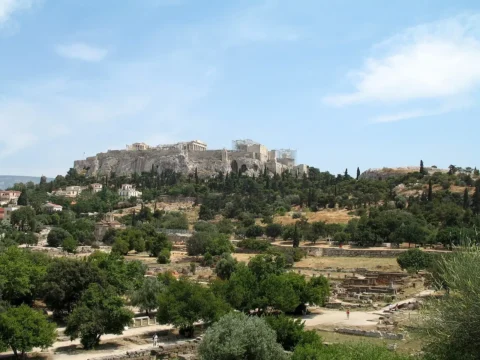
Athens developed extensive infrastructure because its large population placed heavy pressure on wells, fountains, and imported supply routes. Underground conduits, cisterns, and public fountain houses became essential parts of the city’s daily operation.
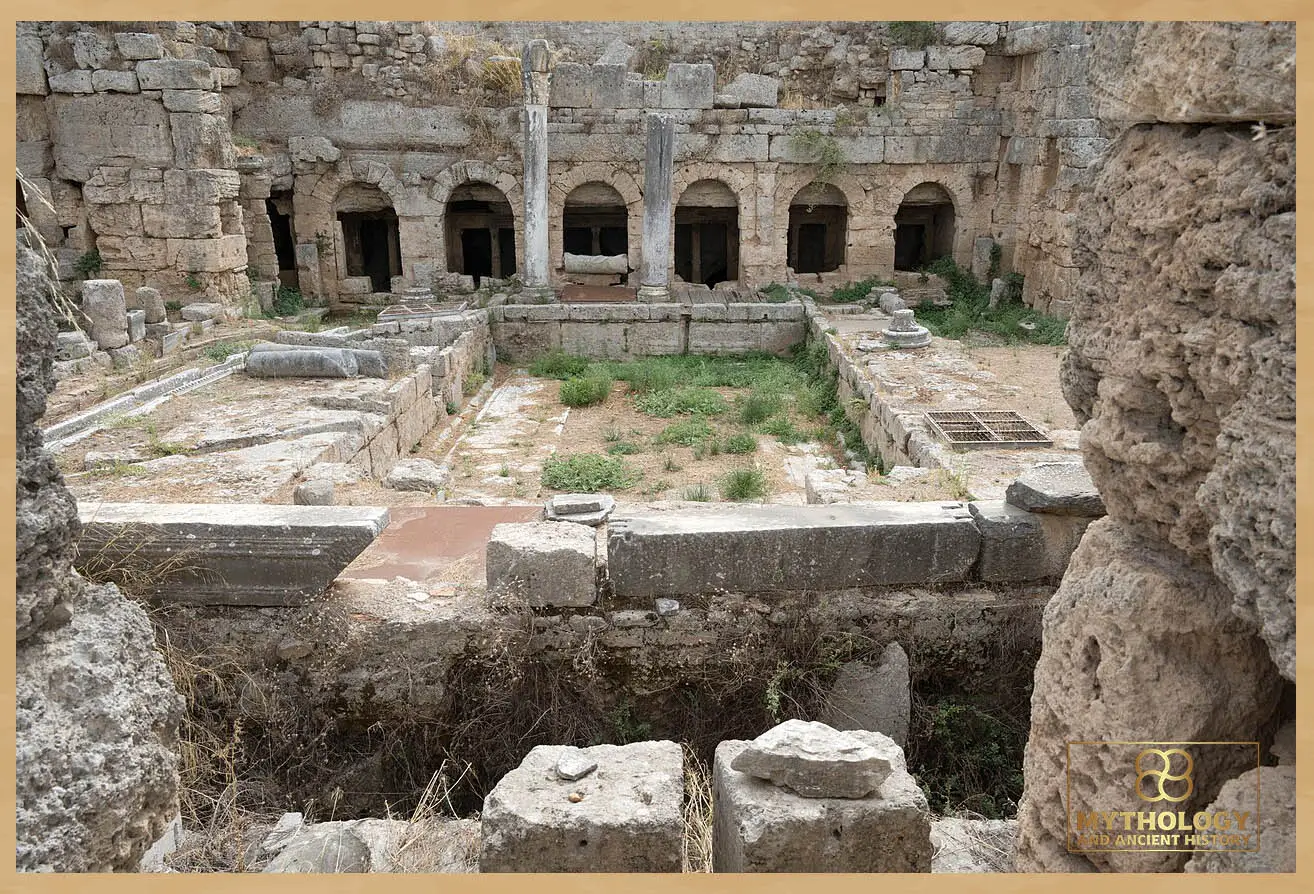
Corinth benefited from access to strong natural springs, allowing some areas to maintain more stable freshwater supply than drier urban centers. Coastal trade wealth also supported investment in water infrastructure.
Island settlements often faced greater scarcity because freshwater reserves remained limited and rainfall varied sharply by season. Storage systems therefore carried greater importance in many island communities.
Sparta depended less on dense urban infrastructure than Athens because its settlement pattern remained more dispersed and less commercially concentrated.
Water systems across the Greek world reflected local environmental conditions as much as engineering ability or political power.
What Water Supply Reveals About Greek Urban Life
Water systems reveal how dependent Greek cities were on organization, maintenance, and collective infrastructure long before modern technology existed.
Urban life could not function through private effort alone. Markets, workshops, households, religious spaces, and public gathering areas all depended on shared access to controlled water supply.
The system also exposed social differences inside the city. Wealthier households stored larger reserves and faced fewer daily difficulties, while ordinary residents often relied on repeated trips to public fountains and communal access points.
Greek cities were therefore shaped not only by politics or architecture, but by constant practical concerns tied to survival and resource management. Keeping water available required engineering, labor, supervision, and cooperation across the entire urban environment.
Looking at water supply makes ancient Greek cities appear less like static ruins and more like living systems that depended every day on the successful movement of essential resources.
- Ancient Greek cities depended on carefully managed freshwater systems for survival
- Water came from springs, wells, rainwater storage, and underground channels
- Public fountains played a major role in everyday urban life
- Maintenance workers and city authorities supervised water infrastructure continuously
- Access to water shaped hygiene, labor, domestic routines, and urban stability
Frequently Asked Questions
How did ancient Greek cities get water?
Greek cities relied on springs, wells, cisterns, rivers, and gravity-fed channels to supply freshwater.
Did ancient Greeks have aqueducts?
Yes. Some Greek cities used aqueducts and underground conduits to transport water from distant sources.
What were fountain houses in ancient Greece?
Fountain houses were public structures where residents collected water for daily household use.
How did Greek households store water?
Families stored water in large ceramic jars and underground cisterns connected to rainwater collection systems.
How did Greek cities handle drought?
Cities relied on stored reserves, wells, and additional nearby sources during periods of water shortage.
Who maintained Greek water systems?
Workers and city authorities repaired channels, monitored supply systems, and maintained fountains and reservoirs.
Sources & Rights
- Angelakis, Andreas N., and Larry W. Mays. Evolution of Water Supply Through the Millennia. IWA Publishing.
- Crouch, Dora P. Water Management in Ancient Greek Cities. Oxford University Press.
- Camp, John M. The Archaeology of Athens. Yale University Press.
- Travlos, John. Pictorial Dictionary of Ancient Athens. Thames & Hudson.
- Hodge, A. Trevor. Roman Aqueducts & Water Supply. Duckworth.
- Hansen, Mogens Herman. An Inventory of Archaic and Classical Poleis. Oxford University Press.
- Owens, E.J. The City in the Greek and Roman World. Routledge.
- Wycherley, R.E. How the Greeks Built Cities. W.W. Norton & Company.
- Lawrence, A.W. Greek Architecture. Yale University Press.
- Mays, Larry W. Ancient Water Technologies. Springer.
- Burford, Alison. Land and Labor in the Greek World. Johns Hopkins University Press.
- Thucydides. History of the Peloponnesian War.
- Pausanias. Description of Greece.
- Vitruvius. On Architecture.
- Herodotus. The Histories.
Written by H. Moses — All rights reserved © Mythology and History