What Jobs People Actually Did in Ancient Greece
When people think about ancient Greece, they usually imagine philosophers, temples, or famous battles. Most Greeks, however, spent their lives working. Farmers woke before sunrise to deal with crops and animals, craftsmen spent long hours inside noisy workshops, merchants moved goods through crowded markets, and dockworkers unloaded cargo arriving from across the Mediterranean. In cities like Athens, daily life depended on builders, potters, sailors, street sellers, metalworkers, and servants who kept the economy moving from morning until night. The reality of work in ancient Greece was practical, exhausting, and closely tied to survival rather than the idealized world often associated with Greek civilization.
Why Most Ancient Greeks Worked Constantly
Ancient Greece was not a society where most people had free time for politics, philosophy, or public debate. Those activities existed, but they depended on continuous labor happening underneath them.
For ordinary people, work was part of daily survival. Small farmers worried about harvests, craftsmen depended on selling products regularly, and traders faced constant pressure from competition, transport costs, and unstable markets. A bad season, damaged cargo, or weak sales could quickly affect an entire household.
Most families could not afford long periods without labor. Even households with modest property still relied heavily on physical work, family cooperation, or enslaved labor to maintain income and food supplies. In cities, economic life started early and continued throughout the day because workshops, markets, docks, and public construction projects demanded constant activity.
The Greek economy also lacked many of the systems associated with later urban societies. There were no large industrial employers, no salaried middle-class structure, and little economic security for ordinary workers. Income often depended on direct production, trade, transport, or manual labor performed day by day.
As a result, work shaped the rhythm of Greek life more than leisure did. Even in culturally famous cities like Athens, most residents experienced the city primarily through labor rather than through philosophy or politics.
| Type of Work | Main Workers | Typical Conditions |
|---|---|---|
| Agriculture | Small farmers and laborers | Seasonal and physically demanding |
| Workshop Production | Craftsmen, families, slaves | Long hours and repetitive labor |
| Market Trade | Merchants and street sellers | Daily competition and unstable income |
| Maritime Labor | Sailors and dockworkers | Dangerous transport and cargo work |
| Public and State Work | Builders, clerks, jurors | Connected to civic projects and administration |
Farmers — The Largest Workforce in Greece
Farming employed more people in ancient Greece than any other type of work. Most households depended directly on agriculture, whether they owned small plots of land or worked for others during planting and harvest seasons.
Greek farmers usually cultivated olives, grapes, barley, and wheat on difficult terrain rather than large fertile plains. Rocky soil and irregular rainfall made agricultural work unpredictable, forcing many families to manage risk carefully from year to year.
Daily labor changed with the season. Plowing, pruning, harvesting, storing grain, repairing tools, and maintaining animals required constant physical effort across the agricultural calendar. During harvest periods, entire households often worked together for long hours to avoid losing crops.
Many small farmers lived close to economic insecurity. A poor harvest, drought, or war could damage food supplies and push families into debt. Some landowners supplemented farming income through trade, seasonal labor, or military service when agricultural production alone was not enough.
Even large urban centers depended heavily on this rural workforce. Cities such as Athens relied on farmers not only for food production but also for olive oil, wine, wool, timber, and other materials feeding the wider economy.
Craftsmen and Workshop Labor
Greek cities depended on thousands of small workshops producing everyday goods for local use and trade across the Mediterranean.
Potters, metalworkers, carpenters, leatherworkers, sculptors, and textile producers usually worked in compact spaces attached to homes, streets, or market districts rather than in large factories. Many workshops were family-run, although wealthier owners sometimes used enslaved labor or hired assistants to increase production.
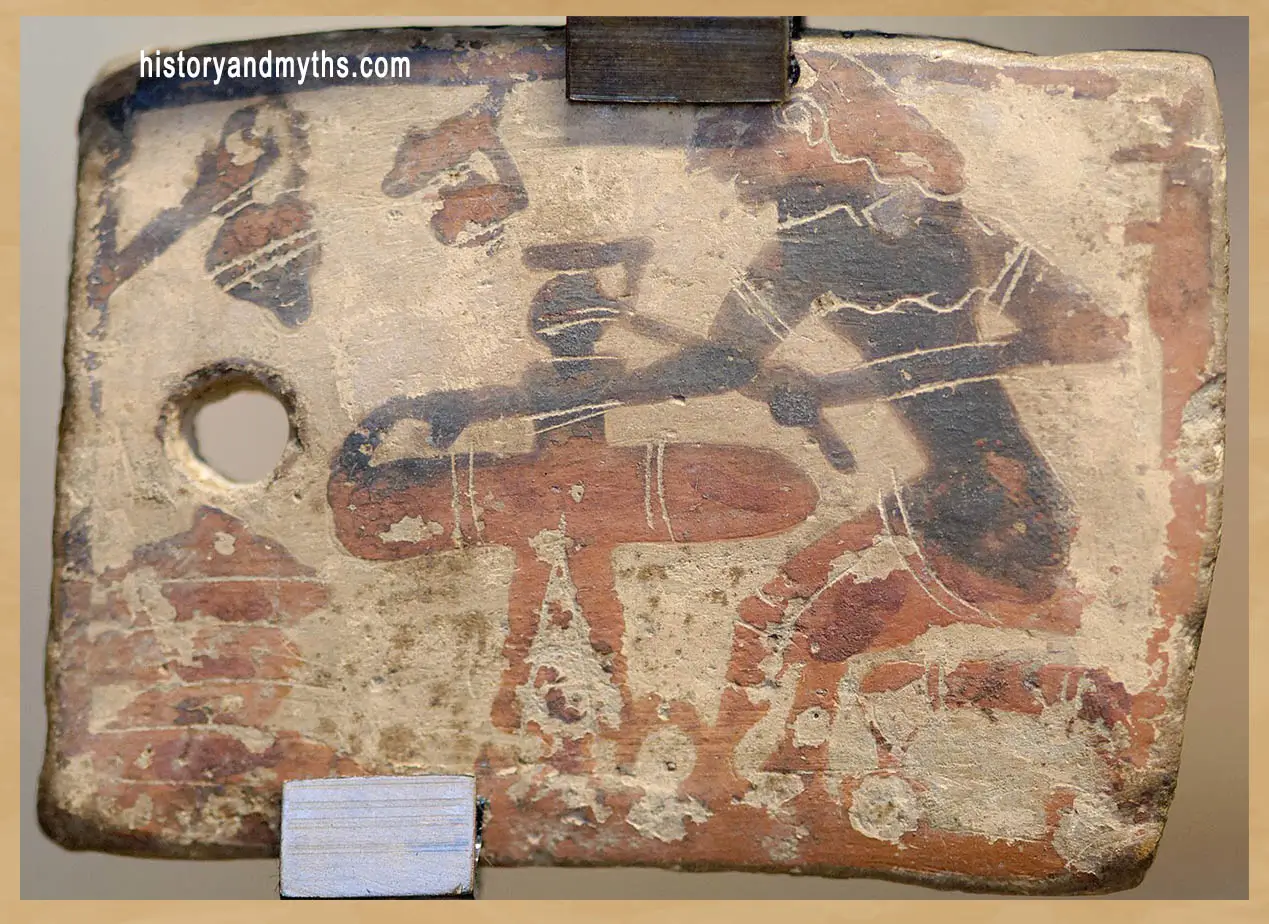
Work inside these shops could be repetitive and physically exhausting. Potters handled clay preparation, shaping, firing, and transport, while metalworkers spent long hours near furnaces producing tools, weapons, or household objects. Textile work required constant spinning and weaving, often performed inside domestic spaces by women or servants.
Successful craftsmen depended heavily on reputation and steady demand. Workshops near busy commercial areas attracted more customers, especially in cities connected to active ports and trade routes. Some Athenian pottery workshops became well known outside Greece because exported ceramics circulated widely through Mediterranean markets.
Skilled labor could provide economic stability, but workshop life still involved uncertainty. Production costs, damaged goods, unstable demand, and competition from neighboring craftsmen all affected income from one season to another.
Market Traders and Street Sellers
Not everyone in ancient Greece produced goods directly. Many people earned a living by moving products through markets, streets, and public gathering spaces.
Small traders sold fish, bread, wine, oil, vegetables, tools, and imported goods from temporary stalls or portable displays inside crowded urban areas. Some traveled regularly between nearby settlements, while others worked permanently inside major marketplaces such as the Athenian Agora.
Street selling required constant interaction with customers. Vendors competed for visibility, negotiated prices directly, and depended heavily on daily foot traffic. Income could vary sharply depending on season, shipping arrivals, festivals, or political conditions affecting trade.
Transport workers also formed part of this commercial system. Men carrying cargo, handling animals, or moving goods between ports, warehouses, and markets performed physically demanding labor essential to urban supply networks.
Much of this economy operated on a small scale. Instead of large commercial corporations, Greek trade often depended on individuals and family businesses trying to secure enough profit from daily exchange to sustain their households.
- Most Greeks worked in farming, workshops, trade, transport, or manual labor
- Economic life depended heavily on small-scale production and daily work
- Ports and markets created constant demand for sailors, merchants, and laborers
- Public construction and civic institutions also generated employment
- Large parts of the economy relied on enslaved labor
© historyandmyths.com — Educational use
Sailors, Dockworkers, and Maritime Labor
Greek economic life depended heavily on the sea, creating constant demand for maritime workers in ports across the eastern Mediterranean.
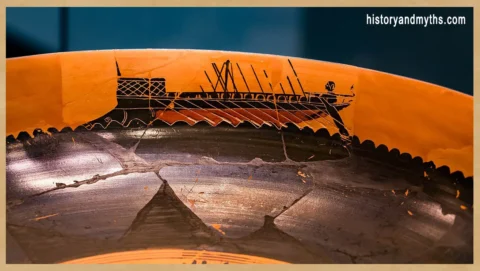
Sailors transported grain, wine, olive oil, timber, ceramics, and other cargo between islands and coastal cities. Voyages could last for weeks and exposed crews to storms, piracy, shipwrecks, and unstable political conditions affecting trade routes.
Port labor was equally important. Dockworkers unloaded cargo, carried storage containers, repaired ships, secured ropes, and managed supplies arriving from commercial vessels. Large ports such as Piraeus operated through continuous movement of goods, workers, and merchants throughout the day.
Many maritime jobs required physical endurance rather than elite social status. Carrying amphorae, handling heavy equipment, and loading ships demanded strength and long hours of repetitive labor near crowded harbors.
Sea trade also connected local workers to wider Mediterranean economies. Imported products, foreign merchants, and shipping networks created employment that extended far beyond agriculture or traditional urban workshops.
Soldiers and Mercenary Work
Military service could also function as a source of income, especially during periods of war or political instability.
Some Greek men joined campaigns temporarily when city-states required additional troops, while others became long-term mercenaries fighting for foreign rulers or rival Greek powers. Payment varied depending on military success, reputation, and the employer’s resources.
Mercenary service expanded after the Peloponnesian War, when experienced fighters discovered that military skill could provide economic opportunities outside their home cities. Greek soldiers later appeared across Egypt, Persia, Sicily, and other parts of the Mediterranean world.
Life as a professional fighter remained dangerous and uncertain. Campaigns involved difficult travel, irregular pay, food shortages, disease, and the constant risk of injury or death. Success depended not only on combat ability but also on securing reliable commanders and stable employment.
For poorer Greeks with limited land or few economic options, military labor sometimes offered one of the few available paths toward regular income or social advancement.
Public Jobs and State Work
Greek cities also created employment through government activity, religious institutions, and public construction projects.
Large urban centers needed clerks, messengers, record keepers, market inspectors, and laborers to support administration and civic organization. Courts, assemblies, temples, and public festivals all required workers performing practical tasks behind the political life of the city.
Construction projects generated additional employment. Builders, stoneworkers, carpenters, and transport crews worked on roads, walls, harbors, temples, and public buildings funded by city authorities or wealthy patrons.
Some civic duties included payment for participation. In democratic Athens, jury service and certain public roles provided modest compensation, allowing poorer citizens to take part in political institutions without completely abandoning work.
Religious centers also operated as economic employers. Temples used craftsmen, attendants, maintenance workers, musicians, and suppliers connected to ritual activity and festival preparation throughout the year.
The Role of Slaves in Greek Labor
A large part of the Greek economy depended on enslaved labor working across households, workshops, agriculture, mining, and trade.
Some slaves performed domestic tasks such as cooking, cleaning, childcare, and household management, while others worked in physically harsh environments including silver mines, quarries, and agricultural estates. Urban workshops also relied heavily on enslaved workers to increase production and reduce labor costs.
The experience of slavery differed widely depending on occupation and owner. Skilled slaves working in crafts or administration sometimes handled responsibilities requiring training and trust, while mining laborers often faced extremely dangerous conditions and short life expectancy.
Enslaved workers allowed many citizens to spend more time on politics, military service, education, or commercial activity. In cities like Athens, parts of public and economic life functioned only because large amounts of routine labor were performed by people without legal freedom.
Greek society therefore combined celebrated ideals of citizenship and public participation with an economic system deeply dependent on coerced labor.
Which Jobs Were Respected Most
Ancient Greeks did not value all forms of work equally. Social status often depended less on how difficult a job was and more on how closely it aligned with ideals of citizenship, independence, and public life.
Landownership carried strong prestige because agriculture was associated with stability and self-sufficiency. Citizens who controlled property were generally viewed more favorably than people dependent on constant commercial or manual labor.
Certain skilled professions earned respect for expertise, especially architecture, sculpture, medicine, and military leadership. Successful craftsmen could gain wealth and reputation, but manual workshop labor still occupied a lower social position than political participation or landholding.
Trade created mixed attitudes. Merchants and market sellers played an essential economic role, yet some elite writers viewed aggressive profit-seeking with suspicion, particularly when compared to farming or civic duty.
Physical labor performed by slaves further shaped social perceptions of work. Because many exhausting tasks were associated with enslaved workers, elite Greek culture often treated manual labor as something separate from the ideal life of a free citizen.
What Work Reveals About Ancient Greek Society
Work in ancient Greece reveals a society built on constant labor, unequal social structures, and strong dependence on local economic survival.
Most people lived through physically demanding routines connected to food production, trade, transport, construction, or domestic management rather than intellectual or political life. Even major cultural centers relied on networks of ordinary workers whose labor sustained urban activity every day.
Economic opportunity also remained uneven. Citizens, foreigners, women, slaves, and wealthy landowners experienced work through very different levels of freedom, security, and social status. Access to property and labor often mattered more than skill alone.
The Greek world was therefore not supported only by philosophers, generals, or politicians. It functioned because farmers cultivated difficult land, craftsmen produced goods, sailors moved cargo across dangerous seas, and workers handled the practical tasks keeping cities alive.
Looking at ordinary jobs makes ancient Greece appear less like an abstract classical civilization and more like a working society shaped by labor, risk, and daily economic pressure.
- Most ancient Greeks worked in physically demanding occupations tied to survival
- Farming remained the largest source of employment across Greece
- Urban economies depended on workshops, ports, and market trade
- Military service and public construction also created jobs
- Greek economic life relied heavily on enslaved labor and social inequality
Frequently Asked Questions
What jobs did most people have in ancient Greece?
Most Greeks worked in farming, craft production, trade, transport, construction, or domestic labor.
What was the most common job in ancient Greece?
Agriculture employed the largest part of the population across most Greek regions.
Did ancient Greeks work in workshops?
Yes. Pottery, metalworking, textiles, carpentry, and sculpture were common workshop industries.
Were merchants important in ancient Greece?
Yes. Trade and market activity connected Greek cities to wider Mediterranean economies.
Did slaves perform much of the labor?
Large parts of the Greek economy depended on enslaved workers in homes, workshops, agriculture, and mines.
Could military service become a profession?
Some Greeks earned income through long-term mercenary service during periods of war.
Sources & Rights
- Finley, M.I. The Ancient Economy. University of California Press.
- Burford, Alison. Craftsmen in Greek and Roman Society. Cornell University Press.
- Hansen, Mogens Herman. An Inventory of Archaic and Classical Poleis. Oxford University Press.
- Cartledge, Paul. Ancient Greece: A History in Eleven Cities. Oxford University Press.
- Osborne, Robin. Greece in the Making. Routledge.
- Morris, Ian, and Barry Powell. The Greeks: History, Culture, and Society. Pearson.
- Davidson, James. Courtesans and Fishcakes: The Consuming Passions of Classical Athens. University of Chicago Press.
- Xenophon. Oeconomicus.
- Aristotle. Politics.
- Thucydides. History of the Peloponnesian War.
- Herodotus. The Histories.
- Plutarch. Life of Solon.
Written by H. Moses — All rights reserved © Mythology and History