Ancient Greek Women: Roles, Restrictions, and Hidden Power
The role of women in ancient Greece was not random or simply restrictive—it was structured to serve specific social and economic functions. Women did not participate in public politics, but they were central to maintaining the household, managing resources, and ensuring the continuity of family lines. Their position was defined by what the system required, not by individual choice.
In practice, this meant clear limits on movement, property, and public presence, especially in cities like Athens. These restrictions were not arbitrary. They controlled inheritance, stabilized family structure, and ensured that citizenship remained clearly defined. At the same time, women held responsibility over areas that were essential to daily life, giving them influence within a different sphere.
This creates a pattern that often appears contradictory. Women seem excluded from power, yet they are necessary for the system to function. Understanding their role requires looking beyond surface descriptions and examining how these limits and responsibilities were organized to maintain order within Greek society.
What Was the Role of Women in Ancient Greece?
The role of women in ancient Greece was to maintain the internal structure of the household and ensure continuity across generations. This included managing domestic space, overseeing resources, and raising children within defined social expectations.
Their function was not public but structural. While men operated in political and civic environments, women were responsible for stabilizing the private domain where family, property, and lineage were organized. This division was not incidental; it separated external decision-making from internal continuity.
The role was therefore defined by responsibility rather than visibility. Women did not participate in public authority, but they performed tasks that allowed the broader system to operate without disruption.
| Area | Function | Purpose in System |
|---|---|---|
| Household | Managing daily life and resources | Ensures internal stability |
| Marriage | Forming controlled family units | Protects lineage and inheritance |
| Child-rearing | Shaping behavior and values | Maintains social continuity |
| Religion | Participation in rituals | Preserves cultural order |
| Restrictions | Limited movement and authority | Ensures system control |
Why Women Were Restricted
Restrictions on women in ancient Greece were designed to control key elements of social structure, especially family, inheritance, and citizenship. Limiting movement and public interaction reduced uncertainty around lineage, ensuring that family lines remained clearly defined.
Property and inheritance depended on this clarity. By keeping women within controlled environments, the system minimized disputes over ownership and succession. This was not about isolating individuals, but about stabilizing how resources were transferred across generations.
Restrictions also reinforced social roles. Clear boundaries between public and private functions prevented overlap that could disrupt coordination within the city. Each group operated within a defined space, reducing conflict and maintaining order.
These limits were therefore functional. They ensured that the internal structure of society remained consistent, predictable, and aligned with the broader system.
Marriage and Inheritance as Structural Control
Marriage in ancient Greece was not treated primarily as a private relationship. It functioned as a mechanism for organizing family alliances, regulating inheritance, and preserving legitimate lineage. This is why women’s position within marriage was closely controlled.
The system required certainty. Property, family continuity, and citizen status depended on clear descent, so marriage had to operate within defined rules. Women were central to this process because they linked household management with reproduction and succession. Their role within marriage was therefore not symbolic, but structural.
Inheritance reinforces this logic. The transmission of property depended on stable family lines, which made the control of women’s movement, marriage, and sexuality a matter of system maintenance rather than personal morality alone. Where inheritance was at stake, regulation became stricter.
This makes marriage one of the clearest examples of how women’s lives were organized within Greek society. It was not simply a social custom. It was a legal and economic framework that helped preserve order across generations.
Two Different Systems: Athens vs Sparta
The position of women in ancient Greece varies because each city required a different outcome. The difference between Athens and Sparta is not simply cultural—it reflects two distinct systems with different priorities.
In Athens, the system is built around citizenship, property, and inheritance. This requires strict control over family structure, which leads to tighter restrictions on women. Their role is focused on maintaining lineage and managing the household, ensuring that the system remains stable across generations.
In Sparta, the system is built around military strength and collective discipline. This creates a different set of requirements. Women are expected to maintain physical strength, manage property in the absence of men, and contribute to the stability of the system through endurance and organization.
The difference is therefore functional. Athens restricts to control lineage and citizenship. Sparta allows more flexibility to support a militarized society. Each model reflects what the system needs rather than a general view of women.
Daily Life as a Structured Role
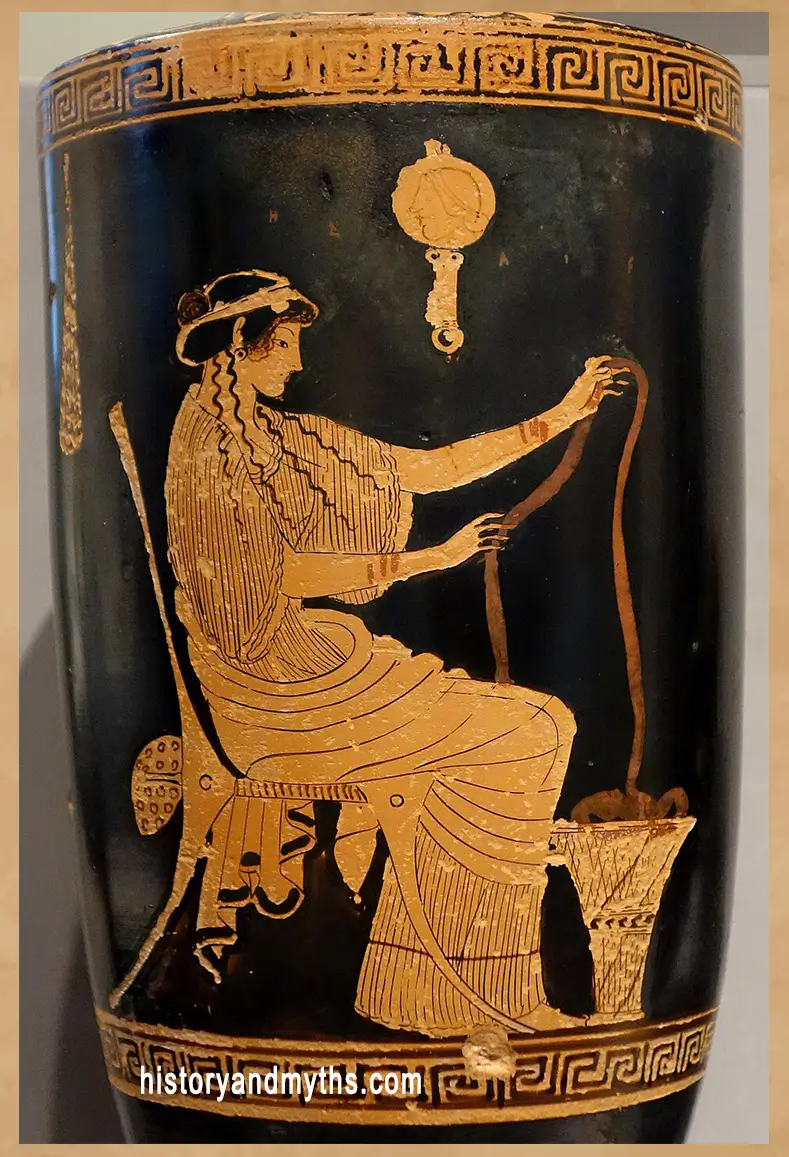
Daily life for women in ancient Greece was organized around a fixed set of responsibilities that maintained the household as a stable unit. Activities were not random or personal; they followed a consistent pattern tied to the needs of the family.
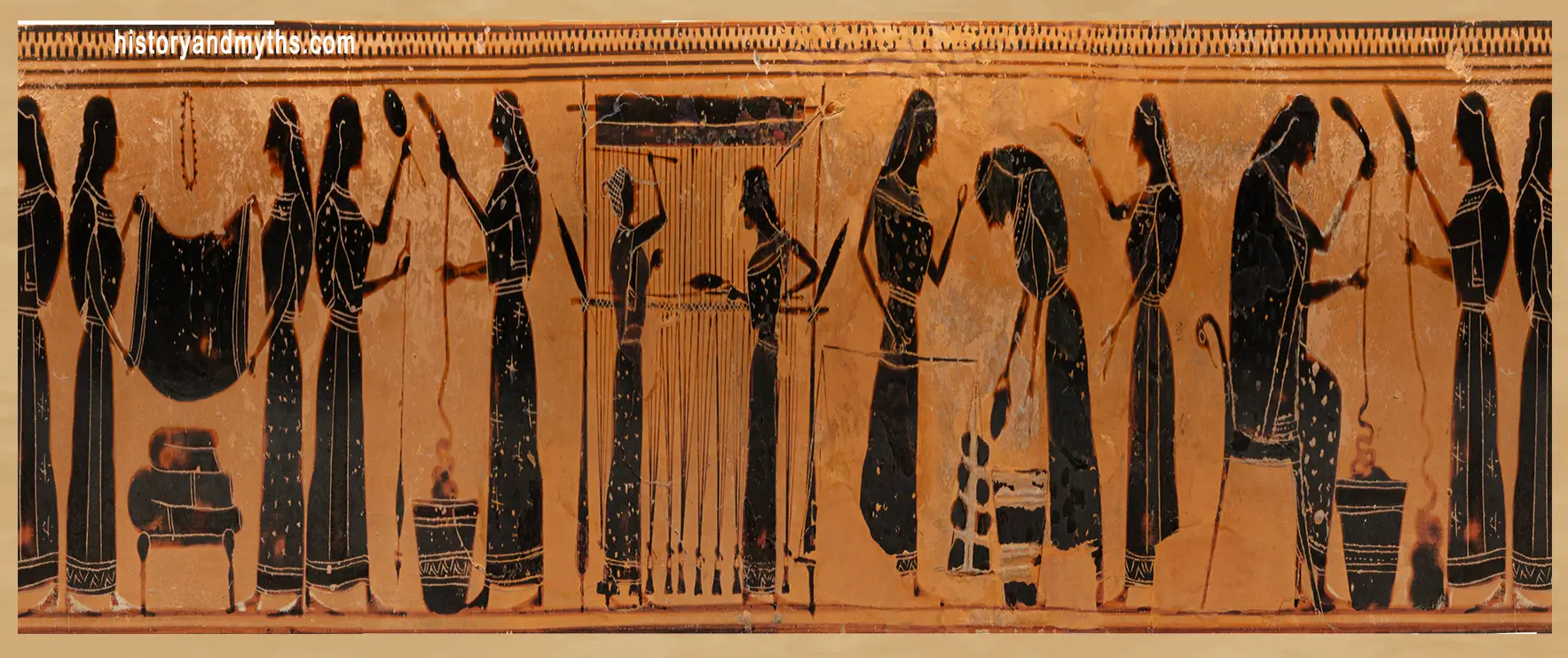
The household functioned as a controlled environment. Women managed food preparation, textile production, and the organization of domestic space. These tasks ensured that resources were used efficiently and that daily life operated without disruption.
Child-rearing was a central part of this structure. Women were responsible for shaping behavior and transmitting expectations to the next generation. This extended their role beyond immediate tasks into long-term continuity.
What defines this daily life is its consistency. Repeated actions reinforced stability, ensuring that the household remained predictable and aligned with the broader social system.
Greek Women — Core Insight
The role of women in ancient Greece was structured to maintain stability within the household, family, and social system. Their responsibilities were defined by function rather than visibility.
While excluded from public authority, women controlled essential areas such as household management, child-rearing, and continuity of lineage. Their position reflects a system designed for order, not equality.
© historyandmyths.com — Educational use
Hidden Power of Women
Despite formal restrictions, women in ancient Greece exercised influence within the areas they controlled. This influence was not public or institutional, but it was embedded in the structure of daily life.
Control over the household meant control over resources, organization, and routine. Decisions related to food, labor, and internal management shaped how the household functioned on a daily basis. This created a form of authority that operated without visibility.
Their role in raising children extended this influence further. By shaping behavior, values, and expectations, women affected how future members of society would think and act. This impact was indirect but long-lasting.
This form of power does not appear in formal records because it does not operate through public roles. It exists within the system itself, influencing outcomes through control of the environment rather than through official authority.
Women in Religion and Ritual
Although women were restricted in politics and formal public authority, they were not absent from public life altogether. Religion created a space where women could appear, participate, and perform recognized roles within the wider community.
This participation was significant because ritual life was not separate from society. Festivals, offerings, and household cult practices helped maintain social and religious continuity, and women were often central to these activities. Their involvement gave them visibility in a domain that the system considered necessary and legitimate.
Religious participation does not cancel restriction, but it complicates it. Women could be limited in law and politics while still holding an acknowledged place in ritual practice. This shows that the system was not based on simple exclusion. It was selective, allowing visibility where it served continuity, order, and shared belief.
Religion therefore reveals an important distinction. Women were excluded from public power, but not from every public function. They remained active where the system required preservation, ritual stability, and the transmission of values.
What Women Could and Could Not Do
The position of women in ancient Greece is defined by clear boundaries that separate permitted actions from restricted ones. These boundaries determine how individuals interact with property, movement, and public life.
Women could manage the household, oversee resources, and direct daily activities within the domestic space. They played a central role in organizing labor, especially in areas like food preparation and textile production. In some contexts, particularly outside strict urban systems, they could also engage in limited economic activity.
At the same time, they could not participate in political decision-making, hold public office, or act independently in legal and financial matters. Movement outside the household was often controlled, and public presence was limited to specific occasions.
These limits are not arbitrary. They define the separation between internal management and external authority. Women operate within the controlled environment of the household, while public roles remain outside that domain.
Continue Reading
Why This System Existed
The structure of women’s roles in ancient Greece was designed to maintain stability in key areas of society: family organization, property control, and social continuity. Each restriction and responsibility aligns with these objectives.
Controlling family structure ensured that lineage remained clear, which was essential for inheritance and citizenship. Without this control, disputes over identity and ownership could disrupt the system.
Separating public and private roles reduced conflict. By assigning specific functions to different groups, the system avoided overlap that could create instability. This allowed each part of society to operate within defined limits.
The system also ensured continuity. By organizing responsibilities within the household, it created a stable environment where behavior and expectations could be passed from one generation to the next.
This structure was not designed for flexibility. It prioritized predictability and control, ensuring that the system could function consistently over time.
Key Takeaways
- Greek women had structured roles, not random limitations
- Restrictions were designed to control lineage and inheritance
- Women managed the household and daily resources
- Marriage functioned as a system of social and economic control
- Women influenced society through family and upbringing
- Religious roles allowed controlled public participation
- Athens and Sparta reflect different system needs
Frequently Asked Questions
What was the role of women in ancient Greece?
Women were responsible for managing the household, raising children, and maintaining family structure.
Did Greek women have rights?
Their rights were limited, especially in politics and property, depending on the city.
What is the difference between Athenian and Spartan women?
Athenian women were more restricted, while Spartan women had greater freedom due to military needs.
Why were women restricted in ancient Greece?
Restrictions helped control inheritance, lineage, and social stability.
Did women have any power in Greek society?
Yes, they had influence within the household and in shaping future generations.
What role did women play in religion?
Women participated in rituals and religious practices that were important to society.
Why is the role of Greek women important today?
It helps explain how social systems organize roles and maintain stability.
Sources & Rights
- Pomeroy, Sarah B. Goddesses, Whores, Wives, and Slaves.
- Blundell, Sue. Women in Ancient Greece.
- Cartledge, Paul. Sparta and Lakonia.
- Golden, Mark. Children and Childhood in Classical Athens.
- Foxhall, Lin. Studying Gender in Classical Antiquity.
- Demand, Nancy. Birth, Death, and Motherhood.
- Osborne, Robin. Greece in the Making.
- Garland, Robert. The Greek Way of Life.
- Ober, Josiah. Mass and Elite in Democratic Athens.
- Just, Roger. Women in Athenian Law and Life.
- Gagarin, Michael. Antiphon the Athenian.
- Dillon, Matthew. Girls and Women in Classical Greek Religion.
- Fantham, Elaine. Women in the Classical World.
- Keuls, Eva. The Reign of the Phallus.
- Lefkowitz, Mary. Women’s Life in Greece and Rome.
- Fantham, Elaine. Roman Literary Culture.
- Nevett, Lisa. House and Society in the Ancient Greek World.
- Schaps, David. Economic Rights of Women.
- Cohen, David. Law, Violence, and Community.
- Reeder, Ellen. Pandora: Women in Classical Greece.
Written by H. Moses — All rights reserved © Mythology and History