Ancient Greek Daily Life: Work, Society, and Everyday Experience
Ancient Greek daily life was not random or purely personal; it was structured by social roles, economic activity, and religious practice. A typical day was shaped by work, public interaction, and repeated rituals that connected individuals to their city and its traditions.
This answers a common question: what was daily life actually like in ancient Greece? It depended on status and role. Citizens participated in public life and decision-making, while others—women, foreigners, and enslaved people—had different responsibilities and limitations. Daily routines were not identical, but they followed a shared structure defined by the polis.
To understand Greek daily life, you need to see how it worked as a system—how work, religion, and social position combined to shape everyday experience across the Greek world.
What Daily Life in Ancient Greece Was Like
Daily life in ancient Greece was organized around routine, obligation, and public interaction. Most people followed a predictable pattern shaped by work, household responsibilities, and participation in communal spaces such as the marketplace (agora).
The day typically began early. Work defined the structure—farmers went to fields, artisans to workshops, and traders to markets. For citizens, daily life also included engagement with public matters, whether informal discussion or formal participation in civic activity.
This routine was not isolated from the broader system. Religious acts, even small ones, were integrated into daily activity, and social roles determined what each person could or could not do. Life was therefore structured rather than flexible, with clear expectations tied to status and function.
What defines Greek daily life is consistency. It was built on repeated actions within a shared framework, where work, social interaction, and ritual combined to form a stable and recognizable pattern across the Greek world.
| Role | Main Activity | Daily Impact |
|---|---|---|
| Citizen (Male) | Work, public discussion, civic participation | Balanced between economy and politics |
| Women | Household management, family roles | Limited public interaction |
| Farmers | Agriculture and seasonal labor | Day structured by land and seasons |
| Artisans & Traders | Production and exchange in markets | Active presence in the agora |
| Enslaved People | Manual and domestic labor | Essential to daily operations |
How Society Was Structured
Greek daily life was shaped by a clear social hierarchy that determined rights, responsibilities, and access to public life. The most important distinction was between citizens and non-citizens. Only male citizens had full political rights and could participate in decision-making within the polis.
Below them were women, foreigners (metics), and enslaved people, each with defined roles. Women managed household activities and family life but had limited public participation. Foreigners could engage in trade and economic activity but lacked political rights. Enslaved people performed labor across households, workshops, and farms, forming a significant part of the workforce.
This structure was not informal—it was embedded in law, custom, and daily practice. What a person could do each day depended on their position within this hierarchy.
The result was a society where daily life followed predictable roles tied to status, ensuring stability but limiting mobility between groups.
Work and Economic Activity
Work was the central structure of daily life, and it varied based on location, skill, and status. Most people were engaged in agriculture, especially in rural areas, where farming determined both routine and survival. Crops such as grain, olives, and grapes required regular, seasonal labor.
In urban settings, economic activity was more diverse. Artisans worked in small workshops producing goods such as pottery, tools, and textiles, while traders operated in marketplaces, exchanging local products and imported goods. The agora functioned as the center of both economic and social interaction.
Labor was not distributed equally. Enslaved people performed much of the manual work, especially in households and larger operations, while citizens often focused on management, trade, or public responsibilities.
Economic life was therefore integrated into the broader system. Work was not just a means of survival—it defined daily schedules, social roles, and interactions, making it a core element of how Greek society functioned.
Religion in Daily Life
Religion was embedded in routine actions, not limited to festivals or public ceremonies. Daily life included small rituals such as prayers, libations, and offerings performed at home or before specific activities like travel or work. These acts maintained a continuous relationship with the gods.
Households played a central role. Families honored domestic deities and marked key moments—birth, marriage, and death—with ritual practices. This made religion a constant presence in private life, not just a public obligation.
Public and private practices were connected. A person might perform a simple offering at home and later participate in a larger communal ritual. Both followed the same principle: correct action directed toward the appropriate deity.
Religion in daily life functioned through repetition and integration. It shaped decisions, structured behavior, and reinforced the broader system without requiring formal belief or centralized control.
How Daily Life in Ancient Greece Functioned
- Daily life was structured by work, social roles, and routine practices.
- The polis defined how individuals interacted and participated in society.
- Economic activity determined the rhythm of the day.
- Religion was integrated into everyday actions, not separate from them.
- Social hierarchy shaped access to public and private life.
Social Roles and Differences
Daily life in ancient Greece varied significantly depending on status, gender, and legal position. Citizens had access to public spaces and political activity, while others operated within more limited roles. This created distinct experiences within the same society.
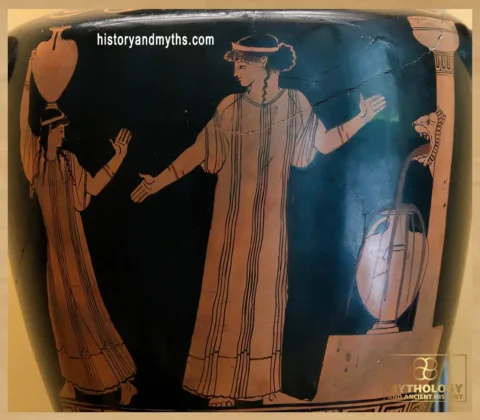
Men who were citizens moved between work and public life, participating in discussions, assemblies, and social interaction in places like the agora. In contrast, women’s roles were centered on the household, managing domestic tasks and family responsibilities with limited visibility in public affairs.
Foreigners (metics) occupied an intermediate position. They could engage in trade and economic activity but remained outside the political system. Enslaved people formed the lowest level, performing essential labor across different sectors with no independent status.
These differences were not occasional—they structured everyday experience. What a person did, where they could go, and how they interacted with others depended on their position, making daily life unequal but highly organized across the Greek world.
Continue Reading
A Typical Day in Ancient Greece
A typical day in ancient Greece followed a predictable sequence shaped by work, social interaction, and routine practices. The day began early, often at sunrise, with individuals moving directly into their primary activities—farming, craft production, or trade. Work occupied most of the day and determined its overall structure.
Midday brought interaction in shared spaces, especially the agora, where people exchanged goods, discussed issues, and maintained social connections. For citizens, this could also include participation in public matters or informal political discussion.
Evening shifted toward the household. Meals were taken, and family life became the focus. Social gatherings could occur, but they were structured and often limited by status and role. Small religious acts—such as offerings or prayers—could be integrated at different points throughout the day.
The pattern was consistent: work, interaction, and domestic life, repeated daily. This routine reflects how Greek society functioned—not through isolated events, but through stable, recurring structures that organized everyday experience.
How Systems Shaped Daily Life
Daily life in ancient Greece was not independent of larger structures. It was shaped by the interaction of political systems, economic activity, and religious practice, all operating at the same time. These systems defined what people did, where they went, and how they interacted.
Political structure determined participation. In democratic cities like Athens, citizens were expected to engage in public life, influencing how they used their time beyond work. In other contexts, authority and decision-making were more limited, but the link between individual activity and the city remained strong.
Economic systems defined routine. Agriculture, trade, and craft production established daily schedules and shaped interactions within households and markets. Work was not separate from society—it was the framework around which daily life was organized.
Religion connected both. Rituals, even small ones, were integrated into ordinary actions, linking daily behavior to a broader system of meaning and obligation.
Together, these elements created a structured environment. Greek daily life functioned through overlapping systems, where individual actions were guided by political roles, economic needs, and religious practices at the same time.
Daily Life as a System
Ancient Greek daily life was not defined by isolated activities, but by a structured system that organized work, society, and belief into a consistent pattern. What people did each day—where they worked, how they interacted, and what roles they followed—was shaped by the framework of the polis.
Its stability came from repetition. The same sequence of work, social interaction, and routine practice was repeated across individuals and generations, creating a predictable and organized form of life. Differences in status existed, but they operated within the same overall structure.
Understanding Greek daily life therefore means understanding how these systems functioned together. It was not simply how people lived, but how their lives were organized by interconnected forces of economy, society, and religion.
Key Takeaways
- Ancient Greek daily life followed structured routines tied to work and society.
- Social roles determined what individuals could do each day.
- Economic activity shaped the rhythm of life.
- Religion was embedded in everyday decisions and actions.
- The system of the polis organized all aspects of daily experience.
Frequently Asked Questions
What was daily life like in ancient Greece?
It was structured around work, social roles, and participation in community life.
What did people do every day in ancient Greece?
Most people worked in farming, trade, or crafts, and interacted in public spaces like the agora.
How did social class affect daily life?
Social status determined rights, responsibilities, and access to public life.
Was religion part of daily life in ancient Greece?
Yes, religious rituals and practices were integrated into everyday activities.
What was the role of the agora in daily life?
The agora was the center of economic, social, and sometimes political activity.
Sources & Rights
- Burkert, Walter. Greek Religion. Harvard University Press.
- Parker, Robert. On Greek Religion. Cornell University Press.
- Mikalson, Jon D. Ancient Greek Religion. Wiley-Blackwell.
- Cartledge, Paul. Ancient Greece. Oxford University Press.
- Osborne, Robin. Greece in the Making 1200–479 BC. Routledge.
- Hansen, Mogens Herman. An Inventory of Archaic and Classical Poleis. Oxford University Press.
- Boardman, John. The Oxford History of Greece. Oxford University Press.
- Kindt, Julia. Rethinking Greek Religion. Cambridge University Press.
- Encyclopaedia Britannica. Ancient Greek Civilization.
- World History Encyclopedia. Greek Society.
Written by H. Moses — All rights reserved © Mythology and History