Ancient Greek Religion: Gods, Rituals, and Beliefs Explained
Greek religion was not based on a fixed set of beliefs or a sacred text. It functioned through ritual practice—a system of offerings, sacrifices, and festivals that maintained the relationship between humans and the gods. What mattered was not what people believed, but what they did.
This relationship was practical and reciprocal. Individuals and communities offered gifts to the gods in exchange for protection, success, or stability. Religion was therefore embedded in everyday decisions, from farming and travel to war and politics. It was not a separate sphere of life, but part of how the Greek world functioned.
Understanding Greek religion requires focusing on how it operated: through rituals, sacred spaces, and public activity. It shaped social order, supported political authority, and connected communities through shared practices rather than shared doctrine.
What Was Greek Religion
Greek religion was a practice-based system, not a doctrine. It had no single founder, no sacred book, and no unified set of beliefs that all followers had to accept. Instead, it consisted of shared rituals, traditions, and local customs that varied between city-states while maintaining a common structure.
At its core, religion focused on maintaining proper relations with the gods. This was achieved through correct performance of rituals rather than personal belief. Whether in public ceremonies or private offerings, the emphasis was on action—doing what was required to secure favor or avoid divine disapproval.
This system operated at multiple levels. It was public, organized by the city through festivals and official rites, and private, practiced within households through daily offerings. The same structure applied in both cases: rituals performed in the right way at the right time.
Greek religion therefore functioned as a shared cultural framework rather than a formal belief system. It unified communities through common practices while allowing variation in local traditions, making it flexible but structurally consistent across the Greek world.
| Element | Function | Where It Happened |
|---|---|---|
| Rituals | Maintain relationship with gods | Public and private settings |
| Sacrifices | Offerings in exchange for favor | Altars outside temples |
| Temples | House the deity | Sanctuaries and city centers |
| Oracles | Provide divine guidance | Sites like Delphi |
| Festivals | Reinforce social and religious unity | Organized by city-states |
The Relationship Between Humans and Gods
The relationship between humans and gods in Greek religion was reciprocal and practical. It was based on exchange: people offered sacrifices, prayers, or dedications, and in return expected protection, success, or favor. This principle—often summarized as do ut des (“I give so that you may give”)—defined how individuals and communities interacted with the divine.
This was not a relationship built on moral judgment or inner belief. The gods were powerful but not uniformly benevolent, and their behavior was often unpredictable. What mattered was maintaining the relationship through correct ritual action, not proving faith or virtue in an abstract sense.
At the same time, the relationship was specific rather than general. Different gods were approached for different needs—Athena for strategy, Demeter for agriculture, Poseidon for the sea. This created a system in which religious activity was tied directly to practical concerns in daily life.
The result was a structured interaction: humans sought to influence divine forces through ritual, and success depended on performing those rituals correctly. Greek religion operated through this balance of offering and expectation rather than through belief alone.
Rituals and Sacrifices
Rituals were the core of Greek religion, and sacrifice was the central act. The most common form was animal sacrifice, where a domestic animal—often a sheep, goat, or ox—was offered to a specific god. Part of the offering was burned for the deity, while the rest was consumed by participants, linking religious practice with communal activity.
These rituals followed a structured sequence. Participants purified themselves, prayers were spoken, and the sacrifice was performed according to established rules. Precision mattered. Performing the ritual correctly was more important than expressing personal belief, because the act itself maintained the relationship with the divine.
Festivals extended this pattern to a larger scale. Public celebrations, often tied to specific deities, included sacrifices, processions, and competitions. Events such as the Panathenaic Festival in Athens combined religious observance with civic identity, reinforcing both devotion and social cohesion.
Rituals therefore served multiple functions at once. They honored the gods, structured community life, and created shared experiences. In Greek religion, maintaining order depended on repeated, correctly performed actions, not on abstract belief.
Temples, Altars, and Sanctuaries
Greek religion was practiced primarily in open spaces, not inside buildings. The most important element was the altar, where sacrifices and offerings took place. It stood outside the temple, making it the true center of ritual activity.
The temple itself had a different function. It housed the cult statue and marked the presence of the deity, but it was not designed for gatherings. This explains a common misconception: temples were visually dominant, but ritual practice happened outside them.
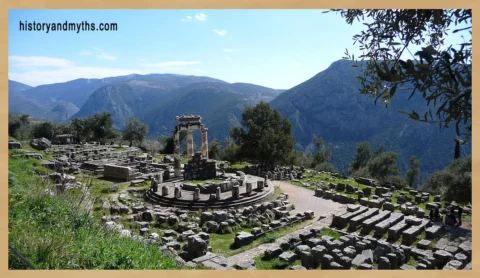
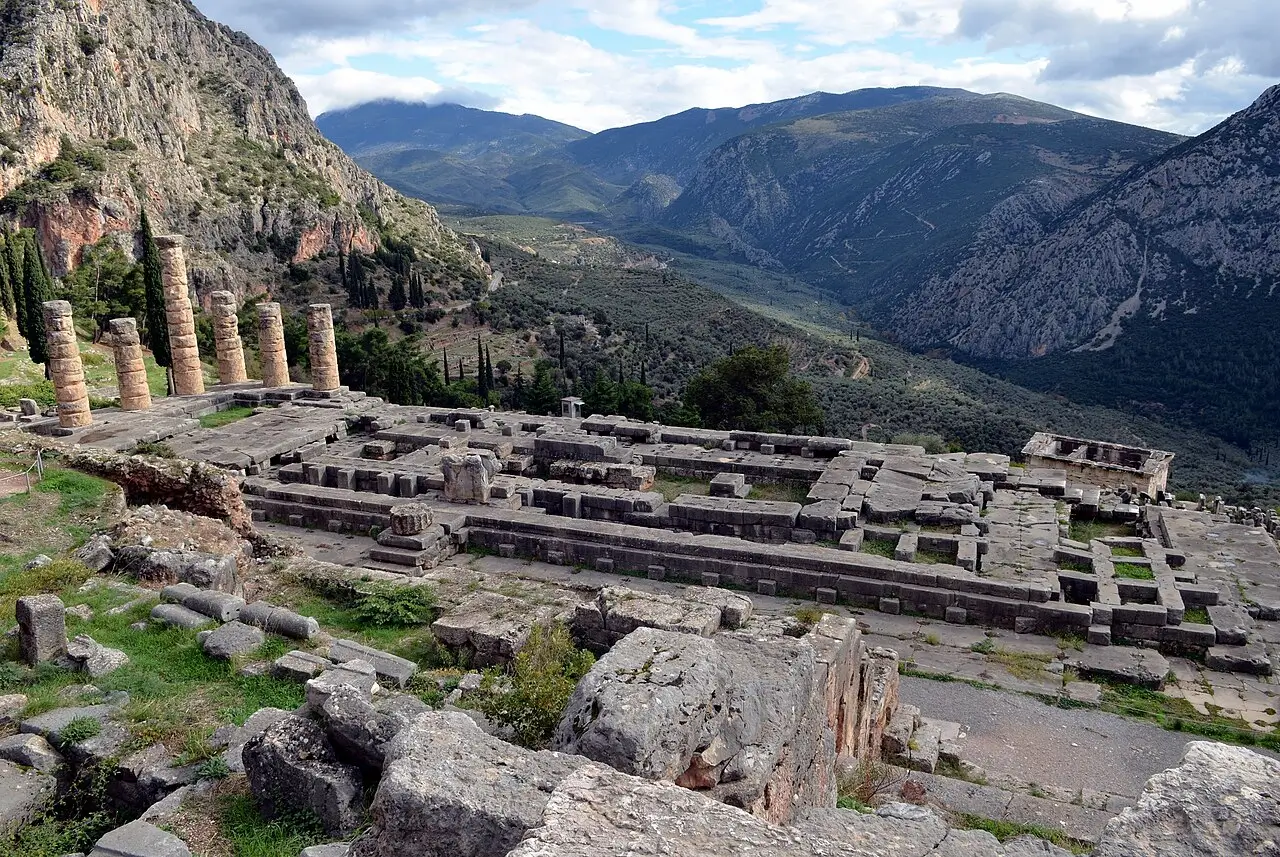
Larger religious sites, known as sanctuaries, combined multiple elements—temples, altars, and open areas—within a defined space. Some, like Delphi and Olympia, operated at a regional level and attracted visitors from across the Greek world. These sites functioned as religious, social, and sometimes political centers.
Together, these spaces formed a system. The altar enabled ritual, the temple represented the god, and the sanctuary organized activity. Greek religion depended on how these elements worked together, not on any single structure alone.
How Greek Religion Worked
- Religion was based on ritual practice, not fixed belief.
- The relationship with gods was reciprocal—offerings in exchange for favor.
- Altars were the main place of worship, not temples.
- City-states organized major religious events and festivals.
- Oracles provided guidance for important decisions.
Priests and Religious Authority
Greek religion did not have a centralized priesthood or a unified religious authority. Priests were local officials, usually attached to a specific temple or sanctuary, and their role was to manage rituals rather than interpret doctrine. There was no separate religious institution controlling belief across the Greek world.
Their responsibilities were practical. Priests organized sacrifices, maintained sacred spaces, and ensured that rituals were performed correctly. In many cases, the position was temporary or rotated, and it could be held by both men and women depending on the deity and the local tradition.
Importantly, priests did not define belief or enforce a system of theology. Authority remained with the community and the city-state, which organized major festivals and public rites. Religion was therefore managed collectively rather than controlled by a specialized class.
This structure reflects the nature of Greek religion itself. Since it was based on practice rather than doctrine, religious authority focused on correct performance of rituals, not on teaching or regulating belief.
Religion and Politics
In the Greek world, religion and politics were not separate systems. Public religious activity was organized by the city-state, and participating in rituals was part of civic responsibility. Festivals, sacrifices, and processions were conducted in the name of the community, linking religious practice directly to political identity.
Major decisions were often tied to religious consultation. Before wars, alliances, or colonization efforts, leaders sought approval through rituals or oracles. This did not replace political judgment, but it provided legitimacy and reduced uncertainty by framing decisions within a religious context.
Religious festivals also reinforced political structure. Events organized by the city brought citizens together, displaying unity, hierarchy, and shared identity. Participation signaled belonging to the polis, while exclusion could indicate marginal status.
In this system, religion supported political stability. It provided a shared framework of action and meaning that justified authority, coordinated collective behavior, and connected civic life with divine approval.
Religion in Daily Life
Greek religion was integrated into ordinary daily activity, not limited to public ceremonies. Individuals practiced it at home through small offerings, prayers, and rituals tied to routine events such as meals, travel, or work. These acts were simple but consistent, reinforcing the ongoing relationship with the gods.
Households maintained their own religious practices. Offerings could be made to household deities or protective spirits, and specific rituals marked key moments such as birth, marriage, and death. Religion functioned as a framework that structured life stages rather than as a separate domain of belief.
Public and private practices were connected. A person might participate in a major festival organized by the city while also performing daily rituals at home. Both followed the same principle: correct action maintained balance between humans and divine forces.
This integration explains why Greek religion was stable without centralized control. It operated through repetition in everyday life, ensuring that religious practice remained continuous across different contexts and social levels.
Continue Reading
Oracles and Decision-Making
Oracles provided a formal way to seek divine guidance before major decisions. The most important was the oracle of Delphi, where individuals and city-states consulted Apollo through a priestess known as the Pythia. Questions were presented, and responses were interpreted as messages from the god.
Consultation followed a structured process. Visitors performed rituals, offered gifts, and submitted their questions. The answer was often indirect, requiring interpretation rather than providing a clear command. This ambiguity allowed the oracle to guide decisions without determining them completely.
Oracles were used for both private and public matters. Individuals asked about personal concerns, while city-states sought advice on war, colonization, or political action. This made oracles part of decision-making rather than a replacement for it.
Their role was to reduce uncertainty. By framing choices within a religious context, oracles gave decisions a sense of legitimacy and connection to divine will, even when the final outcome depended on human interpretation.
Belief vs Practice in Greek Religion
Greek religion was defined by practice rather than belief. There was no requirement to accept a fixed doctrine or to hold specific theological views. What mattered was performing rituals correctly offering sacrifices, observing festivals, and maintaining established traditions.
This distinction explains how the system remained consistent across different regions. While myths and local traditions could vary, the structure of ritual practice stayed largely the same. Communities did not need agreement on abstract ideas as long as they followed shared forms of action.
Belief still existed, but it was not standardized or enforced. Individuals could interpret the gods differently, question myths, or emphasize certain deities over others without leaving the system. Religion allowed flexibility at the level of thought while maintaining stability through repeated practice.
The result was a system where correct action ensured continuity, not uniform belief. Greek religion functioned through what people did together, not through what they were required to think.
Why Greek Religion Worked as a System
Greek religion remained stable without central control because it was built on shared practice, local organization, and repetition. There was no need for a unified authority or fixed doctrine as long as communities followed established rituals. This allowed the system to operate across many independent city-states while maintaining a recognizable structure.
Its flexibility was equally important. Local variations were accepted, and different regions could emphasize different deities or traditions without breaking the system. What held everything together was not uniform belief, but the consistent performance of rituals in both public and private life.
At the same time, religion was embedded in key areas of society—politics, economy, and daily activity. This integration ensured that religious practice was continuously reinforced through routine actions rather than occasional events.
As a result, Greek religion functioned as a self-sustaining system. It did not rely on centralized control or doctrinal enforcement, but on repeated, shared behavior that maintained social order and connection with the divine.
Key Takeaways
- Greek religion focused on practice rather than belief.
- Rituals and sacrifices-maintained relationships with the gods.
- Religion was integrated into politics and daily life.
- Temples symbolized the gods, but rituals happened outside.
- The system worked without centralized authority.
Frequently Asked Questions
What was Greek religion based on?
Greek religion was based on rituals and practices rather than a fixed system of beliefs.
Did the Greeks believe in one god or many?
They worshipped multiple gods, each associated with different aspects of life.
Where did Greek religious rituals take place?
Most rituals were performed at altars outside temples or in open sanctuaries.
What was the role of oracles in Greek religion?
Oracles provided guidance by interpreting messages believed to come from the gods.
Was Greek religion controlled by priests?
No. Religious practices were organized by local communities and city-states, not a central authority.
Sources & Rights
- Burkert, Walter. Greek Religion. Harvard University Press.
- Parker, Robert. On Greek Religion. Cornell University Press.
- Encyclopaedia Britannica. Ancient Greek Religion.
- World History Encyclopedia. Greek Religion.
Written by H. Moses — All rights reserved © Mythology and History