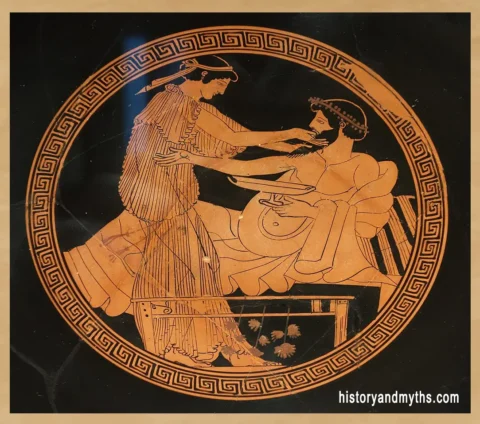
Ancient Greek Music and Performance: How Sound Shaped Rituals
Ancient Greek music was not separate from daily life, and it was not used for entertainment alone. It was built into rituals, public performances, and education, shaping how people acted, felt, and participated together. If you were present at a festival, a play, or a ceremony, music was not background—it organized the experience.
This is the key point you need to understand. Greek music worked as a structured system, not a loose art form. It controlled rhythm in ritual, supported meaning in theatre, and guided collective emotion in large gatherings. The sound, the timing, and the performance were all arranged to produce a specific effect on the audience.
You also need to see how it functioned. Music was tied to performance—choruses, instruments, and voices working together in real time. It was experienced collectively. People did not just listen; they reacted, synchronized, and absorbed the same emotional pattern. That is what gave it power.
So the real question is not what instruments the Greeks used, but how music and performance shaped ritual, influenced emotion, and created shared experiences inside Greek society.
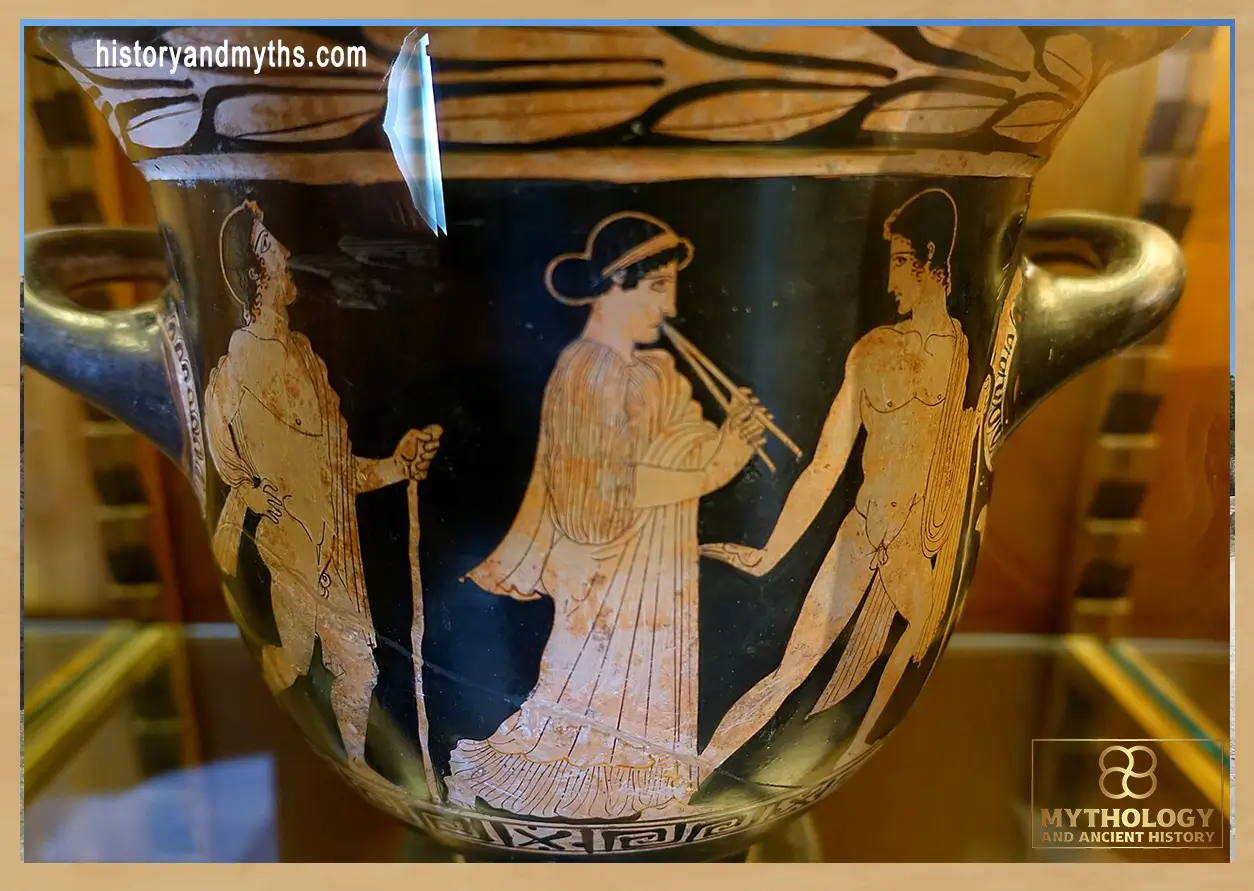
What Greek Music?
Greek music did not exist as an isolated art. It was embedded in structured activities—rituals, performances, and training. You didn’t “go listen to music” as a separate event. You encountered it inside a function: a ceremony, a chorus in a play, or a formal setting where rhythm and sound guided what happened next.
The defining feature is integration. Music combined voice, instrument, and movement into a single act. A chorus did not just sing; it moved in time, followed a pattern, and delivered lines that carried meaning within a larger sequence. The sound was tied to action. Remove one element, and the structure breaks.
Form mattered more than variety. Greek music was built on patterns that could be repeated and recognized. This made it usable in different contexts. A known rhythm or melodic structure could signal the type of moment—procession, lament, celebration—before any explanation was given.
Instruments were part of this system, not the center of it. The lyre and the aulos supported the voice and set the pace. They provided framework and continuity, allowing groups to stay synchronized. The effect was coordination, not display.
| Element | Function | Outcome |
|---|---|---|
| Music Patterns | Organize rhythm and sequence | Coordinated action |
| Ritual Performance | Structure ceremonies | Consistent execution |
| Chorus | Deliver unified sound and movement | Group alignment |
| Instruments | Maintain timing and flow | Performance stability |
| Audience Response | Receive and follow cues | Collective experience |
Music in Ritual and Religion
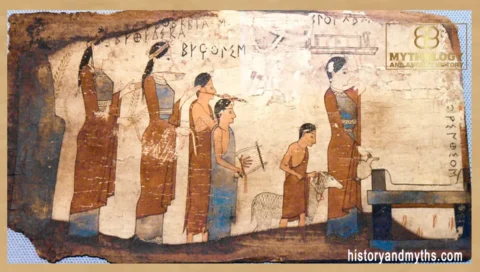
In Greek ritual, music was not decoration. It organized the sequence of the event. Processions, offerings, and invocations followed a pattern, and music set the pace that held those steps together.
Timing was controlled through sound. A steady rhythm kept participants moving as a unit during processions. Changes in tempo or tone marked transitions—approach, offering, completion. People did not need instructions at each step; they followed the structure carried by the music.
The chorus played a central role. It delivered lines tied to the ritual and moved in coordination, making the sequence visible and audible at the same time. This created a shared focus. Attention did not scatter because the same cues reached everyone simultaneously.
Music also defined the type of moment. Certain patterns signaled lament, others celebration. That distinction mattered in religious settings, where the correct tone had to match the act being performed. The form guided participants toward the appropriate response.
Repetition reinforced the structure. The same sequences were used across events, which made them predictable and easier to follow. Participants learned the pattern through exposure, not instruction. Over time, the ritual became self-sustaining through its own rhythm.
In practice, music made ritual executable. It set timing, coordinated movement, and fixed the form of the event, allowing large groups to act in a consistent way without continuous direction.
Music in Public Performance (Theatre)
In Greek theatre, music did not sit behind the action—it carried part of it. Dialogue moved the plot, but the chorus—supported by instruments—structured the rhythm of the performance and clarified its meaning.
The key function was control of pace. Scenes shifted between spoken lines and choral sections. The music marked those transitions and reset the audience’s attention. Without it، the performance would feel fragmented. With it، the sequence stayed coherent.
The chorus acted as a bridge. It commented on events, framed what had just happened, and guided interpretation without stopping the flow. Because it moved and sang together, it delivered a unified signal that the audience could follow immediately.
Instruments supported this structure. The aulos set tempo and sustained continuity across sections. It kept performers aligned and prevented drift in timing, which is critical when multiple voices and movements have to stay synchronized.
Another function was emphasis. Music highlighted key moments—entry, turning points, and closure. It did not add new information as much as it directed attention to what mattered at each stage.
In practice, theatre used music to organize the performance into a controlled sequence, maintain coherence, and guide the audience through the shifts in action and meaning.
Music and Emotion
Greek music was designed to produce a controlled emotional response, not just accompany events. The goal was not individual expression, but alignment of feeling across a group.
This worked through structure, not randomness. Rhythm, repetition, and tone created a predictable pattern that the audience could follow. As the pattern continued, people began to synchronize with it, both physically and mentally. That is where the effect happens.
Different musical forms signaled different emotional states. A slow, measured pattern could support restraint or reflection. A faster, more intense sequence could drive tension or urgency. The audience did not need explanation. The structure of the sound directed the response.
Because the experience was shared, the effect multiplied. Individuals were not reacting in isolation. They were reacting within a group that was receiving the same cues at the same time. This created collective emotion, which is stronger and more stable than individual reaction.
Control mattered. The sequence of sound could build, hold, and release tension in a planned way. That made the emotional response part of the design, not a byproduct. Performers were not guessing. They were following a structure known to produce a specific effect.
- Greek music structured ritual and public performance
- Sound patterns controlled timing and movement
- Chorus synchronized group behavior
- Music shaped shared emotional response
- Performance created coordinated collective experience
© historyandmyths.com — Educational use
Instruments as Tools (Not Objects)
Greek instruments were not valued as standalone pieces. They were used because they did specific jobs inside a structured performance. The instrument mattered only if it supported timing, coordination, or clarity.
The lyre worked as a stabilizer. It provided a clear rhythmic frame for voice-based performance. In settings where precision mattered—recitation, training, controlled delivery—the lyre kept the sequence steady and predictable.
The aulos did something different. It drove intensity. Its sound could sustain continuous flow and push momentum forward, which made it effective in larger, more dynamic settings like public performance. It helped maintain alignment when multiple performers had to stay synchronized.
Neither instrument was used to dominate. Both were integrated with the voice and the movement. Their role was to hold the structure together, not to draw attention away from it.
Choice depended on context. A setting that required control and clarity favored one approach. A setting that required energy and continuity favored another. The instrument was selected based on what the performance needed to achieve, not on preference.
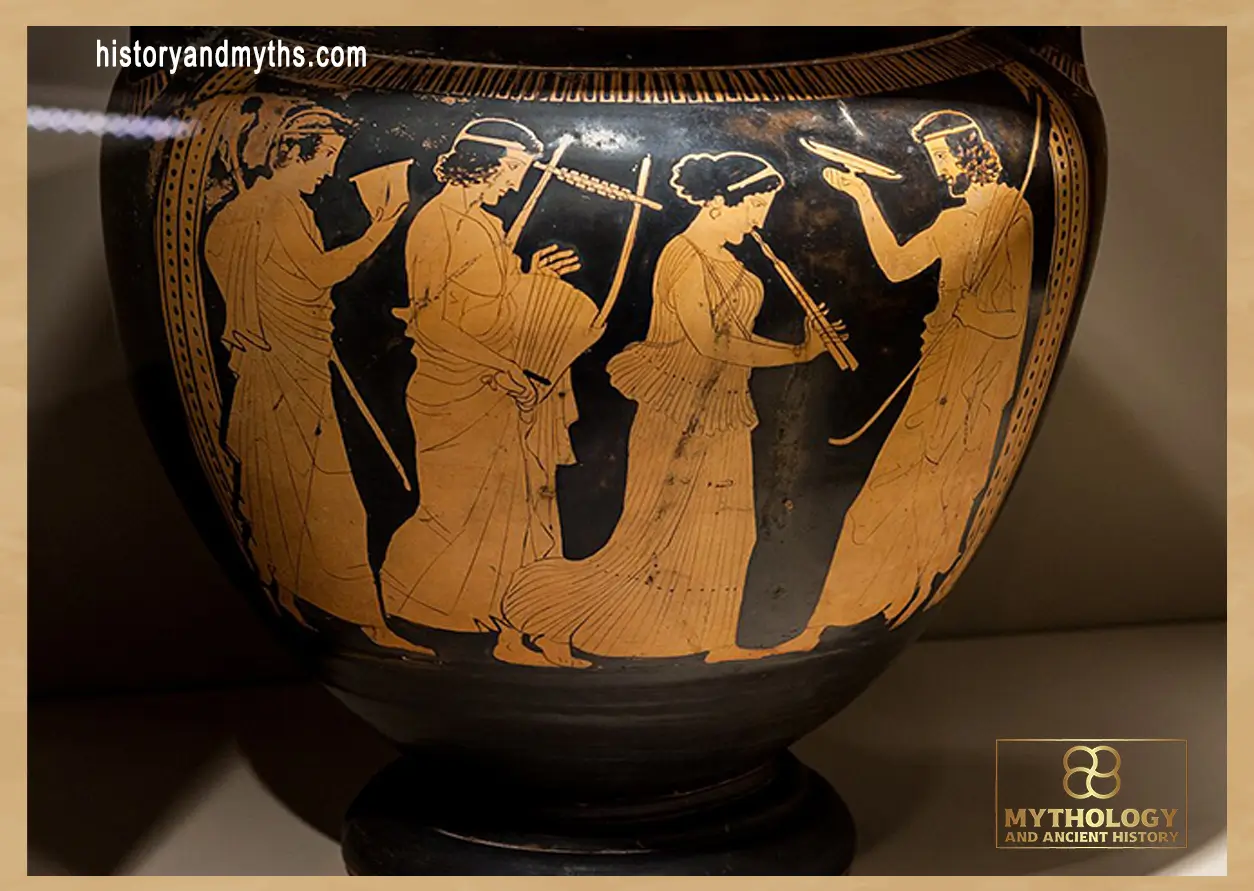
Performance as a Social Experience
Greek performance was built to be experienced together, not consumed individually. The setup—chorus, space, sequence—was designed so that everyone present received the same cues at the same time. That is what turns performance into a shared event rather than a series of separate reactions.
The audience was not passive. Even without speaking, it followed the same rhythm and transitions. When the chorus shifted pace or tone، the change reached the entire group at once. Attention moved collectively. This is what kept large gatherings coherent without constant direction.
Space reinforced this. Performances took place in open settings where sound and movement were visible to all. There were no private viewpoints. What happened on stage was projected outward, making it easier for the audience to stay aligned with the sequence.
Repetition played a role again. Familiar patterns allowed people to anticipate what was coming next. That reduced confusion and kept the group synchronized. Over time، this created a shared understanding of how performance unfolds, even for those without formal training.
The result was not just entertainment. It was coordination at scale. People experienced the same structure, reacted within the same timing, and carried that shared experience beyond the event itself.
Training and Discipline
Greek music was learned as a form of control over timing and behavior, not as a loose creative activity. Training focused on keeping voice, movement, and rhythm aligned under fixed patterns. If alignment broke, the performance lost coherence.
The chorus is the clearest example. It required multiple participants to move and sound as one unit. That only works with repetition and strict coordination. Individuals had to adjust to the group, not the other way around. Precision came from practice, not improvisation.
Instruction emphasized sequence. Participants learned when to enter, how long to hold a line, and how to transition without breaking the flow. These are operational skills. They ensure the structure holds in real conditions.
Correction was immediate. Small errors—timing, pitch, movement—were addressed because they affected the entire group. The goal was not personal expression. It was consistent execution.
This carried into education. Music training was used to develop discipline, attention, and responsiveness. Students learned to follow patterns accurately and adapt within them. That had value beyond performance; it shaped how individuals functioned in coordinated settings.
Music as a System (Not Just Art)
Greek music only works when you see it as part of a larger operating system, not an isolated form of art. It connected ritual, performance, training, and group behavior into one continuous structure.
The system held because each part depended on the others. Ritual needed timing. Performance needed coordination. Groups needed alignment. Music provided the mechanism that kept all of that functioning together. Remove it, and the sequence breaks.
It also sustained itself. Repeated use across ceremonies and performances created stable patterns. People learned them through participation, not theory. That made the system durable. It did not rely on explanation—it relied on execution.
Another key feature is transferability. The same structures could be used in different settings—religious, public, educational—without losing effectiveness. Music carried the pattern from one context to another, keeping behavior and response consistent.
The outcome was control at scale. Large groups could act, react, and transition together without direct instruction. The system worked because it embedded guidance inside sound and sequence, not in constant commands.
- Greek music was integrated into ritual and public life
- It structured timing, movement, and performance
- Music shaped collective emotional response
- Instruments supported coordination, not display
- Performance created shared group experiences
- Training ensured precision and discipline
- Music functioned as a system, not just art
Frequently Asked Questions
What was the role of music in ancient Greece?
It structured rituals, performances, and collective experiences.
Was Greek music used for entertainment?
Not primarily. It served functional roles in society and ritual.
What instruments did the Greeks use?
Common instruments included the lyre and the aulos.
How did music affect audiences?
It guided emotional response and synchronized group behavior.
What was the role of the chorus?
It delivered coordinated sound and movement in performances.
Was music part of education?
Yes. It was used to train discipline and coordination.
Why is Greek music important?
It shaped how people experienced rituals and public events.
Sources & Rights
- West, M. L. Ancient Greek Music. Oxford: Oxford University Press, 1992.
- Landels, John G. Music in Ancient Greece and Rome. London: Routledge, 1999.
- Barker, Andrew, ed. Greek Musical Writings. 2 vols. Cambridge: Cambridge University Press, 1984–1989.
- Mathiesen, Thomas J. Apollo’s Lyre: Greek Music and Music Theory in Antiquity and the Middle Ages. Lincoln: University of Nebraska Press, 1999.
- Csapo, Eric, and William J. Slater. The Context of Ancient Drama. Ann Arbor: University of Michigan Press, 1995.
- Wilson, Peter. The Athenian Institution of the Khoregia. Cambridge: Cambridge University Press, 2000.
- Goldhill, Simon. Reading Greek Tragedy. Cambridge: Cambridge University Press, 1986.
- Hall, Edith. Greek Tragedy: Suffering under the Sun. Oxford: Oxford University Press, 2010.
- Burkert, Walter. Greek Religion. Cambridge, MA: Harvard University Press, 1985.
- Nagy, Gregory. Poetry as Performance: Homer and Beyond. Cambridge: Cambridge University Press, 1996.
- Pickard-Cambridge, Arthur. The Dramatic Festivals of Athens. Oxford: Oxford University Press, 1968.
- Cartledge, Paul. Ancient Greece: A Very Short Introduction. Oxford: Oxford University Press, 2011.
- Osborne, Robin. Greece in the Making: 1200–479 BC. London: Routledge, 1996.
- Hornblower, Simon, and Antony Spawforth, eds. The Oxford Classical Dictionary. 4th ed. Oxford: Oxford University Press, 2012.
- Power, Timothy. The Culture of Kitharōidia. Washington, DC: Center for Hellenic Studies, 2010.
- Calame, Claude. Choruses of Young Women in Ancient Greece. Lanham: Rowman & Littlefield, 2001.
- Stehle, Eva. Performance and Gender in Ancient Greece. Princeton: Princeton University Press, 1997.
- Murray, Penelope, and Peter Wilson, eds. Music and the Muses: The Culture of Mousikē in the Classical Athenian City. Oxford: Oxford University Press, 2004.
- Franklin, John Curtis. Lyre and Aulos: Musical Traditions in Ancient Greece. Cambridge: Cambridge University Press, 2013.
- LeVen, Pauline. The Many-Headed Muse: Tradition and Innovation in Late Classical Greek Lyric Poetry. Cambridge: Cambridge University Press, 2014.
Written by H. Moses — All rights reserved © Mythology and History