How Ancient Greek Soldiers Fought Inside the Phalanx
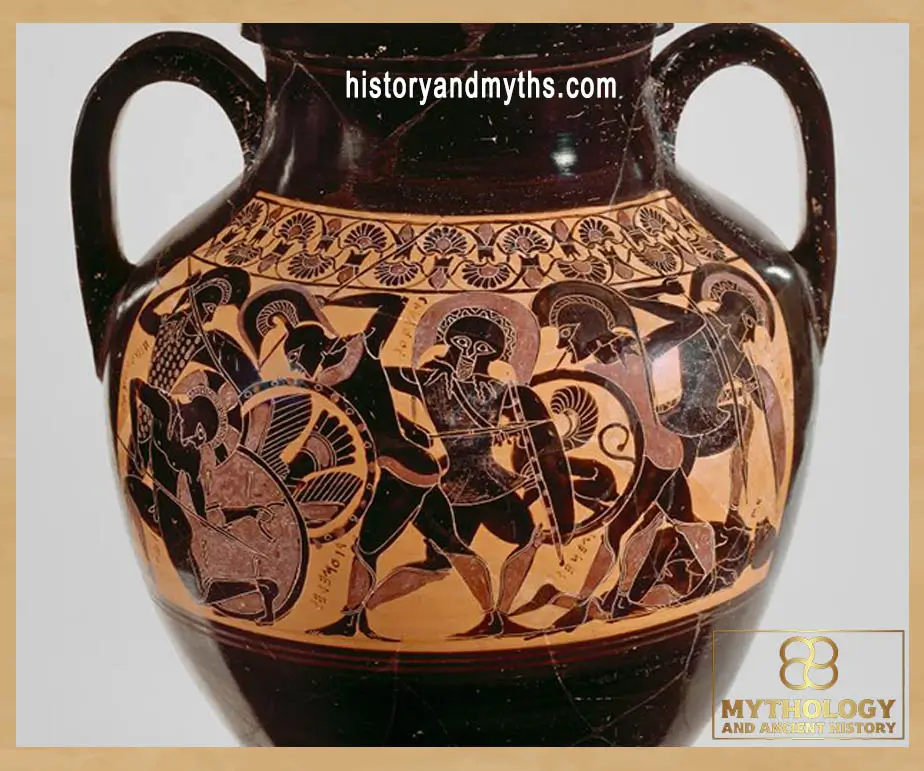
Fighting inside a Greek phalanx was not an experience of open movement or individual combat skill. Hoplites stood packed tightly beside one another with limited visibility, restricted weapon movement, and constant physical pressure from both allies and enemies. A soldier’s survival depended heavily on the stability of the formation around him, because losing alignment or creating a gap could expose the entire line. Inside the phalanx, men fought through short spear thrusts, shield coordination, endurance, and collective discipline rather than personal freedom on the battlefield.
Why Individual Freedom Disappeared Inside the Formation
A hoplite inside the phalanx could not fight as an independent warrior once the battle line closed.
Movement depended on the line. Soldiers advanced, stopped, and turned according to the pace of the formation rather than personal choice.
Shield positioning restricted space. Large overlapping shields forced hoplites to remain close together to preserve collective protection across the front.
Leaving position endangered nearby soldiers. A man stepping too far forward, backward, or sideways could expose gaps that weakened the line around him.
Combat decisions became collective. Survival relied more on maintaining formation stability than on pursuing individual attacks or personal initiative.
Battle compressed personal control. Noise, pressure, and limited visibility reduced a soldier’s ability to react freely once contact began.
Inside the phalanx, individual freedom disappeared because the formation itself became the primary weapon and the primary protection.
| Battle Condition | What the Hoplite Experienced | Effect on Combat |
|---|---|---|
| Dense Formation | Restricted movement and spacing | Reduced individual freedom |
| Limited Visibility | Shields, dust, and bodies blocked vision | Fragmented battlefield awareness |
| Close Contact | Short spear thrusts under pressure | Compact and controlled fighting |
| Formation Instability | Gaps and uneven pressure spread fear | Threatened line cohesion |
| Exhaustion | Continuous strain from armor and pressure | Reduced combat effectiveness |
What a Hoplite Could Actually See During Battle
A hoplite inside the phalanx fought with a narrow and fragmented view of the battlefield.
The shield blocked much of the front. Large round shields protected the body but also reduced direct forward visibility during close formation fighting.
Nearby bodies limited awareness. Soldiers stood shoulder to shoulder, making it difficult to see beyond the first ranks or track wider battlefield movement.
Dust and motion obscured detail. Advancing formations disturbed the ground continuously, especially during collision and sustained pressure.
Most information came indirectly. Hoplites often understood the state of the battle through movement inside the line rather than through clear visual observation.
Confusion increased after contact. Once formations compressed together, soldiers focused mainly on immediate threats directly ahead or beside them.
A hoplite usually experienced battle through restricted perception rather than through a clear understanding of the entire fight.
How Soldiers Attacked in Such Limited Space
Combat inside the phalanx relied on compact and controlled movements rather than wide, aggressive strikes.
Spears were used with short forward thrusts. Dense ranks left little room for large motions, forcing hoplites to attack through narrow openings between shields.
Balance mattered constantly. A soldier pushing too far forward risked losing footing or disrupting the spacing needed to keep the line stable.
Targets appeared briefly. Exposed areas around the face, throat, or shoulders became the main opportunities for attack during close contact.
Weapon use depended on timing. Hoplites often attacked when pressure shifted or when opposing shields momentarily opened space in the line.
Coordination increased effectiveness. Soldiers fought more successfully when the formation around them maintained steady alignment and controlled pressure.
Combat inside the formation rewarded precision and stability more than speed or dramatic individual movement.
How Hoplites Protected Each Other
The phalanx survived because each soldier helped shield the men beside him as much as himself.
Shields overlapped across the line. A hoplite’s shield covered part of the soldier next to him, creating a connected defensive wall rather than isolated protection.
Mutual dependence reduced exposure. Gaps between shields could quickly expose vulnerable areas across multiple ranks during close combat.
Formation stability created safety. Soldiers trusted neighboring hoplites to hold position and maintain alignment under pressure.
Rear ranks reinforced the front. Men behind the leading rows supported the formation by sustaining forward cohesion and replacing weakened sections when possible.
Collective discipline mattered more than personal bravery. A single soldier acting independently could destabilize nearby fighters and weaken the defensive structure of the line.
Protection inside the phalanx came from coordinated positioning rather than from individual defense alone.
What Happened If One Soldier Lost Position
A single disruption inside the phalanx could create problems that spread beyond the individual involved.
Shield coverage weakened immediately. Nearby soldiers lost part of the protection created by overlapping formation spacing.
Spacing became unstable. Men beside the gap were forced to adjust position under pressure while still fighting at close range.
Enemy pressure concentrated on weak points. Opposing soldiers naturally attacked exposed sections where alignment had started to fail.
Panic could spread locally. Visible disorder inside one part of the line often affected confidence in nearby ranks.
Recovery was difficult during active combat. Tight formations and continuous pressure left little opportunity to rebuild structure once instability appeared.
The phalanx depended on continuous positional discipline because small failures could quickly threaten the integrity of the wider formation.
- Hoplites fought with limited visibility and restricted movement
- Soldiers depended heavily on neighboring shields and formation stability
- Combat relied on short spear thrusts inside compressed ranks
- Fear and exhaustion spread quickly through the line
- Formation collapse often began through small positional failures
© historyandmyths.com — Educational use
How Exhaustion Built Inside the Formation
Fatigue developed quickly because hoplites fought under constant physical strain without meaningful relief during contact.
Armor added continuous weight. Shields, helmets, and body armor exhausted the body even before sustained combat pressure intensified.
Restricted movement increased stress. Soldiers could not step away freely to recover balance, breathing, or stamina once the formation locked together.
Heat accumulated inside dense ranks. Crowded formations trapped body heat and reduced airflow during prolonged fighting.
Muscle fatigue affected weapon control. Holding shields steady and delivering repeated spear thrusts became harder as exhaustion spread through the line.
Mental strain amplified physical weakness. Fear, noise, and uncertainty accelerated fatigue during prolonged pressure inside the formation.
Exhaustion weakened formations gradually by reducing stability, coordination, and the ability to maintain collective pressure.
- What Happened When Two Ancient Greek Phalanxes Collided
- How the Greek Phalanx Actually Worked in Battle
- Ancient Greek Warfare Tactics Explained
- How Hoplite Armor Worked in Battle
Why Fear Spread So Quickly in the Line
Fear moved through the phalanx rapidly because soldiers depended heavily on the stability of the men around them.
Instability was physically noticeable. Sudden shifts in pressure, uneven movement, or hesitation inside nearby ranks signaled danger immediately.
Retreat behavior spread visually. A few soldiers stepping backward could trigger uncertainty across connected sections of the formation.
Limited awareness increased anxiety. Hoplites often reacted to local movement without fully understanding what was happening elsewhere on the battlefield.
Crowded conditions intensified panic. Dense formations reduced escape options and made disorder feel more immediate once cohesion weakened.
Confidence depended on collective endurance. Soldiers fought more effectively when the line around them appeared organized and steady under pressure.
Fear spread quickly because the phalanx functioned as an interconnected structure where instability in one section affected the psychological state of others nearby.
How Soldiers Knew the Formation Was Failing
Hoplites often recognized collapse through physical changes inside the line before they understood the larger outcome of the battle.
Shield pressure became uneven. Sudden loss of resistance or uncontrolled movement inside nearby ranks signaled weakening cohesion.
Spacing started to break apart. Gaps widened as soldiers lost alignment or struggled to maintain position under stress.
Commands lost effectiveness. Noise and confusion made organized control increasingly difficult once disorder spread through the formation.
Movement turned inconsistent. Sections of the line could begin shifting backward or sideways instead of advancing together.
Confidence disappeared locally first. Soldiers sensed failure through instability around them long before the entire formation fully collapsed.
The breakdown of the phalanx was usually experienced as a gradual loss of order inside immediate surroundings rather than as a single dramatic moment.
What Fighting Inside the Phalanx Reveals About Greek Warfare
Life inside the phalanx shows that Greek warfare depended on coordinated endurance more than individual combat freedom.
Battlefield success relied on cohesion. Armies remained effective only while formations preserved alignment and mutual support under pressure.
Discipline outweighed personal initiative. Soldiers were expected to maintain position and protect the structure of the line rather than pursue isolated action.
Combat operated collectively. Protection, attack, movement, and morale functioned through the formation as a shared system.
Psychological resilience shaped outcomes. Fear, exhaustion, and confidence influenced whether formations continued holding together during prolonged contact.
The phalanx reduced individuality in combat. A hoplite survived primarily through the performance of the formation surrounding him.
Greek warfare therefore emphasized collective stability and organized pressure as the foundation of battlefield effectiveness.
- Greek hoplites fought as part of a tightly controlled formation
- Visibility and movement became heavily restricted during combat
- Formation cohesion mattered more than individual fighting skill
- Fear and instability spread physically through the line
- Survival depended on collective discipline and endurance
Frequently Asked Questions
How did Greek soldiers fight inside the phalanx?
Hoplites fought in dense formations using short spear thrusts while maintaining shield alignment with nearby soldiers.
Could hoplites move freely during battle?
No. Tight formation spacing greatly restricted personal movement during combat.
What could a hoplite see during phalanx fighting?
Visibility was limited by shields, dust, crowded ranks, and close physical contact.
Why was formation discipline important?
The phalanx depended on collective stability because gaps or disorder could expose the entire line.
How did fear spread inside the formation?
Soldiers reacted quickly to nearby instability, retreat, or loss of alignment inside the ranks.
Why did hoplites become exhausted so quickly?
Heavy armor, restricted movement, heat, and sustained pressure created rapid physical fatigue.
Sources & Rights
- Hanson, Victor Davis. The Western Way of War. University of California Press.
- Van Wees, Hans. Greek Warfare: Myths and Realities. Duckworth.
- Lazenby, J.F. The Spartan Army. Aris & Phillips.
- Anderson, J.K. Military Theory and Practice in the Age of Xenophon. University of California Press.
- Krentz, Peter. “The Nature of Hoplite Battle.” Classical Antiquity.
- Cartledge, Paul. The Spartans. Vintage Books.
- Snodgrass, Anthony. Arms and Armor of the Greeks. Johns Hopkins University Press.
- Sabin, Philip. Lost Battles. Continuum.
- Thucydides. History of the Peloponnesian War.
- Xenophon. Hellenica.
- Herodotus. The Histories.
- Plutarch. Life of Lycurgus.
Written by H. Moses — All rights reserved © Mythology and History