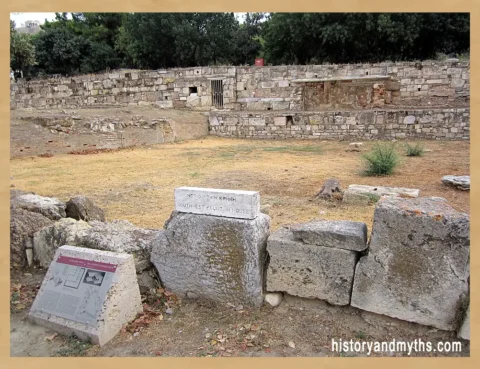
Greek Theatre: How Drama, Structure, and Performance Worked
Greek theatre was not simply a place for entertainment. It was a structured system designed to control how performance was seen, heard, and experienced by a large audience at once. Every element—from the shape of the seating to the use of masks and voice—worked together to deliver a clear and unified experience.
The design of the theatre itself solved practical problems. Thousands of spectators had to see the actors and hear their voices without modern technology. This was achieved through a precise arrangement of space, where seating, stage position, and acoustics were aligned to support performance. Nothing in the structure was accidental.
At the same time, performance followed strict conventions. Actors used controlled movement, exaggerated gestures, and vocal projection to match the scale of the space. The audience was not free to interpret randomly; the system guided attention, emotion, and understanding.
To understand Greek theatre, it is not enough to know its origins or its famous playwrights. The key is to see how architecture, performance, and audience were integrated into a single system that shaped the entire experience from start to finish.
What Is Greek Theatre?
Greek theatre is a system that combines architecture, performance, and audience into a single controlled experience. It is not defined by the play itself, but by how space and performance work together to deliver sound, movement, and meaning to a large audience with clarity.
This system operates through three connected layers. The structure of the theatre controls visibility and acoustics. Performance techniques—voice, gesture, and masks—extend the actor’s presence across distance. The audience is arranged in a way that ensures a shared and synchronized experience rather than individual interpretation.
As a result, performance is not directed at individuals but at the entire space. The audience does not engage privately; it responds collectively within a controlled environment where attention is guided and meaning is reinforced.
What defines Greek theatre is this coordination. A single action on stage is designed to reach everyone at once, not through amplification or technology, but through a system that aligns space, movement, and perception.
| Element | Role in the System | Effect on Audience |
|---|---|---|
| Theatre Layout | Organizes seating and stage position | Ensures clear visibility for all spectators |
| Acoustics | Supports voice projection across space | Allows sound to reach large audiences clearly |
| Actor Movement | Controls positioning and gesture | Maintains clarity of action at distance |
| Masks | Simplify expression and identity | Enhance recognition and emotional clarity |
| Audience Arrangement | Positions viewers in a shared field | Creates synchronized collective experience |
Why Theatre Was Central in Greek Society
Greek theatre was not a secondary form of entertainment. It was embedded in public life, where performance served social, political, and religious functions at the same time. Its importance comes from how it gathered large groups of people into a single, shared experience.
Theatre was tied to public festivals, especially those dedicated to Dionysus. These events were organized at the level of the city, not privately, which meant that attendance was collective and structured.
This setting gave theatre a specific role. It allowed ideas, conflicts, and behaviors to be presented in a controlled environment where they could be observed and understood collectively. The performance did not just tell a story—it created a situation where the audience could respond together, reinforcing shared perspectives.
Because of this, theatre functioned as a tool for organizing experience. It aligned attention, directed emotion, and made complex themes accessible to a large audience at once. Its central role in Greek society comes from this ability to structure how people saw, heard, and reacted within a shared public space.
The Structure of Greek Theatre
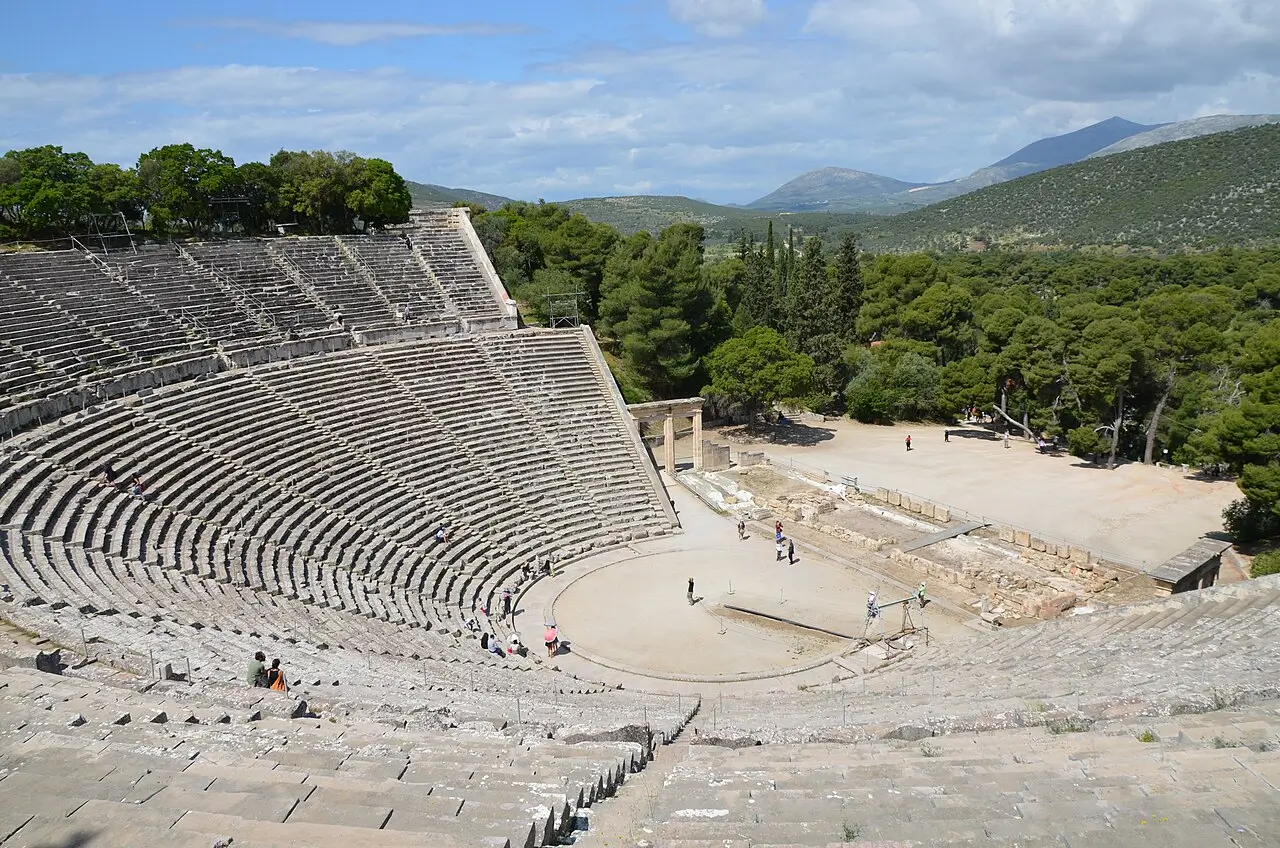
The structure of Greek theatre is designed to solve two problems at once: how to make a performance visible and how to make it audible for a large audience. Every part of the layout contributes to this goal, creating a system where space supports performance.
The seating area is arranged in a semicircle, allowing the audience to face the stage from multiple angles while maintaining clear sightlines. This shape reduces visual obstruction and ensures that attention remains focused on a central point. Elevation is equally important. Rows rise gradually, so each spectator can see over those in front without interference.
At the center lies the performance space, positioned to be equally visible from all sides. Its placement is not arbitrary. It acts as a focal point that anchors both movement and attention. Behind it, the stage structure provides a visual boundary and supports the organization of the scene, preventing the performance from dispersing.
This arrangement creates a unified field of experience. The actor performs within a defined space, the audience observes from a controlled position, and the entire system works together to maintain clarity. What matters is not the individual parts, but how they are aligned to deliver a performance that can be seen and followed without confusion.
How Sound and Visibility Were Controlled
Greek theatre was designed to function without amplification, which meant that sound and visibility had to be built into the structure itself. Control was achieved through the relationship between space, position, and performance, not through added technology.
Sound projection begins with placement. The actor performs at a central point that allows the voice to spread outward evenly. The semicircular arrangement of seating supports this distribution, while the rising tiers prevent sound from being blocked or absorbed by the audience. The shape of the space helps carry the voice, reducing loss over distance.
Visibility follows the same logic. The audience is elevated in a way that maintains clear sightlines toward the stage. There are no competing focal points. Everything directs attention toward the performance area, ensuring that gestures and movement remain readable even from the highest rows.
Performance techniques reinforce this system. Actors use controlled gestures and deliberate movement that can be recognized at scale. Masks and posture amplify expression, making it visible across distance without relying on fine detail.
What results is a coordinated system where architecture and performance work together. The space carries the sound, the layout preserves visibility, and the actor adjusts to both. The audience does not struggle to see or hear—the system removes that problem entirely.
Greek Theatre — Core Insight
Greek theatre functioned as a unified system where architecture, performance, and audience were aligned to deliver a clear and shared experience. The structure controlled visibility and sound, while performance techniques ensured that meaning could be understood at scale.
What made this system effective was its precision. Every element—from seating arrangement to actor movement—was designed to remove confusion and guide attention. The result was a performance that reached thousands of spectators simultaneously without the need for technology.
© historyandmyths.com — Educational use
How Performances Actually Worked
Greek performances were built to function within the constraints of a large, open space. This required a controlled approach where voice, movement, and visual elements were adjusted to reach the entire audience at once.
Actors did not rely on subtle expression. Instead, they used amplified gestures and clear body positions that could be understood from a distance. Movement was deliberate, often limited, so that each action remained readable within the larger space. Nothing was spontaneous. Every shift in position or direction was part of a controlled sequence.
Voice projection was equally structured. Lines were delivered with clarity and rhythm, not natural conversation. The goal was not realism in speech, but audibility and consistency. This ensured that meaning could be carried across the theatre without distortion.
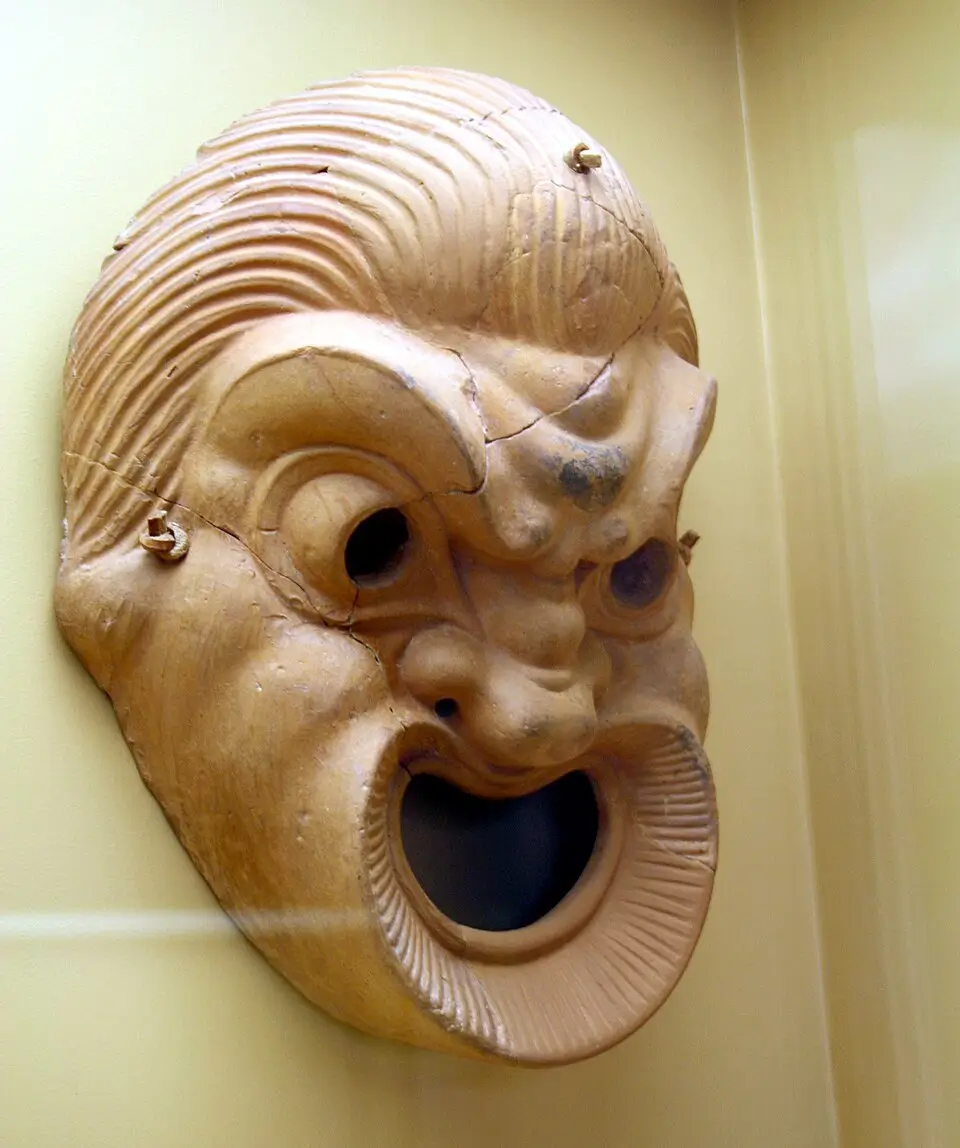
Masks played a functional role within this system. They simplified facial expression into recognizable forms, allowing the audience to identify roles and emotions instantly. Rather than reducing realism, masks increased clarity by removing unnecessary detail.
The performance, therefore, was not about individual actors expressing themselves freely. It was about aligning voice, movement, and visual cues with the structure of the space. The result is a performance that remains clear, controlled, and accessible to everyone in the theatre.
Tragedy vs Comedy — Functional Difference
The difference between tragedy and comedy in Greek theatre is not only in content, but in how each form organizes the audience’s experience. Both follow structured performance, but they direct attention and emotion in different ways.
Tragedy is built to concentrate focus and maintain tension. The structure is controlled, the movement is restrained, and the progression leads toward a clear outcome. The audience is guided through a sequence where attention remains fixed on the central action. There is little interruption, and each element reinforces the same direction.
Comedy operates with more flexibility. It allows shifts in tone, variation in pace, and a broader range of movement. The performance can move between different points of focus, introducing contrast rather than maintaining a single line of tension. This creates a more dynamic experience where attention is redirected rather than sustained.
The distinction is functional. Tragedy narrows the experience to create intensity and coherence. Comedy expands it to allow variation and contrast. Both rely on the same system of space and performance, but they use it to produce different effects on the audience.
What separates them is not simply seriousness versus humor. It is how each form controls structure, pacing, and attention to shape the way the audience experiences the performance.
How Theatre Controlled Audience Experience
Greek theatre was designed to guide how the audience sees, hears, and reacts. The experience is not left open. It is structured from the moment the spectator enters the space.
Seating plays a central role. The arrangement places all viewers in a shared field of vision, facing the same focal point. This reduces distraction and aligns attention. Everyone sees the same action from a controlled perspective, which limits variation in interpretation.
Sound reinforces this alignment. Because the voice reaches the audience evenly, no group receives more or less information. The performance is delivered consistently, which helps synchronize understanding and response across the entire theatre.
The pacing of the performance also contributes to control. Movement, speech, and transitions are regulated so that attention does not drift. Each moment follows a clear sequence, preventing confusion and maintaining focus on the central action.
This combination produces a collective experience. The audience does not respond as separate individuals, but as a unified group. Reactions are shaped by the structure of the space and the rhythm of the performance.
What defines this system is precision. The theatre does not simply host an audience—it organizes how that audience experiences the performance from beginning to end.
Continue Reading
Greek Theatre vs Modern Theatre
Greek theatre and modern theatre operate under different conditions, which leads to different systems of performance and design. The contrast is not only in technology, but in how each approach organizes space, actors, and audience.
Greek theatre is open, large, and fixed in its structure. The performance is built to reach everyone at once without technological support. This requires controlled movement, strong voice projection, and simplified visual signals. The actor performs for the entire space, not for a specific section of the audience.
Modern theatre is enclosed and flexible. Lighting, sound systems, and stage design allow performance to be directed more precisely. Attention can be focused on specific areas, and subtle gestures or quiet speech can be understood clearly. The actor does not need to project to the entire space in the same way.
This difference changes how performance is constructed. Greek theatre relies on clarity and scale, ensuring that every element is readable from a distance. Modern theatre can operate with detail and variation, allowing for more nuanced expression.
The audience experience also differs. In Greek theatre, spectators are part of a large, unified group responding together. In modern theatre, the experience can feel more individual, even within a shared space, because attention can be directed and controlled through technology.
What separates the two is not complexity, but method. Greek theatre solves the problem of scale through structure and performance. Modern theatre solves it through technical control and adaptability.
Why Greek Theatre Still Matters
Greek theatre remains relevant because it established a way of organizing performance that does not depend on technology. It shows how space, voice, and movement can be aligned to deliver a clear and shared experience to a large audience.
The core idea still applies today. Performance must be readable, attention must be directed, and the audience must be able to follow action without confusion. Even with modern tools, these principles remain necessary. Technology can support them, but it does not replace them.
Greek theatre demonstrates that clarity comes from structure. When space is arranged correctly and performance is controlled, meaning can be delivered consistently across an entire audience. This approach continues to influence how stages are designed and how performances are constructed.
What endures is not the form of the theatre, but the system behind it. It defines how a performance can be experienced collectively, with precision and coherence, regardless of scale or setting.
Key Takeaways
- Greek theatre is a system combining space, performance, and audience
- The structure ensures clear sound and visibility without technology
- Actors use controlled movement and voice projection
- Masks simplify expression and improve recognition
- The audience experiences performance collectively, not individually
- Tragedy and comedy differ in how they control attention and pacing
- The system still influences modern theatre design
Frequently Asked Questions
What is Greek theatre?
Greek theatre is a system that combines architecture, performance, and audience to create a controlled and shared experience.
Why was Greek theatre important?
It played a central role in public life, bringing large audiences together for shared cultural and social experiences.
How did Greek theatres work without microphones?
They used architectural design and acoustics to project sound naturally across large spaces.
What is the difference between tragedy and comedy?
Tragedy focuses on sustained tension and structure, while comedy allows variation and shifting attention.
What role did masks play in Greek theatre?
Masks simplified expression and made characters recognizable to large audiences.
How was the audience organized?
The audience was seated in a semicircular arrangement that ensured clear visibility and a shared experience.
How is Greek theatre different from modern theatre?
Greek theatre relies on structure and performance, while modern theatre uses technology to control sound and visibility.
Sources & Rights
- Csapo, Eric & Slater, William. The Context of Ancient Drama.
- Goldhill, Simon. Reading Greek Tragedy.
- Taplin, Oliver. Greek Tragedy in Action.
- Cartledge, Paul. Ancient Greek Political Thought in Practice.
- Rehm, Rush. Greek Tragic Theatre.
- Wiles, David. Greek Theatre Performance.
- Arnott, Peter. Greek Scenic Conventions.
- Storey, Ian & Allan, Arlene. A Guide to Ancient Greek Drama.
- Pickard-Cambridge, A.W. The Dramatic Festivals of Athens.
- Sommerstein, Alan. Greek Drama and Dramatists.
- Easterling, P.E. The Cambridge Companion to Greek Tragedy.
- Segal, Charles. Greek Tragedy and Society.
- Webster, T.B.L. Greek Theatre Production.
- Green, J.R. Theatre in Ancient Greek Society.
- Wilson, Peter. The Athenian Institution of the Khoregia.
- Fischer-Lichte, Erika. The Transformative Power of Performance.
- Scullion, Scott. Three Studies in Athenian Dramaturgy.
- Arnott, Peter. An Introduction to the Greek Theatre.
- Henderson, Jeffrey. Greek Comedy and Society.
- Marshall, C.W. The Stagecraft of Aeschylus.
Written by H. Moses — All rights reserved © Mythology and History