Priests & Temple in Mesopotamian Civilization: Power, Ritual, Society
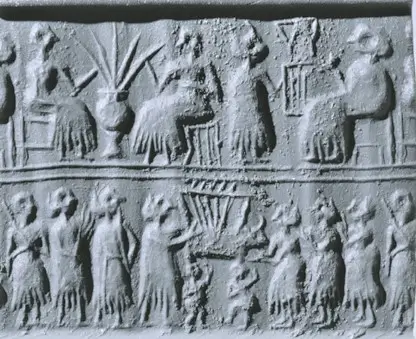
Priests in Mesopotamian civilization were not secluded religious figures devoted only to prayer; they were administrators, economists, healers, diviners, and agents of social control operating at the center of urban life. Temples functioned as major institutions that owned land, managed labor, stored surplus, distributed rations, and legitimized political power—and priests were the professionals who ran this system. This article explains how temple life actually worked in Sumerian, Babylonian, and Assyrian cities: who the priests were, what they did on a daily basis, how they exercised authority, and why the temple was one of the most powerful institutions in Mesopotamian society.
The Temple as an Institution: More Than a Place of Worship
In Mesopotamian civilization, the temple was not primarily a spiritual refuge; it was an institutional hub that structured economic, legal, and social life. From the Early Dynastic period onward, temples functioned as corporate entities owning land, livestock, workshops, and dependent labor forces. They operated alongside palaces, sometimes in cooperation and sometimes in competition, but always as pillars of urban organization.
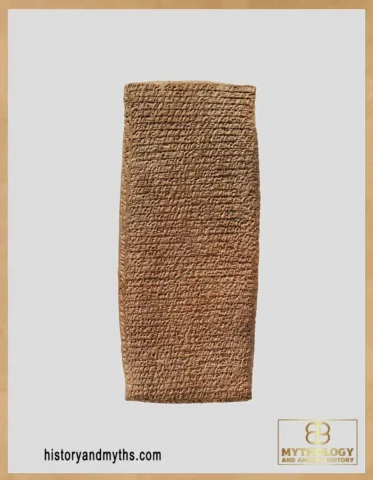
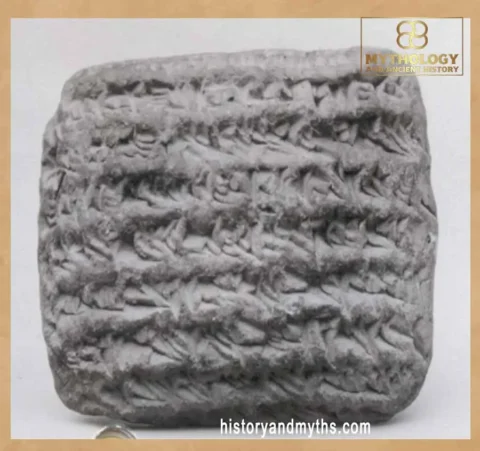
Cuneiform administrative tablets show temples receiving agricultural produce, redistributing rations, paying workers, and financing long-distance trade. This means that “temple life” cannot be understood as ritual activity alone—it was a system of governance embedded in daily survival. The god was legally considered the owner of the temple estate, but in practice, priests acted as managers and representatives of divine property.
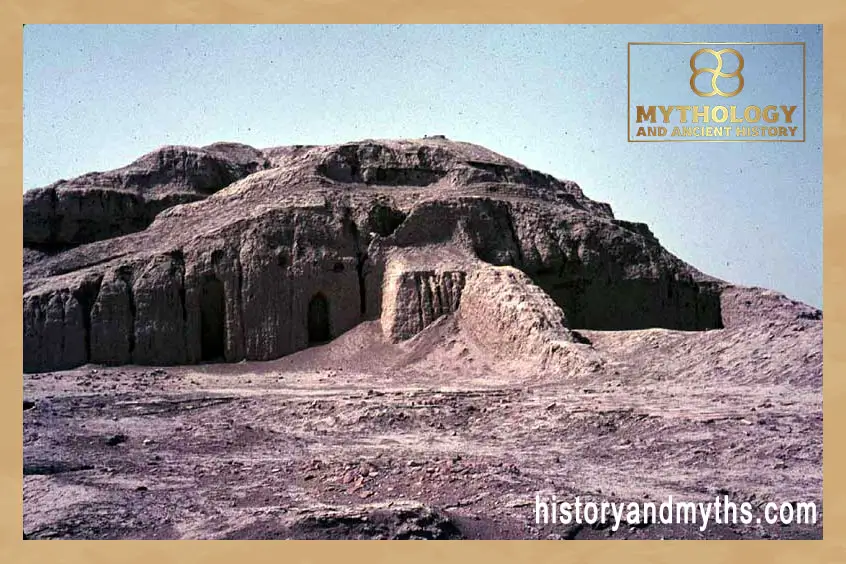
Each major city had a principal temple tied to its patron deity—such as the Eanna of Inanna in Uruk or the Ekur of Enlil in Nippur. These temples anchored urban identity and justified political authority: serving the temple meant serving the god, and serving the god meant sustaining cosmic order. This ideological framework allowed temples to command obedience, labor, and resources without relying on coercion alone.
Temple complexes themselves were large, multi-functional spaces. Beyond the shrine, they included storage rooms, kitchens, workshops, administrative offices, and living quarters for clergy and dependents. The daily rhythm of temple life—offerings, accounting, inspections, and ritual maintenance—mirrored the rhythms of the city economy. In this sense, priests were not isolated religious specialists; they were institutional actors embedded in every layer of Mesopotamian society.
| Priestly Role | Primary Function | Impact on Society |
|---|---|---|
| High Priest | Oversight of temple rituals and administration | Legitimized political and religious authority |
| Diviner | Interpretation of omens and dreams | Guided royal and civic decisions |
| Exorcist-Healer | Diagnosis and treatment of illness | Managed fear, disease, and misfortune |
| Lamentation Priest | Ritual chants during crises | Restored divine favor in emergencies |
| Temple Administrator | Land, labor, and resource management | Sustained temple economy and welfare |
Hierarchy of Priests: Ranks, Specializations, and Authority
Priesthood in Mesopotamia was not a single role but a structured hierarchy with clearly defined ranks, duties, and areas of expertise. Cuneiform texts distinguish between multiple priestly offices, each tied to specific ritual, administrative, or technical functions. This hierarchy ensured that temple operations—both sacred and economic—ran with precision and continuity.
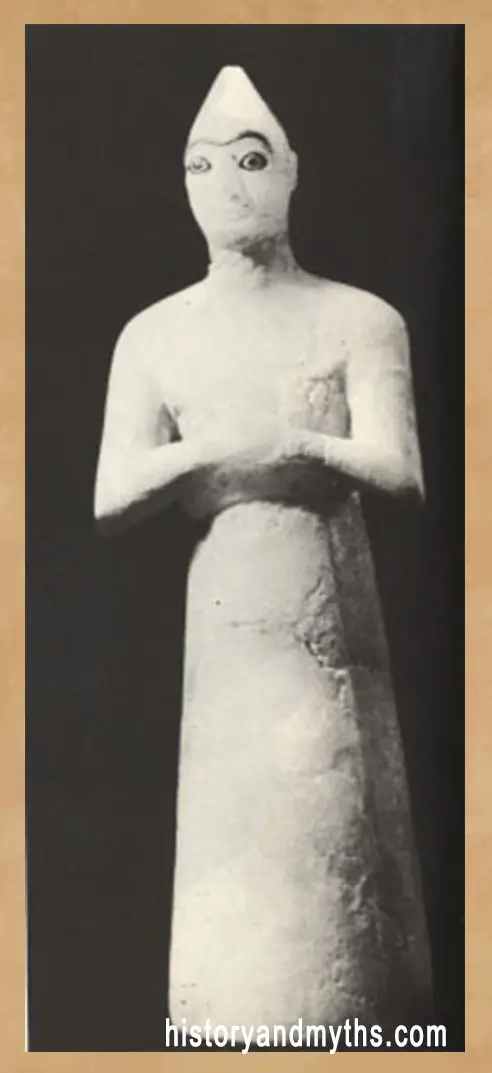
At the top stood high-ranking priests such as the šangû (chief administrator of the temple) and the en or entu priest/priestess, figures who combined religious authority with economic oversight. The šangû managed temple estates, supervised personnel, and handled relations with the palace, making him closer to a chief executive than a purely religious figure. The en-priesthood, often associated with major cults, carried symbolic weight and reinforced the divine legitimacy of the city.
Below them were specialized priests responsible for technical religious knowledge. These included kalû priests (lamentation specialists), āšipu (exorcists), and bārû (diviners). Each specialization required formal training, mastery of texts, and adherence to ritual purity rules. Their authority did not stem from charisma but from expertise—knowing the correct incantation, omen interpretation, or ritual sequence could determine the outcome of illness, legal decisions, or royal policy.
Lower-ranking clergy and temple personnel formed the operational backbone of temple life. These included singers, gatekeepers, scribes, brewers, bakers, and labor supervisors. Many were hereditary temple dependents rather than free professionals. Their roles blur the line between “religious staff” and “temple workforce,” reinforcing the idea that priesthood was embedded in an institutional economy rather than a purely spiritual vocation.
Importantly, priestly authority was collective and procedural, not prophetic. Unlike later religious traditions centered on individual revelation, Mesopotamian priests operated within fixed ritual frameworks. Deviating from established practice was seen as dangerous, not inspired. This emphasis on correct performance over personal belief explains why temples remained stable institutions for millennia, even as dynasties and political regimes changed.
Training, Education, and Temple Schools
Priests in Mesopotamia were not self-taught mystics; they were trained professionals produced by a long, institutional learning process centered in temples and scribal schools. Entry into the priesthood usually began in childhood, often within families already tied to temple service, which ensured continuity of technical knowledge across generations.
Training focused first on literacy and textual mastery. Priests were expected to read and write cuneiform fluently, since rituals, hymns, omens, and medical formulas were preserved in written form. Temple schools taught students how to copy canonical texts accurately—errors were not merely academic mistakes but potential ritual failures. This explains the conservative nature of priestly education: innovation was discouraged, precision rewarded.
Beyond writing, education diverged according to specialization.
- Diviners studied omen series (liver omens, celestial omens, birth anomalies) and learned how to correlate signs with outcomes.
- Exorcists memorized long incantation sequences and diagnostic texts linking symptoms to supernatural causes.
- Lamentation priests trained in music, rhythm, and performance, since ritual sound itself was believed to have efficacy.
Equally important was ritual discipline. Priestly students learned purity rules, dress codes, fasting requirements, and behavioral restrictions. These were not symbolic gestures but technical prerequisites: ritual impurity could invalidate an entire ceremony. Training therefore shaped not only what priests knew, but how they lived.
Temple education also produced administrators. Advanced students were trained in accounting, land management, labor organization, and legal documentation. This dual education—ritual and bureaucratic—explains why priests could move seamlessly between altar and archive. In practice, the same person might perform a ritual in the morning and audit grain deliveries in the afternoon.
Crucially, this system created institutional authority rather than personal authority. A priest’s legitimacy came from certification by tradition and training, not from personal inspiration or moral charisma. Knowledge was cumulative, textual, and transferable, allowing temples to function as long-term knowledge centers independent of individual lifespans.
How Temples Controlled Mesopotamian Society
- Temples owned land, workshops, and labor forces
- Priests linked ritual success to political stability
- Economic management was framed as divine service
- Uncertainty (illness, omens, disasters) was ritualized and contained
- Access to gods was mediated, not direct
© historyandmyths.com — Educational use
Daily Rituals and the Maintenance of Divine Order
Daily ritual activity in Mesopotamian temples was not symbolic devotion; it was a practical system meant to maintain cosmic stability. The gods were believed to govern nature, fertility, health, and political order, but their favor was conditional. Rituals existed to feed, clothe, entertain, and appease the gods so that the world would continue to function normally.
Each day followed a structured liturgical rhythm. Priests began with purification rites—washing, changing garments, and reciting protective formulas—before approaching the divine statue. The god’s image was treated as a living presence, not a symbol. It was awakened in the morning, washed, dressed, anointed with oils, and presented with meals consisting of bread, beer, meat, fruits, and incense. These offerings were later redistributed within the temple economy, reinforcing the link between ritual and resource management.
Sound played a central role. Hymns, chants, and laments were not expressions of emotion but functional tools believed to influence divine perception. Certain melodies and words were considered inherently powerful, capable of calming angry gods or reversing misfortune. Lamentation priests were especially important during crises such as droughts, epidemics, eclipses, or military defeat.
Rituals also responded to specific threats. When omens suggested danger—an eclipse, an abnormal birth, or a disturbing dream—priests performed apotropaic rites to deflect catastrophe. These could involve figurines representing demons or enemies, which were symbolically destroyed to neutralize the threat before it manifested in reality.
Importantly, ritual failure had consequences. If a ceremony was performed incorrectly, the gods might withhold protection, leading to crop failure, disease, or political instability. This belief reinforced priestly authority: correct ritual knowledge was not optional, and only trained specialists could safely interact with the divine.
Thus, daily temple rituals functioned as a form of cosmic maintenance. Just as irrigation canals required constant upkeep, so too did the relationship between gods and humans. Priests were the technicians of this system, ensuring that disorder did not spread from the divine realm into the human world.
Continue Reading
Economic Power of Temples and Priestly Administration
Mesopotamian temples were not marginal religious spaces; they were economic institutions on the scale of palaces. In many city-states, temples ranked among the largest landowners, employers, and distributors of resources. Priests were therefore not only ritual specialists but economic managers operating complex systems of production and redistribution.
Temples owned agricultural land worked by dependent laborers, tenants, and corvée workers. Fields produced grain, dates, wool, and oil, which were stored in temple granaries and recorded meticulously on clay tablets. Priests supervised these records, ensuring accurate accounting of yields, losses, rations, and offerings. The survival of thousands depended on this system, especially in years of drought or flood.
Temple workshops employed craft specialists—weavers, metalworkers, potters, brewers—who produced goods for ritual use and for exchange. Wool textiles, in particular, became a major temple product traded across regions. Priests oversaw production quotas, quality control, and distribution, functioning in roles comparable to modern economic administrators.
Ration distribution formed another core function. Workers, widows, orphans, and temple dependents received standardized food allowances, often documented down to precise quantities of barley or beer. This system created a controlled welfare economy, binding large segments of the population to temple institutions. Loyalty was economic as much as religious.
Priests also played a role in credit and debt management. Temples lent grain or silver, especially before planting seasons, and expected repayment after harvest. Failure to repay could result in debt servitude, reinforcing the temple’s power over vulnerable populations. While legal norms regulated these practices, enforcement often relied on priestly authority.
Crucially, economic power reinforced ritual authority. Since the gods were believed to own temple property, economic mismanagement was framed not as administrative failure but as impiety. This sacralization of resources insulated priestly elites from criticism and legitimized their control over wealth.
In short, temple economies were not separate from religion; they were its material foundation. Priests stood at the intersection of belief, labor, and surplus, making temple life inseparable from the everyday economic realities of Mesopotamian society.
Divination, Healing, and the Control of Uncertainty
One of the most critical roles of priests in Mesopotamian society was managing uncertainty. Life in the Tigris–Euphrates basin was unstable—floods, droughts, disease, and war could erupt without warning. Priests provided structured systems to interpret these threats and respond to them before disaster fully unfolded.
Divination was not superstition but a formal diagnostic science grounded in precedent. Priests believed the gods constantly communicated their intentions through signs embedded in nature. The task of the diviner was to read these signs correctly. Omen collections—compiled over centuries—linked specific phenomena to specific outcomes. A malformed animal liver, an eclipse, an unusual birth, or a dream was not random data; it was a message requiring expert interpretation.
Different priestly specialists handled different domains:
- Hepatoscopists examined the livers of sacrificial animals, mapping marks and irregularities to political or military outcomes.
- Celestial diviners tracked planetary movements, eclipses, and unusual sky events to assess threats to kingship or the city.
- Dream interpreters analyzed symbolic imagery believed to originate from divine sources.
Once danger was identified, priests shifted from interpretation to intervention. This is where exorcists and healers became central. Illness was often understood as the result of divine displeasure, demonic attack, or ritual impurity. Diagnosis involved questioning symptoms, observing behavior, and consulting written medical-ritual texts that linked physical conditions to supernatural causes.
Healing combined practical treatment and ritual action. Herbal remedies, poultices, and dietary prescriptions were used alongside incantations meant to expel the offending force. The priest did not simply treat the body; he treated the relationship between the patient and the divine realm. Recovery signaled restored balance, not merely physical improvement.
This system granted priests immense social authority. When kings faced ominous signs, priestly counsel could delay military campaigns, trigger substitution rituals, or justify political decisions. Ordinary people depended on priests to explain misfortune and offer pathways to relief. In both cases, priests positioned themselves as the mediators between chaos and order.
Importantly, these practices reinforced institutional stability. By framing uncertainty as interpretable and manageable, priests reduced social panic and redirected anxiety into controlled ritual responses. Divination and healing were therefore not marginal activities—they were tools of social regulation, ensuring that fear did not destabilize the city.
Priests, Kings, and Political Legitimacy
In Mesopotamian civilization, political power was never autonomous. Kings ruled, but priests legitimized that rule. Authority flowed from the gods, and priests were the specialists who interpreted divine will, making them indispensable to governance.
Kingship itself was understood as a divine institution. The king was chosen by the gods, but this choice was not self-evident—it had to be confirmed, maintained, and renewed through ritual. Priests conducted coronation rites, purification ceremonies, and annual festivals that symbolically reaffirmed the king’s right to rule. Without these acts, kingship was incomplete, vulnerable to both divine punishment and social challenge.
Temples served as ideological anchors of the state. Major political decisions—wars, building projects, legal reforms—were preceded by divination. If omens were unfavorable, priests could delay or block royal initiatives. This did not mean priests ruled instead of kings, but it ensured that royal power operated within a theologically approved framework.
The relationship was reciprocal. Kings endowed temples with land, labor, and wealth, expanding priestly institutions. In return, priests framed royal success as evidence of divine favor. Military victories were credited to correct ritual observance; defeats were explained as lapses requiring expiation rather than structural failure. This narrative protected both temple and throne.
Crucially, priests also played a role in crisis management. During plagues, famines, or eclipses, public rituals led by priests reassured the population that disorder was being addressed. When kings faltered, priests could redirect blame toward cosmic imbalance rather than political incompetence, stabilizing the system.
At times, tension emerged. Some kings attempted to assert greater control over temples, appointing loyal priests or centralizing ritual authority. Yet even the most powerful rulers never eliminated priestly mediation entirely. To rule without divine endorsement was to rule illegitimately.
Thus, priests were not passive servants of the state; they were co-architects of political power. By controlling access to divine approval, they shaped the limits of kingship and embedded religion into the very structure of Mesopotamian governance.
Temple Life and Ordinary People
For ordinary Mesopotamians, temples were not distant sacred spaces but institutions embedded in daily survival. People interacted with temples through work, rations, vows, healing rituals, and legal transactions. Farmers delivered offerings, laborers received food allocations, and families sought divine protection through priestly mediation.
Access to the gods was structured, not open. Most people could not approach divine statues directly; priests acted as intermediaries who translated human needs into acceptable ritual forms. This reinforced dependence: divine favor was attainable, but only through proper channels.
Temples also functioned as places of refuge and obligation. Widows, orphans, and the indebted often relied on temple distributions, while at the same time becoming economically tied to temple authority. Participation in festivals, processions, and communal rituals integrated individuals into a shared religious calendar that reinforced social cohesion.
In practical terms, temple life shaped how people understood misfortune, justice, and hope. Illness had meaning, suffering had explanation, and recovery required ritual action. This framework reduced uncertainty and gave structure to lives lived under constant environmental and political risk.
By the end, temple institutions achieved something rare: they linked the cosmic, political, and personal into a single system. Priests were the managers of that system, ensuring that divine order, social stability, and everyday life remained interconnected rather than fragmented.
Key Takeaways
- Mesopotamian priests were administrators, not isolated mystics
- Temples functioned as economic, political, and religious centers
- Rituals maintained cosmic and social order
- Divination and healing reduced uncertainty and panic
- Priestly authority legitimized kingship and governance
Frequently Asked Questions
- Were Mesopotamian priests powerful?
Yes. They controlled rituals, resources, and access to divine approval. - Did temples function as economic centers?
Yes. Temples owned land, workshops, and managed labor and rations. - Could ordinary people access the gods directly?
No. Priests acted as mandatory intermediaries. - What role did divination play?
It guided political, military, and personal decisions. - Were priests independent from kings?
They were interdependent, each legitimizing the other.
Sources & Rights
- Bottéro, Jean. Religion in Ancient Mesopotamia.
- Black, Jeremy, and Anthony Green. Gods, Demons and Symbols of Ancient Mesopotamia.
- Van de Mieroop, Marc. A History of the Ancient Near East.
- Hallo, William W. The World’s Oldest Literature.
- Foster, Benjamin R. Before the Muses.
- Oppenheim, A. Leo. Ancient Mesopotamia: Portrait of a Dead Civilization.
- George, Andrew. The Epic of Gilgamesh.
- Jacobsen, Thorkild. The Treasures of Darkness.
- Roth, Martha T. Law Collections from Mesopotamia and Asia Minor.
- Snell, Daniel C. Life in the Ancient Near East.
- Michalowski, Piotr. The Correspondence of the Kings of Ur.
- Leick, Gwendolyn. Mesopotamia: The Invention of the City.
Written by H. Moses — All rights reserved © Mythology and History