love in ancient Egypt
The Poem of Yearning: A Glimpse into Ancient Egyptian Love
Ancient Egyptian Love Poetry and Its Origins
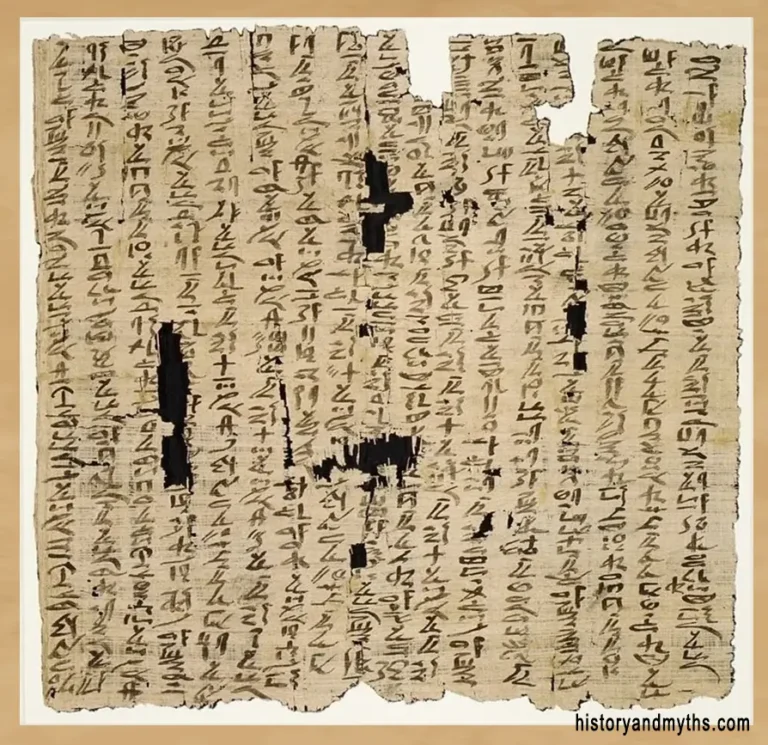
More than thirty centuries ago, specifically during the nineteenth dynasty, this flirtatious poem was written, and the papyrus “Chester’s Beatty” recorded those words that express feelings of intimate love, and the poem came under the title “The Virgin Lover”, and through its words we sense the extent of the delicacy of human feelings among the loving ancient Egyptian, whether woman or man, and it also showed the extent of freedom enjoyed by the Egyptian woman, in expressing the essence of her soul towards her lover who raised her with his voice, and then left her prey to anxiety and eagerness.
| Aspect | Description | Why It Matters |
|---|---|---|
| Love Poetry | Poems expressing personal longing, desire, and emotional intimacy | Shows emotional depth and individuality in ancient Egyptian society |
| Role of Women | Women freely expressed love and desire in literature | Reflects social respect and personal agency for women |
| Religious Dimension | Love linked to goddesses such as Hathor and Isis | Connects emotional life with divine and cosmic order |
| Royal Love | Affection documented between kings and queens | Humanizes rulers and highlights emotional bonds in power structures |
| Common People | Love expressed mainly through poetry and metaphor | Preserves everyday emotional experience beyond elite culture |
Love as a Muse for Ancient Egyptian Myths and Literature
The Cultural Significance of Love in Ancient Egyptian Society
Ancient Symbols and Meeting Places for Lovers
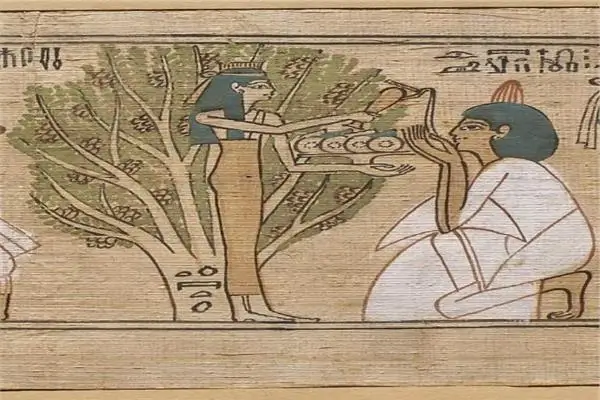
The aforementioned Egyptian papyrus and Austraca pieces recorded many love stories and lovers’ poems in ancient Egypt, adjoined by inscriptions of the symbol of love in Egypt, the Sycamore Fig tree, as it was with its lush shadows, and its large, multiple and hollow trunks, as a haven for lovers to meet in its shadows and the middle of its trunks and hollows. These poems and literary texts left by the ancient Egyptians lived for thousands of years, to chronicle us a lot of tales, hymns, mythical texts and stories of journeys and adventures, besides the tales of lovers, love poems and super-fantasy fairy tales.
Ancient Egyptian Views on Love as a Soothing Divine Gift
“The gift of heaven is poured by nature into the cup of life to soothe its bitter taste”
This is how the ancient Egyptians knew love, so history immortalized them as the first to boast of the passion of love and immortalized it in the world of the living on the walls of their temples, stones, and graves, so that everyone may live with love in the other world.
Respect for Women in Ancient Egyptian Love Poetry
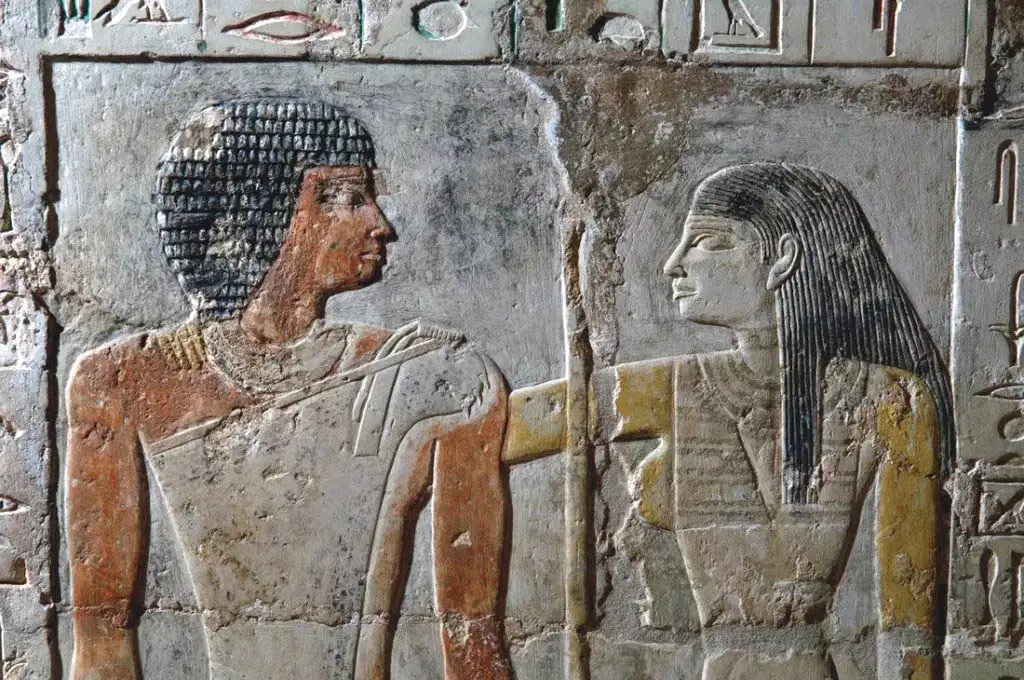
It is strange that the ancient Egyptian, according to those poems that came in those papyri, showed the extent of the Egyptians’ respect for women. Even in poems that he does not call her without a singular title, and that literature has saved us many titles, there are those who called the queen, the beloved or the wife, confirming her position in the hearts, including, as a beautiful-faced title, great loving, bright as the sun, refreshing hearts, lady of joy, lady of the breeze, lady of all ladies, beautiful beauty, lady of the earth, “and other titles contained in many texts of ancient Egyptian literature according to context and occasion.
The Role of Love in Ancient Egyptian Legends and Myths
But if we review some of those poems, they have proven that love was the main motive for the creation of many legends, and that his poems and literature crystallized a closer image of the feelings of the ancient Egyptian with various vocabulary and rhetorical images, embodying them with all his material potential, and this was clearly shown in the Chester Beatty Papyrus, which is the perfect model for love, love and intimate feelings poems, and this was shown in the hymn of Nephthys to Osiris, when she said:
“Just bring, sir, whoever went away, bring to do what you love under the trees, you took my heart away from me thousands of miles, with you, you just want to do what I love, if I have gone to the country of eternity I will accompany you, I am afraid that a ghost will kill me. I came here for my love you, let my body free from your love.”
The Eternal Call: Isis’ Yearning for Osiris
As for the poem of Isis, the first lover, which I wrote in the Berlin Papyrus No. 3008 under the title, The Eternal Call, it said:
Come towards your home, come to your home, you who have no enemies, you beautiful young man, come to your home to see me, do not ever be separated from me, I do not see you, but my heart looks forward to meeting you, and my eyes are looking for you, come, you whose heart has stopped beating, I call you and shout the sky, but you do not hear my voice, you did not love another woman except me
Famous Ancient Egyptian Love Stories Among Kings and Queens
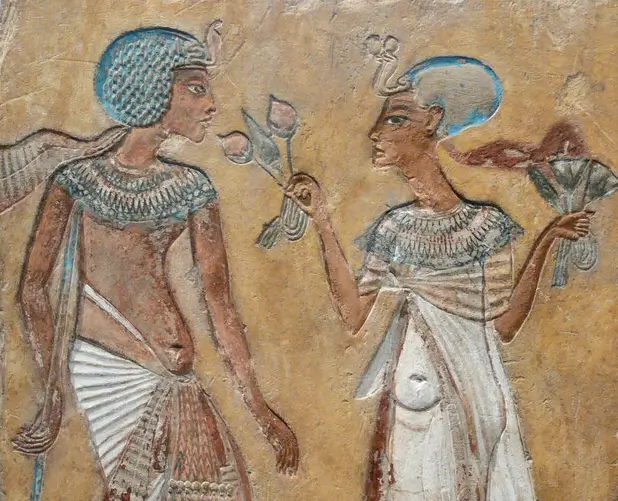
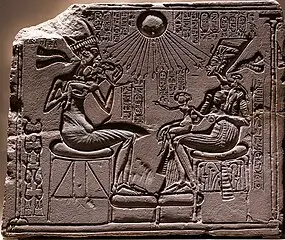
The truth confirmed by inscriptions and papyri is that Egyptian history is full of love stories, especially between kings and queens, especially during the dynasties of 18 and 19, there was the story of the love of King Ahmose I and his wife Ahmose-Nefertari, the story of the love of King Amenhotep III and his wife Queen Tiye, and the story of King Amenhotep IV “Akhenaten” and his wife Nefertiti, who immortalized his love using new artistic styles that were not familiar to Egyptian art before her, in which the artist tended by the king’s order to portray the couple in many family love sessions surrounded by their six daughters.
The Eternal Love of Ramesses II and Nefertari
Love in Ancient Egyptian Civilization
- Emotional Expression: Love was openly described through poetry and personal language.
- Social Balance: Romantic relationships reflected mutual respect rather than domination.
- Cultural Education: Love poems were taught and memorized as part of cultural learning.
- Divine Connection: Love was seen as a gift aligned with cosmic harmony.
- Historical Memory: Emotional life was preserved alongside political history.
Love Among Common People and Its Expression through Poetry
As for the peoples, their love has another character. Despite the availability of the material capabilities of the kings and the rich that contributed to the immortality of their love stories, the simple people had nothing but love to offer to their loved ones, and poems and poetry were their only haven to express their feelings. For them, love was more like a divine creature, but they considered it the universe itself, so the poems showed the extent of joy in meeting the lovers and lovers, as the lover sees his beloved as nature and its pleasures, falling into its traps as the bird falls into the hands of the bird hunter, and Lalouette was translated into French in her book “Sacred Texts and Worldly Texts”, some of the words of adoration,
“The gap of my beloved Lotus bud, her breast is the fruit of tomatoes, her forehead is a ring of acaculum wood, and I am a wild goose, I look at her sent hair, as if I have been baited in a trap.”
The Rich Poetic Language of the Ancient Egyptians in Love
In Laluit’s book “Ancient Egyptian Literature,” she showed the extent of the ancient Egyptian’s literary and linguistic wealth in expressing his affection for his beloved, when we see him flirting with her most important qualities, and he says,
“She is the perfect lover, not like anyone else, she is the most beautiful woman, look! She is like a bright star at the beginning of a happy year, she is radiant and full, her skin is fresh, her eyes gaze is enchanting, she is charmed by the words of her lips, her neck is long, her breast is explosive, her hair is original lapis lazuli, her help is more wonderful than gold, her fingers are lotus blossoms, she has two legs that are the most beautiful among all that is beautiful in her, noble-looking when she walks on the ground.”
Expressions of Romantic Happiness in Ancient Egypt
“I’m your first friend, look!, I am like the orchard that I planted with flowers, with all kinds of delicate fragrant grass, beautiful is the place where I walk when your hand is in my hand, my body is very comfortable, and my heart is joyful because we walk together, I live by hearing your voice, and if I look at you, every look for me is better than eating and drinking.” This is how the Egyptian woman recorded the joy of meeting her lover and enjoying with him the beauty of the singing gardens, which confirms the extent of her freedom in her talk about her love.
Key Takeaways
- Love played a central role in ancient Egyptian emotional and cultural life.
- Poetry preserved personal feelings across thousands of years.
- Women enjoyed notable freedom in expressing love and desire.
- Love was closely connected to religion, mythology, and divine order.
- Both royalty and common people shared similar emotional values.
Frequently Asked Questions
Did ancient Egyptians believe in romantic love?
Yes, love was deeply valued and openly expressed through poetry, art, and daily life.
Were women allowed to express love freely in ancient Egypt?
Ancient Egyptian love poetry shows women expressing desire, longing, and emotional intimacy openly.
What role did love play in religion and mythology?
Love was associated with goddesses like Hathor and Isis and seen as part of cosmic harmony.
How was love preserved in ancient Egyptian culture?
Through papyri, inscriptions, poetry, and artistic depictions.
Did kings and queens express love publicly?
Yes, royal inscriptions and art often emphasized affection and emotional bonds.
How did common people express love?
Mainly through poetry, metaphor, and oral traditions.
Sources & Rights
- Lichtheim, Miriam. Ancient Egyptian Literature, Volume II. University of California Press.
- Assmann, Jan. The Mind of Egypt. Harvard University Press.
- Parkinson, R. B. The Tale of Sinuhe and Other Ancient Egyptian Poems.
- Lalouette, Claire. Textes sacrés et textes profanes de l’ancienne Égypte.
- British Museum. Egyptian Love Poetry Papyri.
Written by H. Moses — All rights reserved © Mythology and History