How Inanna Descended into the Underworld in Sumerian Mythology
The myth of Inanna’s descent to the underworld is one of the most important stories in Sumerian mythology. It follows the goddess Inanna as she enters the realm of her sister Ereshkigal, passes through seven gates, loses the symbols of her power, and ultimately faces death itself. More than a journey into the land of the dead, the myth explores authority, sacrifice, transformation, and rebirth, making it one of the most influential underworld narratives from the ancient Near East.
Inanna’s Purpose and Descent
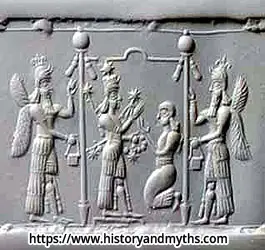
She gathers together all the appropriate divine decrees, adorns herself with her queenly robes and jewels, and is ready to enter the “land of no return”.
Queen of the netherworld is her elder sister and bitter enemy Ereshkigal, the goddess of darkness and gloom and death.
Myth Overview
| Aspect | Details |
|---|---|
| Myth | Inanna’s Descent to the Underworld |
| Main Deity | Inanna |
| Underworld Ruler | Ereshkigal |
| Helper | Ninshubur |
| Rescuer | Enki |
| Major Themes | Death, rebirth, sacrifice, divine authority, transformation |
| Famous Symbol | The Seven Gates of the Underworld |
| Primary Source | Inanna’s Descent to the Netherworld |
Instructions to Ninshubur
Fearing lest her sister put her to death in the netherworld, Inanna instructs her messenger, Ninshubur, who is always at her beck and call, that if after three days she shall have failed to return, he is to go to heaven and set up a hue and cry for her in the assembly hall of the gods.
Moreover, he is to go to Nippur, and there weep and plead before the god Enlil to save Inanna from Ereshkigal’s clutches.
If Enlil should refuse, he is to go to Ur, Ur of the Chaldees. And there repeat his plea before Nanna, the great Sumerian moon-god.
If Nanna, too, refuses, he is to go to Eridu, the city in which Sumerian civilization is said to have originated, and weep and plead before Enki, the “god of wisdom”.
And the latter, “who knows the food of life, who knows the water of life,” will restore Inanna to life.
The Seven Gates and Stripping of Power
seven gates of the netherworld. As she passes through each of the gate’s part of her robes and jewels are removed in spite of her protest.
The Seven Gates of the Netherworld and Inanna’s Stripped Powers
As Inanna descends, she is stripped of a sacred item at each gate—each symbolizing a part of her divine identity and power.
| Gate Number | Item Removed | Symbolic Meaning |
|---|---|---|
| Gate 1 | Crown | Divine authority and rulership |
| Gate 2 | Staff (Measuring Rod/Lapis) | Judgment, wisdom, and command |
| Gate 3 | Necklace | Connection to heaven/divinity |
| Gate 4 | Breastplate | Power and protection |
| Gate 5 | Ring | Identity and covenantal power |
| Gate 6 | Anklets/Bracelets | Feminine beauty and influence |
| Gate 7 | Robe | Full glory, dignity, and majesty |
Death and Judgment in the Netherworld
Finally, after entering the last gate, she is brought stark naked and on bended
knees before Ereshkigal and the seven Anunnaki, the dreaded judges of the netherworld.
These latter fasten upon Inanna their “look of death”. whereupon she is turned into a corpse and hung from a stake.
Ninshubur’s Plea to the Gods
So, pass three days and three nights. On the fourth day, Ninshubur, seeing that his mistress has not returned, proceeds to make the rounds of the gods in accordance with his instructions.
As Inanna had foreseen, both Enlil of Nippur and Nanna of Ur refuse all help.
Enki’s Intervention and Resurrection
Enki, however, devises a plan to restore her to life.He fashions the kurgarru and kalaturru, two sexless creatures, and entrusts to them the “food of life” and the “water of life,” with instructions to proceed to the netherworld and to sprinkle this food and this water sixty times upon Inanna’s suspended corpse. This they do and Inanna revives.
Inanna’s Ascension and Consequences
As she leaves the netherworld, however, to reascend to the earth, she is accompanied by the shades of the dead and by the bogies and harpies who have their home there.
Surrounded by this ghostly, ghastly crowd, she wanders through Sumer from city to city.
Inanna’s Descent at a Glance
One of the most influential myths in Mesopotamian religion, this story follows Inanna’s journey into the underworld ruled by Ereshkigal. As she passes through seven gates, she is stripped of her symbols of power, judged by the Anunnaki, killed, and later restored to life through Enki’s intervention. The myth explores death, rebirth, and the limits of divine authority.
Selected Passages from the Original Sumerian Text
The poem says, according to the translation of the clay tablets in Inanna: Descent to the Netherworld:
Inanna, from the “great above” she set her mind toward the “great
below.”
My lady abandoned heaven, abandoned earth,
To the netherworld she descended,
Inanna abandoned heaven, abandoned earth,
To the nether world she descended,
Abandoned lordship, abandoned ladyship,
To the netherworld she descended.
In Erech she abandoned Eanna,
To the netherworld she descended,
In Badtibira she abandoned Emushkalamma,
To the netherworld she descended,
In Zabalam she abandoned Giguna,
To the netherworld she descended,
In Adab she abandoned Esharra,
To the netherworld she descended,
In Nippur she abandoned Baratushgarra,
To the netherworld she descended,
In Kish she abandoned Hursagkalamma,
To the netherworld she descended,
In Agade she abandoned Eulmash,
To the netherworld she descended.
The seven divine decrees she fastened at the side,
She sought out the divine decrees, placed them at her hand,
All the decrees she set up at (her) waiting foot,
The shugurra, the crown of the plain, she put upon her bead,
Radiance she placed upon her countenance,
The . . . rod of lapis lazuli she gripped in (her) hand,
Small lapis lazuli stones she tied about her neck,
Sparkling . . . stones she fastened to her breast,
A gold ring she gripped in her band,
A . . . breastplate she bound about her breast,
All the garments of ladyship she arranged about her body,
. . . ointment she put on her face.
Inanna walked toward the nether world,
Her messenger Ninshubur walked at her side,
The pare Inanna says to Ninshubur:
“O (thou who art) my constant support,
My messenger of favorable words,
My carrier of supporting words,
I am now descending to the netherworld.
“When I shall have come to the netherworld,
Fill heaven with complaints for me,
In the assembly shrine cry out for me,
In the house of the gods rush about for me,
Lower thy eye for me, lower thy mouth for me,
With . . . lower thy great . . . for me,
Like a pauper in a single garment dress for me,
To the Ekur, the house of Enlil, all alone direct thy step.
“Upon thy entering the Ekur, the house of Enlil,
Weep before Enlil:
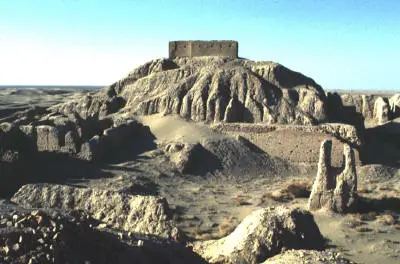
‘O father Enlil, let not thy daughter be put to death in the netherworld,
Let not thy good metal be ground up into the dust of the netherworld,
Let not thy good lapis lazuli be broken up into the stone of the stoneworker,
Let not thy boxwood be cut up into the wood of the wood-worker,
Let not the maid Inanna be put to death in the nether world.’
“If Enlil stands not by thee in this matter, go to Ur.
“In Ur upon thy entering the house of the . . . of the land,
The Ekishshirgal, the house of Nanna,
Weep before Nanna:
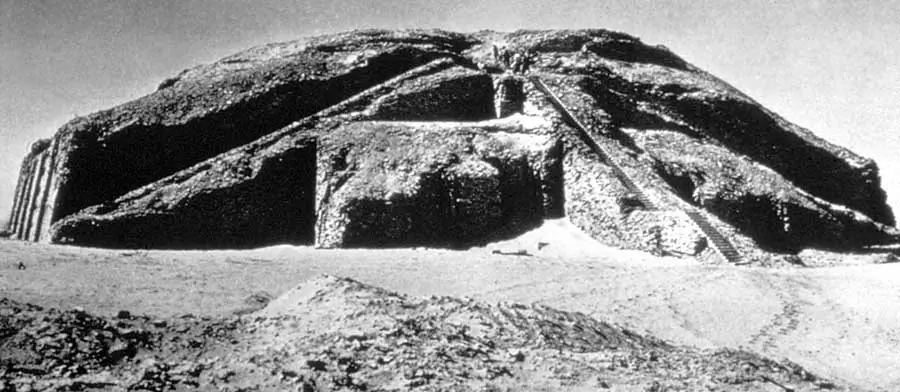
‘O Father Nanna, let not thy daughter be put to death in the nether
world,
Let not thy good metal be ground up into the dust of the netherworld,
Let not thy good lapis lazuli be broken up into the stone of the stoneworker,
Let not thy boxwood be cut up into the wood of the wood-worker,
Let not the maid Inanna be put to death in the netherworld.’
“If Nanna stands not by thee in this matter, go to Eridu.
“In Eridu upon thy entering the house of Enki,
Weep before Enki:
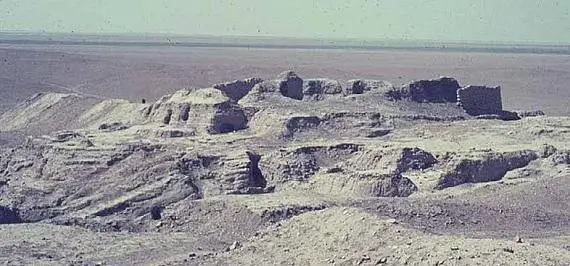
‘O father Enki, let not thy daughter be put to death in the netherworld,
Let not thy good metal be ground up into the dust of the netherworld,
Let not thy good lapis lazuli be broken up into the stone of the stone-worker
Let not thy boxwood be cut up into the wood of the wood-worker,
Let not the maid Inanna be put to death in the netherworld.’
“Father Enki, the lord of wisdom,
Who knows the food of life, who knows the water of life,
He will surely bring me to life.”
Inanna walked toward the netherworld,
To her messenger Ninshubur she says:
“Go, Ninshubur,
The word which I have commanded thee . . .”
When Inanna had arrived at the lapis lazuli palace of the netherworld,
At the door of the netherworld, she acted evilly,
In the palace of the netherworld, she spoke evilly:
“Open the house, gatekeeper, open the house,
Open the house, Neti, open the house, all alone I would enter.”
Neti, the chief gatekeeper of the nether world,
Answers the pure Inanna:
“Who pray art thou?”
“I am the queen of heaven, the place where the sun rises.”
“If thou art the queen of heaven, the place where the sun rises,
Why pray hast thou come to the land of no return?
On the road whose traveller returns not how has thy heart led thee?”
The pure Inanna answers him:
“My elder sister Ereshkigal,
Because her husband, the lord Gugalanna, had been killed,
To witness the funeral rites,
. . .; so be it.”
Neti, the chief gatekeeper of the netherworld,
Answers the pure Inanna:
“Stay, Inanna, to my queen let me speak,
To my queen Ereshkigal let me speak . . . let me speak.”
Neti, the chief gatekeeper of the netherworld,
Enters the house of his queen Ereshkigal and says to her:
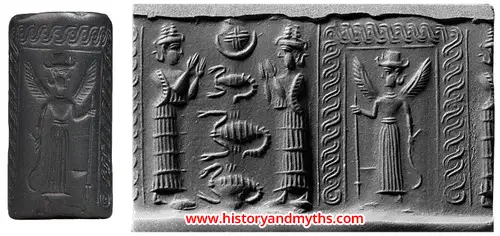
“O my queen, a maid,
Like a god . . .,
The door . . .,
. . .,
In Eanna . . .,
The seven divine decrees she has fastened at the side,
She has sought out the divine decrees, has placed them at her hand,
All the decrees she has set up at (her) waiting foot,
The shugurra, the crown of the plain, she has put upon her head,
Radiance she has placed upon her countenance,
The . . . rod of lapis lazuli she has gripped in (her) hand,
Small lapis lazuli stones she has tied about her neck,
Sparkling . . . stones she has fastened to her breast,
A gold ring she has gripped in her hand,
A . . . breastplate she has bound about her breast,
All her garments of ladyship she has arranged about her body,
. . . ointment she has put on her face.”
Then Ereshkigal . . .,
Answers Neti, her chief gatekeeper:
“Come, Neti, chief gatekeeper of the netherworld,
Unto the word which I command thee, give ear.
Of the seven gates of the nether world, open their locks,
Of the gate Ganzir, the ‘face’ of the netherworld, define its rules;
Upon her (Inanna’s) entering,
Bowed low . . . let her . . .”
Neti, the chief gatekeeper of the netherworld,
Honored the word of his queen.
Of the seven gates of the netherworld, he opened their locks,
Of the gate Ganzir, the ‘face’ of the nether world, he defined its rules.
To the pure Inanna he says:
“Come, Inanna, enter.”
Upon her entering the first gate,
The shugurra, the “crown of the plain” of her head, was removed.
“What, pray, is this?”
“Extraordinarily, O Inanna, have the decrees of the netherworld been
perfected,
O Inanna, do not question the rites of the netherworld.”
Upon her entering the second gate,
The . . . rod of lapis lazuli was removed.
“What, pray, is this?”
“Extraordinarily, O Inanna, have the decrees of the netherworld been
perfected,
O Inanna, do not question the rites of the netherworld.”
Upon her entering the third gate,
The small lapis lazuli stones of her neck were removed.
“What, pray, is this?”
“Extraordinarily, O Inanna, have the decrees of the netherworld been
perfected,
O Inanna, do not question the rites of the netherworld.”
Upon her entering the fourth gate,
The sparkling . . . stones of her breast were removed.
“What, pray, is this?”
“Extraordinarily, O Inanna, have the decrees of the netherworld been
perfected,
O Inanna, do not question the rites of the netherworld.”
Upon her entering the fifth gate,
The gold ring of her hand was removed.
“What, pray, is this?”
“Extraordinarily, O Inanna, have the decrees of the netherworld been
perfected,
O Inanna, do not question the rites of the netherworld.”
Upon her entering the sixth gate,
The . . . breastplate of her breast was removed.
“What, pray, is this?”
“Extraordinarily, O Inanna, have the decrees of the netherworld been
perfected,
O Inanna, do not question the rites of the netherworld.”
Upon her entering the seventh gate,
All the garments of ladyship of her body were removed.
“What, pray, is this?”
“Extraordinarily, O Inanna, have the decrees of the netherworld been
perfected,
O Inanna, do not question the rites of the netherworld.”
Bowed low . . .
Continue Reading
- Why Gods Needed Sacred Cities in Sumerian Mythology
- Ereshkigal: Queen of the Underworld
- Why Sumerian Gods Behaved Like Rulers in Sumerian Mythology
- Sumerian Mythology: Why the Underworld Was Feared
- Sumerian Underworld: The Judges, Gods, and Officials of the Dead
- Dumuzi: Mesopotamian God of Fertility, Love, and Renewal
- Inanna and Dumuzi: The Great Love Story of Sumerian Mythology
The pure Ereshkigal seated herself upon her throne,
The Anunnaki, the seven judges, pronounced judgment before her,
They fastened (their) eyes upon her, the eyes of death,
At their word, the word which tortures the spirit,
. . . ,
The sick woman was turned into a corpse,
The corpse was hung from a stake.
After three days and three nights had passed,
Her messenger Ninshubur,
Her messenger of favorable words,
Her carrier of supporting words,
Fills the heaven with complaints for her,
Cried for her in the assembly shrine,
Rushed about for her in the house of the gods,
Lowered his eye for her, lowered his mouth for her,
With . . . he lowered his great . . . for her,
Like a pauper in a single garment he dressed for her,
To the Ekur, the house of Enlil, all alone he directed his step.
Upon his entering the Ekur, the house of Enlil,
Before Enlil he weeps:
“O father Enlil, let not thy daughter be put to death in the netherworld,
Let not thy good metal be ground up into the dust of the netherworld,
Let not thy good lapis lazuli be broken up into the stone of the stoneworker,
Let not thy boxwood be cut up into the wood of the wood-worker,
Let not the maid Inanna be put to death in the netherworld.”
Father Enlil answers Ninshubur:
“My daughter, in the ‘great above’ . . ., in the ‘great below’ . . .,
Inanna, in the ‘great above’ . . ., in the ‘great below’. . .,
The decrees of the netherworld, the . . . decrees, to their place . . .,
Who, pray, to their place . . .?”
Father Enlil stood not by him in this matter, he went to Ur.
In Ur upon his entering the house of the . . . of the land,
The Ekishshirgal, the house of Nanna,
Before Nanna he weeps:
“O father Nanna, let not thy daughter be put to death in the nether
world,
Let not thy good metal be ground up into the dust of the netherworld,
Let not thy good lapis lazuli be broken up into the stone of the stoneworker,
Let not thy boxwood be cut up into the wood of the wood-worker,
Let not the maid Inanna be put to death in the nether world.”
Father Nanna answers Ninshubur:
“My daughter in the ‘great above’ . . ., in the ‘great below’ . . .,
Inanna, in the ‘great above’ . . ., in the ‘great below’ . . .,
The decrees of the netherworld, the . . . decrees, to their place . . .,
Who, pray, to their place . . .?”
Father Nanna stood not by him in this matter, he went to Eridu.
In Eridu upon his entering the house of Enki,
Before Enki he weeps:
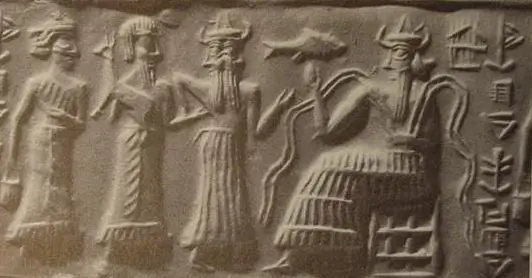
“O father Enki, let not thy daughter be put to death in the netherworld,
Let not thy good metal be ground up into the dust of the netherworld,
Let not thy good lapis lazuli be broken up into the stone of the stoneworker,
Let not thy boxwood be cut up into the wood of the wood-worker,
Let not the maid Inanna be put to death in the netherworld.”
Father Enki answers Ninshubur:
“What now has my daughter done! I am troubled,
What now has Inanna done! I am troubled,
What now has the queen of all the lands done! I am troubled,
What now has the hierodule of heaven done! I am troubled.”
. . . he brought forth dirt (and) fashioned the kurgarru,
. . . he brought forth dirt (and) fashioned the kalaturru,
To the kurgarru he gave the food of life,
To the kalaturru he gave the water of life,
Father Enki says to the kalaturru and kurgarru:
. . . (nineteen lines destroyed)
“Upon the corpse hung from a stake direct the fear of the rays of fire,
Sixty times the food of life, sixty times the water of life, sprinkle upon it,
Verily Inanna will arise.”
. . . (twenty-four(?) lines destroyed)
Upon the corpse hung from a stake they directed the fear of the rays of
fire,
Sixty times the food of life, sixty times the water of life, they sprinkled
upon it,
Inanna arose.
Inanna ascends from the netherworld,
The Anunnaki fled,
(And) whoever of the netherworld that had descended peacefully to the
netherworld.
When Inanna ascends from the netherworld,
Verily the dead hasten ahead of her.
Inanna ascends from the netherworld,
The small demons like . . . reeds,
The large demons like tablet styluses,
Walked at her side.
Who walked in front of her, being without . . ., held a staff in the hand,
Who walked at her side, being without . . ., carried a weapon on the loin.
They who preceded her,
They who preceded Inanna,
(Were beings who) know not food, who know not water,
Who eat not sprinkled flour,
Who drink not libated wine,
Who take away the wife from the loins of man,
Who take away the child from the breast of the nursing mother.
Inanna ascends from the netherworld.
Upon Inanna’s ascending from the netherworld,
Her messenger Ninshubur threw himself at her feet,
Sat in the dust, dressed in dirt.
The demons say to the pure Inanna:
“O Inanna, wait before thy city, we would bring him to thee.”
The pure Inanna answers the demons:
“(He is) my messenger of favorable words,
My carrier of supporting words,
He fails not my directions,
He delays not my commanded word,
He fills heaven with complaints for me,
In the assembly shrine he cried out for me,
In the house of the gods he rushed about for me,
He lowered his eye for me, he lowered his mouth for me,
With . . . he lowered his great . . . for me,
Like a pauper in a single garment he dressed for me,
To the Ekur, the house of Enlil,
In Ur, to the house of Nanna,
In Eridu, to the house of Enki (he directed his step),
He brought me to life.”
“Let us precede her, in Umma to the Sigkurshagga let us precede her.”
In Umma, from the Sigkurshagga,
Shara threw himself at her feet,
Sat in the dust, dressed in dirt.
The demons say to the pure Inanna:
“O Inanna, wait before thy city, we would bring him to thee.”
The pure Inanna answers the demons:
(Inanna’s answer is destroyed)
“Let us precede her, in Badtibira to the Emushkalamma let
us precede her.”
In Badtibira from the Emushkalamma,
. . . threw themselves at her feet,
Sat in the dust, dressed in dirt.
The demons say to the pure Inanna:
“O Inanna, wait before thy city, we would bring them to thee.”
The pure Inanna answers the demons:
(Inanna’s answer destroyed; the end of the poem is wanting)
Key Takeaways
- Inanna voluntarily enters the underworld ruled by Ereshkigal.
- She instructs Ninshubur to seek help if she does not return.
- At each of the seven gates she loses one symbol of divine authority.
- The Anunnaki judges condemn her and she is killed.
- Enlil and Nanna refuse to intervene on her behalf.
- Enki creates special beings and provides the Water and Food of Life.
- Inanna returns to life, making the myth one of the earliest stories of death and rebirth.
Frequently Asked Questions About Inanna’s Descent to the Underworld
Why did Inanna descend to the underworld?
The myth does not provide a single definitive explanation, but it presents her journey as a deliberate descent into the realm ruled by Ereshkigal.
Who ruled the underworld in Sumerian mythology?
Ereshkigal, the sister of Inanna, ruled the underworld and presided over its laws and judgments.
What happened at the seven gates?
At each gate, Inanna surrendered one of her sacred garments or symbols of authority until she stood powerless before the underworld court.
Who judged Inanna?
The seven Anunnaki judges pronounced judgment against her in the underworld.
How was Inanna brought back to life?
Enki created the kurgarru and kalaturru and sent them with the Food of Life and Water of Life to restore her.
Why is this myth important?
It is one of the earliest surviving narratives about death, resurrection, and transformation in world mythology.
What does the story symbolize?
The myth is commonly interpreted as a story of sacrifice, renewal, loss of power, spiritual transformation, and rebirth.
Sources
- Black, Jeremy, and Anthony Green. Gods, Demons and Symbols of Ancient Mesopotamia. London: British Museum Press, 1992.
- Bottéro, Jean. Religion in Ancient Mesopotamia. Chicago: University of Chicago Press, 2001.
- Crawford, Harriet. Sumer and the Sumerians. Cambridge: Cambridge University Press, 2004.
- Dalley, Stephanie. Myths from Mesopotamia. Oxford: Oxford University Press, 2000.
- Electronic Text Corpus of Sumerian Literature (ETCSL). “Inanna’s Descent to the Netherworld.” University of Oxford.
- Foster, Benjamin R. Before the Muses. Bethesda, MD: CDL Press, 2005.
- George, Andrew R. The Babylonian Gilgamesh Epic. Oxford: Oxford University Press, 2003.
- Hallo, William W., and K. Lawson Younger Jr., eds. The Context of Scripture. Leiden: Brill, 2003.
- Jacobsen, Thorkild. The Treasures of Darkness. New Haven: Yale University Press, 1976.
- Kramer, Samuel Noah. History Begins at Sumer. Philadelphia: University of Pennsylvania Press, 1981.
- Kramer, Samuel Noah. Sumerian Mythology. Philadelphia: University of Pennsylvania Press, 1961.
- Lambert, W. G. Babylonian Creation Myths. Winona Lake: Eisenbrauns, 2013.
- Leick, Gwendolyn. A Dictionary of Ancient Near Eastern Mythology. London: Routledge, 1991.
- Leick, Gwendolyn. Mesopotamia: The Invention of the City. London: Penguin Books, 2001.
- Michalowski, Piotr. The Literature of Ancient Sumer. Oxford: Oxford University Press, 2006.
- Roux, Georges. Ancient Iraq. London: Penguin Books, 1992.
- Snell, Daniel C. Religion in the Ancient Near East. Cambridge: Cambridge University Press, 2011.
- Van De Mieroop, Marc. A History of the Ancient Near East ca. 3000–323 BC. Oxford: Wiley-Blackwell, 2015.
- Wolkstein, Diane, and Samuel Noah Kramer. Inanna: Queen of Heaven and Earth. New York: Harper & Row, 1983.
- Zgoll, Annette. The Ancient Mesopotamian Gods and Their World. Münster: Ugarit-Verlag, 2018.
Written by H. Moses — All rights reserved © Mythology and History