Astronomy for Agriculture in Ancient Egypt and the Nile Cycle
Agriculture in ancient Egypt depended on timing more than technique. Farmers needed to know when the Nile would rise, when fields would emerge, and when planting could begin. Without mechanical clocks or meteorological tools, this timing relied on astronomical observation. The sky provided the only stable reference in a landscape shaped by an unpredictable river.
Astronomy was therefore not an abstract science. It was a practical system used to coordinate farming with the Nile’s annual cycle. Observations of stars and seasonal patterns allowed administrators and farmers to anticipate flooding, organize labor, and regulate planting and harvesting. Celestial events mattered because they helped secure food production and economic stability.
This article examines how astronomy functioned as an agricultural tool in ancient Egypt. It explains why farming required astronomical knowledge, how celestial observation shaped the agricultural calendar, and who applied this knowledge in practice. By focusing on use rather than belief, the article presents astronomy as a working system that supported agriculture, administration, and survival.
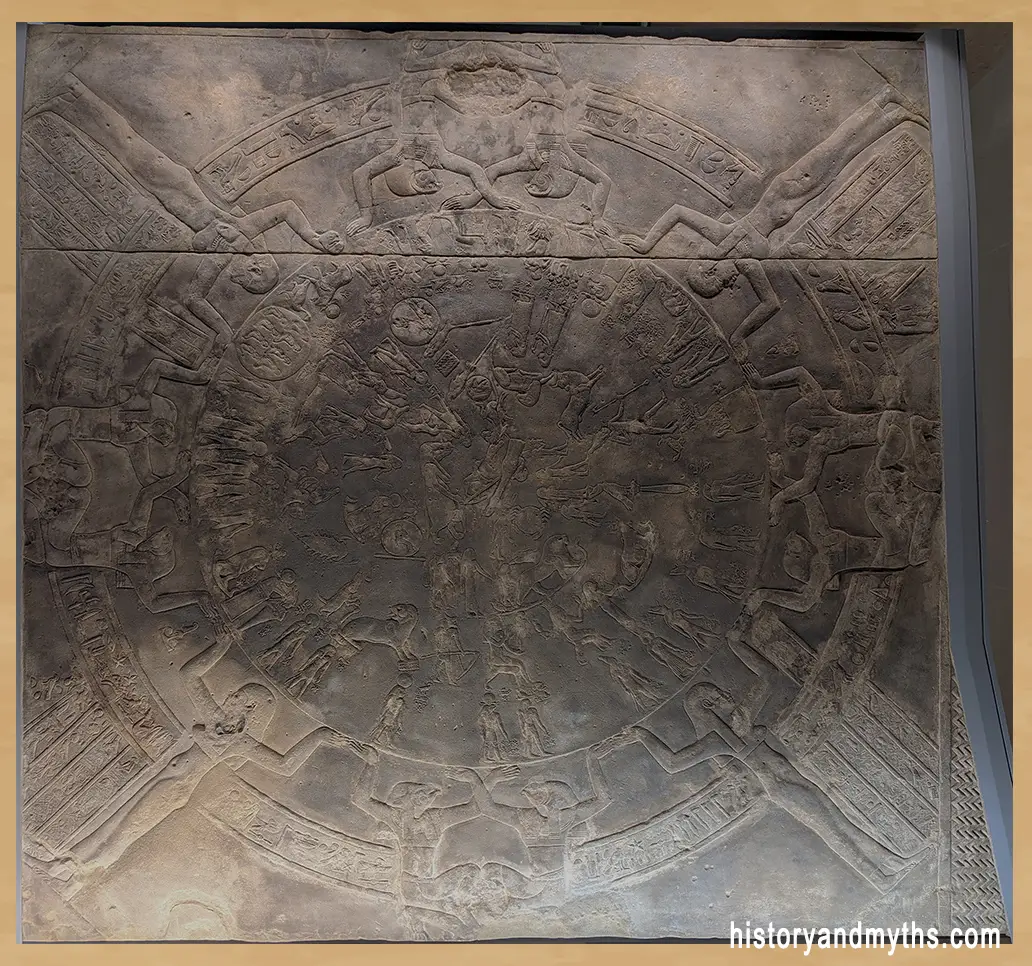
Source: Wikimedia Commons (CC0).
Why Agriculture Needed Astronomy
Agriculture in ancient Egypt was entirely dependent on the Nile, yet the river did not follow a fixed calendar. The annual flood varied in timing and intensity, creating uncertainty for farmers who needed precise moments to prepare fields, sow crops, and organize labor. Without reliable natural signals on the ground, agricultural planning required a stable external reference.
Astronomy provided that reference. Celestial movements were predictable in ways the river was not. Stars rose and set on consistent annual cycles, offering markers that could be observed long before environmental changes became visible. By watching the sky, Egyptian planners gained early warnings that allowed them to prepare for the agricultural year.
This need went beyond farming households. The state depended on agricultural output for taxation, storage, and redistribution. Poor timing meant crop failure, food shortages, and administrative instability. Astronomical observation therefore supported not only cultivation but also economic planning and state control.
The sky functioned as an agricultural calendar before calendars existed in written form. Astronomy translated cyclical celestial patterns into actionable agricultural timing, making it an essential tool in managing land, labor, and food production across the Nile Valley.
| Astronomical Marker | Agricultural Function | Practical Outcome |
|---|---|---|
| Heliacal rising of Sirius | Predict timing of the Nile flood | Early preparation for inundation and field planning |
| Akhet season | Flood period management | Soil renewal and labor reorganization |
| Peret season | Planting and crop growth | Optimized sowing and irrigation timing |
| Shemu season | Harvest and collection | Stable yields and accurate taxation |
| Annual calendar cycle | Synchronization of farming activities | Predictable agricultural rhythm across regions |
Sirius and the Nile Flood
The most important astronomical marker for agriculture in ancient Egypt was the heliacal rising of Sirius. This event—when the star first became visible just before sunrise after a period of absence—occurred shortly before the annual Nile flood. Its regularity made it a reliable signal in an otherwise uncertain environment.
Sirius did not cause the flood, but its appearance consistently preceded it. This correlation allowed Egyptian observers to treat the star as a predictive indicator. Once Sirius rose, preparations for flooding could begin: fields were cleared, labor was organized, and administrative planning shifted toward the coming agricultural cycle.
The importance of Sirius lay in timing, not symbolism. While the star later acquired religious associations, its agricultural value came from observation and repetition. Over generations, the pattern proved dependable enough to structure the beginning of the year and anchor the farming calendar.
By using Sirius as a temporal marker, Egyptian agriculture gained a form of early warning. This reduced uncertainty and allowed both farmers and administrators to act before environmental changes became visible on the ground. In this way, astronomy transformed celestial regularity into agricultural preparedness.
The Agricultural Calendar and Farming Seasons
Astronomical observation allowed ancient Egyptians to divide the year into functional agricultural seasons. These divisions were not abstract timekeeping tools but working frameworks that aligned farming activity with environmental change. The calendar translated celestial patterns into practical phases of cultivation.
Akhet — The Flooding Season
Akhet marked the period of inundation. Fields lay underwater, making cultivation impossible, but this was not idle time. Flooding replenished soil fertility and reset agricultural boundaries. Administrators used this season to plan labor, manage state projects, and prepare for the next planting phase. Astronomy helped anticipate the onset of Akhet, allowing preparation before the flood arrived.
Peret — The Planting Season
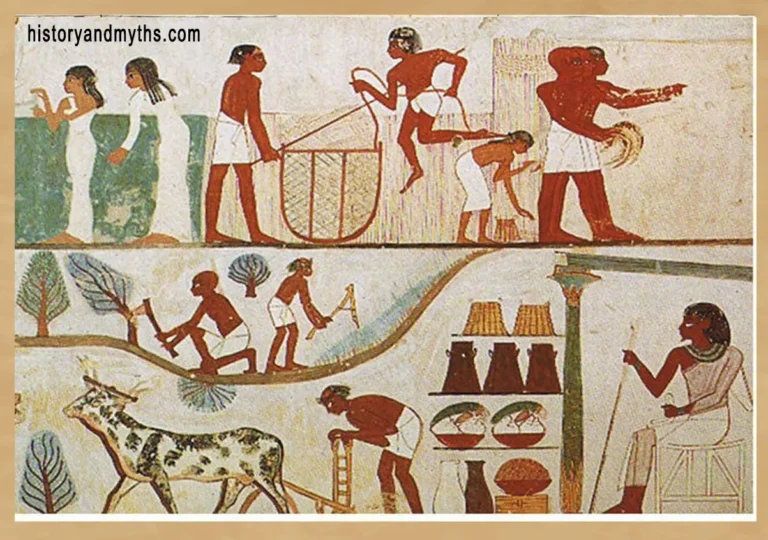
As floodwaters receded, Peret began. This was the most labor-intensive phase of the agricultural year. Fields were sown, canals managed, and growth monitored. Timing was critical: planting too early or too late reduced yields. The calendar ensured that agricultural activity began at the optimal moment, based on predictable seasonal patterns rather than guesswork.
Shemu — The Harvest Season
Shemu marked ripening and harvest. Crops were gathered, measured, and transported to storage facilities. This phase fed directly into taxation and redistribution. Astronomical timing helped ensure that harvesting occurred when crops reached maturity, supporting stable yields and accurate accounting.
Together, these seasons formed a cyclical system that linked sky, river, and land. Astronomy provided the structure that kept this cycle synchronized year after year, transforming observation into agricultural order.
Who Applied Astronomical Knowledge?
Astronomical knowledge in ancient Egypt was not applied directly by farmers observing the sky on their own. It was mediated through specialized groups who observed, recorded, and translated celestial patterns into practical guidance for agriculture.
Priest-astronomers were responsible for systematic observation. Working within temple institutions, they tracked stellar cycles, seasonal markers, and recurring celestial events. Their role was technical as much as religious: maintaining continuity of observation over generations ensured reliable agricultural timing.
Scribes played a critical intermediary role. They recorded observations, maintained calendars, and integrated astronomical timing into administrative schedules. Through documents, notices, and official planning, scribes converted celestial knowledge into instructions that affected planting, labor organization, and taxation.
Farmers themselves rarely needed to understand the astronomy behind the calendar. They operated according to established seasonal rhythms communicated through administrative and communal practice. In this way, astronomical knowledge flowed from observation to administration to agriculture, without requiring universal literacy or direct celestial study.
This division of roles ensured consistency. By centralizing astronomical observation and distributing its results through administrative channels, ancient Egypt reduced local variation and synchronized agricultural activity across the Nile Valley.
How Astronomy Supported Egyptian Farming
- Predictive timing: stellar cycles offered early signals before environmental change.
- Calendar structure: astronomy organized the year into workable farming seasons.
- State coordination: celestial observation supported taxation, labor planning, and storage.
- Risk reduction: advance preparation reduced losses from mistimed planting.
- Practical focus: observation served agriculture, not abstract theory.
© historyandmyths.com — Educational use
Limits of Agricultural Astronomy
Despite its effectiveness, agricultural astronomy in ancient Egypt had clear limits. Celestial observation could indicate seasonal patterns, but it could not control environmental variability. The Nile flood did not rise with the same volume or timing every year, and astronomical markers could signal when change was likely, not how severe it would be.
Astronomy worked best as a framework, not a guarantee. Early or weak floods still caused crop shortfalls, even when timing was correct. Likewise, unexpected environmental disruptions—such as irregular rainfall upstream—could undermine agricultural planning despite accurate celestial observation.
Another limitation was accessibility. Astronomical knowledge was centralized within temples and administration. Local communities depended on transmitted calendars rather than direct observation. This system ensured consistency but reduced flexibility when regional conditions differed.
Finally, astronomy could not replace experience. Farmers still relied on soil conditions, water levels, and practical judgment. Celestial timing guided preparation, but successful agriculture required continuous adjustment on the ground.
These limits do not diminish the system’s value. Instead, they reveal a pragmatic approach: astronomy provided structure and predictability, while human observation addressed variability. Together, they formed a balanced agricultural strategy that sustained Egypt for millennia.
Key Takeaways
- Astronomy in ancient Egypt served agriculture by providing reliable seasonal timing.
- The heliacal rising of Sirius functioned as an early indicator for the Nile flood.
- The agricultural calendar structured farming into Akhet, Peret, and Shemu.
- Astronomical knowledge was applied through priests and scribes, not directly by farmers.
- Celestial observation reduced risk but could not eliminate environmental uncertainty.
- The system balanced predictive structure with on-the-ground agricultural experience.
© historyandmyths.com — Educational use
Frequently Asked Questions
How did astronomy help ancient Egyptian agriculture?
Astronomy provided predictable seasonal markers that helped farmers and administrators time flooding, planting, and harvesting.
What role did Sirius play in Egyptian farming?
The heliacal rising of Sirius signaled the approaching Nile flood, allowing early preparation for the agricultural year.
Was astronomy mainly religious or practical?
In agriculture, astronomy was primarily practical, used for timing and planning rather than religious symbolism.
Who applied astronomical knowledge to farming?
Priest-astronomers observed the sky, while scribes integrated this knowledge into calendars and administrative planning.
How were farming seasons organized in ancient Egypt?
The year was divided into Akhet (flooding), Peret (planting), and Shemu (harvest), aligning agriculture with the Nile cycle.
Could astronomy prevent crop failure?
No. Astronomy reduced uncertainty by improving timing, but it could not control flood strength or environmental variation.
Sources & Rights
- Parker, Richard A. The Calendars of Ancient Egypt. Chicago: University of Chicago Press, 1950.
- Belmonte, Juan Antonio. Egyptian Astronomy and Sacred Landscape. Madrid: Consejo Superior de Investigaciones Científicas, 2009.
- Neugebauer, Otto, and Richard A. Parker. Egyptian Astronomical Texts. 3 vols. Providence: Brown University Press, 1960–1969.
- Clagett, Marshall. Ancient Egyptian Science, Vol. II: Calendars, Clocks, and Astronomy. Philadelphia: American Philosophical Society, 1995.
- Kemp, Barry J. Ancient Egypt: Anatomy of a Civilization. 2nd ed. London: Routledge, 2006.
- Wilkinson, Toby. The Rise and Fall of Ancient Egypt. New York: Random House, 2010.
Written by H. Moses — All rights reserved © Mythology and History