Friendship in Ancient Egypt, Trust, Loyalty, and Daily Life
Modern readers often treat friendship as a private emotional choice. In ancient Egypt, friendship functioned differently. It was not defined by intimacy or personal expression, but by usefulness, reliability, and repeated interaction within shared environments.
Most social bonds formed where people worked, lived, and depended on one another daily. Workshops, fields, construction crews, temple staff, and village communities created conditions where trust mattered more than affection. Friendship emerged from cooperation, not confession.
These relationships were practical. Friends offered support in labor, acted as witnesses, provided protection, and sometimes mediated disputes. In a society where institutions were limited and mobility was low, reliable personal networks reduced risk and increased stability.
Understanding friendship in ancient Egypt therefore requires moving away from modern emotional frameworks. This article examines how friendship operated as a functional social bond-rooted in work, proximity, and trust-and why it mattered for maintaining order in everyday life.
What Friendship Meant in an Egyptian Context
Friendship in ancient Egypt was not defined by personal closeness or emotional disclosure. It was defined by reliability. A friend was someone you could depend on within a shared environment-someone whose behavior was predictable and whose interests aligned with yours over time.
Language reflects this. Terms translated as “friend” often overlap with meanings like companion, associate, or trusted person. The emphasis was not on private feeling, but on public conduct. Friendship was visible through action: cooperation, assistance, and loyalty under pressure.
These bonds formed through repetition. Working together, living nearby, or serving under the same authority created familiarity. Familiarity, when reinforced by consistent behavior, produced trust. Trust-not affection-was the foundation of friendship.
Importantly, friendship did not replace hierarchy. Friends could exist across unequal positions, but roles remained intact. A supervisor and subordinate might be described as friends if cooperation was smooth and dependable. Friendship softened interaction but did not erase structure.
This definition mattered because Egyptian society relied on small, stable groups. When tasks required coordination and risk-sharing, knowing who would act predictably was more valuable than knowing who cared emotionally.
Friendship, in this context, was a social tool. It helped people function within fixed systems by creating dependable links between individuals who interacted daily.
| Aspect | Family Bonds | Friendship Bonds |
|---|---|---|
| Basis of the Relationship | Kinship and blood ties | Trust built through repeated interaction |
| Primary Function | Household continuity and inheritance | Cooperation, support, and risk reduction |
| Social Context | Family and household life | Workplaces, villages, and shared labor groups |
| Role in Conflict | Internal mediation within kinship | Informal mediation and reputation support |
| Relationship to Authority | Embedded within household hierarchy | Operates within hierarchy without challenging it |
| Flexibility | Fixed by birth | Formed and maintained through behavior |
Friendship at Work and Shared Labor
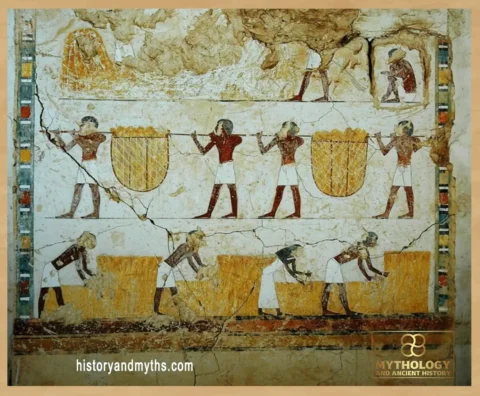
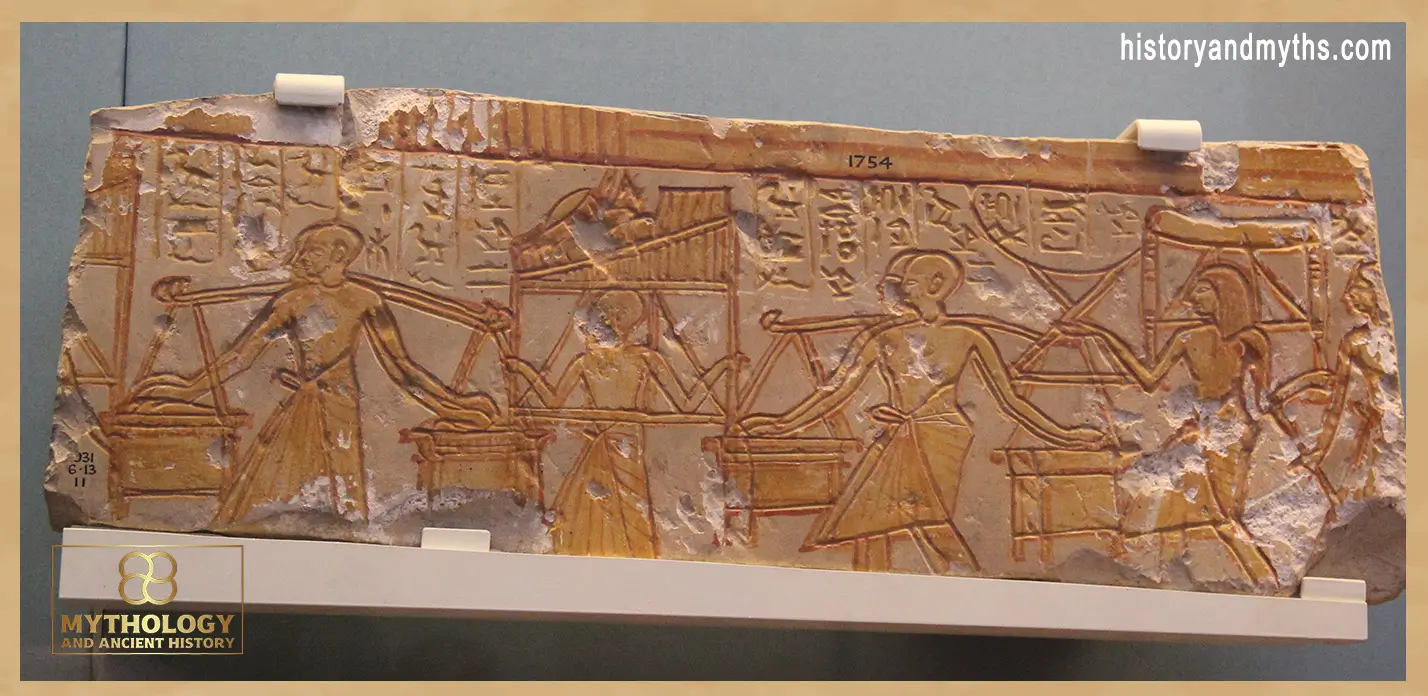
Work was the primary space where friendship formed. Fields, workshops, construction crews, temple staffs, and village administrations forced people into long-term cooperation. Under these conditions, friendship grew out of shared responsibility, not choice.
Labor in ancient Egypt was collective by necessity. Tasks were repetitive, physically demanding, and often supervised. Mistakes affected the group, not just the individual. Friendship developed where individuals proved dependable—showing up consistently, carrying their share of work, and avoiding actions that endangered others.
In these environments, a friend was someone who did not create risk. Trust was earned through routine: doing the job correctly, respecting boundaries, and responding predictably to authority. Over time, this reliability created bonds that went beyond formal obligation.
Friendship at work also offered protection. A trusted colleague could cover absences, share resources, or intervene with supervisors. In systems where formal safeguards were limited, personal networks mattered. Friendship reduced vulnerability within rigid labor structures.
These relationships were not sentimental. They were maintained because they worked. Cooperation made labor more efficient and less dangerous. Friendship stabilized work groups by reinforcing mutual dependence.
Because work dominated daily life, friendship followed it. Social bonds were shaped less by personal preference and more by proximity, repetition, and shared risk.
How Ancient Egyptians Built Lasting Friendships
Friendships in ancient Egypt were rarely formed through chance meetings or shared interests alone. They developed gradually through repeated daily interaction. People worked alongside the same colleagues, lived in close-knit communities, and often remained in the same occupations for many years.
Trust, Loyalty, and Mutual Support
Trust was the currency of friendship in ancient Egypt. Loyalty was not expressed through emotional declarations, but through behavior under pressure. A friend was someone who did not betray you when it mattered.
Daily life involved constant exposure to risk—shortages, labor demands, disputes, and supervision. In this environment, mutual support reduced uncertainty. Friends acted as witnesses, defended reputations, and provided backing in conflicts both formal and informal.
Loyalty also had limits. It operated within accepted boundaries. Friendship did not justify defying authority or disrupting order. A loyal friend supported you without challenging the system that governed both of you.
This balance mattered. Uncontrolled loyalty could threaten stability, while controlled support reinforced it. Friendship therefore worked best when it complemented hierarchy rather than undermining it.
Trust accumulated slowly. One act did not create friendship. Repeated reliability did. Over time, mutual support became expected, and expectations solidified the bond.
Friendship, in this sense, functioned as informal insurance. It did not eliminate risk, but it distributed it. People relied on friends not because of affection, but because trust made daily life manageable.
Social Bonds Beyond Family
Family ties formed the foundation of Egyptian society, but they were not sufficient on their own. Daily life required cooperation beyond kinship. Friendship filled this gap by creating reliable connections outside the family unit.
Villages, work crews, and administrative groups brought together people who were not related by blood but depended on one another regularly. In these settings, friendship provided continuity where family ties did not reach. It allowed individuals to function within larger social networks without relying solely on relatives.
These bonds were especially important in environments like Deir el-Medina, where skilled workers lived and worked closely over long periods. Shared routines, shared supervision, and shared risk encouraged the formation of durable friendships that extended beyond household boundaries.
Friendship outside the family also reduced isolation. In cases of conflict, absence, or vulnerability, non-kin support mattered. Friends could intervene, mediate, or assist when family members were unavailable or insufficient.
However, these bonds did not compete with family loyalty. They complemented it. Friendship expanded a person’s social safety net without replacing primary obligations to kin.
By extending trust beyond the household, Egyptian society created flexible but controlled networks. Friendship allowed cooperation across social space while preserving the primacy of family and hierarchy.
Core Insight
In ancient Egypt, friendship functioned as an informal system of trust.
Built through shared work and repeated interaction, it reduced risk,
stabilized cooperation, and supported social order without challenging hierarchy.
© historyandmyths.com — Educational use
Friendship in Ancient Egyptian Letters and Daily Records
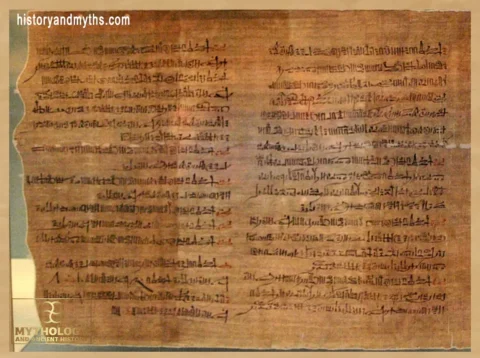
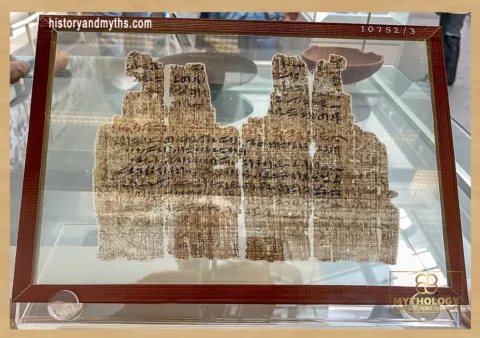
Ancient Egyptian texts show that friendship was more than an abstract idea. Personal letters, administrative records, and documents from communities such as Deir el-Medina reveal relationships built on trust, cooperation, and mutual assistance. Friends exchanged practical help, acted as reliable witnesses, and maintained long-term connections through everyday responsibilities. Although surviving texts rarely describe friendship in emotional language, they frequently emphasize dependable behavior and loyalty.
One of the clearest examples comes from the workers’ village of Deir el-Medina, where artisans responsible for decorating the royal tombs lived and worked together for generations. Ostraca and papyrus records from the village reveal a community built on close cooperation, shared responsibilities, and personal trust. Neighbors witnessed legal agreements, exchanged favors, cared for one another during absences, and relied on long-standing relationships that extended beyond family ties. These records show that friendship was not merely an ideal, but a practical part of everyday life in one of ancient Egypt’s best-documented communities.
People were valued for keeping their word, supporting colleagues, and maintaining good reputations within their communities. These records suggest that friendship was measured less by personal feelings than by actions that strengthened social relationships.
Together, these written sources confirm that friendship played a practical role in Egyptian society. It helped connect individuals beyond family ties while reinforcing the cooperation needed for villages, workshops, and administrative communities to function effectively.
Why Friendship Mattered for Stability
Friendship mattered because it stabilized interaction in a society with limited formal safeguards. Law, authority, and hierarchy existed, but they did not regulate every moment of daily life. Friendship filled those gaps by creating predictable behavior between individuals who depended on one another.
These bonds reduced friction. When people trusted those around them, cooperation required less supervision. Work progressed more smoothly, disputes were contained, and minor failures did not escalate into conflict. Friendship acted as a buffer between rigid structures and everyday reality.
Importantly, friendship did not challenge social order. It operated within it. By reinforcing trust and cooperation at the local level, friendship supported larger systems rather than undermining them. Stable relationships produced stable groups, and stable groups supported stable institutions.
Friendship endured because it was useful. It reduced risk, distributed responsibility, and made daily life manageable in environments shaped by labor demands and hierarchy.
Understanding friendship in ancient Egypt therefore means recognizing it as a functional social bond, not a private emotional ideal.
Key Takeaways
- Friendship in ancient Egypt was based on reliability and trust, not emotional intimacy.
- Most friendships formed through shared work, proximity, and repeated cooperation.
- Friendship provided informal support and reduced risk within rigid social structures.
- These bonds reinforced stability and hierarchy rather than challenging them.
Frequently Asked Questions
What did friendship mean in ancient Egyptian society?
Friendship meant reliability and trust built through repeated interaction, especially in work and shared daily environments.
Where did friendships usually form in ancient Egypt?
Most friendships formed in workplaces, villages, and shared labor groups rather than through private social choice.
Did friendship replace family ties?
No. Friendship complemented family bonds by extending support and cooperation beyond kinship without replacing it.
Did friendship challenge social hierarchy?
No. Friendship operated within existing hierarchies and helped stabilize them by reducing conflict and uncertainty.
Sources & Rights
- Bagnall, Roger S. Reading Papyri, Writing Ancient History. London: Routledge, 1995.
- Eyben, Rosalie. “Relationships, Bonds, and Social Interaction in Ancient Egypt.” In The Oxford Handbook of the Archaeology of Childhood. Oxford: Oxford University Press.
- Janssen, Jac. J. Village Varia: Ten Studies on the History and Administration of Deir el-Medina. Leiden: Brill, 1997.
- Kemp, Barry J. Ancient Egypt: Anatomy of a Civilization. 2nd ed. London: Routledge, 2006.
- Lewis, Naphtali. Life in Egypt Under Roman Rule. Oxford: Oxford University Press, 1983.
- Meskell, Lynn. Private Life in New Kingdom Egypt. Princeton: Princeton University Press, 2002.
- Parkinson, R. B. Poetry and Culture in Middle Kingdom Egypt. London: Continuum, 2002.
- Parkinson, R. B. Voices from Ancient Egypt: An Anthology of Middle Kingdom Writings. London: British Museum Press, 1991.
- Quirke, Stephen. The Cult of Ra: Sun-Worship in Ancient Egypt. London: Thames & Hudson, 2001.
- Robins, Gay. Women in Ancient Egypt. Cambridge, MA: Harvard University Press, 1993.
- Szpakowska, Kasia. Daily Life in Ancient Egypt: Recreating Lahun. Malden, MA: Blackwell Publishing, 2008.
- Trigger, Bruce G., Barry J. Kemp, David O’Connor, and Alan B. Lloyd. Ancient Egypt: A Social History. Cambridge: Cambridge University Press, 1983.
Written by H. Moses — All rights reserved © Mythology and History