Irrigation Failures in Mesopotamia: Floods, Salinity, and Collapse
Irrigation in Mesopotamia did not fail suddenly, nor did it collapse by chance. Its failures were cumulative, documented, and repeatedly managed through emergency measures, legal intervention, and administrative repair. Floods overwhelmed canals, continuous irrigation degraded soil through salinization, and neglected maintenance triggered cascading breakdowns across agricultural regions.
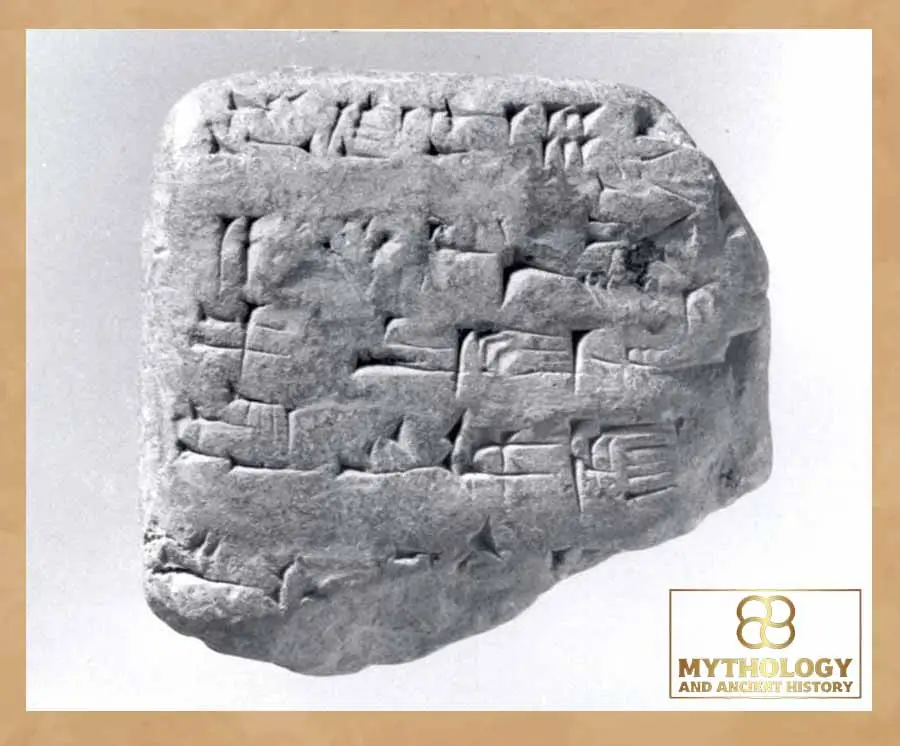
These failures are visible in concrete evidence: declining crop yields recorded in administrative texts, emergency labor mobilizations after floods, legal penalties for canal negligence, and long-term shifts in crop patterns toward salt-tolerant barley. Together, they reveal a system under constant stress—one that enabled civilization but also generated its own structural limits.
This article examines how and why Mesopotamian irrigation systems failed, using documented events and practices rather than general environmental explanations. It shows how technical strain, ecological damage, and administrative pressure interacted, turning irrigation from a tool of stability into a recurring source of crisis.
Floods as Administrative Failure, Not Natural Disaster
Floods in Mesopotamia were predictable in timing but destructive in impact when administrative control failed. The Tigris and Euphrates rose rapidly and irregularly, and without precise canal management, floodwater breached embankments, destroyed fields, and disrupted distribution networks. These outcomes were not inevitable; they reflected failures in timing canal openings, maintaining banks, or mobilizing labor in advance.
Administrative texts record emergency responses after floods, including compulsory labor mobilization to seal breaches and reroute water. The recurrence of these measures indicates that flooding was a systemic management problem, not an occasional natural shock. When authorities acted late or lacked sufficient labor, damage propagated downstream, amplifying losses across entire agricultural zones.
Flood episodes thus expose the limits of Mesopotamian irrigation governance. Effective control required anticipation and coordination; when either faltered, floods transformed from seasonal events into administrative crises with immediate economic consequences.
| Failure Type | Cause | Direct Impact |
|---|---|---|
| Flooding | Poor timing and weak embankment control | Crop destruction and emergency labor mobilization |
| Salinization | Continuous irrigation without drainage | Decline in wheat yields and shift to barley |
| Canal Collapse | Neglect, silt buildup, flood damage | Disrupted distribution and cascading failure |
Salinization: The Silent Failure of Irrigation
Salinization was the most damaging and least visible failure of Mesopotamian irrigation. Continuous watering without effective drainage caused salts to accumulate in the soil, gradually reducing fertility. This was not a short-term fluctuation; it was a long-term structural degradation produced by the irrigation system itself.
Administrative and agricultural records reveal a measurable response: declining wheat yields and a forced shift toward barley, a crop more tolerant of saline soils. This change was not a preference but an adaptation to worsening conditions. Once salinity crossed certain thresholds, fields could no longer sustain traditional crops, and productivity fell permanently.
The scale of salinization becomes clearer when crop patterns are examined over time. Administrative records from southern Mesopotamia show a gradual decline in wheat cultivation, followed by a marked increase in barley production. This shift was not driven by preference or market demand, but by necessity. Wheat is highly sensitive to saline soils, while barley can tolerate higher salt concentrations, making it the only viable option once soil quality deteriorated.
This adaptation masked the problem without solving it. Barley sustained agriculture temporarily, but yields remained lower than earlier wheat-based production. Over successive generations, salinity reduced the productive lifespan of irrigated land, forcing authorities to expand cultivation into new areas or intensify labor on declining fields.
Crucially, salinization could not be reversed through maintenance alone. Canal cleaning and embankment repair addressed flow and flooding, but they did nothing to remove accumulated salts from the soil. The failure was therefore structural: the very system that enabled large-scale irrigation gradually undermined its own agricultural base, creating a long-term constraint that administration could manage, but not eliminate.
Unlike floods, salinization offered no sudden warning. It advanced season by season, locking authorities into diminishing returns despite ongoing maintenance. The problem illustrates a critical limit of Mesopotamian water control: even when canals functioned and laws were enforced, the system could undermine its own agricultural base.
- Irrigation failure was cumulative, not sudden.
- Environmental stress exposed limits of administrative control.
- Maintenance could delay failure but not eliminate structural risks.
- Small breakdowns often escalated into regional crises.
© historyandmyths.com — Educational use
Canal Collapse and Cascading Failure
Canal collapse rarely remained a local problem. When a section was neglected, blocked by silt, or damaged by floodwater, the failure propagated downstream. Reduced flow deprived fields of irrigation, triggered disputes, and forced emergency redistribution that strained the entire network.
Canal collapse often triggered a chain reaction extending far beyond the initial breach. When water failed to reach downstream fields, farmers sought alternative access, sometimes by reopening abandoned channels or diverting water illegally. These actions intensified conflict and forced authorities to intervene, not only to repair infrastructure but to restore order.
Administrative responses show that collapse was treated as an emergency, not a routine failure. Labor was redirected from agricultural work to canal repair, delaying planting and compounding losses. In some cases, temporary redistribution favored certain zones over others, effectively sacrificing marginal lands to protect core production areas.
This reveals a critical feature of Mesopotamian irrigation: resilience depended on constant, system-wide coordination. Once failure began in one segment, authorities faced escalating costs—economic, social, and political. Canal collapse thus exposed the limits of centralized control, demonstrating how tightly irrigation stability was bound to administrative capacity.
Administrative responses show how quickly a small breakdown escalated. Repairs required immediate labor mobilization, temporary rerouting of water, and suspension of normal schedules. If intervention was delayed, losses multiplied: crops failed, maintenance backlogs grew, and neighboring canals faced overload as water was redirected.
This cascading effect explains why irrigation failures were so destabilizing. The system was highly interconnected; resilience depended on constant maintenance everywhere. Once collapse began in one segment, authorities faced a chain reaction that could not be solved by isolated fixes. Canal failure was therefore not a technical glitch but a systemic vulnerability inherent in large-scale irrigation.
- Mesopotamian irrigation systems failed through environmental and administrative stress.
- Floods reflected management breakdowns, not natural inevitability.
- Soil salinization caused irreversible long-term decline.
- Canal collapse triggered cascading economic and social disruption.
- Irrigation failures revealed the limits of centralized control.
Frequently Asked Questions
They failed due to flooding, soil salinization, and the cumulative effects of canal neglect.
Yes. Long-term irrigation without drainage reduced soil fertility and forced crop changes.
No. Floods became destructive mainly when administrative control and maintenance failed.
It disrupted water distribution, triggered disputes, and caused cascading crop losses.
They could manage and delay failure, but structural environmental limits remained.
Sources & Rights
- Jacobsen, Thorkild & Adams, Robert McC. Salt and Silt in Ancient Mesopotamian Agriculture.
- Adams, Robert McC. Heartland of Cities.
- Van De Mieroop, Marc. A History of the Ancient Near East.
- Liverani, Mario. The Ancient Near East: History, Society and Economy.
- Postgate, J. Nicholas. Early Mesopotamia: Society and Economy.
- Pollock, Susan. Ancient Mesopotamia: The Eden That Never Was.
- Oates, Joan. Babylon.
- Leick, Gwendolyn. Mesopotamia: The Invention of the City.
- Roth, Martha T. Law Collections from Mesopotamia and Asia Minor.
- Encyclopaedia Britannica. Irrigation and Agriculture in the Ancient Near East.
Written by H. Moses — All rights reserved © Mythology and History