Delian League: How Athens Built an Empire from a Greek Alliance
The Delian League was not just an alliance of Greek city-states—it was a system that allowed Athens to turn shared defense into political and economic control. Formed after the Persian Wars to protect against Persia, it began as a cooperative network where members contributed ships or money for collective security.
But the key question is not why it was formed—it is how it changed. Over time, Athens took control of the alliance’s resources, decisions, and military power, transforming it from a defensive coalition into what functioned as an empire. This article explains that process step by step: how the system worked, how power shifted, and why the Delian League ultimately reshaped Greek politics.
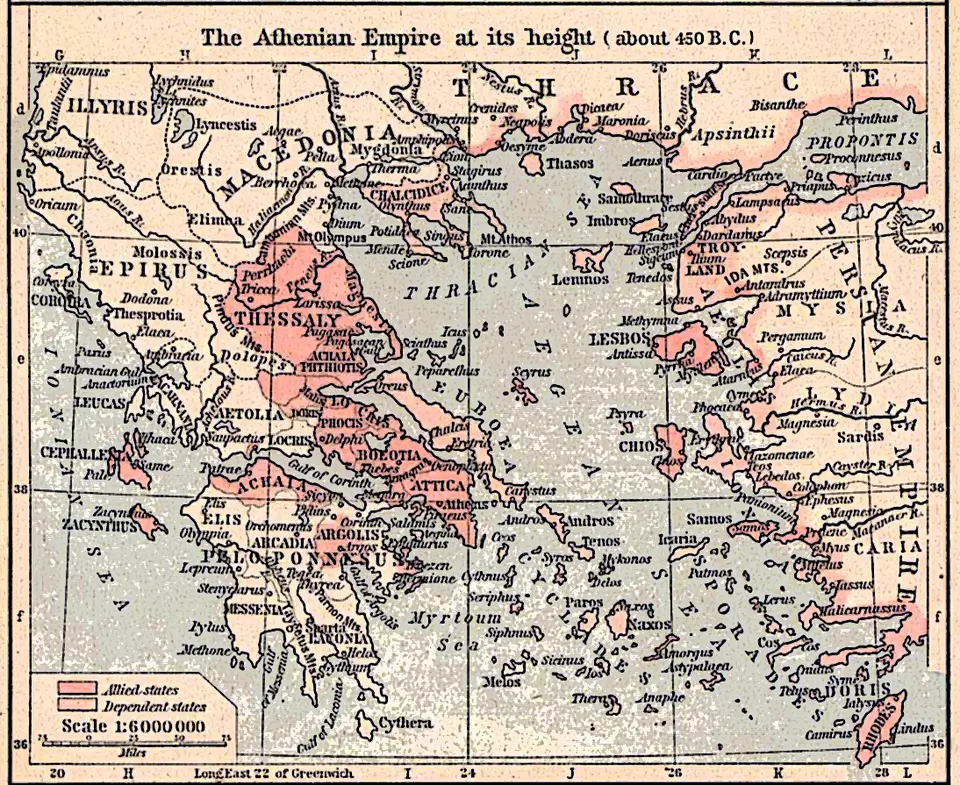
What Was the Delian League in Ancient Greece?
The Delian League was a coordinated alliance of Greek city-states formed to manage a shared military objective: continued defense against Persian power after the wars. It was not a loose agreement—it was a structured system with defined contributions, leadership, and operational control.
Member states joined under a common framework. Each was required to contribute either ships or money, creating a pooled resource base that could be deployed collectively. This made the alliance functional rather than symbolic—its strength depended on coordinated input from multiple cities.
Leadership was centralized from the start. Athens held command of military operations, which meant it controlled how the alliance’s resources were used. Other members participated, but they did not share equal influence over strategic decisions.
The league’s treasury was originally placed on the island of Delos, giving the alliance a neutral administrative center. This reinforced the idea that the system was collective, even though operational control was already concentrated.
From a system perspective, the Delian League was designed as a joint military and financial structure—one that could coordinate defense across independent city-states. What made it significant is not just that it existed, but that its structure allowed control to be centralized over time.
| System Element | Function | Effect on Power |
|---|---|---|
| Military Contributions | Ships or money from members | Shifted control to Athens over time |
| Central Command | Athens directed operations | Unified decision-making |
| Tribute System | Regular financial payments | Created economic dependency |
| Treasury Control | Funds managed centrally | Enabled strategic dominance |
| Enforcement | Prevented withdrawal | Turned alliance into control system |
| System Outcome | Alliance → Empire | Centralized power under Athens |
Why Was the Delian League Formed After the Persian Wars?
The Delian League was created to solve a specific strategic problem: how to maintain coordinated defense after the immediate threat of invasion had passed. Even after major victories, Persia remained a long-term risk, especially along the Aegean coast.
Greek city-states could not handle this individually. They were independent, often competing with each other, and lacked a unified command structure. Without coordination, naval defense would be inconsistent and ineffective. The alliance provided a way to organize collective security without creating a single state.
The system also addressed uneven capacity. Not all cities could maintain fleets or sustain long-term military operations. By allowing contributions in money instead of ships, the league created a flexible model where each member supported the system based on its resources. This made participation scalable and sustainable.
At the same time, there was a leadership gap. Athens had the naval strength and organizational capability to lead, while other states lacked both the capacity and the incentive to coordinate independently. The league formalized this imbalance into a working system.
From a system perspective, the Delian League emerged because decentralized states needed a coordinated solution to a shared external threat. It was not built as an empire—but its structure made central control possible from the beginning.
How the Delian League Worked as a Military Alliance
The Delian League functioned through a structured system that combined military coordination with centralized command. It was not just an agreement to cooperate—it was an operational framework that defined how resources were collected and used.
Member states contributed in one of two ways:
- Ships and crews, which directly expanded the alliance’s naval force
- Financial payments (tribute), which funded ships maintained under Athenian control
This dual model created flexibility, but it also introduced imbalance. Cities that paid money instead of providing ships gradually lost direct military involvement, while Athens increased its control over the actual fleet.
Command was centralized. Athens directed operations, decided strategy, and deployed forces. Other members did not operate independently within the alliance—they contributed to a system where decisions were made from a single point.
Coordination was continuous, not occasional. The alliance maintained readiness, conducted campaigns, and managed territories under its influence. This made it a standing military system, not a temporary coalition formed only during crises.
The key structural feature was that control of resources meant control of action. As more members shifted to financial contributions, Athens controlled a larger share of the alliance’s military capacity.
From a system perspective, the Delian League worked as a centralized military network—where collective input supported a force increasingly controlled by a single leading power.
The Economic System: Tribute, Money, and Control
The Delian League was sustained not just by military cooperation, but by a structured financial system that determined how power was distributed. Tribute—regular payments from member states—was the core of this system.
Each member city was assessed a contribution, either in ships or in money. Over time, more cities shifted to paying money instead of maintaining their own fleets. This shift had a direct structural effect: control over resources moved toward Athens, which managed the funds and used them to build and maintain the alliance’s naval power.
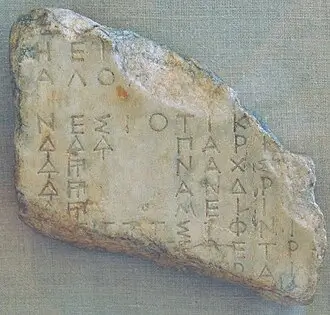
The treasury, originally located on Delos, represented collective ownership. But when it was moved to Athens, control became centralized not just in practice, but in administration. This allowed Athens to decide how funds were allocated, which campaigns were prioritized, and how the system operated day to day.
Financial dependency followed. Cities that paid tribute relied on Athens to provide military protection, reducing their ability to act independently. At the same time, refusal to pay or attempts to leave the league were treated as threats to the system, often met with enforcement.
The key mechanism was simple:
- Contributions became centralized funds
- Centralized funds created centralized power
From a system perspective, the economic structure of the Delian League turned a shared financial model into a mechanism of control, where managing money meant controlling both the alliance and its members.
How the Delian League Actually Worked
- Started as a defensive alliance after the Persian Wars
- Members contributed ships or money to a shared system
- Athens controlled military operations from the start
- Financial contributions shifted power toward central control
- The treasury move to Athens strengthened dominance
- The system gradually transformed into an empire
© historyandmyths.com — Educational use
How Athens Gained Power Over the Delian League
Athenian control over the Delian League was not established in a single move. It developed gradually through structural advantages built into the alliance.
The first factor was control of command. From the beginning, Athens directed military operations. This gave it authority over strategy and deployment, which positioned it as the decision center of the alliance.
The second factor was control of resources. As more member states chose to pay tribute instead of providing ships, Athens became the primary holder of naval power. It used these funds to build and maintain fleets under its own command, increasing its operational independence from other members.
The third factor was dependency. Cities that relied on Athens for protection lost the capacity to act independently. Their security became tied to the system, and by extension, to Athenian decisions.
The final factor was enforcement. When some states attempted to withdraw or resist, Athens responded by using the alliance’s own military resources to maintain control. What had been a cooperative structure began to function as a controlled system where participation was no longer optional.
This process did not require formal declarations of dominance. Control emerged from how the system worked:
- centralized command
- centralized funding
- reduced independence of members
From a system perspective, Athens gained power not by changing the alliance’s structure, but by operating it in a way that concentrated control over time.
From Alliance to Empire: How the System Changed
The transformation of the Delian League from alliance to empire was not a formal shift—it was the result of gradual changes in how the system operated.
At the beginning, member states retained autonomy. They contributed resources and participated in a shared defense system. Over time, this balance shifted as Athens increased control over both military and financial structures.
The first change was loss of military independence. As cities moved from providing ships to paying tribute, they no longer maintained their own forces. This made them dependent on Athenian-controlled fleets for protection.
The second change was loss of financial control. With the treasury centralized and managed by Athens, member states had little influence over how their contributions were used. Funding decisions became part of Athenian policy rather than collective agreement.
The third change was restriction of exit. In a true alliance, members can withdraw. In this system, attempts to leave were treated as threats. Athens used force to prevent withdrawal, effectively turning participation into obligation.
At this point, the structure had changed in function, even if not in name:
- Contributions became enforced payments
- Cooperation became compliance
- Leadership became control
From a system perspective, the Delian League became an empire when members lost the ability to act independently within the system, and all key functions—military, financial, and political—were centralized under a single power.
Continue Reading
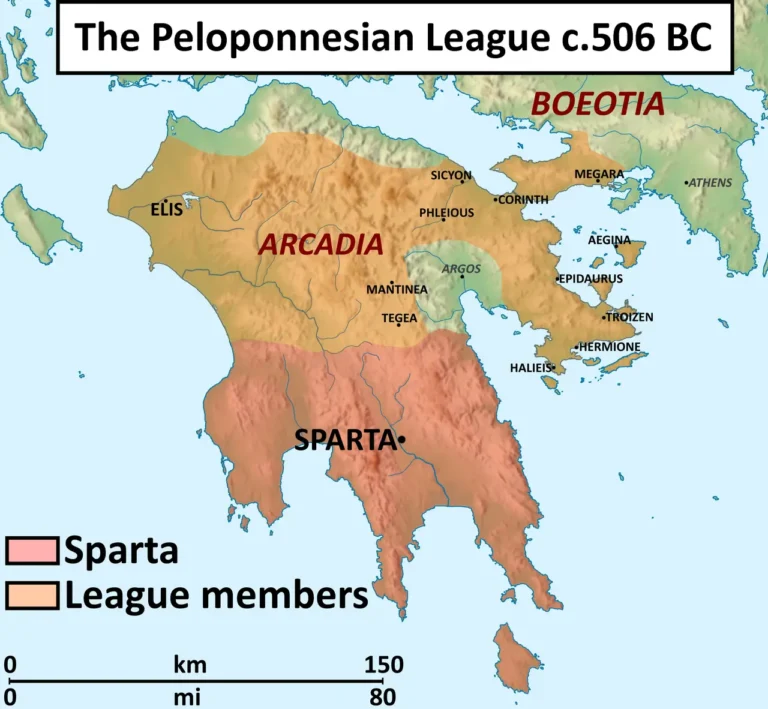
Delian League vs Peloponnesian League: Two Power Systems
The Delian League and the Peloponnesian League were not just rival alliances—they represented two different systems for organizing power between Greek states.
The Delian League, led by Athens, was centralized. It relied on financial contributions, a unified naval force, and a single decision center. Control increased over time because resources and command were concentrated in one place.
The Peloponnesian League, led by Sparta, followed a decentralized model. Member states retained more autonomy and contributed primarily through military support rather than centralized funding. Sparta led, but did not absorb control in the same way Athens did.
This created two distinct approaches:
1. Delian League
- Centralized command
- Financial dependency
- Increasing control over members
2.Peloponnesian League
- Shared military obligations
- Greater local independence
- Leadership without full centralization
The difference was structural. One system concentrated power to increase efficiency and control, while the other distributed power to maintain autonomy among its members.
From a system perspective, these alliances show that Greek states were experimenting with different ways to manage collective power—either by centralizing authority or preserving independence within a shared framework.
Why the Delian League Led to the Peloponnesian War
The conflict that became the Peloponnesian War was not caused by a single event—it was the result of how the Delian League evolved as a system.
As Athens expanded its control, the balance of power in the Greek world shifted. What began as a defensive alliance became a structure that concentrated military and financial strength in one state. This change created a strategic problem for other powers, especially Sparta.
The issue was not ideology—it was fear of imbalance. A system that allowed one city to control resources, fleets, and allied territories threatened the autonomy of others. Even states outside the league were affected because the growing power of Athens could influence trade, security, and regional stability.
Tension increased as control became more visible. Member states were no longer equal participants, and resistance was suppressed. This signaled that the system was no longer cooperative—it was expansionary.
For Sparta and its allies, the choice became strategic:
- Accept the growing dominance of Athens
- Or challenge the system before it became irreversible
War emerged as the only viable response within this context. It was not an accident—it was a structural outcome of a system that concentrated power without a balancing mechanism.
From a system perspective, the Peloponnesian War began because the Delian League created a level of dominance that forced opposition from other powers.
What the Delian League Reveals About Greek Alliances
The Delian League shows that Greek alliances were not stable partnerships—they were systems that could shift from cooperation to control depending on how power was managed.
At the start, the alliance solved a real problem: collective defense in a fragmented political landscape. But its structure—centralized command, pooled resources, and dependency—created conditions where one state could dominate the rest.
This reveals a key principle:
alliances are not defined by their purpose, but by how control is distributed inside them
When resources and decisions remain shared, alliances function as cooperation. When they become centralized, alliances begin to function as systems of control.
The Delian League did not fail because alliances are weak—it changed because its structure allowed power to concentrate without limits.
From a system perspective, Greek alliances were not just agreements between states—they were mechanisms for organizing power, capable of evolving into dominance if not balanced.
Key Takeaways
- The Delian League was a structured military and financial system, not just an alliance.
- Athens gained power by controlling resources, strategy, and decision-making.
- The tribute system created dependency among member states.
- The alliance gradually shifted into an empire without formal change.
- Centralized power led to tension with other Greek states.
- The system contributed directly to the Peloponnesian War.
Frequently Asked Questions
What was the Delian League?
The Delian League was a military alliance of Greek city-states led by Athens after the Persian Wars.
Why was the Delian League created?
It was formed to provide collective defense against Persia and protect Greek territories.
How did Athens control the Delian League?
Athens controlled military command, managed the treasury, and used tribute to centralize power.
Was the Delian League an empire?
It began as an alliance but gradually functioned as an empire under Athenian control.
What was the tribute system?
Member states paid money or provided ships to support the alliance’s military operations.
Why did the Delian League lead to war?
Its growing power created fear and imbalance, leading to conflict with Sparta and its allies.
Sources & Rights
- Meiggs, Russell. The Athenian Empire. Oxford University Press.
- Kagan, Donald. The Outbreak of the Peloponnesian War. Cornell University Press.
- Hornblower, Simon. The Greek World 479–323 BC. Routledge.
- Rhodes, P. J. A History of the Classical Greek World. Wiley-Blackwell.
- Cartledge, Paul. Ancient Greece: A Very Short Introduction. Oxford University Press.
- Osborne, Robin. Greece in the Making 1200–479 BC. Routledge.
- Finley, M. I. Politics in the Ancient World. Cambridge University Press.
- Pomeroy, Sarah B. Ancient Greece: A Political, Social, and Cultural History. Oxford University Press.
- Thucydides. History of the Peloponnesian War. (Primary source).
- Raaflaub, Kurt A. The Discovery of Freedom in Ancient Greece. University of Chicago Press.
Written by H. Moses — All rights reserved © Mythology and History