Tell Muhammad: Life and Power on Babylon’s Frontier
South of modern Baghdad, Tell Muhammad preserves the remains of a Mesopotamian city that stood near the frontier between Babylon and Eshnunna during the early second millennium BCE. Its massive mudbrick walls reflect the military importance of the region, while discoveries inside the settlement reveal a community engaged in food production, trade, and everyday economic transactions.
Excavations in 2026 uncovered a cuneiform tablet recording a loan of barley and kurunnum beer, installations possibly used for preparing food, and a channel that directed rainwater into a cistern. Archaeologists also exposed a secondary gate and traces of burning along the fortifications. These findings add to evidence recovered during earlier excavations, offering a fuller picture of Tell Muhammad during the Old Babylonian period. Beyond its connection with Hammurabi, the site helps explain how a Mesopotamian city managed its resources, organized daily life, and maintained its defenses in a politically contested region.
Where Was Tell Muhammad, and Why Was It Important?
Tell Muhammad lies on the southeastern outskirts of Baghdad, approximately two kilometers east of the Tigris River. The surviving archaeological site covers about 5.5 hectares, comprising a 2.5-hectare mound and a lower area of three hectares. A 2026 study estimates that the ancient settlement once extended over roughly 24 hectares. Flooding, military construction, and Baghdad’s urban expansion have destroyed much of the original site.
During the Old Babylonian period, roughly 1900–1600 BCE, Tell Muhammad occupied a strategically important area between Babylon to the south and Eshnunna to the northeast. Nearby Tell Harmal, identified as ancient Shaduppum, formed part of the same regional settlement network. The area’s political importance grew as Hammurabi extended Babylonian control into territories previously influenced by Eshnunna.
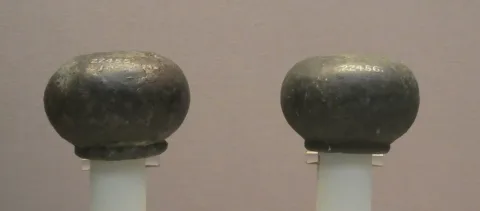
The strongest evidence connecting Tell Muhammad with Hammurabi comes from two copper-alloy maceheads discovered by Austen Henry Layard in 1850. Both bear the inscription É.GAL ḫa-am-mu-ra-bi, translated as “Palace of Hammurabi” or “Fortress of Hammurabi.” They suggest a Babylonian royal presence at the site, but do not identify a particular building as Hammurabi’s palace or establish when the fortifications were constructed.
The city’s ancient name remains uncertain. Some scholars have proposed Diniktum, while others have considered Dūr-Banāya, a fortified settlement mentioned in tablets recovered at Tell Muhammad. The site’s defensive walls support the latter possibility, but neither identification has been conclusively established.
The settlement’s history extended beyond Hammurabi’s reign. Excavations document successive Old Babylonian occupation phases, followed by evidence of Kassite-period activity, including pottery and intrusive burials. The later evidence is less extensive than the Old Babylonian remains, but it shows that Tell Muhammad’s archaeological history cannot be confined to the reign of a single Babylonian king.
What Did Archaeologists Discover at Tell Muhammad in 2026?
The sixth excavation season at Tell Muhammad, completed in October 2026, concentrated on the city’s northern defenses and buildings within the walls. Led by Nicola Laneri of the University of Catania in collaboration with Iraqi archaeologists, the work extended earlier investigations rather than uncovering an entirely unknown settlement.
Along the northern perimeter, excavators traced additional sections of a mudbrick wall approximately five meters thick and extending for more than 100 meters. They identified a corner in the fortification system and a small secondary entrance protected by a bastion. Extensive burning was visible outside the defensive structures, although its cause has not been established.
Inside the city, archaeologists investigated a building beside the road connecting the main gate with the sacred precinct. A semicircular mudbrick counter stood near its entrance, while four circular installations and a basin occupied the interior. One of the season’s two cuneiform tablets was found on the floor of this room, providing a valuable connection between a written economic record and its archaeological setting. The second tablet came from a disturbed context, making its original location less certain.
Another discovery was a channel constructed from reed mats and clay, apparently designed to direct rainwater into a large cistern identified during earlier excavations.
These finds document several parts of the settlement within the same excavation season, but they do not necessarily belong to a single phase of occupation. Establishing when the structures were built, modified, and used remains essential to understanding how Tell Muhammad developed.
What Do the Cuneiform Tablets Tell Us?
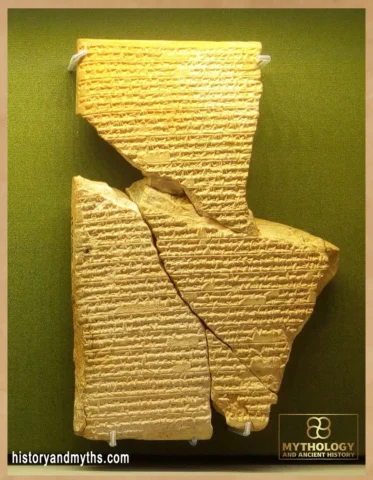
The two tablets discovered in 2026 provide different kinds of evidence for Tell Muhammad’s economy. The earlier document records a loan of barley and kurunnum beer, agreed upon in the presence of two witnesses. Annunziata Rositani, the expedition’s philologist, dates it through its writing style to the reign of Hammurabi or his successor Samsu-iluna, in the eighteenth century BCE.
The contract shows that grain and beer could form part of a formally recorded debt. The presence of witnesses points to an agreement intended to be recognized beyond the immediate parties. It does not, however, establish where the goods were produced or how the loan was eventually repaid.
One personal name on the tablet incorporates Marduk, Babylon’s patron deity. According to the excavation team, this is the first such name identified among texts recovered at Tell Muhammad. In a settlement situated between competing political powers, the reference is noteworthy, although a single name cannot establish its bearer’s origin or prove the existence of a local cult of Marduk.
The second tablet belongs to a later period and records allocations of commodities, including barley and sesame. Unlike the loan contract, it was found outside its original archaeological context and is less well preserved. It provides evidence of the distribution of agricultural products, but its connection to a particular building or activity cannot be established.
Together, the documents reveal two aspects of economic administration: borrowing goods and recording their allocation. The excavation announcements have not yet provided complete scholarly editions of the texts, so details such as quantities, repayment conditions, and the identities of all participants require further study.
Was Beer Produced at Tell Muhammad?
The building excavated in 2026 may have been used to make beer, but its function remains unconfirmed. Archaeologists identified installations potentially associated with brewing or bread-making, including features comparable to those found at Ur and Nippur. Both activities involved processing cereals and could require similar equipment, making architectural comparisons alone insufficient to distinguish them.
The semicircular mudbrick counter facing the street raises another possibility: the building may have served people beyond its occupants. Some reports have described it as a potential tavern, but evidence of food production does not establish a place where customers purchased or consumed beer. A brewery, bakery, and drinking establishment could have served different purposes despite sharing certain architectural features.
The barley-and-beer loan tablet found on the room’s floor provides a useful clue, but not a record of brewing. It documents an economic transaction and may reflect activities associated with the building. Whether the room was used to produce, store, distribute, or serve these commodities cannot be determined from the tablet alone.
The excavation team plans to analyze carbonized organic remains recovered from the installations. Identifying the materials processed there could help distinguish brewing from other food-production activities. Until those results are available, beer production remains a plausible interpretation rather than an established discovery.
Why Was Tell Muhammad So Heavily Fortified?
Tell Muhammad’s position between Babylon and Eshnunna made its defenses particularly important during the early second millennium BCE. Its walls protected the settlement and controlled access to a strategically contested region, although their construction began before Hammurabi’s expansion.
Excavations in Area B revealed a mudbrick fortification dating to the Isin-Larsa period, probably the nineteenth century BCE. The wall was approximately five meters thick and survives to a height of 1.9 meters. A projecting section extended about 30 meters towards the lower western ground, with a gateway and staircase providing access to the elevated settlement. Based on the surviving foundations, archaeologists estimate that the original wall may have stood eight to ten meters high.
The defensive system remained in use during the period associated with Hammurabi and Samsu-iluna. Its history, however, was not exclusively military. By the later Old Babylonian period, the original gateway had been sealed, and part of the former fortification was reused as a retaining wall supporting a terraced area within the settlement.
This transformation reveals a significant change in the city’s organization. A structure originally designed to defend and regulate access to Tell Muhammad eventually became part of the architecture supporting its inhabited spaces.
How Did Tell Muhammad Manage Its Water?
The rainwater channel uncovered in 2026 adds to evidence of a more varied water-management system at Tell Muhammad. Constructed with reed mats and clay, it appears to have directed runoff towards a large cistern identified during earlier excavations. The arrangement suggests that rainfall was deliberately collected rather than simply allowed to drain away.
Other installations served a different purpose. Excavations near the main city gate revealed a terracotta pipe that carried wastewater from an urban sewer beyond the fortifications into the surrounding fields. In Area D, archaeologists found a smaller drain beside a staircase, serving an open-air terrace near a cistern or well. A nearby mudbrick structure with a circular opening has been interpreted as a toilet, providing evidence of facilities for disposing of human waste.
Water storage also occurred on a smaller scale. One building contained a buried jar with a bitumen-coated interior, apparently intended to hold water. In a later occupation level, excavators identified another jar set into an outdoor pavement to collect rainwater.
These features belong to different parts of the settlement and, in some cases, different occupation phases. They cannot all be reconstructed as a single connected network. Nevertheless, they document distinct approaches to collecting rainfall, storing water, and removing wastewater. The archaeological evidence reveals practical attention to drainage and sanitation without establishing how water was distributed throughout the entire city.
What Do Earlier Excavations Reveal About Life at Tell Muhammad?
Excavations conducted by Iraqi archaeologists between 1978 and 1984 uncovered a substantial settlement with domestic buildings, workshops, burial areas, and a sacred precinct containing two temples. The religious buildings belonged to a late phase of the Old Babylonian city, showing that Tell Muhammad remained an established urban community well after Hammurabi’s reign.
The renewed excavations beginning in 2022 have added evidence of household religious practices. In Building C, archaeologists discovered four infant or stillborn burials in pottery vessels, alongside miniature pots and a mudbrick installation apparently used for liquid offerings. The excavators suggest that the room served as a domestic chapel associated with ancestor rituals known as kispum, although its precise ritual function remains uncertain.
A separate study by Sergio G. Russo, published in 2026, examined 53 infant and child burials recorded during earlier excavations within approximately 0.8 hectares. Most were jar burials concentrated in designated burial areas that had originally been residential spaces. The findings help explain how burial practices shaped the city’s inhabited landscape, although incomplete excavation records limit what can be reconstructed about individual burials.
Read Also:
The Bridge of Larsa: Water Control in Ancient Mesopotamia
Other discoveries illuminate production and craft activities. The 2022 and 2023 excavations identified grinding equipment, cylinder seals, furnaces, and a pottery kiln containing evidence of intense firing. These finds document activities beyond the agricultural transactions recorded on clay tablets, providing a broader picture of work within the settlement.
The older cuneiform archives also reveal an unusual method of recording dates. Some tablets carry two dating formulas, one commemorating a local event and another counting years in relation to Babylon. Frans van Koppen identified a sequence in which numbered dates from years 36 to 39 appeared alongside local formulas, while later documents used the numerical system alone. Scholars disagree about the event from which this count began, but the change in dating practices may reflect a shift in political allegiance. The tablets are therefore important evidence for understanding Tell Muhammad’s political history during the transition from the Old to Middle Babylonian periods.
Conclusion
Tell Muhammad offers more than a glimpse of daily life in Hammurabi’s time. Its cuneiform records document economic transactions and political changes, while excavated buildings, burials, and infrastructure reveal activities rarely described in written sources. Together, they trace the development of a Mesopotamian community through several centuries of changing political control.
Academic Sources & Excavation Reports
- Laneri, Nicola, et al. (2024).
The Baghdad Urban Archaeological Project: A Preliminary Report on the First Two Seasons (2022–2023) of Archaeological Research at the Old Babylonian Site of Tell Muhammad (Baghdad).
Egitto e Vicino Oriente, 47. - Laneri, Nicola, et al. (2026).
Conserving the Memory of Hammurabi: A Sustainable Model for Ancient Heritage Management at the Old Babylonian Site of Tell Muhammad, Iraq.
Heritage, 9(2), 47. - Russo, Sergio G. (2026).
Intramural Nonadult Burials at Tell Muhammad (in Baghdad) during the Old Babylonian Period (1894–1595 BCE): A Preliminary Assessment of Legacy Data.
Near Eastern Archaeology, 89(1), 24–35. - van Koppen, Frans (2010).
The Old to Middle Babylonian Transition: History and Chronology of the Mesopotamian Dark Age.
Egypt and the Levant, 20, 453–463.
Official Excavation Update (2026)
Laneri, Nicola, and Alice Mendola (20 November 2026).
Tell Muhammad: nuove scoperte raccontano la vita di un’antica città mesopotamica.
University of Catania, UnictMagazine.
Copyright & Attribution
© 2026 History & Myths. All rights reserved. This article is an original editorial synthesis based on published archaeological research, excavation reports, and historical scholarship. Academic sources are credited above. Any third-party images are subject to their respective licenses and attribution requirements.