Mesopotamian Literature: How Writing Built Empires
Mesopotamian literature was not simply a collection of myths and epics. It was a structured cultural system through which cities preserved memory, legitimized rulers, trained officials, and organized knowledge. From Sumerian temple hymns to Assyrian archives, written texts formed the intellectual infrastructure of the ancient Near East.
Unlike later literary traditions built around authorship and artistic individuality, Mesopotamian writing emerged from institutions — temples, palaces, and scribal schools. Literature was copied, standardized, archived, and transmitted across centuries. What survived on clay tablets was not accidental. It reflects deliberate systems of preservation and political intent.
To understand Mesopotamian literature, we must move beyond individual stories and examine how texts were produced, taught, stored, and used within society.
What Was Mesopotamian Literature?
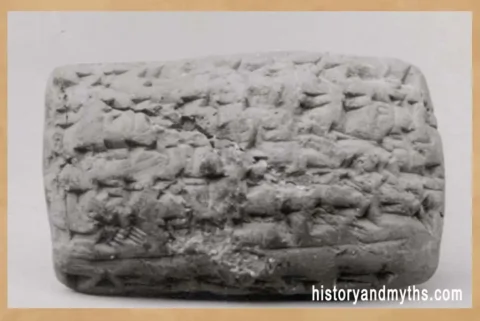
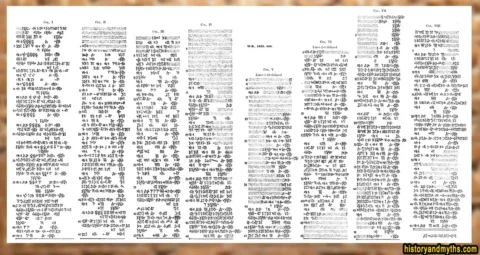
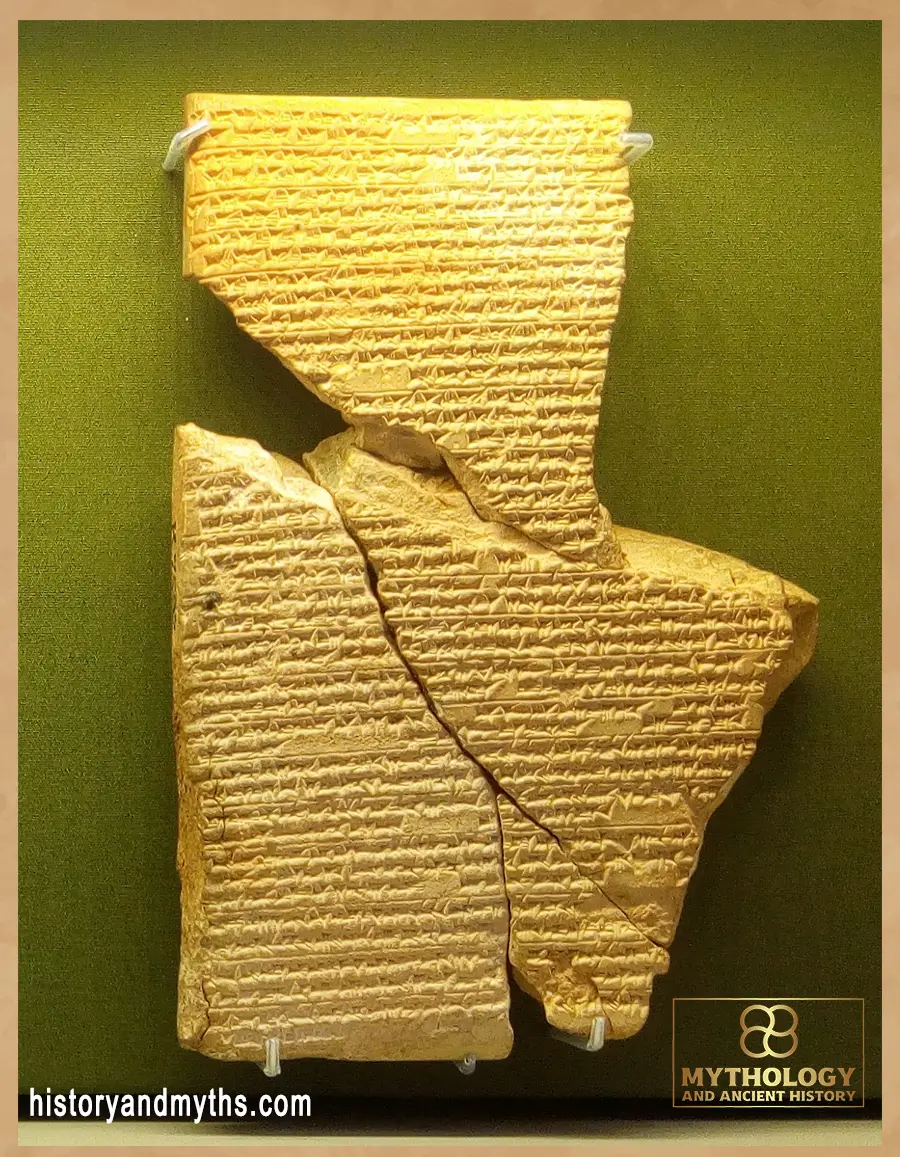
Mesopotamian literature refers to the corpus of written texts composed primarily in Sumerian and Akkadian between the third and first millennia BCE. These texts were written in cuneiform on clay tablets and circulated within temple, palace, and educational environments.
It included multiple genres:
- Hymns to gods and temples
- Royal inscriptions
- Wisdom instructions and proverbs
- Lamentations after political collapse
- Diplomatic and administrative letters
- Scholarly lexical and omen texts
The boundaries between “literary” and “administrative” writing were fluid. A royal inscription could function both as historical record and political rhetoric. A hymn could operate as both devotional text and ideological performance.
Unlike later literary cultures, Mesopotamia did not prioritize the concept of an individual author. Texts were often anonymous and transmitted through scribal copying traditions. Authority came from antiquity and continuity, not originality.
This institutional framework explains why certain works — such as the Epic traditions or temple hymns — were preserved repeatedly, while others disappeared. Literary survival was shaped by scribal curriculum and archival policy rather than popularity alone.
Major Genres of Mesopotamian Literature
| Genre | Primary Function | Institutional Context |
|---|---|---|
| Hymns | Ritual praise and divine legitimation | Temples |
| Lamentations | Theological framing of crisis | Temple / Scribal Schools |
| Wisdom Texts | Moral and social instruction | Scribal Education |
| Royal Inscriptions | Political legitimacy | Palaces |
| Letters | Diplomatic and administrative communication | Palace Archives |
From Temple Hymns to Royal Archives: The Institutional Evolution of Mesopotamian Literature
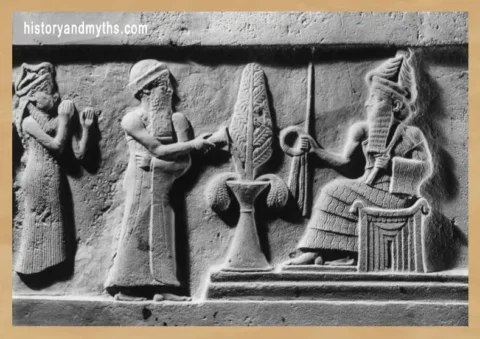
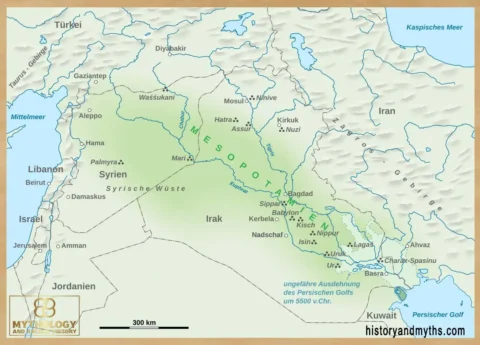
The earliest literary compositions in Mesopotamia emerged within temple environments during the third millennium BCE. In Sumerian cities such as Nippur and Ur, hymns were written to honor patron deities, sanctify sacred spaces, and affirm the cosmic order upon which urban life depended. These texts were not private devotional expressions. They were ritual instruments performed within institutional settings.
Temple hymn collections—especially those associated with priestly schools—demonstrate early efforts to standardize language and theological vocabulary. Repetition, parallelism, and fixed formulae were not stylistic limitations but tools of stability. A stable text reinforced a stable cult.
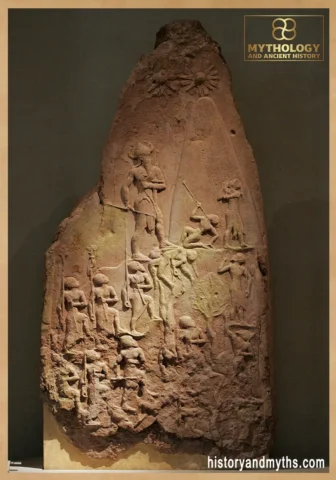
By the late third and early second millennia BCE, literary production expanded beyond temple ritual into royal ideology. Kings commissioned inscriptions that narrated military victories, building projects, and divine favor. These inscriptions were carved on stone or impressed into clay foundation deposits. Although presented as historical record, they functioned as political literature: structured narratives designed to legitimize rule and shape collective memory.
During the Old Babylonian period, scribal schools formalized copying practices. Students reproduced canonical texts repeatedly as part of their training. This process unintentionally preserved earlier Sumerian compositions long after Sumerian ceased to be a spoken language. Literary continuity was therefore educational continuity.
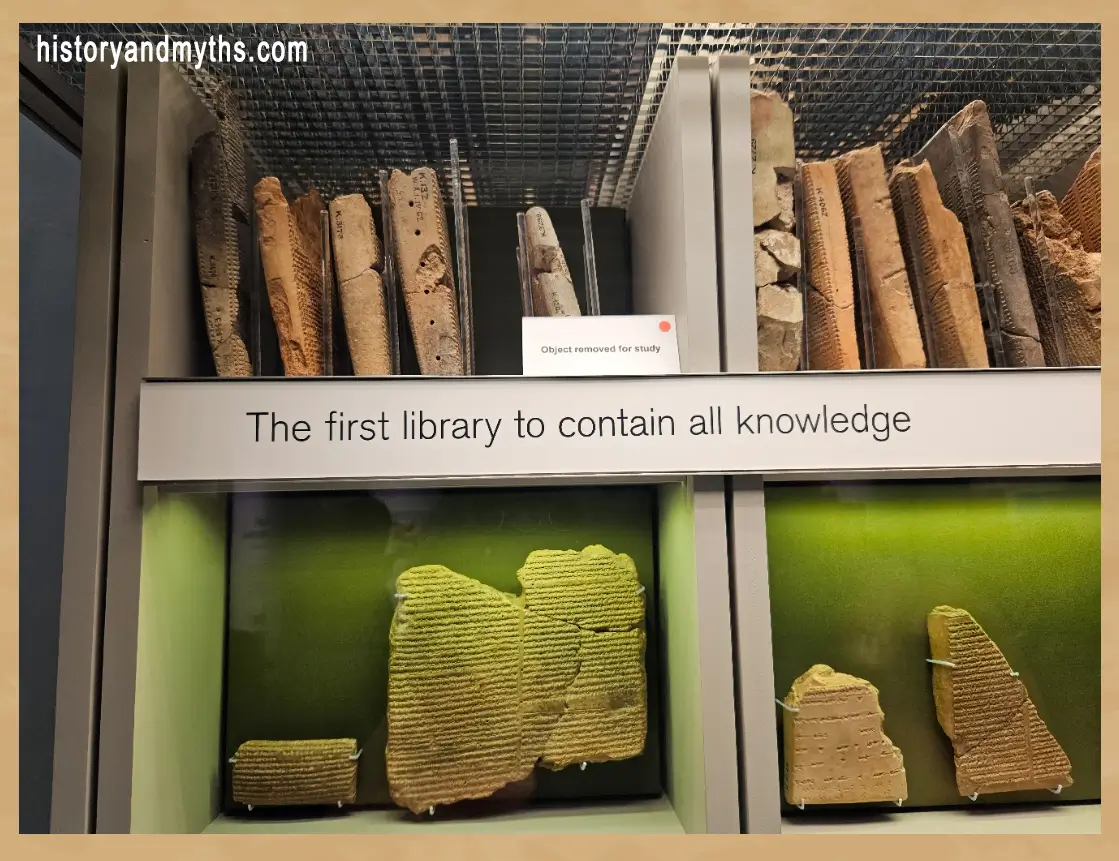
The Neo-Assyrian period marked another institutional shift. Under Ashurbanipal (7th century BCE), large-scale collection and archiving of texts took place at Nineveh. The royal library did not merely store documents; it curated tradition. Myths, omens, lexical lists, rituals, and scholarly commentaries were gathered, copied, and organized.
This transition—from temple hymn to palace archive—reveals something essential: Mesopotamian literature evolved alongside political centralization. As states grew more complex, so did their textual systems. Writing moved from localized ritual performance to imperial knowledge management.
Literature in Mesopotamia was therefore never static. It adapted to shifting institutional priorities—cultic stability, royal legitimacy, bureaucratic governance, and scholarly preservation. What modern scholars classify as “literature” was, in its own time, inseparable from administration and authority.
Genres of Mesopotamian Literature: Beyond Myth and Epic
Modern readers often reduce Mesopotamian literature to heroic epics and creation myths. Yet the surviving corpus reveals a far more diversified textual world. Literary production in ancient Mesopotamia was structured around functional genres, each embedded within institutional life.
Hymns and Liturgical Poetry
Hymns formed one of the earliest and most enduring genres. These compositions praised deities, temples, and occasionally kings. Temple hymn collections from cities such as Nippur reveal deliberate theological organization, suggesting coordinated priestly activity rather than spontaneous composition.
Hymns served multiple purposes:
- Ritual recitation during ceremonies
- Reinforcement of divine hierarchy
- Legitimation of political authority
- Preservation of sacred language
Their repetitive structure aided memorization and standardization, essential in a culture dependent on scribal transmission.
Lamentations
Lament texts emerged particularly during periods of political collapse. The so-called city laments mourned the destruction of urban centers such as Ur. These compositions framed catastrophe as divine judgment rather than military failure.
Lamentations functioned as theological explanation and communal processing. They reinterpreted trauma within a cosmic order, restoring meaning to political disaster. In this sense, literature operated as crisis management.
Wisdom Literature and Proverbs
Instructional texts formed part of scribal education. Works traditionally attributed to ancient sages—such as the Instructions of Shuruppak—contain moral maxims on obedience, restraint, and social hierarchy.
These texts were not abstract philosophy. They reflect pragmatic urban values:
- Respect for authority
- Control of speech
- Economic prudence
- Social discipline
The repeated copying of wisdom texts in school tablets suggests their role in shaping administrative elites. Moral instruction reinforced bureaucratic stability.
Royal Inscriptions
Royal inscriptions occupy an ambiguous space between record and rhetoric. Kings described military campaigns, building achievements, and divine favor in highly formulaic language. These inscriptions were publicly displayed or ritually deposited within foundations.
Their literary features—parallelism, repetition, stylized exaggeration—demonstrate that they were crafted narratives rather than neutral chronicles. Political memory was written with intention.
Letters and Diplomatic Correspondence
Private and diplomatic letters, especially those preserved in archives such as the Mari correspondence, reveal another dimension of Mesopotamian writing. Unlike hymns or inscriptions, letters capture negotiation, anxiety, and strategic calculation.
They provide insight into:
- Interstate diplomacy
- Military intelligence
- Administrative disputes
- Court politics
Although practical in purpose, many letters display rhetorical skill and structured argumentation. Written communication became an instrument of governance.
Scholarly and Archival Texts
Lexical lists, omen series, ritual manuals, and scholarly commentaries represent the intellectual infrastructure of Mesopotamian civilization. Collections later preserved in the library of Ashurbanipal illustrate the scale of textual preservation.
These works demonstrate systematic classification of knowledge. Literature was not only narrative or devotional—it was analytical and archival.
Literary Diversity as Institutional Design
The variety of genres reflects institutional specialization:
- Temples generated hymns and rituals.
- Palaces produced inscriptions and diplomatic letters.
- Scribal schools transmitted wisdom and canonical texts.
- Imperial centers curated archives.
Mesopotamian literature cannot be reduced to a single form. It was a layered textual ecosystem, shaped by religious authority, political power, and educational continuity.
Literature and Political Authority: Writing as Legitimacy and Control
In Mesopotamia, writing was inseparable from power. Texts did not merely describe authority—they constructed it.
Royal inscriptions present the clearest example. Kings narrated victories, temple restorations, and divine election in stylized language designed to affirm legitimacy. Campaign accounts were structured to portray order overcoming chaos, rebellion punished, and divine will fulfilled. The repetition of formulae across reigns created continuity: each ruler appeared as heir to an unbroken tradition of sanctioned kingship.
Literature also stabilized authority through theology. Hymns and ritual texts positioned cities within a cosmic hierarchy governed by specific deities. When rulers were described as chosen or beloved by those gods, political authority was embedded within religious structure. Opposition thus became not only rebellion, but sacrilege.
Even lamentations after urban destruction performed political work. By framing catastrophe as divine judgment rather than administrative failure, these texts redirected blame from human leadership to cosmic causality. Literature absorbed crisis and preserved institutional legitimacy.
Diplomatic letters reveal another dimension. Written correspondence allowed rulers to negotiate alliances, demand tribute, and manage distant territories without physical presence. Writing extended authority across geography. A sealed tablet carried political weight equal to an envoy.
Over time, large-scale archival practices reinforced control. When texts were copied, standardized, and stored—most notably under Ashurbanipal—knowledge itself became centralized. Control of texts meant control of tradition, ritual procedure, scholarly interpretation, and historical memory.
Mesopotamian literature therefore functioned as:
- Political narrative
- Religious validation
- Administrative extension
- Historical framing
- Intellectual centralization
Authority was not sustained by force alone. It was maintained through writing.
How Mesopotamian Literature Survived
- Copied repeatedly in scribal schools
- Standardized through educational curricula
- Stored in temple and palace archives
- Collected and curated in imperial libraries
- Preserved accidentally through destruction and fire
© historyandmyths.com — Educational Use
Scribal Schools and Canon Formation: How Literature Was Preserved and Standardized
Mesopotamian literature survived not because it was popular, but because it was taught.
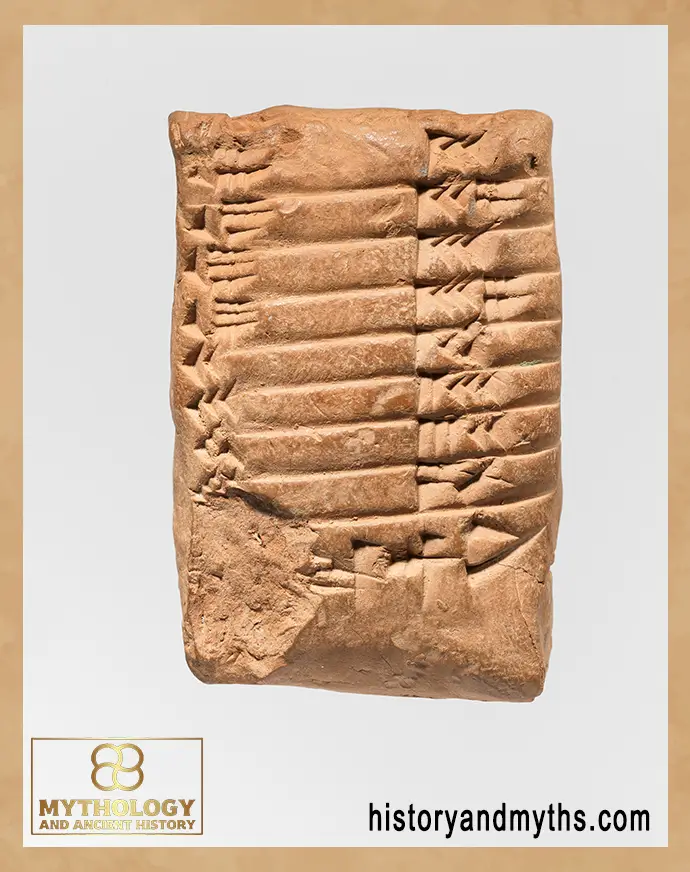
Scribal education began with elementary copying exercises—sign lists, lexical tables, and model sentences. Students learned cuneiform through repetition. Over time, advanced pupils copied established compositions: hymns, laments, wisdom texts, and epic narratives. What entered the curriculum entered preservation.
Excavations at sites such as Nippur have uncovered school tablets containing standardized literary works written in consistent formats. These finds indicate structured pedagogical systems rather than informal apprenticeship. Texts circulated within defined scholarly networks.
Canon formation was gradual. Certain compositions were copied repeatedly across centuries, while others disappeared after limited transmission. This process was selective. Works that reinforced religious orthodoxy, royal ideology, or scholarly utility were prioritized. Literary survival reflects institutional endorsement.
Language continuity also shaped preservation. Sumerian ceased to be a spoken language by the early second millennium BCE, yet it remained central in scribal training. Students copied older Sumerian texts alongside Akkadian compositions. This bilingual curriculum created textual layering: literature became both archive and tradition.
The large-scale collection of tablets under Ashurbanipal represents the culmination of this process. By gathering and recopying texts from across Mesopotamia, the Neo-Assyrian court formalized what had long been an educational canon. Preservation became state policy.
Canon formation in Mesopotamia did not emerge from literary criticism in the modern sense. It emerged from curriculum, copying practices, and institutional priorities. A text endured if it remained useful—ritually, politically, or pedagogically.
Literature, in other words, survived through schools before it survived through libraries.
Continue Reading
Archives and Libraries: The Infrastructure of Memory
Mesopotamian literature depended on material systems of storage. Clay tablets were durable, but survival required organization. Texts were kept in temple archives, palace storerooms, and later in large curated collections.
Temple archives primarily preserved ritual instructions, hymns, offering lists, and administrative accounts. These collections ensured continuity of cult practice. Writing stabilized repetition: the same liturgy could be performed across generations with controlled variation.
Palace archives expanded textual scope. Administrative correspondence, diplomatic letters, tax records, legal documents, and royal inscriptions accumulated in centralized repositories. Archives were not passive storage spaces. They enabled governance. Officials consulted prior agreements, tribute records, and military reports to inform policy.
By the Neo-Assyrian period, archival ambition intensified. At Nineveh, under Ashurbanipal, thousands of tablets were collected from across the empire. These included myths, scholarly treatises, omen series, lexical lists, and ritual manuals. The collection reflects systematic acquisition rather than incidental accumulation.
This shift marks a transition from archive to library. An archive stores active documents tied to administration. A library curates knowledge for preservation and study. In Nineveh, texts were catalogued and often copied to ensure completeness. Knowledge became imperial capital.
Archives performed several structural functions:
- Preserving institutional continuity
- Enabling administrative accountability
- Centralizing scholarly authority
- Controlling historical narrative
Because clay tablets were often baked accidentally during destruction, many survived in archaeological contexts long after the political systems that produced them collapsed. Ironically, imperial violence contributed to textual preservation.
Mesopotamian literature, therefore, endured through infrastructure. Without organized archives and copying practices, the textual tradition would have fragmented. Writing survived because institutions invested in memory.
Why Mesopotamian Literature Still Matters: Writing as the Foundation of Civilizational Memory
Mesopotamian literature matters not because it contains the “oldest stories,” but because it reveals how writing became a civilizational tool.
In southern Mesopotamia, writing began as administrative notation. Over time, it evolved into structured narrative, ritual codification, legal framing, and scholarly classification. Literature emerged from bureaucracy, then shaped culture in return. The same script used to track grain deliveries came to preserve cosmology and kingship.
This transformation changed how societies understood continuity. Oral tradition depends on performance; written tradition depends on replication. Once texts were copied systematically in scribal schools and preserved in archives, memory detached from individual recall. Authority became transferable across generations through tablets.
Mesopotamian literature also shaped later traditions. Themes of creation, flood narratives, divine justice, and royal legitimacy circulated widely across the ancient Near East. But more significant than thematic parallels is structural inheritance: the idea that knowledge can be archived, standardized, and curated.
Writing in Mesopotamia created:
- Institutional memory
- Political continuity
- Religious codification
- Educational canon
- Scholarly tradition
It introduced a new relationship between power and text. Authority could now be recorded, consulted, and reinterpreted.
When later civilizations inherited cuneiform scholarship or encountered its translations, they inherited more than stories. They inherited a model of knowledge management—how to store law, ritual, science, and history within durable systems.
Mesopotamian literature survives today not as isolated myths, but as evidence of the first sustained experiment in written culture. It marks the point at which human societies began to treat memory as infrastructure.
Key Takeaways
- Mesopotamian literature emerged from institutions, not individual authors.
- Texts functioned as tools of political and religious authority.
- Scribal schools determined which works survived.
- Archives transformed writing into organized cultural memory.
- Literature in Mesopotamia was inseparable from administration and governance.
Frequently Asked Questions
What is Mesopotamian literature?
It refers to written texts composed in Sumerian and Akkadian, including hymns, inscriptions, wisdom texts, and administrative correspondence.
Was Mesopotamian literature only mythological?
No. While myths were important, many texts were administrative, political, or instructional in nature.
Who wrote Mesopotamian texts?
Professional scribes trained in specialized schools produced and copied most texts.
How were texts preserved?
Through systematic copying in scribal education and storage in temple and palace archives.
What is the importance of the Library of Ashurbanipal?
It represents one of the earliest large-scale curated collections of literary and scholarly texts.
Why were clay tablets used?
Clay was abundant, durable, and practical for inscription with cuneiform styluses.
Did authors sign their works?
Most compositions were anonymous, emphasizing tradition over individual authorship.
Sources & Rights
Black, Jeremy A., Graham Cunningham, Eleanor Robson, and Gábor Zólyomi. The Literature of Ancient Sumer. Oxford: Oxford University Press, 2004.
Foster, Benjamin R. Before the Muses: An Anthology of Akkadian Literature. 3rd ed. Bethesda: CDL Press, 2005.
George, Andrew R. The Babylonian Gilgamesh Epic: Introduction, Critical Edition and Cuneiform Texts. Oxford: Oxford University Press, 2003.
Michalowski, Piotr. The Lamentation over the Destruction of Sumer and Ur. Winona Lake: Eisenbrauns, 1989.
Vanstiphout, Herman. Epics of Sumerian Kings: The Matter of Aratta. Atlanta: Society of Biblical Literature, 2003.
Robson, Eleanor. Writing and Literacy in Early Mesopotamia. Cambridge: Cambridge University Press, 2008.
Charpin, Dominique. Writing, Law, and Kingship in Old Babylonian Mesopotamia. Chicago: University of Chicago Press, 2010.
Radner, Karen, and Eleanor Robson, eds. The Oxford Handbook of Cuneiform Culture. Oxford: Oxford University Press, 2011.
Veldhuis, Niek. History of the Cuneiform Lexical Tradition. Münster: Ugarit-Verlag, 2014.
Dalley, Stephanie. Myths from Mesopotamia: Creation, the Flood, Gilgamesh, and Others. Oxford: Oxford University Press, 2000.
Hallo, William W., and K. Lawson Younger Jr., eds. The Context of Scripture. 3 vols. Leiden: Brill, 1997–2002.
Postgate, J. N. Early Mesopotamia: Society and Economy at the Dawn of History. London: Routledge, 1992.
Glassner, Jean-Jacques. Mesopotamian Chronicles. Atlanta: Society of Biblical Literature, 2004.
Lambert, W. G. Babylonian Wisdom Literature. Oxford: Oxford University Press, 1960.
Grayson, A. Kirk. Assyrian Royal Inscriptions. Wiesbaden: Harrassowitz, 1972–1976.
Parpola, Simo. The Correspondence of Sargon II. Helsinki: Helsinki University Press, 1987.
Sallaberger, Walther. “Literature and Performance in the Early Mesopotamian World.” In Literature as Politics, Politics as Literature. Winona Lake: Eisenbrauns, 2013.
Leick, Gwendolyn. Mesopotamia: The Invention of the City. London: Penguin, 2002.
Van De Mieroop, Marc. A History of the Ancient Near East. 3rd ed. Oxford: Wiley-Blackwell, 2016.
Beaulieu, Paul-Alain. The Pantheon of Uruk During the Neo-Babylonian Period. Leiden: Brill, 2003.
Winter, Irene J. “Royal Rhetoric and the Development of Historical Narrative in Neo-Assyrian Reliefs.” In Studies in Visual Communication. Philadelphia, 1985.
Oppenheim, A. Leo. Ancient Mesopotamia: Portrait of a Dead Civilization. Chicago: University of Chicago Press, 1964.
Written by H. Moses — All rights reserved © Mythology and History