Who Were the Norse People? Origins, Society and Identity
The Norse were the North Germanic-speaking peoples of medieval Scandinavia, primarily associated with present-day Denmark, Norway, and Sweden. Although best known for the Viking Age (c. 750–1050 CE), their societies had much older roots in the Scandinavian Iron Age. Most Norse people were farmers, craftspeople, and traders rather than Viking raiders.
Through trade, migration, and settlement, Norse communities spread across the British Isles, Iceland, Greenland, and parts of Eastern Europe, eventually reaching North America. They shared related languages and cultural traditions but never formed a single nation or a genetically uniform population.
Who Were the Norse People?
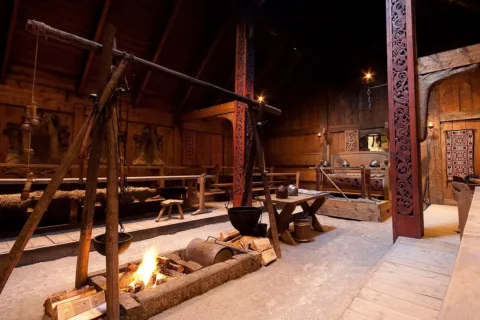
The term Norse encompasses the North Germanic-speaking communities of Scandinavia during the late Iron Age and early Middle Ages, including those established overseas. Their homeland extended across the Jutland Peninsula, the Danish islands, and much of present-day Norway and Sweden.
The English word Norse derives from the Dutch Noorsch, meaning Norwegian. Its modern historical usage is broader, encompassing communities associated with the linguistic and cultural traditions of medieval Scandinavia.
Not all inhabitants of Scandinavia were Norse. Sámi communities inhabited parts of northern Fennoscandia, maintaining distinct languages, cultural traditions, and ways of life while interacting with their Norse neighbors through trade and other forms of contact.
Norse, Vikings and Scandinavians: What Is the Difference?
- Norse describes a historical, linguistic, and cultural affiliation, including communities established beyond Scandinavia.
- Viking referred primarily to people engaged in maritime raiding. The Old Norse expression fara í víking meant going on a raiding expedition. The term described an activity rather than an ethnicity or inherited social rank.
- Scandinavian is primarily a geographical designation associated with Denmark, Norway, and Sweden, applicable to both historical and modern populations.
A farmer in medieval Norway could be both Norse and Scandinavian without ever becoming a Viking. An Old Norse-speaking inhabitant of Iceland was culturally Norse but lived outside Scandinavia.
Modern historians also use the term Viking in a broader sense when discussing the archaeology and societies of the Viking Age. This convention is useful for describing a historical period, but it can obscure the distinction between the wider population and those who undertook raiding expeditions.
The Historical Roots of the Norse World
During the Nordic Bronze Age (c. 1700–500 BCE), Scandinavian communities maintained long-distance trading networks, importing copper and tin for bronze production. Rock carvings depicting ships reflect the importance of maritime activity long before the Viking Age.
During the Roman Iron Age (c. 1–400 CE), Scandinavian communities established contacts with the Roman Empire despite remaining outside its borders. Roman coins, glassware, and luxury goods found in Scandinavian graves indicate extensive exchange networks and the wealth of regional elites.
The Migration Period (c. 375–550 CE)
The decline of the Western Roman Empire and population movements across Europe also affected Scandinavia. Gold hoards, imported objects, and elaborate burials reveal concentrations of wealth and power.
The volcanic eruptions of 536 and 540 CE brought severe climatic disruption. Archaeological evidence suggests that parts of Scandinavia experienced agricultural difficulties and settlement decline, although the severity and long-term consequences varied by region.
The Vendel Period (c. 550–750 CE)
Named after a burial site in central Sweden, the Vendel Period provides important evidence of the aristocratic culture that preceded the Viking Age.
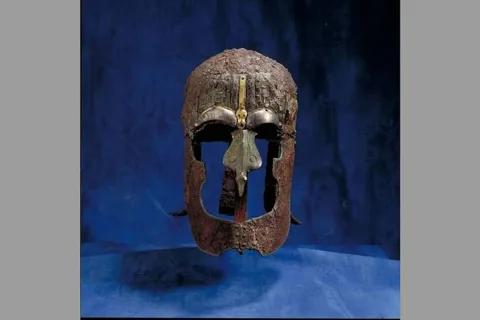
Boat graves at Vendel and Valsgärde contained decorated helmets, weapons, imported objects, and equipment associated with wealthy warrior elites. These burials document established traditions of maritime culture, craftsmanship, and social hierarchy.
The Transition to the Viking Age
The two ship burials discovered at Salme, Estonia, dating to around 750 CE, contained the remains of 41 men. Archaeological, genetic, and isotope evidence points to central Sweden as their probable region of origin.
Their presence across the Baltic demonstrates that armed Scandinavian maritime expeditions were already taking place decades before the attack on Lindisfarne in 793.
The Viking Age emerged from existing maritime networks, established aristocratic traditions, and centuries of contact with continental Europe rather than a sudden transformation of Scandinavian society.
How Did the Norse Identify Themselves?
There is little evidence that the Norse regarded themselves as a single people. Identity was rooted in kinship, geographical origin, and allegiance to local rulers. Names such as Danir (Danes) and Svíar (Svear) distinguished particular populations, while regional affiliations remained important even as larger kingdoms emerged.
Foreign observers used different names. Frankish chroniclers sometimes used Northmanni (Northmen) and Dani (Danes) interchangeably, while Irish annals used terms such as Gaill (foreigners). These labels reflected external perceptions and did not necessarily identify the precise geographical origins of the groups described.
New cultural affiliations emerged as Scandinavian communities settled overseas. In Ireland, the term Gall Goídil, conventionally translated as Norse-Gaels, appears in ninth-century records, reflecting interaction between Scandinavian and Gaelic societies. The precise identity of the groups described by this term remains debated.
Modern Danish, Norwegian, and Swedish national identities should not be projected unchanged onto early medieval Scandinavia, when political boundaries and regional affiliations were still evolving.
What Ancient DNA Reveals About Norse Origins
Ancient DNA research has identified substantial changes in Scandinavian ancestry long before the Viking Age, challenging the idea that the Norse descended from an isolated ancestral population.
Population Movements Before the Viking Age
A 2026 study published in Nature identified a population that entered Sweden around 2050 BCE, probably from the Baltic region, and subsequently spread across Scandinavia. The researchers proposed that this migration may have introduced an ancestral form of the Germanic languages, although the linguistic affiliation of these migrants remains uncertain.
Further population changes occurred between approximately 375 and 575 CE, when groups with ancestry associated with northern Germany and southern Jutland migrated into Denmark and southern Sweden. A separate 2025 genomic study identified substantial central European-related ancestry in southern Scandinavia by around 800 CE.
Norway followed a different demographic trajectory. The 2026 study found greater genetic continuity between its Iron Age and Viking Age populations despite comparable social and linguistic changes. This suggests that the emergence of Old Norse did not depend on a uniform pattern of migration across Scandinavia. Reconstructing these movements remains difficult because widespread cremation practices limited the availability of ancient DNA from this period.
Genetic Diversity During the Viking Age
A 2020 study of 442 ancient individuals identified distinct patterns of Scandinavian migration. Danish-related ancestry was particularly evident in England, Swedish-related ancestry in the Baltic region, and Norwegian-related ancestry in Ireland, Iceland, and Greenland. These were predominant patterns rather than exclusive migration routes.
Migration also brought new populations into Scandinavia. A 2023 study published in Cell found that ancestry associated with Britain and Ireland became widespread during the Viking Age, while eastern Baltic ancestry was concentrated particularly in Gotland and central Sweden.
Can DNA Identify a Norse Person?
Ancient DNA can reveal biological relationships, population movements, and geographical connections, but it cannot determine a person’s language, religious beliefs, or cultural affiliation. The genetic differences between Viking Age populations demonstrate why Norse identity cannot be defined by a single ancestral profile.
The Old Norse Language and Its Development
Old Norse belonged to the North Germanic branch of the Indo-European language family. It developed from Proto-Norse, an earlier linguistic stage documented in Scandinavian runic inscriptions from approximately the second century CE.
Between the sixth and eighth centuries, changes in pronunciation and grammatical structure transformed Proto-Norse into Old Norse. These developments coincided with the reduction of the runic alphabet from the 24-character Elder Futhark to the 16-character Younger Futhark.
By the Viking Age, two broad dialect groups had emerged:
- Old West Norse, spoken primarily in Norway and later in Iceland, Greenland, and other North Atlantic settlements.
- Old East Norse, associated mainly with Denmark and Sweden.
These dialects remained closely related and largely mutually intelligible. Gotland also developed a distinctive linguistic variety known as Old Gutnish.
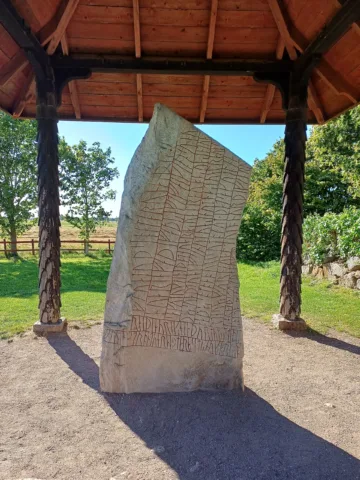
Runic inscriptions carved on memorial stones and everyday objects preserve personal names, family relationships, property claims, and accounts of overseas journeys.
The spread of Christianity encouraged the adoption of the Latin alphabet for writing vernacular texts on parchment. The earliest surviving vernacular manuscripts from Iceland and Norway date to the twelfth century.
Norse settlement also influenced English, which absorbed everyday words such as sky, egg, take, and they. Over time, Old Norse developed into modern Danish, Swedish, Norwegian, Icelandic, and Faroese.
Norse Society and Social Hierarchy
Norse society was organized around households, kinship networks, landownership, and personal obligations. Wealth, legal status, and family connections determined an individual’s position within the community.
The Eddic poem Rígsþula presents society through three social groups:
- Jarls: Aristocratic elites whose influence rested on landownership, wealth, and political or military authority.
- Karls: Free people, including farmers, merchants, and craftspeople, who possessed legal rights and could participate in public assemblies, depending on their status and local customs.
- Thralls: Enslaved individuals who performed agricultural, domestic, and other forms of labor. Enslavement could result from capture or birth into slavery, and enslaved people were also bought and sold.
Actual social relationships were more complex than this literary model suggests. Free farmers varied considerably in wealth and influence, while freed slaves occupied an intermediate position in some communities.
Family, Women and Household Authority
Family connections provided protection, access to resources, and support in legal disputes. Marriage could strengthen political alliances and consolidate property.
Women managed households, contributed to agricultural production, and played an important role in textile manufacturing. Later medieval Scandinavian laws document women’s inheritance rights under certain conditions, although these rights varied by region and legal status.
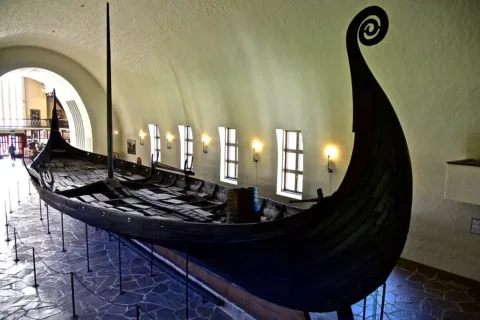
The richly furnished ninth-century Oseberg ship burial in Norway demonstrates that some women attained exceptionally high social status, but it does not establish how much authority women generally exercised in Norse society.
Kingship, Political Power and Law
Early Norse communities were governed by local chieftains and regional rulers whose authority depended on land, wealth, personal alliances, and military support. Rulers maintained the loyalty of their followers through feasting, gift-giving, and the distribution of resources.
The Thing Assembly
The thing (Old Norse þing) was a public assembly where laws were proclaimed, disputes were settled, compensation was negotiated, and political decisions were made. These assemblies operated at local and regional levels.
Iceland developed a distinctive political system. Around 930 CE, the Alþing was established as a general assembly linking regional chieftains under a common legal framework without a king. This arrangement lasted until Iceland came under Norwegian royal authority between 1262 and 1264.
The Emergence of Scandinavian Kingdoms
During the tenth and eleventh centuries, rulers increasingly consolidated their authority over larger territories. In Denmark, Harald Bluetooth’s monumental ring fortresses demonstrate the ability of royal power to mobilize labor and resources on a substantial scale. The formation of kingdoms in Norway and Sweden followed different paths, involving competition between regional rulers and established aristocratic families.
Norse law was largely transmitted orally before being recorded in writing. Surviving legal collections, such as the Icelandic Grágás and the Norwegian Gulating Law, preserve elements of earlier legal customs. However, their medieval compilation makes it difficult to determine precisely which provisions originated during the Viking Age.
Read More:
Farming, Trade and Everyday Life
Agriculture formed the economic foundation of Norse society. Farmers cultivated barley, oats, and rye, while raising cattle, sheep, goats, and pigs. Fishing, hunting, and seasonal grazing supplemented agricultural production, particularly in mountainous and coastal regions where farming conditions were less favorable.
Most people lived on rural farmsteads rather than in towns. Longhouses accommodated families, while surrounding buildings served as workshops, storage facilities, and shelters for livestock. Households produced textiles, preserved food, and manufactured many of the tools needed for everyday work.
Trade and Craftsmanship
Commercial settlements such as Ribe, Hedeby, Birka, and Kaupang became important centers of exchange and specialized production. Excavations have uncovered evidence of metalworking, glass bead manufacturing, and comb-making.
Norse merchants exported furs, walrus ivory, and enslaved people, while importing silver, silk, and glassware. Islamic silver coins known as dirhams, discovered in Scandinavian hoards, particularly on Gotland, document commercial connections with the Islamic world.
Silver frequently circulated according to its weight rather than the face value of coins. Finds of fragmented jewelry, cut coins, balances, and weights document this system of exchange.
Read More:
The Geographic Expansion of the Norse World
Between the eighth and eleventh centuries, Norse merchants, settlers, and raiders established communities and commercial networks across Europe and the North Atlantic.
Western Europe and the British Isles
In England, Scandinavian settlement became particularly extensive within the region known as the Danelaw. In Ireland, Dublin developed into an important Norse commercial center, while Orkney and Shetland became closely integrated into the Norwegian cultural sphere.
In northern France, an agreement between the Frankish king Charles the Simple and the Scandinavian leader Rollo in 911 laid the foundations of Normandy. Subsequent generations of settlers gradually adopted the local language and Christianity.
The North Atlantic and North America
Norse settlers began colonizing Iceland in the late ninth century and established settlements in southwestern Greenland around 985 CE.
At L’Anse aux Meadows in Newfoundland, archaeological remains confirm a Norse presence in North America. A study published in Nature established that Norse people were cutting wood at the site in 1021 CE, providing a securely dated instance of European activity in the Americas before Columbus.
Eastern Europe and the Byzantine World
Scandinavian traders and warriors traveled through the Baltic and along the river systems of Eastern Europe, reaching the Black Sea and Caspian regions. They contributed to the emergence of the Rus’ political and commercial networks, interacting with Slavic, Finnic, and other populations.
Some entered Byzantine military service, eventually forming part of the Varangian Guard.
How Do We Know About the Norse People?
Historians reconstruct Norse history by combining archaeological evidence with written records produced at different times and from different cultural perspectives.
Archaeology and Runic Inscriptions
Excavated settlements, graves, workshops, and trading centers provide direct evidence of material culture, economic activity, and burial practices. Stable isotope analysis helps reconstruct diet and geographical mobility, while ancient DNA provides evidence of biological kinship and population ancestry.
The eleventh-century Ingvar runestones in Sweden, for example, commemorate individuals who participated in an expedition eastward. Unlike later literary accounts, these inscriptions were produced close to the events they describe.
Foreign Historical Accounts
The Anglo-Saxon Chronicle, the Frankish Royal Annals, and the Irish annals document Scandinavian activity from outside the Norse world. Their authors frequently emphasized warfare and political disruption, reflecting the concerns of their own societies.
Ahmad ibn Fadlan, who encountered the Rus’ along the Volga in 922 CE, recorded valuable observations of burial customs, commerce, and social behavior. His descriptions, however, concern a particular community and cannot be generalized to all Norse populations.
How Reliable Are the Norse Sagas?
Many Icelandic sagas describing Viking Age events were written during the thirteenth and fourteenth centuries. Although they preserve older traditions, genealogies, and memories of historical events, they also reflect medieval literary conventions and Christian intellectual influences.
Skaldic poetry sometimes preserves material composed closer to the events described, although much of it survives in later manuscripts.
Historians assess these literary accounts against independent evidence wherever possible, distinguishing historically plausible traditions from details that cannot be verified.
Read More:
Christianization and the End of the Viking Age
Christianity reached Scandinavia through missionaries, commercial contacts, and political relationships with Christian Europe long before conversion became official royal policy.
In Denmark, the larger Jelling runestone, erected by Harald Bluetooth in the tenth century, records the king’s claim to have made the Danes Christian. In Norway, Olaf Tryggvason and Olaf Haraldsson actively promoted conversion, while Christianity became established more gradually in Sweden. Iceland formally adopted Christianity through a decision at the Alþing around 1000 CE.
Traditional religious practices persisted during the transition. Archaeological finds of crosses and Thor’s hammer pendants from the same period illustrate the coexistence of Christian and pre-Christian religious traditions.
The establishment of churches, bishoprics, and ecclesiastical laws accompanied the consolidation of royal authority, strengthening Scandinavia’s political and institutional ties with medieval Christian Europe.
The Battle of Stamford Bridge in 1066 is often regarded as a conventional endpoint for the Viking Age, although Scandinavian military expeditions continued afterward. The end of the period marked a transformation of Norse society rather than the disappearance of its people.
Read More:
The Historical and Cultural Legacy of the Norse
Place-name elements such as -by (settlement) and -thorpe (secondary settlement), particularly common in northern and eastern England, preserve evidence of Scandinavian settlement and linguistic influence. Names such as Whitby, Grimsby, and Scunthorpe remain visible examples of this heritage.
Iceland and the Faroe Islands retain a particularly strong Norse linguistic heritage. Icelandic and Faroese preserve many features inherited from Old West Norse, while Iceland’s medieval manuscript tradition preserves an extensive body of poetry, historical narratives, genealogies, and legal texts.
Conclusion
The Viking Age was a period of expansion within a much longer Scandinavian history. Understanding the Norse requires looking beyond their maritime expeditions to the rural communities, regional identities, and economic networks that sustained them. Their history continued into the medieval kingdoms of Scandinavia, long after the conventional end of the Viking Age.
Sources & Primary Texts
Ancient DNA and Population History
- McColl, H., et al. (2026). Tracing the Spread of Germanic Languages Using Ancient Genomics. Nature.
- Speidel, L., et al. (2025). High-Resolution Genomic History of Early Medieval Europe. Nature.
- Rodríguez-Varela, R., et al. (2023). The Genetic History of Scandinavia from the Roman Iron Age to the Present. Cell.
- Margaryan, A., et al. (2020). Population Genomics of the Viking World. Nature.
Archaeology, Identity and Norse Expansion
- Downham, C. (2012). Viking Ethnicities: A Historiographic Overview. History Compass.
- Kuitems, M., et al. (2022). Evidence for European Presence in the Americas in AD 1021. Nature.
- Price, N. (2020). Children of Ash and Elm: A History of the Vikings. Basic Books.
- Brink, S., and Price, N. (eds.) (2008). The Viking World. Routledge.
- Uppsala University. The Viking Phenomenon Research Project.
- Swedish History Museum. Collections and Research on Scandinavian Prehistory and the Viking Age.
Primary Texts and Historical Records
- The Poetic Edda, particularly Rígsþula, for literary representations of Norse social hierarchy.
- The Anglo-Saxon Chronicle, Annales Regni Francorum (Royal Frankish Annals), and The Annals of Ulster, for contemporary and near-contemporary accounts of Scandinavian activity.
- Ahmad ibn Fadlan. Mission to the Volga. Translated by James E. Montgomery. Library of Arabic Literature, NYU Press.
- Grágás and the Gulating Law, for medieval Icelandic and Norwegian legal traditions.
- Skaldic Poetry of the Scandinavian Middle Ages. International scholarly edition and research database.
- Swedish National Heritage Board. Runor: Scandinavian Runic Inscriptions Database.
Historical and Institutional Resources
- National Museum of Denmark. Research and Collections on the Viking Age.
- UNESCO World Heritage Centre. Jelling Mounds, Runic Stones and Church.
- UNESCO World Heritage Centre. Viking-Age Ring Fortresses.
- UNESCO World Heritage Centre. Þingvellir National Park.
- UNESCO World Heritage Centre. Archaeological Border Complex of Hedeby and the Danevirke.
- The Árni Magnússon Institute for Icelandic Studies.
