Who Were the Ancient Celts? Peoples, Languages and Identity
The ancient Celts were a diverse group of peoples who inhabited much of Europe during the Iron Age, from Ireland and Britain to Iberia, central Europe, northern Italy, and eventually Anatolia. Their languages were related, and many shared cultural traditions, but they never formed a single nation or empire.
Greek and Roman writers used names such as Keltoi, Galatai, and Galli to describe particular populations. Modern scholars use the term Celtic more broadly, primarily in a linguistic sense. Similar burial customs, weapons, or artistic styles do not necessarily indicate a shared language or ethnic identity.
For much of the twentieth century, Celtic origins were closely associated with the Hallstatt and La Tène cultures of central Europe. Ancient DNA research published in Nature in November 2026 suggests that population movements potentially associated with the spread of Celtic languages began during the Late Bronze Age, centuries before these Iron Age cultures emerged.
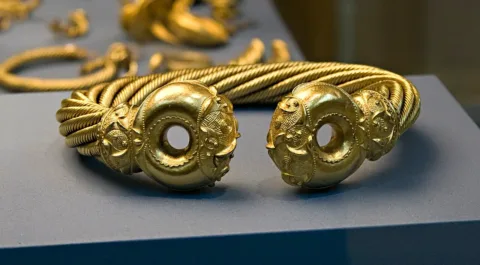
Who Were the Celts in Greek and Roman Sources?
Some of the earliest surviving references to the Celts appear in the writings of Herodotus. In the fifth century BCE, he placed the Keltoi beyond the Pillars of Heracles in western Europe and near the supposed source of the Danube (Histories, 2.33 and 4.49). His geographical descriptions were imprecise, but they establish that the name was already known to the Greeks.
Greek authors used both Keltoi and Galatai, while Roman writers generally referred to the peoples of Gaul as Galli. Diodorus Siculus distinguished the Celts living inland from Massalia (modern Marseille), near the Alps and Pyrenees, from the Gauls inhabiting territories farther north. He noted that the Romans applied the name Gauls to both groups (Library of History, 5.32).
Julius Caesar records an important instance of Celtic self-identification. In the opening passage of The Gallic War, he distinguishes the Belgae and Aquitani from a population who called themselves Celtae in their own language and whom the Romans called Galli. The name was therefore not exclusively an outsider’s label, although there is no clear evidence that all Celtic-speaking peoples used it to identify themselves.
The modern linguistic definition extends beyond these ancient classifications, encompassing populations such as the Celtiberians and the speakers of Lepontic, regardless of the names by which they identified themselves.
Were the Ancient Celts a Single People?
The ancient Celts had no common political authority. Peoples such as the Arverni and Aedui in Gaul, the Boii in central Europe, and the Galatians in Anatolia maintained distinct political identities and interests. Neighboring communities competed for territory, resources, and influence, forming alliances that often reflected local interests rather than wider Celtic affiliations.
Scholars examine four kinds of evidence when investigating these populations:
- Historical evidence: names, collective identities, and geographical descriptions recorded by ancient writers.
- Linguistic evidence: inscriptions, personal names, place names, and relationships between languages.
- Archaeological evidence: settlements, burial practices, craftsmanship, and patterns of cultural exchange.
- Genetic evidence: population ancestry, biological relationships, and migration.
Each reveals a different aspect of the ancient world. In northern Italy, Lepontic inscriptions directly attest to a Celtic language. In Ireland, the relatively limited presence of continental La Tène material contrasts with the island’s well-established Celtic linguistic heritage. Archaeological and linguistic boundaries did not necessarily coincide.
Political fragmentation does not rule out a broader cultural identity, but there is little evidence that Celtic-speaking peoples across Europe regarded themselves as members of a single collective community.
Where Did the Celtic Languages Originate?
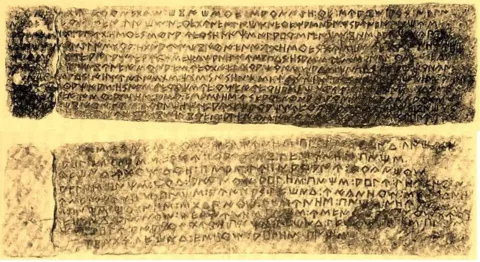
Celtic languages form a branch of the Indo-European language family. Their common ancestor, known as Proto-Celtic, has been reconstructed by linguists through shared vocabulary, grammatical features, and regular sound changes. No written records of Proto-Celtic survive, and its geographical homeland remains debated.
The earliest securely identified Celtic inscriptions are in Lepontic, spoken in northern Italy and southern Switzerland, with examples dating to around the sixth century BCE. Later inscriptions document Gaulish across continental Europe and Celtiberian in the Iberian Peninsula. The surviving Celtic languages belong to two branches: Goidelic (Irish, Scottish Gaelic, and Manx) and Brittonic (Welsh, Cornish, and Breton).
Four principal models have been proposed to explain the origins and spread of Celtic languages:
- The Bell Beaker model: associates early Celtic dispersal with the expansion of Bell Beaker communities across Europe during the late third millennium BCE.
- Celtic from the West: proposes that Celtic developed through maritime networks connecting Atlantic Europe during the Bronze Age.
- Celtic from the Centre: places its emergence in inland France and possibly northwestern Italy, followed by its spread into neighboring regions.
- Celtic from the East: locates the origins of Celtic in central Europe and associates its dispersal with the Urnfield, Hallstatt, and La Tène cultural horizons.
A particularly contentious issue is the classification of Tartessian, an ancient language documented in southwestern Iberia. Its proposed identification as Celtic has supported arguments for an Atlantic homeland, but this interpretation remains disputed among linguists.
The surviving inscriptions establish where Celtic languages were spoken by particular dates, not where they originated.
What Does Ancient DNA Reveal About Celtic Origins?
A study published in Nature on November 4, 2026, by Hugh McColl, Guus Kroonen, and their colleagues analyzed genome-wide data from 4,587 ancient individuals to assess the demographic evidence behind competing models of Celtic language dispersal. The researchers identified three major population movements:
- From around 2450 BCE: Bell Beaker-associated populations introduced Steppe-related ancestry into much of western and central Europe. These movements may have brought Indo-European dialects from which Celtic subsequently developed.
- Around 1850–1250 BCE: population movements from southwestern Europe into Britain were consistent with aspects of the Atlantic-origin hypothesis.
- Around 1250–850 BCE: ancestry related to Knovíz–Urnfield communities in eastern central Europe spread westward into France, the British Isles, northeastern Iberia, and Italy.
Of these three movements, the researchers considered the Late Bronze Age expansion the most plausible demographic explanation for the geographical distribution of Celtic languages. Related ancestry was subsequently identified in populations associated with Hallstatt and La Tène archaeological contexts.
A limitation of the study is the scarcity of ancient DNA samples from Urnfield communities, largely because cremation was the predominant burial practice. The genetic impact of the Late Bronze Age population movement also diminished farther west.
Earlier research published in Nature in 2022 had identified substantial Bronze Age migration into Britain from populations genetically related to those of ancient France. Together, these studies provide demographic support for the possibility that Celtic languages reached Britain before the Iron Age.
The genetic findings favor a dispersal from eastern central Europe, but they do not establish where Proto-Celtic first developed. Languages can spread without substantial population replacement, and genetic similarities between ancient communities cannot establish that they spoke the same language.
Urnfield, Hallstatt and La Tène: Were These Celtic Cultures?
Urnfield, Hallstatt, and La Tène represent three major stages in the archaeological history of central Europe, spanning the Late Bronze Age and Iron Age. Their development involved regional continuities as well as changes in technology, burial practices, and social organization.
The Urnfield Culture (c. 1300–800 BCE)
The Urnfield horizon takes its name from the widespread practice of cremating the dead and burying their ashes in urns within extensive cemeteries. Its communities developed fortified settlements, advanced bronze metallurgy, and long-distance exchange networks across much of central Europe.
The population movements identified in the 2026 genetic study suggest that some Urnfield communities may have participated in the early dispersal of Celtic languages. This does not establish the linguistic identity of the entire archaeological horizon.
The Hallstatt Culture (c. 800–450 BCE)
Named after the archaeological site of Hallstatt in Austria, this Early Iron Age culture saw the growing adoption of iron technology and the emergence of powerful regional elites.
Archaeologists distinguish between eastern and western Hallstatt zones based on differences in burial customs, material culture, and external contacts. The western zone, extending across parts of eastern France, southern Germany, and Switzerland, is more closely associated with early Celtic-speaking populations.
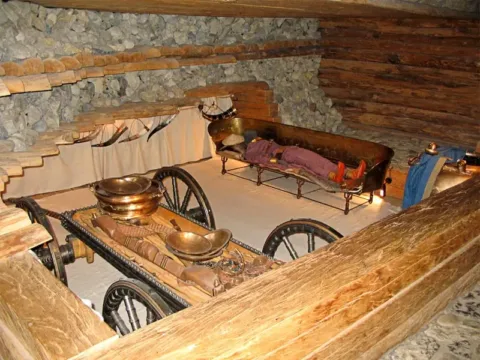
Richly furnished burials at Hochdorf and Vix reflect the concentration of wealth among regional elites and their access to Mediterranean trade networks.
The La Tène Culture (c. 450–1 BCE)
Named after a site on Lake Neuchâtel in Switzerland, La Tène culture is distinguished by its curvilinear art, elaborate metalwork, and changing burial traditions. It developed from earlier regional Iron Age traditions rather than replacing Hallstatt populations wholesale.
Its geographical expansion coincided with historically documented Celtic migrations into northern Italy, southeastern Europe, and Anatolia, providing stronger historical associations with named Celtic peoples.
La Tène objects also spread through trade and local imitation, however. The distribution of this artistic tradition therefore extended beyond the territories of historically documented Celtic-speaking populations.
Where Did the Ancient Celtic Peoples Live?
Celtic-speaking populations were distributed across much of Europe during the Iron Age, although they did not occupy a continuous territory or share fixed geographical boundaries.
Gaul
Ancient Gaul encompassed much of modern France, Belgium, Switzerland, and neighboring territories. Peoples such as the Arverni, Aedui, Sequani, and Parisii controlled their own territories and pursued distinct political interests. Gaulish inscriptions, coin legends, and classical accounts make this one of the best-documented regions of the ancient Celtic-speaking world.
Central Europe
Celtic communities inhabited parts of modern Germany, Austria, Switzerland, Czechia, and the Danube basin. Classical sources document peoples such as the Boii and Taurisci, while archaeological sites including Manching and Staré Hradisko reveal substantial Late Iron Age settlements with extensive commercial connections.
Northern Italy
Celtic-speaking populations were established south of the Alps before the major migrations traditionally dated to the fourth century BCE, as demonstrated by early Lepontic inscriptions. Later groups, including the Insubres, Cenomani, Boii, and Senones, occupied territories that became part of Roman Cisalpine Gaul.
The Iberian Peninsula
The Celtiberians occupied parts of the central and northeastern Iberian interior, particularly around the upper Douro, Tagus, and Jalón river valleys. The Botorrita bronze tablets preserve evidence of their language, legal practices, and public administration. Other Celtic-speaking communities inhabited western Iberia alongside populations speaking non-Celtic languages.
Britain
Iron Age Britain contained numerous regional societies, including the Brigantes, Catuvellauni, and Dumnonii. Personal names, place names, and later Brittonic languages establish its Celtic linguistic heritage, while archaeological evidence reveals considerable regional continuity.
In 2025, linguist Patrick Sims-Williams challenged the longstanding claim that classical writers never described Britain’s inhabitants as Celts. He argued that a reference to Pytheas of Massalia preserved by Hipparchus indicates that some inhabitants of Britain were called Keltoi as early as around 320 BCE.
Ireland
Ireland’s Celtic linguistic heritage is directly attested by Primitive Irish inscriptions written in the Ogham alphabet, the earliest generally dated to around the fourth century CE. Continental La Tène influences are visible in Irish metalwork, although neither these artifacts nor the surviving inscriptions establish when Celtic languages first reached the island.
The Balkans and Anatolia
Celtic groups expanded into southeastern Europe during the fourth and third centuries BCE. The Scordisci established themselves around the confluence of the Sava and Danube rivers, while other groups crossed into Anatolia around 278–277 BCE.
Three peoples, the Tectosages, Tolistobogii, and Trocmi, eventually established themselves in central Anatolia, in the region known as Galatia. Classical accounts and surviving personal names document their Celtic heritage within an increasingly Hellenized environment.
How Were Celtic Societies Organized?
Political institutions varied across the Celtic-speaking world. In first-century BCE Gaul, some communities were ruled by kings, while others appointed magistrates and maintained aristocratic councils. Among the Aedui, the chief magistrate, known as the vergobret, held office for one year and exercised extensive judicial authority.
Caesar identifies two privileged groups in Gaulish society: the Druids, who exercised religious and judicial authority, and the warrior aristocracy, whose influence depended partly on the number of followers and dependents they maintained. He also describes poorer inhabitants becoming dependent on powerful nobles through debt, taxation, or oppression.
A 2024 genetic study published in Nature Human Behaviour examined 31 individuals from seven elite burial sites in southwestern Germany. The men buried at Hochdorf and Asperg-Grafenbühl were most likely a maternal uncle and nephew, suggesting that elite status could pass through maternal family connections rather than exclusively from father to son. The findings do not establish whether this pattern represented a formal system of political succession.
Women could also attain considerable social prominence. The richly furnished sixth-century BCE burial at Vix in eastern France contained gold jewelry and an enormous Greek bronze vessel, reflecting the exceptional wealth and long-distance connections of a woman belonging to the regional elite. Such burials, however, tell us little about the rights or circumstances of ordinary women.
How Did the Celts Live and Build Their Economies?
Agriculture formed the economic foundation of most Celtic communities. Farmers cultivated wheat, barley, and pulses, while livestock supplied meat, dairy products, wool, and hides. Agricultural surpluses helped support specialized craftspeople, merchants, and political elites.
Natural resources encouraged regional specialization. At Hallstatt, salt mining sustained a prosperous community. Exceptionally preserved wooden tools, leather equipment, and textiles provide direct evidence of mining techniques and working conditions rarely documented at other Iron Age sites.
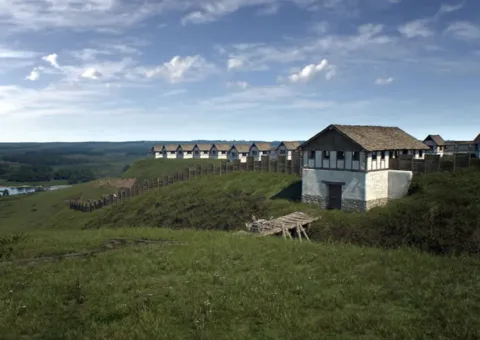
Urban development was already underway in parts of central Europe by the sixth century BCE. Heuneburg, on the upper Danube, may have supported around 5,000 inhabitants during the first half of that century, with a substantial outer settlement beyond its fortified core.
Chemical analysis of pottery from Heuneburg identified evidence of grape wine consumption in the outer settlement, suggesting that access to Mediterranean imports extended beyond the highest-ranking elites.
During the later Iron Age, large fortified settlements known as oppida became important centers of manufacturing, commerce, and political authority. From the third century BCE onward, coinage became increasingly widespread among Celtic communities. Many early issues drew on Greek monetary designs, particularly the gold staters of Philip II of Macedon, before developing distinctive regional styles.
How Did the Celts Interact With Greece and Rome?
The Greek settlement of Massalia, founded around 600 BCE, became an important commercial link between Mediterranean merchants and communities in the European interior. Greek ceramics, Etruscan bronze vessels, and imported wine reached settlements along the Rhône and other major river routes.
Celtic warriors also served in Mediterranean armies. Xenophon records Celtic and Iberian mercenaries sent by Dionysius I of Syracuse to support Sparta in 369 BCE.
Military encounters shaped Greek and Roman perceptions of the Celts. The sack of Rome around 390 BCE and the Celtic expedition against Delphi in 279 BCE contributed to literary portrayals of the Celts as formidable but undisciplined warriors. Such accounts must be read in the context of Mediterranean attitudes toward foreign peoples rather than accepted as objective descriptions of Celtic society.
Roman expansion gradually brought Celtic territories under imperial control. The conquest of Cisalpine Gaul during the third and second centuries BCE was followed by the establishment of Roman rule in southern Gaul in the late second century BCE and Caesar’s campaigns of 58–50 BCE.
Celtic communities responded according to their own political interests. The Aedui had established diplomatic ties with Rome long before Caesar’s arrival, while the Arverni became central to the resistance led by Vercingetorix in 52 BCE. Rome’s ability to exploit existing rivalries was an important factor in its conquest of Gaul.
What Happened to the Ancient Celts?
Roman conquest transformed Celtic societies across much of continental Europe and Britain. Local political institutions were absorbed into provincial administration, Latin became increasingly important in public life, and religious practices incorporated Roman traditions. These changes varied considerably between regions.
Celtic languages survived for centuries under Roman rule. Gaulish remained in use during the later Roman Empire, although the date of its disappearance is uncertain. Writing in the late fourth century CE, Jerome remarked that the Galatians of Anatolia spoke a language resembling that of the Treveri, a people living around modern Trier. His testimony suggests that Celtic speech may have persisted in Anatolia more than six centuries after the Galatian migrations, although whether Jerome was reporting contemporary speech or drawing on earlier literary sources remains debated.
Ireland remained outside the Roman Empire, while parts of northern Britain escaped permanent Roman control. Celtic languages survived in these regions and developed into distinct medieval literary traditions. Migration from Britain between the fifth and seventh centuries CE also helped establish Brittonic speech in Armorica, modern Brittany.
The broader Celtic identity recognized today developed partly through linguistic scholarship and cultural revival movements from the eighteenth century onward. It draws on genuine linguistic and historical connections without representing the uninterrupted survival of a single ancient ethnic or political community.
Read Also:
Conclusion
The ancient Celts were diverse societies linked primarily by related languages rather than a common political or ethnic identity. Recent genetic research strengthens the case for the spread of Celtic languages from eastern central Europe during the Late Bronze Age, although their original homeland remains uncertain.
The history of these peoples extends beyond the archaeological cultures traditionally associated with them. Their languages, institutions, and regional traditions developed over centuries, leaving a legacy that survives most visibly in the Celtic languages spoken today.
Sources & Primary Texts
Academic Studies and Archaeological Research
- McColl, H., Kroonen, G., et al. (2026). Tracing the Spread of Celtic Languages Using Ancient Genomics. Nature, 659, 1031–1040.
- Sims-Williams, P. (2025). ‘Celtic Britain’ in Pre-Roman Archaeology, Reconsidered. Oxford Journal of Archaeology, 44(4), 446–461.
- Gretzinger, J., et al. (2024). Evidence for Dynastic Succession Among Early Celtic Elites in Central Europe. Nature Human Behaviour.
- Patterson, N., et al. (2022). Large-scale Migration into Britain During the Middle to Late Bronze Age. Nature.
- Pope, R. (2022). Re-approaching Celts: Origins, Society, and Social Change. Journal of Archaeological Research, 30, 1–67.
- Sims-Williams, P. (2020). An Alternative to ‘Celtic from the East’ and ‘Celtic from the West’. Cambridge Archaeological Journal.
- The Dynamics of Early Celtic Consumption Practices: A Case Study of the Pottery from the Heuneburg (2019). PLOS ONE.
- Fernández-Götz, M. (2018). Urbanization in Iron Age Europe: Trajectories, Patterns, and Social Dynamics. Journal of Archaeological Research, 26, 117–162.
- Gaulish in the Late Empire (c. 200–600 CE). Oxford University Press.
Linguistic and Epigraphic Resources
- University of Vienna. Lexicon Leponticum: The Cisalpine Celtic Languages.
- Dublin Institute for Advanced Studies. Ogham in 3D: Early Irish Inscriptions.
Classical Primary Sources
- Herodotus. Histories, Books II.33 and IV.49.
- Julius Caesar. De Bello Gallico (The Gallic War), Books I, VI, and VII.
- Diodorus Siculus. Bibliotheca Historica (Library of History), Book V.32.
- Xenophon. Hellenica, Book VII.1.
- Strabo. Geography, Books IV and XII.
- Jerome. Commentary on Galatians, Book II, Preface.
Copyright & Editorial Notice
© 2026 History & Myths. All rights reserved.
Written and edited by H. Moses for History & Myths. This article presents an original historical synthesis based on classical primary sources, archaeological evidence, linguistic scholarship, and published scientific research.
The article may not be reproduced, republished, or distributed without prior written permission, except as permitted by applicable copyright law. Third-party images and materials remain subject to their respective licenses and copyright holders.
